Why We Need the Hope of Christmas

One of the sure signs that the Christmas season is upon us is all the twinkling lights that suddenly adorn nearby homes and businesses. The tradition of putting up lights during the Advent season can be traced back to the Protestant Reformer Martin Luther. On a late-night hike in December, he was struck by the way the starlight beautifully danced on the boughs of a fir tree. Luther said he felt as if the hand of God had touched his soul. It was so moving, he set out to create a similar experience for his family in the home. Luther attached candle holders to the branches of their tree, and his family and friends were dazzled by the spectacle of a well-lit Christmas tree. Thus began a longstanding tradition, today replicated with the far safer set of electric lights you string around your Christmas tree.

From the beginning, light has symbolized the Christmas hope.

The World in Darkness

The first Christmas came at a time when the world felt very dark. Interestingly, the historian Luke begins his Gospel narrative by focusing not on Mary and Joseph, but on another couple that was far older, Zechariah and Elizabeth.

Zechariah is a priest chosen by lot to present the incense offering before the Lord at the altar in the Jerusalem temple. As a Jew, this was an incredible honor for Zechariah. Most priests only dreamed of being the one who got to burn the incense on the altar of God. Since a priest could only win the lottery one time, this was quite literally a once in a lifetime opportunity for Zechariah.

But as he stood in this place of great honor, Zechariah struggled to feel blessed. For one thing, he and Elizabeth had failed to conceive in a culture where children were a sign of God’s blessing. Over the years, many of Elizabeth’s peers may have looked at her with an arched eyebrow as they hurried along with their train of youngsters.

On top of their personal pain, as a nation Israel felt oppressed by the Roman Empire. Rome’s overbearing rule and hefty taxes had become a weighty burden for an already beleaguered nation. Long gone were the glory days of King David and King Solomon and the First Temple. Long gone, even, were the courageous Maccabees to lead a revolution against all the foreign oppressors.

Many wondered, Where is the Deliverer God promised through the prophets? Why has God abandoned us to become pawns in the hands of pagans?  In short, it was a bleak time for Israel.

From Zechariah’s perspective, it didn’t look like God and His people were winning. The forces of darkness seemed to be having their way and showed no sign of weakening.

Hero of God

It’s in this context that old Zechariah is at the altar when an unexpected visitor shows up: the angel Gabriel. Gabriel – whose name means “hero of God” – had visited the prophet Daniel hundreds of years earlier to foretell a yet future arrival of a Messiah who would “put an end to sin” and “bring in everlasting righteousness” (Daniel 9:24). In a sense, Gabriel’s message hadn’t changed. But he now told Zechariah that he would father this Messiah’s forerunner. This son, whose name would be John (the Baptist), would prepare the nation and “turn many of the children of Israel to the Lord their God” (Luke 1:16).

Zechariah’s initial response is to doubt. Like many skeptics today who treat the Christmas story as an outmoded myth, Zechariah’s problem was spiritual, not intellectual, in nature. After all, a glorious angel of the living God was standing before his eyes. His unbelief was not caused by a lack of evidence. You see, doubt had probably infected his heart long before Gabriel showed up.

Luke tells us Zechariah and Elizabeth had lived upright and moral lives, but Zechariah had probably struggled to trust God for some time. Why? Today, we would say he lived with the anguish of unanswered prayers. Perhaps when he was younger his prayer for a child was fervent, but in his old age, he had almost certainly given up on such a request. Like the psalmist, he had probably pleaded with God to not forget His people, to break through the heavens, come down, and set things right.[1] But time after time, the Romans had reminded him and his fellow Jews that they were the ones in charge. In his head, he knew that the God of Israel ruled over all, but most days it felt like Caesar reigned supreme.

Heaven’s Perspective

Rather than coddling Zechariah, the angel challenges his unbelief: “I am Gabriel. I stand in the presence of God, and I was sent to speak to you and to bring you this good news. And behold, you will be silent and unable to speak until the day that these things take place, because you did not believe my words, which will be fulfilled in their time” (Luke 1:19-20, ESV). It’s as if Gabriel is saying, “Zechariah, things may look dark from where you are standing, but I stand in the presence of the Almighty God Himself. And there is no darkness in Him.”

Zechariah had seen all of life’s circumstances from one angle, and to him, it looked like tragedy upon tragedy. It looked like the light of hope had all but burned out. But Gabriel brought heaven’s perspective, a perspective that is easy to lose in this broken world of suffering and death, but greatly needed.

Many think of Christianity as a nice fairytale for those who simply cannot deal with all of life’s agony, as if faith was an anesthetic that numbs us to the pain of reality. But Christianity never tries to downplay the truth of suffering. Christians have long called this world “fallen” because it no longer displays the ideal of what life was supposed to look like. Cancer, war, oppression, hunger, poverty, and death were not part of God’s original design. But Christianity announces that all this misery is ultimately rooted in humanity’s rebellion against its Maker, and our only hope is to be reconciled back to Him.

Indeed, for one to say that something is wrong implies that there is a way things ought to be. When someone gets away with murder, we don’t say, “Personally, I find murder objectionable. But who am I to judge?” No, we say, “This is evil!” That’s because deep down we recognize that “all have sinned and fallen short of the glory of God” (Romans 3:23).

Atheism’s Problem of Suffering

People may claim that the world’s suffering shows that a good God does not exist, but the Bible says the real reason we deny God’s existence is that we don’t like being held accountable for the ways we have fallen short.[2]

If you resort to atheism, you still have to deal with the problem of suffering, but now you have a problem with no resolution. Many young atheists claim to be “scientifically minded,” as if science stood in opposition to belief in God. But when you turn to science for answers to life’s most perplexing problems (like death and our desire for lasting happiness), it doesn’t offer much help. Consider atheist Bertrand Russell’s perspective:

“Such, in outline, but even more purposeless, more void of meaning, is the world which Science presents for our belief… That Man is the product of causes which had no prevision of the end they were achieving; that his origin, his growth, his hopes and fears, his loves and his beliefs, are but the outcome of accidental collocations of atoms; that no fire, no heroism, no intensity of thought and feeling, can preserve an individual life beyond the grave; that all the labors of the ages, all the devotion, all the inspiration, all the noonday brightness of human genius, are destined to extinction in the vast death of the solar system, and that the whole temple of Man’s achievement must inevitably be buried beneath the debris of a universe in ruins… Only within the scaffolding of these truths, only on the firm foundation of unyielding despair, can the soul’s habitation henceforth be safely built.”[3]

And that was poor Russell on a good day. But isn’t Russell giving an honest appraisal that without God, we are left with “the firm foundation of unyielding despair”?

Without heaven’s perspective, the picture grows ever more hopeless and dull. But one reason we can know atheism isn’t true is that it is totally unlivable. No one can live as if there is no objective moral standard. Atheists cry out for justice when they get hit by porch pirates, too! And no one can live as if there is no meaning and purpose to life. It’s the most barren worldview imaginable, and it leaves us only in despair.

The Good News of Christmas

This world is in desperate need of hope, and Gabriel had come to announce good news. That’s why he began by telling Zechariah that his prayer was not ignored or forgotten, but had been answered. He would have a son and great joy would accompany his birth.

Later in the same chapter, Gabriel shows up again, this time with an announcement for a very young woman. The virgin Mary is told that she is highly favored and will bear a Son, Jesus. Gabriel says, “He will be great and will be called the Son of the Most High. And the Lord God will give to him the throne of his father David” (Luke 1:31-32). The angels would later tell the shepherds, “Fear not, for behold, I bring you good news of great joy that will be for all the people” (Luke 2:10).

The very Messiah Gabriel had foretold to Daniel was now arriving. And once John was born, Zechariah understood the significance of his role. Holding up his newborn boy, he said, “And you, child, will be called the prophet of the Most High; for you will go before the Lord to prepare his ways, to give knowledge of salvation to his people in the forgiveness of their sins” (Luke 1:76-77).

Zechariah no longer doubted God’s goodness. Now, he saw afresh that God’s timing is always perfect, that He hadn’t forgotten His people, but rather that He had sent them a Redeemer. This Messiah would not only deliver them from all enemies (v. 71), but would “give light to those who sit in darkness and in the shadow of death” (v. 79).

Science and technology have given us many good gifts, but they could never solve our greatest problems of sin and death. God sent His own Son, the divine Messiah, to bring the light of hope where human effort only leaves us in darkness.

Martin Luther told his children the same thing I tell my boys. The lights on the house and the Christmas tree and the lit candles of the Advent wreath all signify the same truth: Jesus, the Light of the world, has come. And because of His coming, life, death, resurrection, and ascension, we now have hope. The good news of Christmas is that a Savior has come to defeat humanity’s greatest enemies and grant forgiveness and new life to all who throw themselves on His mercy, by trusting in the risen Christ’s substitutionary death on the cross.

Have thoughts on this post? Feel free to comment below!


[1] Psalm 144.

[2] See Psalm 10:13; 94:7; Isaiah 29:15; Job 22:13-15.

[3] Bertrand Russell quoted in Timothy Keller, Hidden Christmas, 9.

Hope for Racial Reconciliation Today

By Derek L. Jackson and Jason Smith

Our hope in this article is to set the stage for how to think about racism in our nation through a biblical and gospel lens. Racism is so deeply enmeshed in our nation that we cannot afford to ignore it for the problem that it is. We also need to look for peaceful and sustainable solutions. Each of us needs to ask, “How can I do my part in seeing racial reconciliation happen?”

It’s so easy for people of different skin color to talk past one another rather than listen carefully with the goal of understanding. That’s why we made a point of writing this article as a collaborative effort between a black man (Derek) and a white man (Jason). Both of us love Jesus dearly and pray that those in the throes of racial violence may find the hope and peace that only our Lord can give. Although we want to confront some tragic realities in our world, we are also filled with hope because the gospel of God’s grace is greater than all our sin.

Only One Race

We both believe that the Bible is emphatically opposed to any and all forms of racism, bigotry, and hatred. Some have ignorantly claimed that the Bible supports racism by misreading and distorting certain passages, but the reality is that the biblical message offers the only genuine remedy to the plague of racism.

The very first chapter in Genesis, the Bible’s first book, tells us that God created the first man and woman in His image (Genesis 1:26-27). Of all the descriptions of humanity’s origin available, in both ancient and modern literature, you will not find a more magisterial description of our nature. In the Bible alone, we see the fascinating combination of humanity’s extraordinary greatness and tragic depravity.  Because we bear God’s image, every person has unfathomable dignity. Because we are fallen, we are all prone to treat our fellow humans in horrendous ways.

The Bible’s teaching on the image of God condemns every form of racism.  God did not create a white Adam, a black Adam, and a brown Adam, and so on, so that we might wonder if one is superior to another. Instead, the biblical argument goes like this: If we are all images of God, how can you hate another image of God (James 3:9)?  How can you say you love God, whom you have never seen, but hate your brother, your neighbor, God’s image, whom you see every day (1 John 4:20-21)?

According to the Apostle Paul, we all have descended from one man (Acts 17:26). Therefore, we are all blood relatives. The black man and the white man truly are brothers by blood. This doesn’t squelch the beauty of cultural diversity; rather, it affirms the dignity of every person because of our common bond as image bearers of God – a truth that transcends every culture.

The Ultimate Source and Cure for Racism

Many have spoken about the need to end “systemic racism,” and we agree that racial injustice has infected nearly every corner of our nation. However, we also believe that every sin – including racism – begins with the human heart. Our Lord Jesus put it this way, “For out of the heart come evil thoughts, murder, adultery, sexual immorality, theft, false witness, slander” (Matthew 15:19). Therefore, it requires a solution that addresses the heart.

In other words, while new laws and policies certainly must be worked for, they ultimately lack the power to uproot all forms of racism. Each of us personally needs nothing less than a total renovation of the heart. That’s where the gospel of Christ comes in. In Christ, people of every ethnicity, background, and gender are united. The ground is level at the foot of the cross. Jesus died for those of every nation and skin color, and through Him, believers are all brought into the one family of the church together.

Paul writes that Christ Himself “is our peace, who has made the two groups one and has destroyed the barrier, the dividing wall of hostility… His purpose was to create in himself one new humanity out of the two, thus making peace, and in one body to reconcile both of them to God through the cross, by which he put to death their hostility” (Ephesians 2:14-16, ESV).

We all have equal access to God through the one cross. All the racial injustice and prejudice that is all too prevalent in this world is rendered powerless by Christ’s bloody cross, where He absorbed all our sin and reconciled us to our Maker.

The Need to Listen Well

When we hear about racial injustice in the news, we’re often guilty of jumping too quickly to conclusions. I (Jason) know, as a white person, how easy it is to minimize the prevalence of racism in our nation. In many ways, I would like to think that we’ve moved past the racism that has plagued our nation’s history. But in reality the stain of racism has not gone away, and we need to do our part in confronting prejudice wherever we find it, beginning with our own hearts.

We need to listen to those of a different skin tone and background to try and understand and help contribute to the solution. The point of Derek sharing the stories below isn’t to undermine the necessary and noble service of good and faithful police officers, but to give a better understanding of the experience of countless black men and women in America.

There are so many things I (Derek) can say about the death of innocent and/or unarmed black people at the hands of white police officers.  I could say that this a new phenomenon, but that would be a lie.  It’s being recorded on camera more often, but this has been happening for years.  There are television shows and movies that try to shine a light on “The Talk” black parents have with their children, but I don’t know if it is understood by non-blacks that these types of conversations are real. 

As a teenager, I was sat down by my father who taught me how to react to police officers who pull you over or seek to question you.  “Always make your hands visible, always be polite, always follow directions, and always repeat vocally the directions as you’re doing them.” But the lesson that has always stuck with me is when my father told me that the police will always see me as black first. Not as human, not as a man, not as a person, just black. What’s really sad is that I have now had to have the same conversation with my son, and he’s only 11.

The color of my skin comes with certain stereotypical misconceptions.  To some I’m seen as a criminal, dirty, less than, worthless, unintelligent or uneducated, a thief, a murderer, and a gang member.  This has been the plight of the black man and woman for centuries.

I will give one example of my run in with law enforcement. As an Oakland, California, native, I know most areas of the city. While in my early twenties, I was in the Rockridge area of Oakland near College Boulevard.  It is a more astute area of Oakland.  I was coming from a friend’s dance studio in the area one evening, just after dark. The crosswalk light was so fast you would not be able to walk across before it changed. So, as the light turned green, I ran across the street just as a police officer was coming down the street and stopping at the red light. I got into my Honda Accord and waited to see if the police officer would drive past, because in my experience he was going to follow me. He didn’t move after the light turned green. I knew if I could make it to the freeway about a mile away, I’d be fine. So, I started my car and began to drive. Of course, the police officer began to follow behind me.

As I drove towards the freeway, I was extra cautious to follow all traffic laws. The police officer followed me the entire mile. Just before I got to the freeway, he turned his lights on and pulled me over. I remember what my father taught me. Before the officer made it to my door, I already had my wallet out with my license and registration on my dash and my hands on the steering wheel, with window down and engine off.  So, when the officer made it to my car’s driver’s side window, he didn’t ask the usual, “License or registration?”  He stated, “This car has been reported stolen.” 

Now, my little light blue Honda Accord wasn’t much to look at, but it was the first car I bought with my own money and it was in my name. So, how did my car get reported as stolen?  The officer then asked for my license. As I gave him my driver’s license, an operator came over his radio stating the car belongs to Derek Jackson. The officer looked at my license, then at me, and reluctantly handed my driver’s license back to me and told me I was free to go as he walked back to his car.

It may not be a big thing to some, but the fear I had at that moment is something that I should not have had.  This officer didn’t ask if my car had been stolen, he stated that it had been reported as stolen.  I believe if I had not heard what the operator said, it would have been a different story.  That, I believe, was God’s protection.

I have other stories, such as being cursed out by a cop for being young and black or another incident of being handcuffed and put in the back of a police car after being pulled over driving to school. I can’t even get into the times I’ve been followed by police or followed in a store. God has protected me because those situations could have ended with someone posting an RIP on their Instagram or Facebook page. 

We (Derek and Jason) both thank God for those police officers of every skin color who have faithfully served and protected the citizens under their care with diligence, sacrifice, and justice. We need more like them now more than ever.

What Can We Do About It?

But what about those who have suffered death, beatings, false accusations, and harassment from the police or Caucasians who hate blacks because of their skin color? Neither of us had a say in our skin color, but we exult in the fact that we are “fearfully and wonderfully made” (Psalm 139:14). You were made the way you were on purpose, and we affirm God’s joyful creativity seen in the mosaic of all our varying skin tones. With grieved hearts, we both acknowledge the hatred and racism that can be traced through every era of our nation’s history.  From the unjust killings of American Indians to the unspeakable atrocities of the enslavement of African men and women.

Together, we affirm God’s denunciation of hate and racism. He tells us to love our neighbors as ourselves (Matthew 22:39). He doesn’t say, “Love the neighbor who shares your skin color.” He just says, “Love your neighbor.”  Your neighbor is anyone you come in contact with.  We’re to love as God loves, and He loved us so much He sacrificed His Son on a cross to save us from our sin. The blood of Jesus can wash away the stain of hate, the stain of racism, and the stain of bigotry and discrimination.

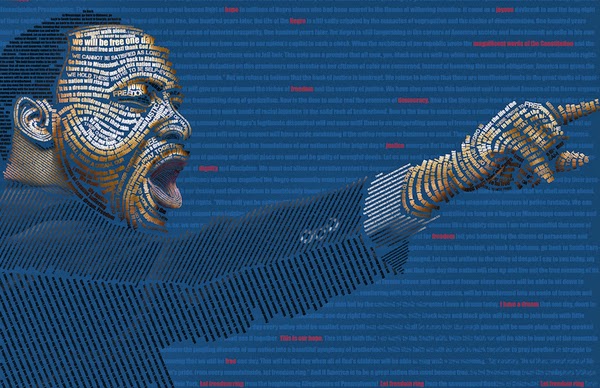
Scripture tells us to speak up for the rights of the hurting and the oppressed (Proverbs 31:8-9). To be silent is to be complicit in the evil happening before our eyes. At the same time, we must not take personal vengeance into our own hands. Violence only begets more violence. Martin Luther King, Jr. said, “Nonviolence is a powerful and just weapon, which cuts without wounding and ennobles the man who wields it. It is a sword that heals.” We must demand justice for those who are oppressed, but we must always do so in love. “Do not be overcome by evil, but overcome evil with good” (Romans 12:21, NIV). Will you join us in working for racial reconciliation today?

God Cannot Be Mocked

By Jason Smith

I remember like it was yesterday the drive back from the coast with two of my long-time buddies, Andy and Daniel. We were seniors in high school, and we had just completed our annual trip to Lincoln City, Oregon. As we rounded the bend of the highway, the Toyota Camry I was driving suddenly lurched and sputtered. Very quickly, I realized the gas pedal was no longer responding and we rolled to an undignified stop on the highway’s shoulder.

Gulp! I told the guys I didn’t know what went wrong, but very quickly the truth began to dawn on me. The fact is, I had been putting off an oil change for several weeks now. And, as it turns out, car engines really do need oil to run well. In fact, as any mechanic will tell you, it’s a simple matter of physics: without lubrication, the metal parts of your engine are bound to overheat. And when they overheat, they begin to warp and wear down.

Because of my automotive negligence, not only did I have a hearty portion of embarrassment to swallow, but I also needed to come up with the cash for a new car.

Simply put, some things are bound to self-destruct if you don’t operate them according to their intended use. If you doubt this, just try using your smartphone as a wheel chock. This is not just true of the physical realm but the spiritual realm, too. God designed your soul for a relationship with Him. Just as cars cannot run without gasoline, human beings are dependent on the life that comes from God.

When we try to do life apart from God, we are bound to self-destruct. And yet, according to the Bible, many people don’t live as if this were true.

In Galatians 6:7-8, the Apostle Paul warns, “Do not be deceived: God cannot be mocked. A man reaps what he sows. Whoever sows to please their flesh, from the flesh will reap destruction; whoever sows to please the Spirit, from the Spirit will reap eternal life.”

Paul says, “Don’t be fooled about this,” because, honestly, a lot of us are. In fact, on our own, we all tend to fall for this lie. What lie? That God can be mocked without repercussions. Every single one of us has, at one time or another, believed that we can actually outsmart God. Don’t believe me?

Every time we knowingly disobey God, we are essentially saying to God, “I would make a better god than you.” The essence of sin is making a bid for the throne of the universe. To disregard God’s law is to choose self-sovereignty rather than live under His perfect rule.

Here’s the problem: Going down this road of self-rule never ends well. There is an unalterable law of reality that you will reap what you sow. And God created us to live under His rule, not our own. Paul says, “Don’t be deceived about this one, guys.” You can be wrong about the weather, who will win American Idol, or most of the questions on Jeopardy! But don’t be wrong about this.

One of the most popular falsehoods of our time is this idea that I can do whatever I want without ever being held accountable for my actions. But Scripture everywhere denies this.

“God will repay each person according to what they have done. To those who by persistence in doing good seek glory, honor, and immortality, He will give eternal life. But for those who are self-seeking and who reject the truth and follow evil, there will be wrath and anger.” (Romans 2:6-8, NIV).

God is immeasurably merciful and patient, but this remains God’s universe. Not ours.

“In the past God overlooked such ignorance, but now He commands all people everywhere to repent. For He has set a day when He will judge the world with justice by the man He has appointed. He has given proof of this to everyone by raising Him from the dead.” (Acts 17:30-31, NIV).

Notice: God will judge the world, but He will do so with perfect “justice.” No one will be able to say on that day, “But I didn’t know” or “This isn’t fair.” We will all know God to be the perfectly just Judge that He is.

Let this truth be emblazoned across your heart: God cannot be mocked. If you think you can fool God, you’re only fooling yourself.

The mighty Goliath tried to test this truth when he taunted the armies of the living God (1 Samuel 17). How did that work out for him? He’s forever remembered for being slain by a young shepherd boy without any real military training. Herod encouraged people to worship him as a god. How did he fare? “Immediately, because Herod did not give praise to God, an angel of the Lord struck him down, and he was eaten by worms and died” (Acts 12:23). Yikes! I don’t care who you are, that’s got to be one of the worst ways to go! Throughout Scripture, this same truth is repeated: You and I will reap what we sow.

What does it mean to “sow to please your flesh” (v. 8)?

John Stott writes: “Every time we allow our mind to harbor a grudge, nurse a grievance, entertain an impure fantasy, or wallow in self-pity, we are sowing to the flesh. Every time we linger in bad company whose insidious influence we know we cannot resist, every time we lie in bed when we ought to be up and praying, every time we read pornographic literature, every time we take a risk which strains our self-control, we are sowing, sowing, sowing to the flesh. Some Christians sow to the flesh every day and wonder why they do not reap holiness. Holiness is a harvest; whether we reap it or not depends almost entirely on what and where we sow.”[1]

We may think all our sowing to the flesh won’t have consequences. We may rationalize and downplay the seriousness of the secret sins we harbor. Eventually, however, what we have sown will come to full bloom. If you take the elephant across the old wooden footbridge too many times, eventually it will collapse.

Thankfully, the Bible doesn’t just leave us with this hard truth. If it did, karma, not the gospel, would be the final rule of the universe. We would forever see God in heaven, frowning down on us with arms crossed, saying, “Well, you had it coming.”

But the gospel of Jesus Christ points us the way to find a new life and a new beginning. We don’t need to stay locked up by the shame of our past. The point of this warning about mocking God is to lead us to the foot of the cross at Calvary, where God’s love poured out for rebels like you and me. When Christ shed His blood on the cross, He was in fact reaping what we have sown. This was only possible because of grace. He died in our place and suffered the consequences we justly deserved.

Hear this promise: “If we confess our sins, He is faithful and just and will forgive us our sins and purify us from all unrighteousness” (1 John 1:8). To confess means to get honest before God, humbly prepared to live in a new direction.

Because of Christ’s cross, God does not rule as some kind of karmic dictator. Instead, He reigns in grace, inviting everyone who has arrogantly tried to take His throne to kneel humbly before His throne (Hebrews 4:16).


[1] John R. W. Stott, The Message of Galatians: Only One Way, The Bible Speaks Today (Downers Grove, IL: InterVarsity, 1968), 170.

Photo Credit: Shutterstock

The Gospel We Give Our Kids

By Jason Smith

“Now, brothers and sisters, I want to remind you of the gospel I preached to you, which you received and on which you have taken your stand. By this gospel you are saved…” (1 Corinthians 15:1-2a, NIV)

Recently, my wife Whitney and I welcomed our son Ryan into the world. A newborn baby is truly a wonder to behold. Their soft hands are already grasping for another hand. Their mouth already seeking nourishment. Their eyes slowly opening and struggling to focus for the first time on the big bright world around them.

With Ryan’s arrival, we have noticed our older two boys (Logan and Weston) acting up a bit more than usual. I don’t think there’s any surprise here. Children often need time adjusting to the arrival of a new sibling. It’s a new era for them. The truth has gradually dawned on them, on a completely new level, that they are not in fact the center of the universe. I find myself wanting to teach them over and over, “It’s not all about you.” Many a parent can relate to this.

Parents rightly see the need to discipline and correct their misbehaving children. But here’s the question I want us to consider: In the midst of discipline, are we teaching our children the gospel of Jesus Christ? Is our method of correction, discipline, and instruction working to support or deny the truth of the gospel? Does the message we are conveying sound more like self-salvation or divine rescue?

No one has to teach their child to be selfish. Parents know firsthand that we all come into this world with a self-centered bent. We want what we want, and we want it now. It’s a shocking truth to learn that the world and everyone we know is not in orbit around us. Even as adults, however, we tend to live as if the story of the universe is all about us. But the gospel of Jesus Christ tells us a better story. It tells us that we were made for a much higher purpose than to live for ourselves. According to Scripture, we exist for God. To worship Him, love Him, and honor Him. It is only in living according to our God-given purpose rather than our self-made plans that we find true and lasting joy. This is precisely the goal of the gospel, the Bible’s central message.

Over and over, Scripture reminds us that we are on this planet to worship and enjoy God. “So whether you eat or drink, or whatever you do, do it all for the glory of God” (1 Corinthians 10:31, NLT). Anything less will leave us empty, beaten up, and dissatisfied. When we live for God rather than self, our actions correspond to our design.

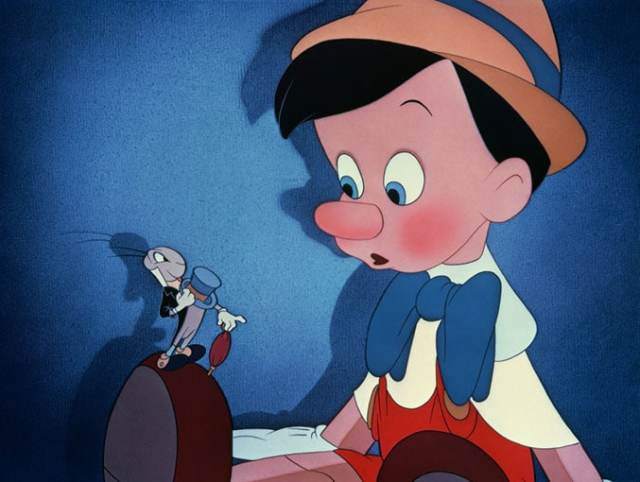
You may remember watching the animated Disney classic Pinocchio as a child. It’s a fascinating story of a puppet that comes to life when his maker wishes upon a star that his little marionette whom he named Pinocchio might become a real boy. That night, a glowing blue fairy partially grants his wish by bringing Pinocchio to life. However, he remains a wooden puppet. Pinocchio awakes and — humorously — is shocked to be alive. The blue fairy tells Pinocchio that if he proves himself “brave, truthful, and unselfish,” Geppetto’s wish will come true. She also assigns the loyal little locust, Jiminy Cricket, to be Pinocchio’s constant companion and voice of conscience.

The tale follows Pinocchio and Jiminy on their many adventures as the puppet sets out to discover what life in the world is really like. While Pinocchio is loved by his “father,” Geppetto, he soon discovers there are many in this world who want to lead him astray. He also learns how easy it is to make wrong choices. I doubt there is another Disney movie that is so chock full of moral lessons and aphorisms, like when the blue fairy says, “You see, Pinocchio, a lie keeps growing and growing until it’s as plain as the nose on your face.”

In the film’s darkest moments, Pinocchio and a friend are lured to Pleasure Island, a place where selfish boys can live it up — smoking, drinking, gambling, and doing whatever else they want — all without the moral restraints of parental authority. Unfortunately for Pinocchio and his friend, the island is cursed so that all the naughty boys who travel there transform into donkeys and are eventually sold into slave labor. One boy-turned-donkey desperately cries out for his mother. In a menacing tone, the island’s owner says, “You boys have had your fun. Now pay for it!” Pinocchio barely escapes, but his friend does not.

In a final act of courage, Pinocchio tries to rescue Geppetto from the belly of a sperm whale that swallowed the puppet maker while he was searching for Pinocchio. While Geppetto and Jiminy Cricket survive the whole ordeal, Pinocchio is killed. At the end of the film, there is a touching moment when Geppetto weeps over his broken puppet lying on the bed. Suddenly, the fairy not only resurrects him but transforms him into a real boy. “Father, I’m a real boy!” Pinocchio shouts in amazement. Apparently, Pinocchio’s final act of bravery proved him worthy of life.

In many ways, Pinocchio is something of a parable for how the modern world understands Christianity. Many today, even in the church, see Christianity as a moral prescription for life. God’s law is a list of dos and don’ts that we are to follow. We can think that, like Pinocchio, we must prove ourselves worthy of life. This way of thinking makes sense to us, but it stems from a wrong view of God.

We can think of God as if He were like a giant fairy, watching over our every move, evaluating our lives to see whether or not we really deserve to be accepted as His child. If we know we’ve blown it — spending too much time at Pleasure Island — we can hear God demanding that we pay up for all that we’ve done. Many people today live with this view of God, persistently uncertain of whether they have done enough or are good enough to go to heaven. Even if we see God as kindhearted and encouraging like the fairy, urging us to listen to our conscience, we can think it’s ultimately about us being good enough to meet God’s expectations.

American sociologist Christian Smith called this version of Christianity “Moralistic Therapeutic Deism.”[1] It essentially boils down to this: God is there for us when we are in a bind, but generally lets us go through life relying on our conscience (rather than His Word). The main thing God cares about is that we try to live a good life and be decent individuals, because heaven is the reward for good people when they die. Makes sense, right? The only problem is that this is nothing like the Christianity of the Bible.

What’s wrong with the above description? Well, for starters, there’s no mention of how Christ fits into that version of Christianity! In Moralistic Therapeutic Deism, Jesus is merely an add-on to Christianity, rather than the hub and center around which everything turns. At best, such a view sees Jesus as a good example or a wise teacher. Certainly, He was the supreme example and wisest teacher ever to live, but to reduce Him to these descriptions is to try to have Christ without the cross. It turns a blind eye to the bleeding and dying man staked to the cross. It ignores the miraculous triumph of the empty tomb. It downplays Jesus’ own radical claims: “I am the way and the truth and the life. No one comes to the Father except through Me” (John 14:6).

Here’s the challenge for Christian parents. It is far easier to skip the gospel and address the moral behavior of our children with rewards or threats. “If you obey, I’ll give you…” “You’d better not disobey me, or else…” Honestly, I catch myself relying on this tactic all the time. I’m certainly not saying that all our rules should be thrown out or that we should stop disciplining our kids. Both of these are essential and sadly not practiced by many parents today.

But when we discipline our kids, are we pointing them to the truth of the gospel? Are we merely addressing their outward behavior, or are we striving to address their heart? The heart is the epicenter for all our children’s thoughts and motives. “Above all else, guard your heart, for everything you do flows from it” (Proverbs 4:23). Jesus said that all our evil thoughts and actions spring from our sin-riddled hearts (Matthew 15:19). If all we ever use is rewards or threats in our discipline, we are actually encouraging our kids to ask the self-centered question: “What’s in it for me?”

Whether we like it or not, we are teaching our kids a gospel not just with what we say but with how we act. The only question is whether the gospel we are giving is the true gospel of Jesus Christ or something else. When I discipline my son for stealing cookies or talking back to Whitney or myself (speaking hypothetically, of course), I want him to know that what he’s doing is a serious problem. And this problem has to do with the sin in his heart. He needs to know not only that his sin saddens me, but that it saddens God, too (Genesis 6:6). I also want him to understand that Jesus loved him so much that He did something about the sin in his heart. In fact, He suffered and died for it, so that God can forgive him and scrub his heart clean of all that sin (1 John 1:8-2:2). My son needs to know that no matter how good he strives to be, he can never work off his guilt. Only Jesus can do that. Beyond this, I want him to know that he’s not alone. “Daddy has sin in his heart, too, and needs Jesus just as much.”

I want my sons — even at a very young age — to recognize their great need to be reconciled to God. The Bible says, “It’s your sins that have cut you off from God” (Isaiah 59:2, NLT). “So we are Christ’s ambassadors; God is making His appeal through us. We speak for Christ when we plead, ‘Come back to God!’ For God made Christ, who never sinned, to be the offering for our sin, so that we could be made right with God through Christ” (2 Corinthians 5:21, NLT). We need to explain to our kids that what makes sin so serious is that we were made for a relationship with a holy God. At the same time, our kids can be confident of their standing with God through faith in Jesus (Romans 8:1; Philippians 1:6).

In every generation, there is a danger of losing or distorting the gospel. Most often this drift from the gospel is well intended. After all, it’s not wrong to want to see our kids live good and moral lives. Pinocchio is a story that resonates with some of our most basic moral intuitions. But what our kids need to see is that there is a much greater story, a powerful story of redemption, that is taught in Scripture and centered around Jesus Christ. Teaching our kids to be good boys and girls is too small a goal. We need to teach them to be Christ-centered, Christ-exalting, and Christ-loving kids. We want their obedience to be rooted in love, not self-centeredness.

Above all else, Jesus-following parents need to embrace the truth that they are in the disciple-making business.

Photos Courtesy of Pixabay and Disney.com


[1] Christian Smith and Melinda Lundquist Denton, Soul Searching: The Religious and Spiritual Lives of American Teenagers (New York: Oxford University Press, 2005).

The Great Exchange

By Jason Smith

Photo credit: Yeele Photography

“Therefore, we are ambassadors for Christ, God making His appeal through us. We implore you on behalf of Christ, be reconciled to God. For our sake He made Him to be sin who knew no sin, so that in Him we might become the righteousness of God.” (2 Corinthians 5:20-21)

“God’s power is at its greatest not in his destruction of the wicked but in his taking all the wickedness of the earth into himself and giving back love.”[1]

I recently heard in the news about the unfortunate strife that led to the collapse of a sports team with a lot of talent. Various sports commentators discussed who was to blame for the team’s gradual demise. One television personality even gave out certain percentages of blame to various persons involved in the whole debacle. Before long, various teammates and coaches began to voice who they thought should be blamed. Interestingly, not one person pointed his thumb at his chest and said, “Yeah, it’s all my fault.”

Masters at Blame Shifting

Have you ever noticed how powerful your need to justify your own actions is? Why is that so often we are quick to blame in others what we would gladly excuse in ourselves? When the other team cheats or the other person lies, they need to be prosecuted to the fullest extent of the law. But when our team gets caught cheating or we get found out, we shrug and quip, “Well, everybody does it.” Why is it that whenever we are accused of something, our gut reaction is either to go into hiding or fight with all our might to clear ourselves of all blame? Deep in our bones, we know that we cannot shoulder our own guilt. Our troubled conscience testifies to this. We need a way out.

We attempt to write off our guilty feelings as nothing more than social conditioning, or perhaps our parents’ strict disciplinarian methods fobbed off onto our psyche. We tell ourselves that we are not really that bad. After all, it is those other people in our lives that are the real problem. We both subtly and not so subtly affix guilt to our parents, our spouse, our boss, or our children. We even manage to paint them in a negative light with an “understanding” tone. We are masters at blame shifting. Can anyone really argue that this is not true of the human heart? We are constantly scouring the universe for someone else to be the scapegoat, when in our heart of hearts we know we are blameworthy.

The unwillingness to own up to our guilt seems to be a perennial problem. Remember what Pontius Pilate did after sentencing Jesus to death? He washed his hands before the crowds, as if to clear himself of all guilt for the blood of this righteous man. Very similarly, Shakespeare has Lady Macbeth desperately trying to wash her hands clean after her part in the murder of Duncan. “Out, damned spot! Out, I say!” she wails. “Here’s the smell of blood still; all the perfumes of Arabia will not sweeten this little hand.”[2] We see this same dynamic when politicians or corporate executives plead ignorance when investigators catch them in a scandal.

So what does this self-justifying strategy say about us? It says something about our moral condition. The Bible explains our own condition to us. We are made in God’s image, and that is why we know right from wrong (Genesis 1:26-27). We know that guilt demands punishment. We know this. And yet, we also know that we have not even lived up to our own standards of right and wrong — let alone God’s standard of perfection. Scripture makes it clear that every human being finds him or herself in this quandary: we are both those who know what we ought and ought not to do and those who know we have failed to live up to these moral obligations. So, what are we to do about this predicament?

The Intolerable Burden

When we come face to face with the Law of God, we all know we fall short. “Now we know that whatever the law says it speaks to those who are under the law, so that every mouth may be stopped, and the whole world may be held accountable to God” (Romans 3:19). When a shameful thing we have done or said in the past rises to the surface in our mind, we sense the weight of our guilt all over again. We can identify with Thomas Cranmer, when he wrote in The Book of Common Prayer:

“Almighty God, Father of our Lord Jesus Christ, Maker of all things, Judge of all men, we acknowledge and bewail our manifold sins and wickedness, which we from time to time most grievously have committed, by thought, word and deed, against thy Divine Majesty, provoking most justly thy wrath and indignation against us. We do earnestly repent and are heartily sorry for these our misdoings. The remembrance of them is grievous unto us; the burden of them is intolerable.”

In John Bunyan’s allegory, Pilgrim’s Progress, the protagonist Christian bears an “intolerable” burden on his back. The great load represents the weight of his own sin, which grows more burdensome as he reads from a book. “He opened the book, and as he read, he wept and trembled.”[3] That is what Scripture does: it exposes our guilt so that we suddenly see the sinfulness of sin. But — and this is of infinite importance — it does not leave us to wallow in our guilt. It is right at this point that we begin to see our genuine need for the gospel of the crucified and risen Messiah. Our guilt demands punishment, and the more we know of God’s holiness, the more we are desperate to be free… and the more we long to be made new.

God’s Great Love

“Therefore, if anyone is in Christ, he is a new creation. The old has passed away; behold, the new has come. All this is from God, who through Christ reconciled us to Himself and gave us the ministry of reconciliation; that is, in Christ God was reconciling the world to Himself, not counting their trespasses against them, and entrusting to us the message of reconciliation” (2 Corinthians 5:17-19).

In a world where we are persistently trying to shift the blame to someone else, God Himself shifted the blame from us to His own Son, Jesus Christ. Why? What could possibly lead a loving Father to do this? God “did not spare His own Son but gave Him up for us all” (Romans 8:32). To spare us from eternal judgment, He could “not spare His own Son.” The only way not to count our trespasses against us was to count our trespasses against Jesus. For God to overlook sin would mean that He would cease to be holy and just. God would cease to be God, and that could never happen. In order for God to uphold the moral order of the universe, He must deal justly with our great offense against Him. Someone had to go through the fire of judgment. God’s great love went out to meet the demands of His perfect justice.

Therefore, the Son of God bowed His head to the Father’s will and did just that. The very “punishment that brought us peace was on Him, and by His wounds we are healed. We all, like sheep, have gone astray, each of us has turned to our own way; and the LORD has laid on Him the iniquity of us all” (Isaiah 53:5-6). Jesus received the cruelty of man and the wrath of God both without protest. Our Lord never once disobeyed His Father. He was utterly pure, spotless, and clean. “Yet it was the will of Yahweh to crush Him” (v. 10). He willingly laid down His life in obedience to His Father’s command.

The Free Gift

“God made him who had no sin to be sin for us, so that in him we might become the righteousness of God” (2 Corinthians 5:21, NIV).

We long to be in the right before men and women. However, our most urgent need is to be in the right before our Maker. In biblical language, what we need most is righteousness. The marvelous truth of the gospel is that we have God’s own righteousness offered to us through the cross. As Martin Luther put it, a “great exchange” took place at the cross. Christ took our sin, so that we might receive His righteousness. He bears our guilt, and we are clothed in His perfection. Out of His abundant love and mercy, God urges you to lay down your defenses and receive the forgiveness He purchased with His Son’s death.

While we are anxiously striving to justify ourselves day after day, the gospel is about God justifying us for all time. The Apostle Paul explained it this way: “But now apart from the law the righteousness of God has been made known, to which the Law and the Prophets testify. This righteousness is given through faith in Jesus Christ to all who believe” (Romans 3:21-22, NIV). Read that last sentence again. Divine righteousness comes to us as a free gift through simple faith. All we must do is turn from sin to God, entrusting ourselves to the tender and secure hands of Jesus.

We do not pay off the great debt we owe. Jesus takes that debt for us. Oh, sweet release! Complete divine forgiveness is offered to us as a free gift! What could possibly be better news than this? The cross answers the great question, “How can I, a sinner, be made right with a holy God?” The answer: through faith in Jesus Christ and His sacrificial death on the cross for us.

Jesus really did die on Calvary for all our sins, but He did not stay dead. The tomb is still vacant. “Fear not,” He says, “I am the first and the last, and the living one. I died, and behold I am alive forevermore, and I have the keys of Death and Hades” (Revelation 1:17b-18). As we approach the celebration of our Lord’s death and resurrection from the grave, let us remember the chief need for every person on the planet is that we be reconciled to the God of love. “Therefore, we are ambassadors for Christ, God making His appeal through us. We implore you on behalf of Christ, be reconciled to God” (2 Corinthians 5:20).


[1] J. N. Oswalt, “Isaiah,” in New Dictionary of Biblical Theology (Downers Grove, IL: InterVarsity Press, 2000), eds. T. Desmond Alexander and Brian S. Rosner, 222.

[2] William Shakespeare, Macbeth, Act 5, Scene 1.

[3] John Bunyan, Pilgrim’s Progress (Philadelphia, PA: Charles Foster, 1891, rev. ed. 2014), 1.