Some of my favorite books to read are memoirs of people who have come to faith in Jesus Christ. There is something powerful about hearing an individual’s story of how God rescued him or her from spiritual darkness. It reminds me that while God sovereignly reigns from Heaven over the whole world, He is also providentially calling individuals to Himself. And every testimony is unique.
Jesus famously said, “I am the Way, the Truth, and the Life; no one comes to the Father except through Me” (John 14:6). Jesus is the only hope of the world and there is no salvation outside of Him. At the same time, God uses various avenues to bring His gospel to a lost soul.
I recently finished reading the book Leaving Buddha: A Tibetan Monk’s Encounter with the Living God by Tenzin Lahkpa. It was fascinating to learn Tenzin’s firsthand account of what life as a Buddhist monk is like. Not only is a Buddhist monk required to live a celibate life, every day comes with a rigorous set of disciplines, such as repeating mantras, studying the life and teachings of Buddha, tirelessly using a prayer wheel, and practicing meditation. As a child, Tenzin’s mother “offered” him to the temple to become a monk.
I learned that many Buddhists live in constant fear of the “all-seeing eye” of Buddha. Tenzin writes:
“The concept of karma was taught to me as a child to keep me from doing anything my mother did not want me to do. My mother discouraged me from having bad thoughts, skipping prayer, or neglecting my duties as a Buddhist. If I did, Buddha would know. His all-seeing eye saw everything. I could not hide.” (37)
After meeting a relative who was a Christian, Tenzin asked his teachers about Jesus. It was intriguing to learn that many Buddhists have a fear of even mentioning the name of Jesus. Tenzin’s teachers viewed Jesus as a “dangerous deceiver” (172). Ironically, it was his teachers’ strong aversion to Jesus that piqued his interest even more. What was it about this Jesus that is so unspeakable?
While recovering from a bout with tuberculosis, Tenzin met a doctor from Sweden who wore a cross around his neck. When Tenzin asked about it, the doctor said it means he’s a follower of Jesus. Tenzin wanted to know more, so the Swedish doctor brought him booklets with information about Jesus.
Tenzin quickly devoured everything the doctor gave him. Tenzin recalls:
“On one page, it told how Jesus paid the price for man’s sin. His grace paid the debt. This was a shocking difference between Buddha and Jesus. Buddha taught that followers had to do many things to earn their way into a better afterlife.” (172)
Perhaps the clearest contrast between the two was Christianity’s central theme of love. It struck him that Christians can say, “I live by faith in the Son of God, who loved me and gave Himself for me” (Galatians 2:20).
“In Buddhism, enlightenment and knowledge drive our motives, not love. Maybe you could say that we love knowledge, but you could not say that we follow Buddha because we love him or because he loved us.” (174)
In time, Tenzin recognized that it was the love of Jesus that he most needed. All the prayer wheels and Buddhist disciplines were attempts at saving himself, but Jesus came to offer His own life to save him. He could never know how much sacrifice Buddha demanded of his disciples. By contrast, Jesus gave the ultimate sacrifice on the cross so he could be forgiven of all his sin. Unlike Jesus, Buddha never claimed to be God and he had not given his life so others could live. Tenzin asked Jesus to come into his life, and he now follows Jesus, not Buddha.
There is no love like the love of Jesus. No so-called “savior” that even comes close. Jesus alone claimed to be God who came among us, and He alone rose from the dead.
Sometimes looking at other religions and faiths helps me see anew how Jesus really is the Light of the world. Across our world and in our community are countless people who are trapped in spiritual darkness. May we, as followers of the risen Lord, be fearless in proclaiming the Name of Jesus.
“And there is salvation in no one else, for there is no other name under heaven given among men by which we must be saved.” (Acts 4:12)
Prayer
Father, give me eyes to see the lost and hurting all around me each day. Help me to love others with the mighty love of Jesus. Grant me opportunities and boldness to speak the name of Jesus and declare His message of salvation to those trapped in spiritual darkness. By the only Name that saves. Amen.
If you have thoughts on this post, I’d love to hear from you.
The more I get to know Jesus the more I see His laserlike ability to see past externals and appearances to each person’s heart. There is no fooling Jesus. And if I was to guess, I would say that one of the biggest struggles people have is being honest with themselves. It’s our tendency to want to hide our private sins, bitter emotions, and inner struggles. We think if we avoid talking about it, maybe it will somehow go away. But that strategy of coping just won’t work.
There is no fooling Jesus.
After seeing Jesus’ miracles, many people expressed a keen interest in Jesus. But John tells us that “Jesus didn’t trust them, because he knew all about people. No one needed to tell him about human nature, for he knew what was in each person’s heart” (John 2:24-25, NLT).
Let that sink in. Jesus sees right to the core of your inner person, and He knows your heart motives. Jesus sees to the bottom of you and knows you even better than you know yourself! What’s more, He alone has the solution to all our internal struggles and contradictions: grace. God has immeasurable grace for the repentant, but He calls each of us to come clean.
And if there is one thing Jesus absolutely hates, it’s religious hypocrisy. In Matthew 23, Jesus delivers a clear warning for those who would claim His name but live for themselves.
In what has to be one of the most scathing criticisms of religious hypocrisy, Matthew 23 records Jesus calling down woes of judgment on the religious hypocrites of His day.
“Woe to you, scribes and Pharisees, hypocrites! For you are like whitewashed tombs, which outwardly appear beautiful, but within are full of dead people’s bones and all uncleanness. So you also outwardly appear righteous to others, but within you are full of hypocrisy and lawlessness.” (Matthew 23: 27-28, ESV)
It’s a side of Jesus we aren’t used to hearing about. Maybe that’s because Jesus makes us uncomfortable here. And I would suggest that the words of Jesus that make us most uncomfortable are the words we most need to hear.
Over and over, Jesus uses that word hupokrites (where we get “hypocrite”), a word used of first century stage actors who played a part and often wore a mask.
Seven times in Matthew 23 Jesus uses the word “hypocrite” to call out the religious fakers.
“For they don’t practice what they teach. They crush people with unbearable religious demands and never lift a finger to ease the burden. Everything they do is for show.” (Matthew 23:3-5, NLT)
Just when you think Jesus can’t be any harsher with these religious leaders, He then adds, “You serpents, you brood of vipers, how are you to escape being sentenced to hell?” (v. 33).
I don’t know about you, but I want to read these words with fear and trembling. I don’t want to skip past this passage and pretend it’s not there. As a pastor of God’s flock, I feel the need to sit with Jesus’ words a little longer.
There is no fooling Jesus.
Is there good news found in Matthew 23? Absolutely. Toward the beginning Jesus tells us how we should respond: “The greatest among you shall be your servant. Whoever exalts himself will be humbled, and whoever humbles himself will be exalted” (v. 11-12).
In the midst of all these woes, Jesus issues a clear call for humility. He wants us to get honest with Him, to reject all outward pious pretense, and to radically commit to putting Him first in all things. Humility is the key that unlocks true intimacy with God.
Why is Jesus so harsh with fakers? Because He wants real devotion, real love, and real relationship. He wants us to stop covering our secret sins with a web of lies and embrace the truth found in Him. The truth will set you free, He said.
If we suspect we might be faking our Christianity, then the best thing to do is confess this to God and share our struggles with other believers we trust. As we get real about our sin, we experience greater depths of His grace.
We can pray the bold and humble prayer of David: “Search me, O God, and know my heart! Try me and know my thoughts! And see if there be any grievous way in me, and lead me in the way of everlasting!” (Psalm 139:23-24)
Prayer
Father, I want to experience true intimacy with You. Help me be real with You and with other believers. I know how much you despise hypocrisy. I humbly ask You to show me areas of my life that are not in alignment with Your Truth. Thank You for Your undeserved love and forgiveness. I embrace it in the Name of Jesus. Amen.
Have thoughts on this post? I’d love to hear from you!
The Bible is a massive book. Actually, it’s a library of 66 different books of various genres, written by around 40 different authors from wide-ranging backgrounds. Nevertheless, the Bible is one complete story about reality. From Genesis to Revelation, the careful reader will notice a unified narrative that follows the story arc of four main themes: Creation, Fall, Redemption, and Restoration.
So, the Bible is a story—a true story!—but it’s a story that beckons the reader to step into the plot and participate in what God is doing in and through the people He has called to Himself, out of a spiritually dark and lost world. Most importantly, this story is all about Jesus Christ. He said so Himself:
“You search the Scriptures because you think that in them you have eternal life; and it is they that bear witness about me.” (John 5:39, ESV; cf. Luke 24:27, 44)
By immersing oneself in Scripture, our minds and hearts are formed after the image of our King and Redeemer, Jesus Christ (Romans 12:1-2). As we step into the story, we are also learning what it means to follow our king.
It is for this reason that I believe one of the most important investments of time and energy a follower of Jesus can make is to spend each day reading the Bible. The Bible is straight from the mouth of God and “able to make you wise for salvation through faith in Christ Jesus” (2 Timothy 3:15-17). Many Christians are intimidated by the idea of reading the entire Bible in a year, but, really, this shouldn’t be the case.
Did you know that if you invested a mere twelve minutes a day to reading Scripture, you could complete the entire Bible in a year?
Twelve minutes! Consider how much time you spend watching the latest hit show on Netflix or some compilation of hilarious cat videos on YouTube. The average American adult spends 168 minutes a day watching TV.[1] That could be on your phone or on your big screen, but either way, that is an exorbitant amount of time to be spend absorbing the messages our culture wants to send. In other words, even if you did spend only 12 minutes a day reading your Bible to finish it in a year but still watched even half as much TV as the average American (84 minutes/day), you would still be spending far more time in front of a screen than you would absorbing the words of the living God. Now, some of what you watch might be profitable, but all of it?
If this all sounds very judgey, I promise I don’t mean it to. God has been convicting me about how much time I’ve spent in the last year in front of screens. And one resolution I have for myself this year is to intentionally have less screen time (phones included) and more time doing other fruitful activities (like going on a run, taking my family to the park, learning and playing instruments, and reading Scripture and other books).
Every Christian I have ever asked has indicated that they want to grow closer to Jesus. Now, at the beginning of 2025, is a great place to turn that desire into a commitment. If you want to grow closer to Jesus, spending at least 12 minutes a day reading His Word is a perfect way to start. Don’t let a day go by when you don’t listen to your Father’s loving guidance and learn what it means to be a Spirit-empowered disciple of Jesus. Remember, you have been put on this earth to make an eternal impact in the lives of others for the glory of God.
Here’s my bold challenge for you: Commit to reading (and even studying) the Bible this year on a daily basis. The enemy will try to convince you that it’s not worth your time, but that’s because Scripture is the very Sword of the Spirit that slices through his web of lies (Ephesians 6:17). And it is always worth your time to invest in reading and studying God’s love letter to you. You can do it!
Some suggestions:
Begin each time in prayer, asking the Holy Spirit to give you clarity and understanding, and to apply what you’re reading to life.
Consider investing in a study Bible, like the ESV Study Bible or The Gospel Transformation Bible, that helps you focus on understanding context.
Set a daily reminder on your phone or purchase a habit tracker to help you remember to stay committed to reading each day.
As you read, ask questions such as: “What does this say about God/Jesus?” “What does this say about me/the people of God?” “Is there something in my life that needs to come into greater alignment with what I’m reading?” “How is what I’m reading here something that can encourage someone else in my life?”
Have thoughts on this post? I’d love to hear from you!
With the 2024 U. S. presidential election fast approaching, many people are feeling anxious about our nation’s uncertain future. Who will lead our country for the next four years? Donald Trump or Kamala Harris? How will this shape our nation’s future, both at home and abroad? Around this time, political opponents amp up their disdain for one another while simultaneously putting themselves forward as the savior this nation needs in order to once more have freedom and justice reign in the land.
During this time, Christians feel a collective longing for the return of our Savior, King Jesus, who will ultimately do what every political figure only attempts to do in their own way but always fails to do.
The Bible lays out the reality that until Jesus’ soon return, there will be two kingdoms vying for our allegiance in the world. The church father Augustine called them “the City of God” and “the earthly city” (or the City of Man). The City of God is marked by those who have centered all their hopes on the rule and reign of the King of kings, who, unlike every human leader, will rule with perfect justice, truth, and grace. The City of Man opposes the rule of Jesus and seeks to establish a kind of secular humanism utopia on earth, undistracted by threats of divine judgment.
As a follower of Jesus in America, I look around at a culture that is sinking deeper and deeper into moral corruption and arrogance. I know that only King Jesus can set things right and rescue His world from the curse of sin and death. I am thankful to be an American citizen and for the sacrifices that have won the freedoms my family and I enjoy. But first and foremost, my “citizenship is in Heaven. And we eagerly await a Savior from there, the Lord Jesus Christ” (Philippians 3:19). Jesus said, “All authority in heaven and on earth has been given to Me,” not Congress and not the person in the White House (Matthew 28:18).
Some Christians, distraught over the state of the culture, have decided to politically disengage and not vote this November. They refuse to vote because they dislike the choice of either candidate. I’ve heard one young man say, “I don’t like either one. What’s the point?”
In some ways, I can understand his frustration. I probably wouldn’t disagree with many points he might raise. However, I believe that Christians should still be politically engaged, even when a vote may feel like a vote for the lesser of two evils.
It’s always been true, not just in 2024, that no political candidate will ever measure up to Jesus. It is for His rule and reign that we long. Nevertheless, until the fullness of His kingdom has arrived, we are left with fallen politicians in a fallen world. Simply by voting, you are not putting your hope in a flawed candidate. But you are seeking to influence the world around you—even in some small measure—by prayerfully voting for an administration with policies that most closely aligns with the truth of God’s Word.
Jesus calls His followers to be salt and light in the world, which means we are meant to have an impact for the kingdom wherever we live. Hitting the eject button and completely disengaging from the culture isn’t an option. As Jesus put it, lamps don’t belong under a basket, but on a stand to give light to all in the house.
Furthermore, many biblical convictions have a direct bearing in the political realm. For example, all Christians should agree that life is sacred and that we must do all we can to preserve the life of preborn babies. This is but one example, but protection of human life should be central to our convictions. For that reason, I intend to cast a vote that most closely aligns with my biblical convictions.
Ultimately, however, the election is a gospel opportunity to give reasons for our hope. For the Jesus-follower, the election is not a time to be anxious; it is a time to point others to the hope and peace found in King Jesus and His coming kingdom, not any earthly government or kingdom.
Psalm 2 speaks prophetically of how every political regime that sets itself up against the reign of King Jesus is destined for destruction.
Why do the nations conspire
    and the peoples plot in vain?
The kings of the earth rise up
    and the rulers band together
    against the Lord and against his anointed, saying,
“Let us break their chains
    and throw off their shackles.” (Psalm 2:1-3, NIV)
Notice that the political rulers of various nations are banding “together against the Lord” in a kind of godless globalism. They say, “Let us break their chains and throw off their shackles.” For those who pridefully oppose the reign of God, His moral truth always feels like restrictive chains. But Jesus said, “The truth will set you free.”
The One enthroned in heaven laughs;
    the Lord scoffs at them.
He rebukes them in his anger
    and terrifies them in his wrath, saying,
“I have installed my king
    on Zion, my holy mountain.” (Psalm 2:4-6, NIV)
Political rulers may set themselves up as the saviors of this world, but God laughs at their folly. This is not the laughter of being pleased. God condemns them for thinking they can rule His world and reject His Messiah-King.
God the Father goes on to promise His Son, King Jesus, the nations as His inheritance (v. 8). As the hymn puts it:
Jesus shall reign where’er the sun does its successive journeys run, His kingdom stretch from shore to shore, till moons shall wax and wane no more.
The nations rage, but Jesus will reign.
Psalm 2 is a warning to every national ruler who fails to acknowledge the supremacy of Jesus Christ over every nation and people. The nations today are but a drop in the bucket; the kingdom of God is eternal. But make no mistake. The reign of Jesus is not some graceless tyranny. We are called to “celebrate His rule with trembling” (v. 11). Salvation comes to those who bow the knee to the true Lord of the world.
But if you don’t humbly welcome His rule and reign over your life, “He will be angry and your way will lead you to your destruction, for His wrath can flare up in a moment” (v. 12). If you haven’t yet, this is a call to yield your life to the King of kings. The text says to “Kiss the Son,” which is another way of saying, “Give Him your absolute allegiance.” When you do, you will not fall prey to either misguided triumphalism when your candidate wins or overwhelming despair when your candidate loses. Instead, you will pray to God, “Your kingdom come on earth as it is in Heaven.”
Have thoughts on this post? I’d love to hear from you!
“All Scripture is God-breathed and is useful for teaching, rebuking, correcting and training in righteousness, so that the servant of God may be thoroughly equipped for every good work.” (2 Timothy 3:16-17, NIV)
Picture, if you will, living at a time when it is illegal to own or even quote an English translation of the Bible. In 1526 in England, those who owned an English copy of the Bible were under the threat of execution by order of the king of England himself. Many Christians today are not aware of the incredible sacrifices that were made for an English translation of the Bible to end up in their hands today.
Knowing what it cost others and how willingly they made those sacrifices is inspiring and motivates me to treasure my Bible more dearly. William Tyndale was one such man who gave up so much out of devotion to God and love for others. Prior to Tyndale translating the New Testament and much of the Old Testament into English, only scholars in Latin, Greek, and Hebrew could read and understand Scripture. Everyone else had to rely on their bishops to tell them what the Bible said.
This is hard for us in the 21st century to wrap our minds around, because today we have the Bible at our fingertips, a mere click or two away. But Scripture foretold times when there would be a famine—”not a famine of bread, nor a thirst for water, but of hearing the words of the Lord” (Amos 8:11, ESV).
Tyndale had studied Greek and Hebrew and knew the treasure of having a relationship with God based on Holy Scripture. He knew that Scripture was not merely the words of wise men, but the very words of the living God, which could be translated into any language (1 Thessalonians 2:13). His heart burned with a passion for the common people of his day to experience the Word of God in the same way.
At one point, a highly esteemed Latin scholar told Tyndale, “It would be better to be without God’s laws than without the pope’s.”
Tyndale courageously responded, “I defy the pope and all his laws! In fact, if God spares my life, I intend to make it possible for a common farmer, a plowman, to know more of the Scripture than you do!”
He spent the next ten years working tirelessly across Europe, fleeing persecution from one nation to the next, translating the Bible into the language even a plowman could read and understand. Tyndale was eventually betrayed and imprisoned. Although he couldn’t do the translation work in prison, he continued to preach the saving message about the crucified and risen Jesus. In fact, the jailer, the jailer’s daughter, and other members of his household surrendered their lives to the Lord Jesus.
Finally, on October 6, 1536, Tyndale was taken out of his prison, strangled to death, and his body was burned as a warning to all who would participate in his Bible-translating rebellion. Just before dying, William Tyndale prayed aloud, “Lord, open the king of England’s eyes!” That prayer was answered three years later when the king of England decreed that Tyndale’s New Testament be placed in every church in England!
It’s impossible to calculate the value of having God’s Word so readily available today.
When I hear about Tyndale’s devotion and sacrifice that led to me having a Bible in my hands, I am deeply moved and compelled to treasure these words and never take them for granted. I hope you feel the same way. God has spoken. And He intends for us to know Him through His Word.
“In the way of your testimonies I delight
    as much as in all riches.
I will meditate on your precepts
    and fix my eyes on your ways.
I will delight in your statutes;
    I will not forget your word.” (Psalm 119:14-16, ESV)
I pray that just because the Bible is so accessible in our day, it would not be overlooked as the precious gift that it is.
Have thoughts on this post? I’d love to hear from you!
What we prioritize determines the course of our lives.
There’s a simple law of reality that says, “If you don’t set your priorities, someone else will set them for you.” In fact, more often than not, the world will set your priorities. Busyness will set your priorities for you. Your long list of “To Dos” will set your priorities. But God wants us to begin with Him. He doesn’t want us to try and squeeze Him into our busy schedule; He wants to be involved with every aspect of life.
Jesus gave us a really helpful perspective for setting priorities: “Seek first the Kingdom of God and His righteousness, and all these things [the basic necessities of life] will be added to you.”[1] For Jesus, the number one priority in life was the Kingdom of God. He didn’t drift through life passively. He began each day intentionally. “Very early in the morning, while it was still dark, Jesus got up, left the house and went off to a solitary place, where he prayed.”[2]
Jesus lived with the Kingdom in mind. He said His food was to do the will of God, His Father.
And that’s where Jesus would have us begin, too.
We tend to say things like, “There aren’t enough hours in the day to get everything done.” But actually, there are exactly the right number of hours in a day. God ordained from all eternity that there would be 24 hours in a day. No more, no less. And it falls to each of us to determine how we will use those precious hours.
We say, “My days have been really full lately.” I think I said that to someone recently. But the truth is, every day is filled with something. It could be filled with working nonstop. It could be filled with chasing the next thrill. It could be filled with binging on Netflix with a bowl of popcorn on the easy chair. But every day is filled with something.
“Look carefully then how you walk, not as unwise but as wise, making the best use of the time, because the days are evil.” (Ephesians 5:16, ESV)
Now, in one sense, we have zero control over unexpected events in life. But in another sense, we are the ones that get to set our own priorities. God gives us agency.
“So teach us to number our days that we may get a heart of wisdom.” (Psalm 90:12, ESV)
These lives are finite. Live in light of eternity. Fill every day with what matters most. Begin with God.
Have thoughts on this post? I’d love to hear from you!
“And this is the judgment: the light has come into the world, and people loved the darkness rather than the light because their works were evil.” (John 3:19, ESV)
This last weekend, the 2024 Olympics kicked off with an opening ceremony that has garnered much attention, mostly negative. I hesitated to write anything about it, because honestly, I didn’t really want to draw more attention to it. But since a couple people have brought it up to me, I felt prompted to reflect on how the gospel speaks directly to cultural moments like this.
I don’t need to get into the details of what was portrayed, but it involved a very gross, in-your-face amalgamation of paganism, drag queens, and disturbing mockery of The Last Supper, Leonardo Da Vinci’s famous painting depicting Jesus with His twelve Apostles in their final meal together. The French Bishops’ Conference lamented that the act was a “mockery and derision of Christianity.” Bishop Robert Barron said the scene “mocked a very central moment in Christianity.” Apparently, there was debate about whether the scene was meant to evoke any connection to Christianity, but in the end the producers admitted “that it was in fact inspired by Da Vinci’s famous painting.”[1]
When Jesus walked the earth, He was both loved and hated. On the one hand, people who keenly sensed their spiritual emptiness were drawn to this miracle-working rabbi who proclaimed the kingdom of God’s arrival in and through His ministry. On the other hand, many despised Jesus because He is holy. Simply by being the Righteous One, Jesus exposed the paltry self-righteousness and hypocrisy of others.
“And this is the judgment: the light has come into the world, and people loved the darkness rather than the light because their works were evil. For everyone who does wicked things hates the light and does not come to the light, lest his works should be exposed.” (John 3:19-20, ESV)
Jesus is the Light of the world (John 8:12). By coming into this world, His power and character exposed the darkness of evil and self-indulgence. So when people love the darkness, they hate Jesus Christ. But in Jesus’s first coming, He didn’t come simply to condemn the world. He came to save all who would trust in Him from condemnation (John 3:17).
“Whoever believes in him is not condemned, but whoever does not believe is condemned already, because he has not believed in the name of the only Son of God.” (John 3:18, ESV)
The Bible teaches that it’s not just the world “out there” that has rebelled against God. We have all turned aside and gone our own way (Isaiah 53:6). We have all fallen short of God’s glorious standard (Romans 3:23). We all stand condemned until we look in saving faith on the One who was condemned in our place.
“Whoever believes in the Son has eternal life; whoever does not obey the Son shall not see life, but the wrath of God remains on him.” (John 3:36, ESV)
Rather than merely accuse or abandon the human race to its deplorable state of moral degradation, Jesus came in pursuit of us. He loved His own to the very end, willingly laying His life down for us and bearing the penalty we justly deserved. In and through Jesus, God was reconciling the world to Himself. On that cross, Jesus was credited with every sin I ever committed (2 Corinthians 5:21). He hung there, stripped and bleeding, because of the sinful and foolish things I have said and done. Scripture is even willing to say that Jesus was made to “be sin” so that I might “become the righteousness of God” through faith in His perfect atonement.
Jesus came to rescue a world caught in the web of satanic lies that have been around since the Garden of Eden. He came to deliver those who have been enslaved to their own lusts. He came to heal those who have been wounded by the pain of a broken world. This is the gospel followers of Jesus must proclaim to a dying world.
What happened during the opening ceremony is a symptom of a world turned away from the light and toward the darkness. Paul wrote of those who “glory in their shame,” whose “end is destruction” (Philippians 3:19). Our message to this lost and confused world is: Look to Jesus—the real Jesus Christ of the Bible. See His spotless character. Watch Him take little children in His arms. See Him reach out and touch the “untouchable” leper. Look at how He takes notice of the man who has greedily lived for money, and He forgives the immoral woman who weeps at His feet. Look at Him hanging between two thieves, dying a criminal’s death for you. See Him gloriously raised to life!
Jesus was the only true Light in a sin-darkened world.
Don’t despise Jesus for coming in weakness and dying a shameful death outside the gate. Instead, “go to him outside the camp and bear the reproach He endured” (Hebrews 13:13). Fall down and worship Him. Because He’s no longer dead! And one day, every knee will bow and every tongue will confess that Jesus Christ is Lord. How terrible will be the day of His return for the unrepentant who have mocked Him and derided His authority.
Those who truly love Jesus are willing to bear the scorn heaped on Him. He is the True North for those who have lost their way. And apart from Him our world has no hope and will have to suffer the consequences of moral rebellion.
Have thoughts on this post? I’d love to hear from you!
“In Him was life, and that life was the light of all mankind” (John 1:4).
Recently, I heard someone use a phrase I often hear: “I’ve always tried to be a good Christian man.” Hearing this statement got me thinking. What do most people mean when they claim to be a “good Christian” or even a “Christian”? Just because a phrase is used all the time doesn’t mean we are all meaning the same thing. In fact, when people don’t clearly explain what they mean by a certain term, that often means there are a lot of hidden assumptions.
For so many people today, they think that being a Christian is about doing all the good, Christian things we’re supposed to be doing. They think that as long as they are listening to Christian music, going to church, occasionally posting a Bible verse on Facebook or X, then they must be a Christian.
For many, “Jesus” is more of an idea than a person. He’s a flannel graph character with a beard and long hair who likes to cuddle lambs. Others consider Jesus their “homeboy” or “co-pilot,” according to their T-Shirt or bumper sticker. It’s as if Jesus is merely this invisible guy that exists for them.
Jefferson Bethke is an author and songwriter who grew up thinking he knew what being a Christian was all about. In his book Jesus is Greater Than Religion, he talks about when he first started attending a Christian university, he tried to fit in with everyone else.
Jefferson writes, “So I decided to copy what ‘being a Christian’ was all about by watching others. I took off my earrings, stopped wearing basketball jerseys, tried my hardest to memorize Hillsong United’s greatest hits, and listened to the Christian radio station. I thought that if I did enough Christian things, it would bring peace to my life. It didn’t work.”
Jefferson eventually realized that though he called himself a Christian, he wasn’t really following Jesus, but an Americanized religious subculture. He came to see that the real Jesus of the Bible is far more powerful and radical than the Sunday School version he’d been taught.
He finally recognized his religious works were nothing but foolish attempts to try to buy God off. He understood now that God is holy, just, and righteous. Furthermore, he was everything God was not. That’s why he needed the cross. On “Skull Rock,” Jesus lovingly gave up His life so that he could have life. Jesus bore the penalty that God’s justice demanded for his sins, and on the third day, He rose in triumph from the grave.
Jefferson came to the foot of the cross and surrendered to the real and living Jesus for the first time.
In view of cultural Christianity, he adds, “In our subculture Jesus would have never been crucified—he’s too nice… The Jesus of the Bible is a radical man with a radical message, changing people’s lives in a radical way. In the Scriptures, Jesus isn’t safe.”
That reminds me of the line from C. S. Lewis’s book, The Lion, the Witch, and the Wardrobe. When Lucy asks if Aslan the lion (who represents Jesus) is safe, Mr. Beaver tells the Pevensie children: “‘Safe?… Don’t you hear what Mrs. Beaver tells you? Who said anything about safe? ‘Course he isn’t safe. But he’s good. He’s the King, I tell you.’”
The real Jesus is not tame and de-clawed. He’s more like a roaring lion in all His glory. He’s not just a “good feeling” to get you through the day. He’s not your “co-pilot.” In Him is life. We exist by Jesus and for Jesus. He is the Alpha and the Omega, the beginning and the end—not just the guy to help you get through the middle.
Listen to this description from Colossians 1:15-17:
“The Son is the image of the invisible God, the firstborn over all creation. For in him all things were created: things in heaven and on earth, visible and invisible, whether thrones or powers or rulers or authorities; all things have been created through him and for him. He is before all things, and in him all things hold together.”
In Jesus everything holds together. Every atom in the universe is bound together and ordered by Jesus! He is the Lord over all creation! He is the reason for your existence. Your very life exists by His continuing power. Jesus is not just a religious figure from long ago. He’s not just the most influential person in history. He is the God-man! And you were created for His glory.
So what about you? Have you encountered the real Jesus? Spend some time in the Gospels of Matthew, Mark, Luke, and John, and carefully consider what you find.
Do you know Him as the sovereign King that He is? Have you bowed the knee and entrusted your eternity to Him? Have you taken up your cross, and are you now following Him?
Are you a cultural Christian? Or, are you a committed Christ-follower?
Have thoughts on this post? I’d love to hear from you!
“Note then the kindness and the severity of God.” (Romans 11:22, ESV)
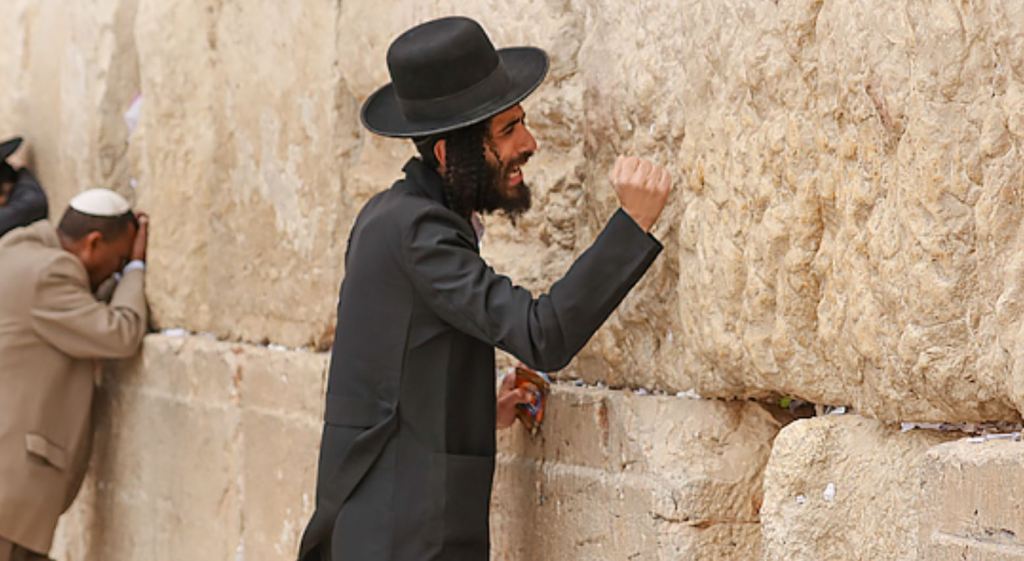
Not long ago, my friend Matt and I were on Oregon State’s campus talking to people about Jesus. A Jewish rabbi approached us and asked, “Are you Jewish?” When we said we were not, he explained he was passing out materials for celebrating Passover and then started to move on.
When Matt asked what he thought of Jesus, he quickly declined to answer. I couldn’t help thinking, But Jesus is the One Passover is ultimately about.
“For Christ, our Passover lamb, has been sacrificed.” (1 Corinthians 5:7, ESV)
Sadly, throughout the years of engaging with Jewish people, whom I love with the love of Jesus the Messiah, I have had very little fruit in even discussing Jesus. His very Name seems to be a conversation killer.
“To the Jew First”
Nevertheless, I remain convinced that I must tell Jewish people about Jesus. I’m not going to accept our culture’s “everyone gets to choose their own brand of spirituality” mantra. For many people, choosing your spirituality is like choosing your own flavor of ice cream. Just go with whatever floats your boat. But spiritual truth is like gravity; you can deny it has any bearing on you, but you do so at your own peril. We don’t get to decide what God is like; rather, we discover what God is like.
Our culture may say I’m being disrespectful and intolerant of my Jewish neighbor by telling him about Jesus. But, at the core of my being, I believe that every person on the planet, irrespective of their ethnic and religious background, needs to hear the gospel.
“For I am not ashamed of the gospel, for it is the power of God for salvation to everyone who believes, to the Jew first and also to the Greek.” (Romans 1:16, ESV)
Americans love to say things like, “My God would never send anyone to hell.” Or even, “My God is tolerant of all faiths and lifestyles.” They have a lot to say about their God. But that’s the problem. Such people have violated the first three commandments and set up a false version of God in place of the real God.
Instead, people need to hear what the true and living God of the Bible has to say about this:
“It is appointed for man to die once, and after that comes judgment.” (Hebrews 9:27, ESV)
“Whoever believes in the Son has eternal life; whoever does not obey the Son shall not see life, but the wrath of God remains on him.” (John 3:36, ESV)
The truly loving thing is to tell my Jewish neighbor that Jesus fulfilled the Hebrew Scripture that spoke of a Messiah (Psalm 22; Isaiah 53; Zechariah 9:9; 12:10), He fulfilled the Temple sacrifices of the Torah, and He is going to return one day soon to judge and to save.
God’s Plan for Israel in Romans 11
I’m also motivated by passages like Romans 11 to keep sharing the good news of the Messiah. Now, fair warning. Romans 11 is a bit dense for those who are new to the Bible. And even learned scholars continue to wrestle through all its implications. Nevertheless, I think it’s a passage worth a careful reading as we think about God’s plan for Jewish people as a whole.
In the eleventh chapter of Romans, the Apostle Paul is warning Gentile believers to not presume on God’s gracious character. Throughout this monumental letter, Paul has been carefully explaining the gospel of God’s grace—telling sinners how they can be reconciled to a holy God. He has emphasized both God’s righteous character and His extraordinary mercy. But in Romans 11, he discusses the problem of Jewish people rejecting Jesus, the Jewish Messiah. In other words, if Jesus is the Heaven-sent Jewish Messiah, why do so many Jews reject Him? He asks the rhetorical question: “Has God rejected his people? By no means!” (Romans 11:1).
Paul uses the illustration of an olive tree to say that the Jewish people who rejected Jesus’ right to rule over them are like the “natural branches” that were “broken off because of their unbelief” (Romans 11:20). Gentile believers were like wild olive shoots that were grafted in to the tree in place of the branches that were removed.
“But if some of the branches were broken off, and you, although a wild olive shoot, were grafted in among the others and now share in the nourishing root of the olive tree, do not be arrogant toward the branches. If you are, remember it is not you who support the root, but the root that supports you.” (Romans 11:17-18, ESV)
So, Israel’s rejection of her Messiah is what led to the gospel going out to the nations? In God’s providence, yes, that’s what happened (see Romans 11:19-20). However, Gentile believers must not grow complacent and presume on God’s grace, thinking they now have the right to the root (Jesus) and Jewish people do not.
“But they were broken off because of unbelief, and you stand by faith. Do not be arrogant, but tremble. For if God did not spare the natural branches, he will not spare you either.” (Romans 11:20-21, NIV)
Natural Branches and Wild Branches
Here’s the point. Many Jewish people rejected Jesus and had confidence in their Jewishness that God would spare them from judgment. John the Baptist directly confronted this mindset (Matthew 3:9-10). However, in the same way, God now gives Gentiles a severe warning. We ought not to presume that because we grew up in church, got baptized, and listened to Audio Adrenaline growing up that we too will be spared from judgment.
Why? Because it is only through faith in the Lord Jesus Christ, His substitutionary death for our sins and resurrection from the grave, that we are saved. If we have not surrendered our lives to Jesus, it doesn’t matter what our “Christian” background is—we “too will be cut off” (Romans 11:22).
“Note then the kindness and the severity of God: severity toward those who have fallen, but God's kindness to you, provided you continue in his kindness. Otherwise you too will be cut off.” (Romans 11:22, ESV)
John Stott writes, “Not that those who truly belong to Him will ever be rejected, but that continuance or perseverance is the hallmark of God’s authentic children.”
Faith in Jesus makes all the difference, because that is how we are united to Christ and get to wear His righteousness before a holy God on the Day of Judgment. To “continue in his kindness” is to demonstrate that our faith is genuinely in Jesus, because genuine faith continues to the end.
“For we have come to share in Christ, if indeed we hold our original confidence firm to the end.”(Hebrews 3:14, ESV)
Thus, we should have a holy fear of the Lord and be staggered by the sheer grace of God to save us by hanging Jesus on the cross we deserved.
See, without this warning, we’d miss out on an important aspect of God’s character, that He is holy, just, and righteous. We should revere Him and have an awe for who He is. The warnings in Scripture help us to not lose sight of this.
Warnings are given by God to shake us out of our spiritual slumber that proudly thinks we are better off than others because we were raised in the “right” church or family. Warnings like this also remind us what is at stake for everyone who dies apart from Jesus.
We Gentiles are the wild branches. We aren’t the natural heirs of the promise, but we’ve been adopted into God’s family through faith in Jesus. I don’t believe that the church has replaced Israel in God’s plan, but that we have been grafted into the root of Israel. No promise of God has been abrogated; instead, our understanding of the original promise to Abraham and his offspring has been expanded (Genesis 12:1-3; Romans 4:13-18). But Paul warns us Gentiles not to be arrogant, because we are nourished by the Jewish root (Jesus).
“Lest you be wise in your own sight, I do not want you to be unaware of this mystery, brothers: a partial hardening has come upon Israel, until the fullness of the Gentiles has come in. And in this way all Israel will be saved.” (Romans 11:25-26, ESV)
This gives me great hope! Even though it looks today like Israel will go on rejecting her Messiah, God says that this is only a temporary situation. The hardening is “partial” not total, and it will only be “until the fullness of the Gentiles has come in.” In other words, as more and more Gentiles turn to the Jewish Messiah, eventually it will reach a tipping point. At that providential moment in history, there will be a sudden and powerful inflowing of Jews into the kingdom of God.
“All Israel Will Be Saved”
Paul says, “All Israel will be saved.” This cannot mean all of “spiritual Israel” or the elect remnant of Israel will be saved; otherwise, the statement would be redundant. Paul has to be speaking of ethnic Jewish people, and his statement probably carries even more force in light of the fact that Israel has been a sovereign nation since May 14, 1948. In other words, God is not done with Jewish people. In His sovereign plan, Israel—as a nation—will one day repent and trust in Jesus as their Messiah and God.
Does this mean that every Jewish person alive at that point will be saved? F. F. Bruce explains: “’All Israel’ is a recurring expression in Jewish literature, where it need not mean ‘every Jew without a single exception’ but ‘Israel as a whole.’”[1]
That makes good sense, because even today while there is a “partial hardening” on the Jewish people, there are still a great many Jews who love and worship Jesus.
Okay, so what’s the big takeaway from all this? Be not discouraged as you encounter Jews who reject the gospel today. Yes, it is sad when any person (Jew or Gentile) rejects the offer of eternal life. Paul said he was willing to go to hell for the sake of his fellow Jews (Romans 9:3)! His heart’s desire and prayer was that his countrymen would see their need for the righteousness of Jesus (Romans 10:1-4).
But God has a purpose and a plan, and we can always trust what God is doing in the world today; He told us it would happen this way. For myself, I’m committed to continually honoring Jewish people as those whom God has used mightily throughout history. We must roundly condemn all forms of anti-Semitism, including weaponizing the Bible as a tool of denigration. We must thank God for how He has blessed Abraham’s descendants and, in turn, allowed us who love and follow Jesus to be grafted on to the Abrahamic olive tree. The Bible I read every day is very Jewish!
And I’m also committed to sharing the good news of Jesus the Messiah with every Jewish person I meet.
“But he was pierced for our transgressions;
    he was crushed for our iniquities;
upon him was the chastisement that brought us peace,
    and with his wounds we are healed.” (Isaiah 53:5, ESV)
I pray this encourages you to be bold in the gospel. If you have any thoughts or questions about this, I would love to hear from you!
One of the biggest ways our enemy, the devil, will try to sabotage our walk with Jesus is through painting God as uncaring or incapable of helping us during the rough patches of life. And when it comes to “rough patches,” we’ve all had them, right? Those times where we feel like we just got sucker punched by life, and it’s like the wind has been knocked out of our lungs. The fresh joy and peace we were just experiencing in the Lord yesterday seems to have vanished. Our spiritual sails don’t seem to be catching wind anymore.
God knows our tendency is to go from scratching our head in confusion, “Where did that come from?” to “Oh, God, why me?” to “God… do you even care?”
Let me assure you. God cares. These times in life—which we, as followers of Jesus, all face—are intended by God to deepen our faith and, ultimately, our communion with Him. The devil’s intention, however, is to tempt us to doubt God’s goodness, love, and presence with us.
So, what do we do when times of testing come?
1. Stay humble.
Whether we realize it or not, this attitude that says, “God doesn’t care about my situation. Why should I go to Him?” is actually incredibly arrogant. It indicates a lack of faith in His character and an unwillingness to listen to what He might want you to learn. It also plays right into the devil’s hand. The devil, you may remember, fell through the sin of pride, and he would gladly enlist you into the same plan of rebellion if you’re willing to sign on.
In his first letter, the Apostle Peter reminds us that God looks with favor on the humble—not on those who puff themselves up in arrogance:
“So humble yourselves under the mighty power of God, and at the right time he will lift you up in honor.” (1 Peter 5:6, NLT)
Notice Peter says “at the right time” God will honor you. In other words, if you’re going through a rough patch in life, it’s not that God has neglected you. It does mean that He has a purpose in your distress and that His goal is to lift you up and honor you when the time is right if you stay humble.
2. Cry out to God from the heart.
“Give all your worries and cares to God, for he cares about you.” (1 Peter 5:7, NLT)
Whatever is pressing on your mind—even if it’s some kind of sadness or fear that you can’t quite name—give it over to God. If you find yourself up late at night incapable of getting those worst fears out of your mind, come back to this passage. Be as open and transparent with the Lord as you can. Name the feelings of fear and frustration and anxiety, even if you can’t pinpoint the source. And tell Him how desperately you want to trust Him to handle these anxious thoughts and give you new life and peace in their place.
3. Stand firm against the devil and his schemes.
“Stay alert! Watch out for your great enemy, the devil. He prowls around like a roaring lion, looking for someone to devour. Stand firm against him, and be strong in your faith.” (1 Peter 5:8-9a, NLT)
It’s sobering to remember the devil is a “great enemy.” When we’re talking about the devil and what he’s capable of when he comes against a follower of Jesus, we aren’t talking about a chihuahua. We’re talking about a “roaring lion looking for someone to devour.”
Last year, my family went to a small game park that had several lions. At one point, one of the male lions let out a thunderous roar. Despite being about 100 yards away, I felt the sound in the pit of my stomach. I’ve seen TheLion King, but a Disney film just can’t convey how loudly they can roar. Were I ever to cross a wild lion in the African savannah, you can bet I would have a healthy fear of what that creature could do to me.
To be clear, Jesus is infinitely more powerful than the devil. And by the power of the Holy Spirit and the Word of God, we have all the resources we need to “stand firm against him.” And yet, he’s still a drooling lion, on the prowl for his next lunch.
So how do we stand firm in the faith and resist our great foe? We wield the very weapon Jesus wielded in His hour of testing in the desert (see Matthew 4:1-11). Get your mind into the Word of God, and those razor-sharp claws start to retract. Remember Daniel? Despite the very real threat of being the main course for the king’s pet lions, Daniel banked everything on God’s power to deliver. So he kept on praying to the God of Heaven when it was illegal. He learned that when your confidence is in God and His promises, hungry lions suddenly lose their appetite.
Be so full of God’s Word that you lose that worldly flavor to which the devil is drawn.
4. Remember you’re not alone in the battle.
You are in a battle, no question about that. We are told to don the armor of God, because our fight is “against evil rulers and authorities of the unseen world, against mighty powers in this dark world, and against evil spirits in the heavenly places” (Ephesians 6:12, NLT). Peter reminds us:
“Remember that your family of believers all over the world is going through the same kind of suffering you are.” (1 Peter 5:9, NLT)
Pick up a copy of the magazine Voice of the Martyrs and spend some time learning about the persecution many of our brothers and sisters are experiencing in other nations. And yet, in the midst of their trials, these suffering Christians often tell of how faithful Jesus has been even though they have lost their church building, their home, and even, at times, family members.
Peter is not speaking from ignorance. He knows what it’s like to be mocked, derided, beaten, flogged, and imprisoned for the Lord Jesus (see Acts 5, 10). And how did Peter respond after being threatened with death and then flogged?
The apostles left the high council rejoicing that God had counted them worthy to suffer disgrace for the name of Jesus. And every day, in the Temple and from house to house, they continued to teach and preach this message: “Jesus is the Messiah.” (Acts 5:41-42, NLT)
Is that not incredible? With a blood-soaked back from the flogging they’d just endured, Peter and the other Apostles could only rejoice that “God had counted them worthy to suffer disgrace for the name of Jesus.” Clearly, they had a countercultural perspective on what life is all about. Even if you’re not there yet, don’t you want to be?
5. Seek first the Kingdom of God.
And then what? They kept doing the very thing that earned them a flogging. They went right on telling people the glorious truth: “Jesus is the Messiah you have been waiting for! He is the Savior who died in your place so that you can be forgiven! He is the Lord of life who conquered the grave!” The more you are captivated by the bigness of the Gospel, the more you will be eager to turn whatever pain you’re enduring into gain for the Kingdom of God.
In his kindness God called you to share in his eternal glory by means of Christ Jesus. So after you have suffered a little while, he will restore, support, and strengthen you, and he will place you on a firm foundation. All power to him forever! Amen.” (1 Peter 5:12, NLT)
Let that truth settle in. God Himself will personally restore, support, and strengthen you. If you remember God’s sweet kindness toward you and commit your battle to the Lord, you have nothing to lose and eternal glory to gain. Because “at the right time” He will set you on a firm foundation.
I pray this encourages you. If you have any thoughts or questions about this, I would love to hear from you!