
By Jason Smith
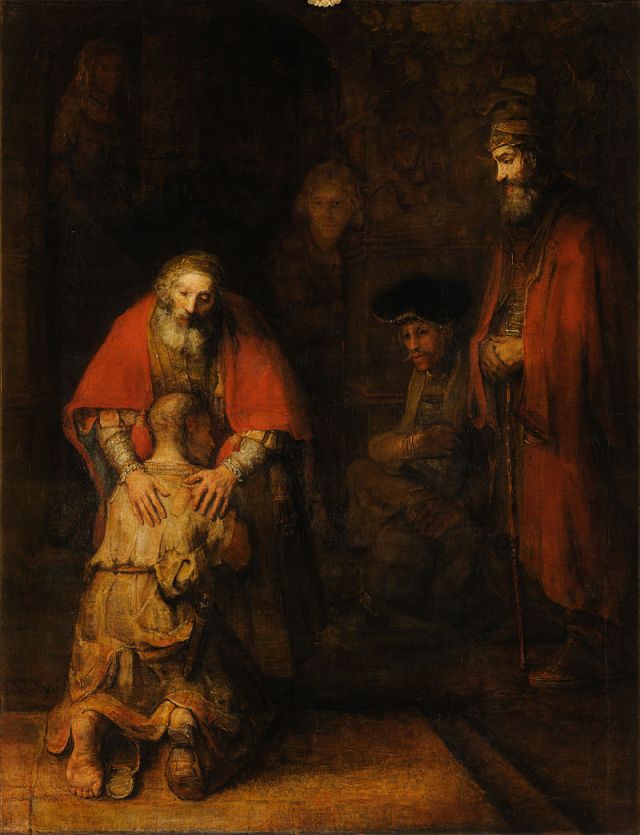
But while he was still a long way off, his father saw him and felt compassion, and ran and embraced him and kissed him… “For this my son was dead, and is alive again; he was lost, and is found” (Luke 15:20, 24).
Is it possible for any one of us to be too far gone from God’s perspective? Some may think so. They imagine God to be patient with people, but that eventually His patience runs out. In Christian circles, I often hear people describe certain individuals as “the hard cases” — those who seem so stubbornly resistant to God and His love that they are, we imagine, beyond hope.
I recently heard a man tell his story of Jesus rescuing him when he was at his absolute lowest point in life. He had been living on the streets, was addicted to heroin, and despised anything with a whiff of Christianity. Yet, to his astonishment, he crossed paths with a young woman who told him about the love God had for him in Jesus Christ. Many years later, in God’s marvelous timing, this man cried out to God for mercy, and God opened his heart to receive Christ. Although change in his life took time, he was immediately aware that he was a new man. Over the next few years, his life transformed dramatically. Thinking back to what God had done in his life, he said he now felt like “God’s trophy” of grace that God could show off to the world, as if to say, “Look what I can do in someone’s life.”
Relationship over Religion
When Jesus of Nazareth showed up on earth, He said some strange things. For example: “I have not come to call the righteous, but sinners to repentance” (Luke 5:32). To many, this sounded confusing. Wait, Jesus wants to hang out with those who rebel against God? I thought He only wanted to be with the morally upright? They even nicknamed Jesus “friend of tax collectors and sinners” (Matthew 11:19). It was meant as an insult. Jesus pointed these Pharisees (admired for their obedience to the law) back to Hosea 6:6, where God says, “I desire steadfast love and not sacrifice, the knowledge of God rather than burnt offerings.” In other words, God was saying, “I don’t merely want your ritualistic sacrifices thoughtlessly brought to me like Baal or one of the countless other pagan gods. I want you to know Me.”
Jesus told a story to some of the religious elite in His day that captured what the heart of God is really like. These religious do-gooders imagined that they were on God’s good side. “After all,” they seemed to say, “Surely God will take into account all our moral efforts.” What they missed, however — and what I fear many who grew up in the church miss — is that God is more interested in a relationship with His children than with religious compliance.
A Lost Son
“There was a man who had two sons,” Jesus began (Luke 15:11). The younger, impetuous son had the audacity to ask his father for his share of the inheritance that was coming to him. Even today, if someone asked a parent for his inheritance early, they would be frowned upon. In ancient times, however, this would have been the equivalent to saying, “Father, I wish you were dead.” The younger son wanted his father’s stuff, but cared little for the father himself. But it is even more surprising that the father actually complied with his son’s wishes. The community would expect the father to revoke any expected inheritance and shun his son as an insolent boy.
Jesus goes on to say this foolish son travels to a “far country,” presumably so he can get away from his father and out from under all the household rules and restrictions. Now, in this land of the Gentiles, this Jewish boy was free to gratify every desire that was forbidden in his father’s house. No doubt this young man attracted many. He wore the finest robes, ate the most scrumptious meals, and had everything money could buy. This young fool squandered all his father’s hard-earned wealth on prostitutes and whatever else he craved in the moment (v. 30).
But eventually, this fool began to reap what he had sown. Just as he spent his final coin, a terrible famine afflicted the land. Therefore, Jesus says, “he began to be in need” (v. 14). The harsh realities of the fleeting satisfaction of sin, the transitory nature of wealth, and the unpredictable vagaries of life in a fallen world all came crashing down on him in a moment. In desperation, “he went and hired himself out to one of the citizens of that country, who sent him into his fields to feed pigs” (v. 15).
Jews considered swine “unclean” (Leviticus 11:7). To be hired by a Gentile to feed such animals was just shameful. It gets worse though: “He was longing to be fed with the pods that the pigs ate, and no one gave him anything” (Luke 15:16). Here was a man at the lowest of lows. Only a short time ago, he was the envy of the neighborhood, as he spent his wealth on every thrill and entertainment imaginable. Now, he sat in his rags, wallowing in the mud like a beast, envious of filthy swine because they at least had their pig slop.
He Came to Himself
It was in that pigsty that a thought occurred to him. For a season, the young man had attempted to push away any thought of his father altogether. But now, the thought of the man he had once so brazenly scorned entered his mind. “How many of my father’s hired servants have more than enough bread,” he mused, “but I perish here with hunger!” (v. 17).
Jesus says, “He came to himself,” finally recognizing what a fool he had been. All the so-called friends he had acquired recently came and went with his cash. None of them had even the slightest care for him now that he was nothing but a miserable worm in their eyes. The painful thought dawned on him: he had turned his back on the one man who genuinely loved him. But after such a gross display of rebellion, would his father ever take him back, this son who had so impudently slapped him across the face by wishing he was dead?
As he starts the long journey home, the young man prepares his “I’m sorry” speech, reciting in his mind: “Father, I have sinned against heaven and before you. I am no longer worthy to be called your son. Treat me as one of your hired servants” (vv. 18-19). The confession is sincere, no doubt, but from his plea we can hear the sickly strain of legalism. He calls himself “unworthy,” and he was certainly right, so far as that goes. But he imagines his only hope is for his father to graciously hire him as a slave. Perhaps he imagines he can one day pay off his grievous debt as a last-ditch effort to gain his father’s approval. It is significant that the only reason he’s willing to return home, with head hanging in shame, is his realization that the one he once called “Abba” is unlike anyone else he knows. His father is a generous man, eager to bless others.
His Father Saw Him
“And he arose and came to his father. But while he was still a long way off, his father saw him and felt compassion,” (v. 20). Oh, what precious words are these! While this pitiful son was still in the distance, perhaps before he ever saw his father, his father saw him. The father, who had been faithfully gazing at the horizon, finally saw that for which he had long hoped. But what a miserable looking fellow: dressed in rags, weak and starving frame, and covered in filth and shame. He was perhaps the most wretched and unlovely creature his father had ever seen. And yet, his father “felt compassion, and ran and embraced him and kissed him” (v. 20).
The ancient Greeks loved to show off their calves, but for a Jewish nobleman to gather up his flowing robes and race down the road in a dead sprint would have been unheard of. In fact, it would have brought him dishonor in the eyes of others. Do you see what is happening here? Whereas before the shameful sight would have been this stumbling reject returning to his home, now the father has, in a sense, traded places with his son. Because of his great love for his son, he is now the one bearing the shame. The son would return home not alone, but under the protective arm of his father.
The onlookers must have stared in amazement. Had not this pathetic fool spat in his father’s face? And now his father receives this rebel without a cause with open arms? Before the broken man can get a word out, his father is holding him against his chest and planting a kiss on his head. In fact, in the original Greek, it says, the father “kept on kissing him.” Can you imagine a more lavish display of acceptance? When was the last time you were greeted this way at a family reunion?
With quivering lips, the son tries to get out his confession and make his plea, but before he can even ask to be made a slave, the father interrupts him. “Bring quickly the best robe,” he commands the nearest servant, “and put it on him, and put a ring on his hand, and shoes on his feet” (v. 22). The robe, the ring, and the shoes all symbolize one thing: this young man is the master’s son, not slave.
Though tears no doubt fill the father’s eyes, he loudly proclaims a feast will be held in his son’s honor. This is no time to mourn. It is time to celebrate! “For this my son was dead, and is alive again! He was lost, and is found!” As the New Living Translation puts it: “So the party began” (v. 24).
Our Compassionate Father
What follows at the end of this grand story that Jesus tells is actually the most disturbing. The elder brother, who is working out in the fields (as always), learns of his brother’s return and, rather than rejoicing, he responds with smug self-righteousness. How dare this foolish sinner show his face around here again!
The father, in yet another display of compassion and grace, goes out to the field and pleads for his elder son to come home. But, with curled lip, the elder son replies, “Look, these many years I have served you [literally, “slaved for you”], and I never disobeyed your command, yet you never gave me a young goat, that I might celebrate with my friends. But when this son of yours came, who has devoured your property with prostitutes, you killed the fattened calf for him!” (vv. 29-30). The elder son’s bitter tone betrays his failure to ever really love his father. He sees all his acts of obedience as joyless slavery. He wanted to celebrate with “friends,” but never to delight in the father himself.
The tragedy is that although this elder son stayed home, he was just as lost as the younger son once was. The father tells him, “All that is mine is yours.” In other words, if you had only asked to delight in what is mine, I would have gladly celebrated with you. The younger son, though a wretched sinner, had returned to the arms of his father, recognizing the generosity of this old man. “It was fitting to celebrate and be glad, for this your brother was dead, and is alive; he was lost, and is found” (15:32).
Jesus told this parable so that we would have a renewed understanding of God. Norval Geldenhuys has rightly said, “So inexplicably wonderful is the love of God that He not merely forgives the repentant sinner, but actually goes to meet him and embraces him in His love and grace.”[1] No matter how long a sinner has lived in staunch rebellion, God is always eager to welcome him or her home. He runs out to meet the one hanging their head in shame. How vital it is to remember that all we have is by sheer grace, and when yet one more prodigal son finds grace in the arms of our compassionate Father, it is only right that we should celebrate.
[1] Norval Geldenhuys, The Gospel of Luke, New International Commentary on the New Testament (Grand Rapids: Eerdmans, 1951), 408.




 Lamp and Light