Responding to Common Atheist Objections

“For what can be known about God is plain to them, because God has shown it to them. For his invisible attributes, namely, his eternal power and divine nature, have been clearly perceived, ever since the creation of the world, in the things that have been made. So they are without excuse.” (Romans 1:19-20, ESV)

When the famous atheist Bertrand Russell was asked what he would say to God if, at death, He turned out to be real, Russell’s famous reply was, “Not enough evidence, God! Not enough evidence.”[1]

According to the Christian worldview, God’s existence can be known to all. Through creation and conscience, God has made Himself known. As the Apostle Paul would say, “So they are without excuse.” The problem, according to the Bible, is that because we love our autonomy and hate the thought of being accountable to God, we “suppress the truth in unrighteousness” (v. 18).

Like the speeding driver who hopes no police officer is watching, broken people don’t want there to be a God—at least, not the holy and righteous God of the Bible. A non-threatening god that winks at sin, so long as you offer token prayers and sufficient good deeds, is not problematic. The real threat is a God of blinding holiness, a God who knows everything about you, everything you’ve done, and why you did it.

As I have interacted with Generation Z on college campuses over the last ten years, I’ve noted that an increasing majority I meet identify as either atheist or agnostic. That means that it’s not uncommon for the typical American college student today to say they see no good reason to believe God is real.

However, I’ve observed that while many will initially say with confidence they see no reason to believe in God, if you’re willing to ask questions and patiently listen, you discover that there’s usually more to the story. In many cases, it’s not necessarily that they have carefully considered the God question. More often, it’s that people hunger for an identity, and I suspect that identifying as atheist or agnostic sounds to many like “liberated,” “free thinking,” and “self-determined.”

Why Do You Believe What You Believe?

My approach is to ask for reasons they doubt God’s existence and then to listen very carefully. I want them to know I genuinely do want to hear their objections and questions. The last thing they want is another religious guy dumping a truckload of truth on them without any gentleness or compassion.

The Bible calls us not only to respond with gentleness and respect, but also to “be quick to listen, slow to speak, and slow to anger” (James 1:19). If nothing else, I hope that they are left with the impression that at least one Christian in this world cares enough to listen to them. But after listening, I will gently push back, usually with some questions of my own, in the hope of getting them to think through what they are claiming to believe.

My goal, however, is to get the conversation to Jesus. And I’m not ashamed to say so. After all, it is the gospel—not clever theistic reasoning—that is the power of God for salvation to everyone who believes (Romans 1:16). So, let’s consider what would be a thoughtful response to some of the most common atheist objections.

“If everything needs a cause, what caused God?”

This objection usually shows up after I’ve asked someone, “How do you account for the beginning of the universe?” Many atheists seem to think this question of “What caused God?” is the knockout blow to the First Cause argument. The argument works like this.

  1. Every effect is a result of some cause.
  2. If the universe itself is an effect, there must be a self-existent First Cause outside our universe that caused the universe.
  3. The universe is an effect, contingent on some prior Cause.
  4. Therefore, a First Cause, whom we call God, exists.

Think about how you ended up where you are today. There were a series of events and decisions that led you to where you are now. You could trace this cause-and-effect series in your life back to the moment you were born. But what caused that? At some point, your parents had to meet. As did their parents. And their parents. You get the picture.

Like a series of Dominoes falling, you can trace back every event in the world to a cause. But you cannot simply do this forever. Eventually, you have to come to a First Cause that tipped that first domino—an uncaused Cause.

One quick note. Christians have never claimed that everything needs a cause—only that creation needs a cause. According to the Bible, God is eternal, existing outside of time, space, and matter.

“Before the mountains were brought forth, or ever you had formed the earth and the world, from everlasting to everlasting you are God.” (Psalm 90:2, ESV)

So, to ask what caused God is like asking how long a bachelor has been married. Properly stated, this objection would sound like this: “If God caused the universe, what caused the eternal and uncaused God?” Just like asking how long a bachelor has been married, the question becomes incoherent once we understand the nature of God. He is by definition “from everlasting to everlasting,” and thus uncaused.

In other words, the Bible claims that God is not one more feature of the created world but is instead the foundation for the created world. He is Being itself, and therefore the ground of all reality.

“Maybe the universe didn’t have a beginning. Or maybe there is a multiverse that gave birth to our universe.”

The Book of Genesis begins with a straightforward explanation of our universe: “In the beginning, God created the heavens and the earth” (Genesis 1:1, ESV). Because of Genesis, Christians believed the universe had a beginning even at a time in history when most of the Greco-Roman world believed in an eternal universe.

It makes sense that as belief in one eternal God spread, so did belief in the universe having a beginning. In order to avoid the need for God, one popular skeptic recently wrote, “There is no beginning and no end—no boundaries. The universe always was, always is, and always will be.”[2]

It’s worth noting that even most cosmologists today agree that the universe had a beginning. They would typically say it all began with the singularity. But any reasonable person might wonder how that singularity got there. Even if you believed—despite contrary evidence—the universe didn’t have a beginning, you still need an explanation for why the universe is sustained in existence even now.

To suggest that there is a multiverse to explain our universe is to appeal to something for which we have no evidence. While many Marvel movies today are based on this idea of a multiverse where there are an infinite number of Spider-mans out there, it’s good to remind people to distinguish between fact and fiction. And in reality, there is no evidence for the multiverse. So, if we care about following scientific evidence wherever it leads, we shouldn’t resort to something with no observable evidence whatsoever.

In fact, the theory of a multiverse first arose as something of a “metaphysical escape hatch” for those who didn’t like the theistic implications of our universe having a beginning and being finely-tuned for life.[3]

“We don’t need to ask why the universe is here. Asking ‘Why?’ is childish.”

In a debate several years ago, the atheist Richard Dawkins said that looking for purpose in nature is a childish endeavor. He added that asking the question “Why is something the way it is?” is to ask a “silly question” which most people grow out of after age six.[4]

But here, Dawkins is mocking what is a basic human intuition. We ask the question “Why?” because we seek understanding—a question that ironically should be encouraged in the sciences. If it’s a “childish” question, then perhaps we need to learn from children about the importance of curiosity and critical thinking and not grow smugly self-satisfied that we already know best how the world works.

Behind Dawkins’ mocking tone is a thinly veiled uneasiness about seeking an ultimate explanation for all the effects in nature. Everything in nature has a cause. Eggs come from birds. Seeds come from flowers. Milk comes from cows. I could keep going.

But while we have a basic intuition telling us that everything in nature has a cause, the question can reasonably be pushed back to the cause of the universe itself.

“Maybe the universe doesn’t need a cause. Maybe it just is, and there’s nothing more to say about it. Why posit a God we can’t see to explain it?”

But this response commits the logical fallacy of special pleading. Special pleading is when we exempt a certain circumstance or event from the same critical criteria as other circumstances or events without reasonable justification.

For example, if you were to come home and find a plate of freshly baked chocolate chip cookies on the counter, you might wonder who made them. Now imagine your roommate or spouse glibly replying, “No one did. They’re just there. Why posit a baker when you didn’t see someone baking them?” Of course, such a response sounds ridiculous.

But here’s where I want to make it clear why it sounds ridiculous. We all intuitively know that every effect (e.g., freshly baked cookies) has a cause (e.g., a baker). Even the 18th century skeptic, David Hume, freely admitted as much: “I have never asserted so absurd a principle as that anything might arise without a cause.”[5]

But if everything in nature has a cause for its existence, it only makes sense that the whole universe would need a cause for its existence, too. And to explain the universe, this Cause must stand outside the universe rather than being one more part within the universe. Hence, the conclusion that the universe is caused by an all-powerful, eternal, all-wise, immaterial, self-existent, and personal Being—also known as God.

Some atheists I’ve interacted with have brought up Ockham’s razor to say that the simplest explanation is always best, and that we don’t need to posit the existence of a God we cannot see.[6] But again, if we are seeking a cause for the physical world we can see, why would we expect God to be physically visible within the universe? Likewise, the Russian cosmonaut Yuri Gagarin, the first man to enter space, reportedly said that he didn’t see God up there.

But we don’t look for a book’s author within its pages. Rather, we recognize the necessary existence of an author because we have a book. Ironically, William of Ockham (1287-1347) never used his “razor” to rule out a need for God. In fact, he said the underlying order in nature is most simply explained by an intelligent Creator. He wrote, “For nothing ought to be posited without a reason given, unless it is self-evident or known by experience or provoked by the authority of Sacred Scripture.”[7]

As Scripture teaches:

“Now every house is built by someone, but the one who built everything is God.” (Hebrews 3:4, ESV)

I prefer scientific explanations to theological speculations about God and what He may or may not have done.”

Science is a wonderful tool for exploring the natural world and for helping us develop technology. We are greatly indebted to scientific discoveries and pioneers of the past. However, science is a discipline for studying the physical world, nothing more.

For example, science may tell us what regularities (laws of nature) we can observe in the world, but it doesn’t tell us how those regularities got there in the first place. Moreover, while it has provided astounding observations about the universe, science cannot provide an ultimate explanation for the universe itself.

Underlying this objection is the presupposition that science is the source of all truth. But if someone was to say to me, “Truth is determined by what can be empirically verified by science,” I would ask them, “Can that statement be empirically verified by science?” This belief that science is the source of all truth is called scientism, and is a claim that, ironically, cannot be supported by science, and is therefore self-refuting.

However, science does provide evidence for a finely-tuned universe that had a beginning. Therefore, while science cannot prove the existence of God in a mathematical sense, it strongly points to the conclusion that God is the uncreated Creator exactly as the Bible describes Him. Moreover, through their studies, many believing scientists have sensed a greater awe by understanding how God so marvelously constructed this universe we call home. The famed astronomer Johannes Kepler (1571-1630) said, “The chief aim of all investigations of the external world should be to discover the rational order and harmony which has been imposed on it by God and which He revealed to us in the language of mathematics.”[8]

Nature can teach us that there is a God, but to know this God personally, we need Him to reveal Himself to us. And this is just what this God has done by giving us Scripture (2 Peter 1:16-21) and ultimately revealing Himself in the one true Redeemer, Jesus Christ, who claimed to be the eternal “I Am” of Genesis (John 8:58; 14:6).

Have thoughts on this post? Feel free to comment below!


[1] Michael J. Murray, An Introduction to the Philosophy of Religion.

[2] Michael Shermer, How We Believe.

[3] The term “metaphysical escape hatch” is used by Robin Collins in Lee Strobel, The Case for a Creator.

[4] See “Richard Dawkins Vs. William Lane Craig Debate” at https://www.youtube.com/watch?v=Uaq6ORDx1C4&t=204s

[5] Quoted in John C. Lennox, God’s Undertaker.

[6] William of Ockham’s famous statement was “Never posit pluralities without necessity.” Quoted in Stephen C. Meyer, Return of the God Hypothesis.

[7] Quoted in Spade, “Ockham’s Nominalist Metaphysics,” 104.

[8] Morris Kline, Mathematical Thought from Ancient to Modern Times (1972), 231.

The Declaration of Creation

Recently, my family and I stopped to feast our eyes on an exquisite sunset, complete with a bright glowing blend of red, orange, and purple. Just after dusk, my three boys and I went frog hunting on my in-laws’ property. We crept up on a little pond, from which we could hear a chorus of croaks and chirps. As we closed in on the frogs, they suddenly fell silent in unison. It didn’t help that our dog, June, plunged into their pond a moment later.

On our way back to the house, we stopped to gaze up at the night sky above us, a deep black canvas dotted with tiny sparkling diamonds. It was sublime. We could even spot Jupiter and Venus. What a way to begin spring! Despite the cold March air, it was hard for the four of us to stop staring. In the midst of our shared excitement, I was reminded of the first line from Psalm 19:

“The heavens declare the glory of God,
    and the sky above proclaims his handiwork.” (Psalm 19:1, ESV)

Ears to Hear

According to the Bible, that starry sky above is making a declaration to us. It’s announcing to us that there is an Artist and Designer behind it all.

Everything you see in this world – towering trees, majestic mountains, fertile fields, mighty elephants, growling lions, chirping crickets – all of it owes its existence to an all-powerful Creator, who ordered and designed this world for the glory of His great name.

Some people might say, “I don’t hear any announcement.” But think of it this way. Someone can be shouting something to you from across the room, and you still don’t hear it. Maybe you’re deaf or you’re wearing noise-canceling headphones. Or maybe you’re just choosing to ignore that person. Although the stars don’t actually speak (v. 3), their message of God’s glory is being declared “through all the earth” (v. 4) to those who have ears to hear.

God’s glory is all the beauty and majesty of His character and nature. The word “glory” (kabod in Hebrew) gives the sense of something being weighty or having importance. So to say the heavens declare God’s glory is more than saying they point to His existence. All of creation is announcing His importance, His power, His worth. The starry skies are urging us to worship God as the One who deserves all the glory.

“You are worthy, our Lord and God,
    to receive glory and honor and power,
for you created all things,
    and by your will they were created
    and have their being.” (Revelation 4:11, NIV)

Many people today like to say they’re not too sure about God’s existence; instead, they prefer to look for a scientific explanation. But the more we learn about the heavens, the more we should see God’s glory. The magnetosphere is a magnetic field surrounding the earth that stretches out into space 36,000 miles. It acts like a massive shield, protecting our planet from the sun’s harmful solar winds. When the charged particles of the solar winds are redirected to the north and south poles, they create the beautiful auroras, known as the northern and southern lights. Science should lead us to exult in God’s incredible design. Not only does the magnetosphere act as a massive protective bubble, but it also creates a breathtaking display in the night sky.

Interestingly, scientists have discovered a host of features like the magnetosphere that have to be just so for earth to be a habitable planet. This includes the size of earth in relation to the sun, the size of the moon in relation to earth, the amount of oxygen in our atmosphere, the amount of water on earth, the size of the surrounding planets, and even our location in the Milky Way galaxy. These are well-documented in The Privileged Planet, a book written by Guillermo Gonzalez and Jay W. Richards.

The Sufficiency of Scripture

David, the psalmist, goes on to say that while creation declares there is a glorious Creator, it doesn’t tell us how to get right with Him. General revelation (nature) tells us there is a Creator, but we need special revelation (Scripture) to learn that there is also a Redeemer.

“The law of the Lord is perfect,
    reviving the soul;
the testimony of the Lord is sure,
    making wise the simple.” (Psalm 19:7, ESV)

While astounding things can be learned from observing the created world, true wisdom is found in God’s law. Such wisdom comes from above; it is more precious than gold (V. 10). Most people don’t realize what an extraordinary privilege it is to have a Bible in their home. It’s like they are sitting on a storehouse of treasure, and they’ve never realized it. God’s Word alone is perfect, flawless, and true. Through Scripture, our eyes are opened to see that this wise Creator has made a way for us to be forgiven and granted eternal life. Many have chased after gold and riches, but David reminds us that “the fear of the Lord is clean, enduring forever” (v. 9).

David wants us to understand the sufficiency of Scripture. The wonder of God’s Word is that you don’t need to have an advanced degree in physics or philosophy to know what God is really like. Scripture itself imparts wisdom to even the “simple” or uneducated (v. 7). It tells us plainly of God’s goodness, justice, and grace. And most importantly, it tells us about the Redeemer Jesus Christ, who alone lived a life acceptable in God’s sight (v. 14) and then offered that life as an acceptable sacrifice in the place of sinners (Ephesians 5:2).

So while creation declares God is powerful and wise, Scripture declares that God is loving and gracious. The Bible alone is “able to make you wise for salvation through faith in Christ Jesus” (2 Timothy 3:15, ESV).

Have thoughts on this post? Feel free to comment below!

Are Science and Christianity Friends or Foes?

“Great are the works of the LORD; they are pondered by all who delight in them.” (Psalm 111:2)

Many today take it for granted that biblical faith is incompatible with scientific findings. The assumption is that science has provided all the knowledge we need about our origins and the origin of our universe. This idea that science and Christianity are at odds has been so widely promoted in our culture by popular science communicators – including Bill Nye and Neil deGrasse Tyson – that many have taken for granted that this is true.

Christianity and Cosmic Order

Before one can undertake any scientific endeavor, such as calculating the growth rate of fertilized plants versus that of unfertilized plants, one must hold some basic working assumptions. One such assumption is the regularity of nature.  In other words, you must assume that certain physical laws will remain in place each time you observe and measure the plants. Such an assumption might seem incredibly obvious. We think, Of course, there is regularity in nature!

But on an atheistic worldview, why assume any kind of law-like structure to the universe? Laws don’t form by chance; they come from a Lawgiver. If the universe is the result of an undirected chaotic explosion rather than the ordered creation of an infinite Mind, why would we expect consistency in nature?

No one would believe that the Eiffel Tower formed as a result of an iron mine explosion. In the same way, we shouldn’t expect any kind of orderliness in a universe that formed by an unguided explosion.

Paul Davies is a physicist who is certainly not religious. And yet he comments:

“Just because the sun has risen every day of your life, there is no guarantee that it will rise tomorrow. The belief that it will, that there are indeed dependable regularities of nature, is an act of faith, but one which is indispensable to the progress of science.”[1]

The Bible not only says that “all things were created through [Christ] and for [Christ],” but also that “in Him all things hold together” (Colossians 1:16-17). It is because the Son of God “upholds the universe by the word of His power” that we can have confidence in the regularity of nature (Hebrews 1:3).

Physicist Michael Guillen says, “The Christian worldview best squares with the scientific worldview. It’s easy for me to be both a scientist and a Christian. Do science and Christianity have disagreements? Oh, you bet! And a few of them get the bulk of the publicity. But when it comes to the fundamentals, the two worldviews are very much in line. They are like my wife and me. We have our disagreements. And some of them are real doozies. But when it comes to core principles, we see eye to eye.”[2]

This is why modern science first began in the West, where the backdrop of the culture was the Christian worldview. This also explains why the vast majority of the founders of modern science were theists – and many were Christian theists.[3]

For instance, Galileo – often falsely portrayed as an opponent of biblical faith – was a Bible-believing Christian who argued that “the laws of nature are written by the hand of God in the language of mathematics” and that the “human mind is a work of God and one of the most excellent.”[4]

While many want to argue that faith and science are at odds, the scientific method itself is based on certain faith assumptions. Without these assumptions – which most scientists simply take for granted – science could never get off the ground. These include the orderly character of nature, the regularity of physical laws, the rational intelligibility of the universe, and the fact that our minds are equipped to understand certain truths about the universe.

Philosopher Richard Swinburne writes:

“The very success of science in showing us how deeply ordered the natural world is provides strong grounds for believing that there is an even deeper cause for that order.”[5]

The Limits of Science

Many have bought into the ideology of scientism, which says that science alone is the key to answering all our questions about the universe. But this ignores the many areas where science is limited. For example, science can teach us how to build an atomic bomb, but it cannot tell us whether it is right to use it.

Science cannot even tell us why there is a universe to study in the first place. Science is a wonderful tool, but it cannot give us a grand explanation of everything. Instead, science points us to a greater explanation beyond its analytical reach.

Scientific observations showing that our universe is expanding indicate that our universe had a beginning. But if the universe had a beginning, there must have been a cause. Things don’t just burst into existence without a prior cause. A timeless and all-powerful God who transcends nature would be a reasonable explanation for the origin of our universe.

“For what can be known about God is plain to them, because God has shown it to them. For his invisible attributes, namely, his eternal power and divine nature, have been clearly perceived, ever since the creation of the world, in the things that have been made. So they are without excuse.” (Romans 1:19-20, ESV)

Atheism and Its Illogical View of the Beginning

In his book The Grand Design, the late Stephen Hawking argued that we don’t need God to explain the origin of the universe. Instead, the universe’s physical laws can explain why there is a universe.

Hawking wrote: “Because there is a law such as gravity, the universe can and will create itself from nothing.”[6]

Interestingly, when I shared this idea with my 7-year-old son, Logan, he laughed and said, “That’s impossible for something to make itself.” He recognized that Hawking’s statement is logically flawed. For something to create itself, it would have to be in existence already. His statement is incoherent.

Why would a scientist as accomplished as Stephen Hawking make such an obvious logical blunder and claim that the universe brought itself into existence?

Scripture provides insight here. The Book of Romans says that when you reject the one true God who created nature, you will end up worshiping various aspects of nature itself (Romans 1:21-23). Interestingly, there is a parallel to this ancient form of nature worship among many scientists today. They attribute creative power, eternality, and even design to the cosmos instead of the Creator of the cosmos.

Oxford scientist John Lennox observes:

“Perhaps there is a subtle danger today that, in their desire to eliminate the concept of a Creator completely, some scientists and philosophers have been led, albeit unwittingly, to re-deify the universe by endowing matter and energy with creative powers that they cannot be convincingly shown to possess.”[7]

Can Irrationality Produce Rationality?

If nature is all there is, that would mean there is no divine mind outside the universe responsible for our existence. But that would mean that our brains are the result of blind and irrational natural processes. Now, if that is where atheistic science takes us, then why in the world would we trust our brains can grasp the truth? In fact, why think we could ever do science in the first place?

Consider a scenario where I told you about a computer that was not designed by a human mind but came about purely by the blind forces of nature. Would you expect such a machine to function well, let alone assemble naturally in the first place? Such an idea sounds preposterous. In the same way, we could only trust our brains to grasp scientific truth if they have been designed by an intelligent Creator who transcends the blind processes of nature. The great irony is that, in their eagerness to eliminate God from the scientific enterprise, atheists have actually removed any reason whatsoever for trusting our rational faculties.

Some atheists have recognized this and are haunted by the logical outcome of their godless worldview.

The chemist J. B. S. Haldane said, “It seems to me immensely unlikely that mind is a mere by-product of matter. For if my mental processes are determined wholly by the motions of atoms in my brain I have no reason to suppose that my beliefs are true.”[8]

Atheist John Gray has put this problem more bluntly: “Modern humanism is the faith that through science humankind can know the truth and so be free. But if Darwin’s theory of natural selection is true this is impossible. The human mind serves evolutionary success, not truth.”[9]

Gray’s point is that on Darwinism, there’s no real basis for thinking we have adapted the ability to know the truth. After all, the Darwinian worldview says that there is no ultimate design and purpose to organic life and that humans are the result of unguided chance.

Christian apologist C. S. Lewis similarly asked, “If thought is the undesigned and irrelevant product of cerebral motions, what reason have we to trust it?”[10]

If atheists want to go on believing that their brain is the product of blind chance, they are welcome to do so, but I’m going to stick with the hypothesis that the only wise God designed my brain. Praise God, we are not mere accidents. Instead, we are “fearfully and wonderfully made” by God with loving design and intention (Psalm 139:14).

According to the Bible, we have every reason to believe our brains can grasp certain truths about the natural world. In fact, the Bible says that God created us in His own image – meaning our rational minds are a reflection of His rational mind (Genesis 1:27-28). Thus, on the Christian worldview, we have good reasons to think we can learn about the world through the scientific endeavor.

Science and biblical faith are not at war. They complement and reinforce one another.

Feel free to comment below!


[1] Paul Davies, The Mind of God, 81.

[2] Michael Guillen, Seeing Is Believing.

[3] Such theistic scientists include Roger Bacon, Gregor Mendel, Blaise Pascal, Johannes Kepler, Nicolaus Copernicus, Galileo Galilei, Isaac Newton, and Michael Faraday.

[4] Galileo quoted in John C. Lennox, Cosmic Chemistry, 43.

[5] Richard Swinburne, Is There a God? (Oxford: Oxford University Press, 1996), 68.

[6] Hawking and Mlodinow, The Grand Design, 180.

[7] John C. Lennox, Cosmic Chemistry, 113.

[8] J. B. S. Haldane, Possible Worlds and Other Essays (reprint ed.) London, UK: Chatto and Windus, 1932.

[9] John Gray, Straw Dogs, London, Granta Books, 2002, 26.

[10] C. S. Lewis, Miracles.

Photo Courtesy of NASA, M. Livio, and the Hubble Heritage Team.

What Does the Bible Say about Abortion?

By Jason Smith

Some might ask, “Why bring up the Bible when we talk about abortion? Isn’t that a political debate?”

Many people would say the Bible is irrelevant to the issue of abortion. But as a follower of Jesus, I take the Bible to be the authoritative Word of God. Jesus had the highest view for Scripture, and Scripture claims to be the very words of God. It’s good to remember that everyone looks to some authority for shaping the way they view the world. These can include your family, your church, your friends, your professors, the scientific community, or your favorite YouTube channel. But we all have sources of authority, and as a follower of Jesus, I’ve become convinced that the Bible really is the authoritative Word of God.

So, the Bible matters to the question of abortion, because what really matters is what the Creator of everything says about this issue. But I think it’s worth pointing out something first.

Contrary to what many want to say, the abortion debate is not about those on the side of science, progress, and women’s rights versus those on the side of religion, faith, and superstition. That’s how many try to frame the debate in order to stack the deck so that religion and faith look silly. But historically, modern science has its roots in a biblical worldview.

As the great thinker, C. S. Lewis, pointed out: “Men became scientific because they expected Law in Nature, and they expected Law in Nature because they believed in a Legislator.”[1] So true science – going out and exploring this world and trying to discover the law and order in the universe is right at home in a theistic, rather than an atheistic, worldview.

So, when we talk about the nature of the unborn, the Christian wants to know both what can be gleaned from science and what can be gleaned from Scripture. Traditionally, this has been called looking at natural revelation and looking at special revelation.

Choice Is not the Issue

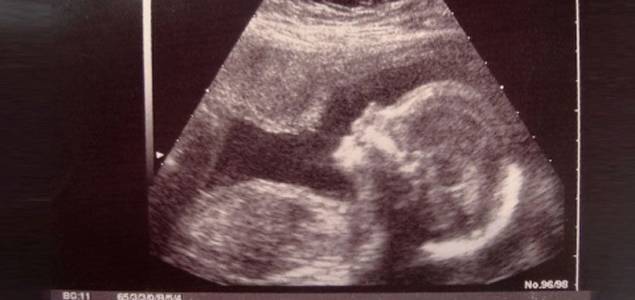
Something else needs to be cleared up. The big question about abortion is not whether someone is pro-choice or anti-choice. Nearly everyone is anti-choice when it comes to rape, genocide, and race-based slavery. People don’t want those choices to be legal, because they are immoral. So, the question isn’t whether you are for or against choice. The whole issue is about the nature of the unborn. Are they a full-fledged human being, imbued with personhood, dignity, and rights, or are they just a parasite, a clump of cells, or some other subhuman creature that can be killed?

On a personal note, something else needs to be said. If you have somehow been involved in an abortion in the past, you need to know that not only does the Bible talk about the unborn child, it also talks about the love, grace, and forgiveness of God found in Jesus Christ. So, you need to know – if that’s you – I don’t write any of this in a spirit of condemnation. I aim to follow the model of Jesus, who the Bible says was “full of grace and truth” (John 1:14).

So what does the Bible say about the unborn child? Well, one thing I’ll want to show from a handful of passages is that the Bible everywhere affirms both the value and personhood of the unborn.

Why the Incarnation Matters in this Debate

Just a couple months back, we Christians celebrated the Advent of Christ. The truth of Christmas is that God Himself entered this world – not directly to a manger – but through the womb of a virgin. It’s astonishing to consider that the Incarnation – God becoming a man – took place first in Mary’s womb. So Jesus Himself was an unborn child in utero.

There’s a unique encounter we read about in the Gospel of Luke, chapter 1. Mary comes to see Elizabeth, her relative, who is also pregnant at this time. So you have two pregnant women greeting each other here. And here’s what we read:

And when Elizabeth heard the greeting of Mary, the baby leaped in her womb. And Elizabeth was filled with the Holy Spirit, and she exclaimed with a loud cry, “Blessed are you among women, and blessed is the fruit of your womb! And why is this granted to me that the mother of my Lord should come to me? For behold, when the sound of your greeting came to my ears, the baby in my womb leaped for joy.”(Luke 1:41-44, ESV)

This passage has some remarkable implications for the nature of the unborn child. First, notice that word “baby” used. In the Greek, it’s the word brephos. That same word is used in the next chapter of baby Jesus after He is born. That tells us that, according to the Bible, whether the child is unborn or born, either way it’s a baby – not merely a clump of cells or a non-person.

Secondly, notice what Elizabeth says: When I heard your greeting “the baby in my womb leaped for joy” (v. 44). This unborn baby – later known as John the Baptist – is already fulfilling his purpose of pointing others to Jesus. And he does this by leaping for joy. Joy is an attribute of human beings; it indicates personhood. A clump of cells doesn’t have joy. And notice that Elizabeth also calls Mary “the mother of my Lord” (v. 43). Even though Mary was only in that first trimester with Jesus, Elizabeth says she’s already a mother – not a potential mother.

So, everything here assumes the unique personhood of the baby in the womb.

Biblical ethicist Scott Rae writes:

“From the earliest points of life in the womb, Mary and Elizabeth realize that the incarnation has begun. This lends support to the notion that the incarnation began with Jesus’s conception and that the Messiah took on human form in all of its stages, embryonic life included.”[2]

David in the Womb

Let’s look briefly at another couple passages.

In Psalm 51, King David is confessing his sin to God. And here’s what he says:

Behold, I was brought forth in iniquity,
    and in sin did my mother conceive me.” (Psalm 51:5, ESV)

Keep in mind, David is confessing his own sin here. But he says that this sin nature is something he’s had, not only from birth, but from conception. To have a sin nature from conception is something that can only be true of persons, who have the dignity of being moral creatures.

Or here again is a passage where David speaks of his life in his mother’s womb:

“You created my inmost being; you knit me together in my mother’s womb.” (Psalm 139:13, ESV)

David speaks of God’s meticulous care in forming him and knitting him together. And notice he doesn’t say, “You knit the clump of cells that would become me together,” or even, “You knit together the fetus that would become me in my mother’s womb.” No, he says, “You knit me together in my mother’s womb.” So, from conception, that fetus or baby in the womb was David, not some impersonal parasite.

So even though David in the womb was tiny, not yet fully developed, and lacked many functional abilities, he was still at that time David. Though there would be changes in his development over time, there was no change to his fundamental nature at birth or any time before or after that.

And by the way, science supports this conclusion. Dianne Irving is a biochemist and biologist and teaches at Georgetown University. She had this to say:

“Scientifically something radical occurs between the processes of gametogenesis and fertilization… During the process of fertilization, the sperm and the oocyte cease to exist as such, and a new human being is produced.”[3]

Where Does Human Value Come From?

All of us have an inborne awareness that human beings have value. That’s why when the choice is given between saving the life of a drowning dog or a drowning child, the answer should be obvious. Of course, we should care for animals, too, but there is something unique and sacred about human life. But even though we all have the sense that human beings are valuable, this concept has no basis in a secular worldview.

The Declaration of Independence states that:

“We hold these truths to be self-evident, that all men are created equal, that they are endowed by their Creator with certain unalienable Rights, that among these are Life, Liberty and the pursuit of Happiness.”

It makes sense that if God created us, human beings have equal value and certain natural rights – including the right to life. But if there is no God, where do human rights come from?

Many of my secular friends want to hold on to human rights – they hate things like human trafficking, rape, and racist acts of violence. But the question is, if we all came about through purely natural processes that didn’t have us in mind, then why on earth do we assume human life has value? Wouldn’t we have the same status as pigs and cows and mice and dung beetles?

As Yuval Noah Harari explained in his book Sapiens:

“The idea of equality is inextricably intertwined with the idea of creation. The Americans got the idea of equality from Christianity, which argues that every person has a divinely created soul, and that all souls are equal before God.”[4]

He then writes:

Homo Sapiens has no natural rights, just as spiders, hyenas, and chimpanzees have no natural rights.”[5] Harari is an atheist, but he recognizes the place that Christianity and the Bible had in introducing the concept of human rights to the world. Without the God of the Bible, he says, this whole idea of human rights and equality is an illusion. This is why having a theistic view of reality is so important.

The Bible teaches that you have intrinsic value – not because you have reached a certain level of development or because you have great hair or are especially smart or have contributed something to society. No. You have intrinsic value simply by nature of being made in the image of God.

Then God said, “Let us make man in our image, after our likeness….”
So God created man in his own image,
    in the image of God he created him;
    male and female he created them (Genesis 1:26-27, ESV)

Notice that this is the very first word on human beings in the Bible. The first and most foundational thing God wanted us to understand is that we are made in His image and likeness, and thus have intrinsic value.

That’s why, just a few chapters later we read:

“Whoever sheds the blood of man,
    by man shall his blood be shed,
for God made man in his own image.” (Genesis 9:6, ESV)

So because we are uniquely created in God’s image and likeness, all humans have intrinsic value. And human life should be protected for that reason. That’s why we should never mistreat others based on skin color, age, sex, or anything else – including whether they are born or unborn.

“But the Bible Doesn’t Mention Abortion”

Here is what some people argue. They say that since the Bible doesn’t explicitly mention the word “abortion,” pro-life people shouldn’t condemn it as a sin. But there’s a real problem with an argument from silence like this. The Bible also doesn’t specifically say we shouldn’t slash people’s tires or spray paint our neighbor’s house or shoplift at 7-Eleven, but that doesn’t mean those things aren’t wrong. Our cultural context is different; but the fact remains that if abortion is the killing of an innocent human being – something that science supports – then it is in fact condemned in the Bible, because all killing of innocent human beings is condemned in Scripture.

Furthermore, I would argue that a case law describing an accidental abortion is mentioned in Scripture. Here’s what we read in the Law of Moses:

“If people are fighting and hit a pregnant woman and she gives birth prematurely but there is no serious injury, the offender must be fined whatever the woman’s husband demands and the court allows. But if there is serious injury, you are to take life for life, eye for eye, tooth for tooth, hand for hand, foot for foot, burn for burn, wound for wound, bruise for bruise.” (Exodus 21: 22-25, NIV)

This law addresses the very specific situation where two people recklessly fight, hit a pregnant woman, and subsequently cause her to give birth prematurely. If no one is seriously harmed, then the husband can demand a fine be paid according to what the court allows. However, if there is any serious harm done, the lex talionis (the principle of retributive justice) ensures that every harm is matched with a proportional punishment.

In the case where either the mother or the baby are killed, the culprit had to face capital punishment (“life for life”). This is significant, because elsewhere in the Mosaic law, accidental killings did not require capital punishment. The killer was still guilty of involuntary manslaughter and would have to flee to a city of refuge until the death of the high priest (Numbers 35:9-15, 22-29). It is significant that God has a far more severe punishment in the case of accidentally killing either a pregnant woman or the baby in her womb than other accidental killings. If God views unintentional abortions this severely, what does He think of intentional abortions?

Commenting on this passage (Exodus 21:22), the 17th century reformer John Calvin wrote:

“…the unborn, though enclosed in the womb of his mother, is already a human being, and it is an almost monstrous crime to rob it of life which it has not yet begun to enjoy…”

It is interesting that Calvin said this based on Scripture and without all the benefits of what modern science tells us about the unborn.

In many passages in the Bible, we are urged to care especially for those who are helpless and need our protection.

“Defend the weak and the fatherless;
    uphold the cause of the poor and the oppressed.
Rescue the weak and the needy;
    deliver them from the hand of the wicked.” (Psalm 82:3-4, NIV)

Final Word on Forgiveness

Before I conclude, I want to add that the great message of the Bible isn’t that “abortion is wrong.” The big message is the Gospel, which states that our God is full of grace and mercy. He sent His Son Jesus to reverse the consequences of our decisions and bear our sin and guilt in our place.

He himself bore our sins in his body on the tree, that we might die to sin and live to righteousness. By his wounds you have been healed.” (1 Peter 2:24, ESV)

That means that because of Jesus’s sin-bearing death, God can heal us of all our sin – including the sin of abortion. All God requires of us is that we get honest with Him, and He’ll wash us clean as we come to Him in repentance and faith.

If we confess our sins, he is faithful and just to forgive us our sins and to cleanse us from all unrighteousness.(1 John 1:9, ESV)

Have thoughts on this post? Feel free to comment below


[1] C. S. Lewis, Miracles, 140.

[2] Scott Rae, Moral Choices: An Introduction to Ethics.

[3] Dianne N. Irving, “When Do Human Beings Begin?” Catholic Education Resource Center, https://www.catholiceducation.org/en/controversy/abortion/when-do-human-beings-begin.html.

[4] Yuval Noah Harari, Sapiens.

[5] Ibid.

Photo courtesy of thewonderweeks.com

God Makes Science Possible

By Jason Smith

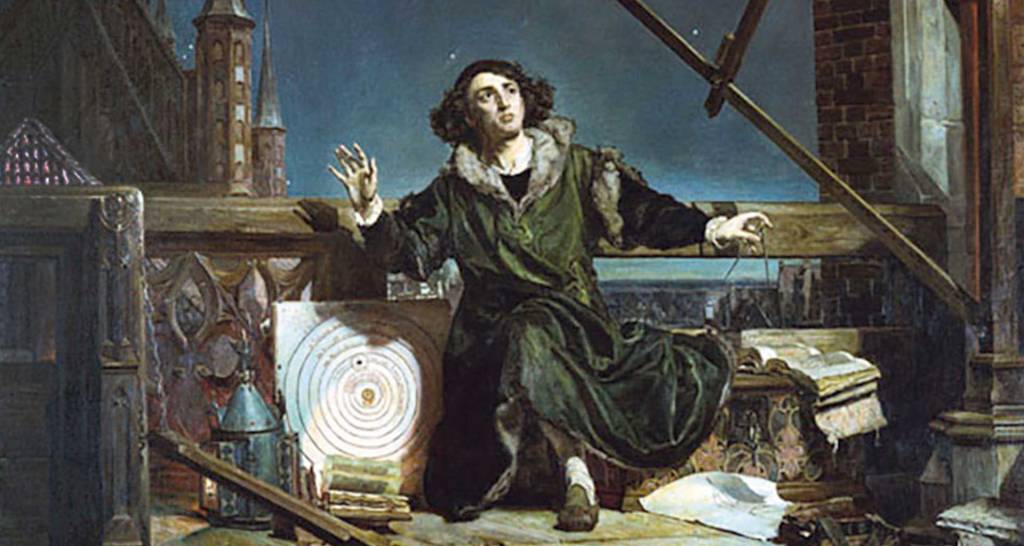
Astronomer Copernicus, or Conversations with God, 1873, by Matejko, Courtesy of Wikipedia
Astronomer Copernicus depicted in Conversations with God, 1873, by Matejko, Wikipedia

Many atheist philosophers and scientists will declare reason and faith are forever locked in a battle for the minds of men. In his book Faith vs. Fact: Why Science and Faith Are Incompatible, Jerry Coyne asserts that there is no evidence “for anything divine.”[1] Therefore, he contends, genuine science must be naturalistic and exclude any appeals to a theistic explanation. This is ironic because Coyne is open to the multiverse theory,[2] an idea that is supported by absolutely no evidence. He also believes that matter arose from non-matter and life arose from non-life. These are counter-intuitive ideas, considering every form of life we see today came from preexisting forms of life. Besides all this, it is simply unreasonable to pit science and reason against religion and faith when the founders of modern science believed in God’s existence.

In fact, many prominent scientists in the 16th and 17th centuries were unabashedly Christian by conviction and firmly committed to biblical authority. These include Robert Hooke (1635-1703), William Harvey (1578-1657), who discovered the way blood circulates throughout the body, Christian Huygens (1629-1695), Tycho Brahe (1545-1601), and Nicholas Copernicus (1473-1543). It’s a little known fact that Copernicus not only proposed the heliocentric solar system but also wrote a commentary on the book of Genesis.[3] And what about Isaac Newton (1643-1727), the so-called “father of modern science”? He wrote, “I have a fundamental belief in the Bible as the Word of God, written by men who were inspired. I study the Bible daily.”[4] Somehow I don’t think Newton would agree that faith is the archenemy of fact. Many more names could be added to this list. Johannes Kepler (1571-1630), who discovered the laws of planetary motion, wrote, “The chief aim of all investigations of the external world should be to discover the rational order which has been imposed on it by God, and which he revealed to us in the language of mathematics.”[5]

Even Galileo, whom many have tried to pit against Christianity, was in fact a Bible-believing Christian. His conflict with the Church was more a result of the Church’s irresponsible adherence to Aristotle’s view of the universe. It had nothing to do with the truthfulness of Christianity or even whether the Bible was the Word of God. Henry Morris writes, “Even though Galileo (1564-1642), for example, was officially censured for his heliocentric teachings by the Church, he himself believed the Bible and that it supported his views.”[6]

John Lennox argues that “there is strong evidence that the biblical worldview was intimately involved in the meteoric rise of science in the sixteenth and seventeenth centuries.”[7] As C. S. Lewis wrote, “Men became scientific because they expected law in nature and they expected law in nature because they believed in a lawgiver.”[8]

Historians unanimously agree that modern science chiefly arose in the Christian culture of Western Europe in the 16th and 17th centuries. But why did it emerge in that specific context and nowhere else? Rodney Stark argues that it has everything to do with Christianity’s inherent rationality and recognition that a rational God has created an orderly universe, upheld through various natural laws. The universe is not eternal, but the remarkable creation of God. Contrary to what many pagan cultures have believed, nature is not too holy to analyze and investigate. Contrary to what many Eastern religions hold, nature is not an illusion but has an objective reality that we can discover. Furthermore, nature is subject to rational inquiry and scientific investigation because it is the result of a divine Mind. Many have bought into the whole idea that prior to the irreligious Renaissance, everyone lived in the so-called “Dark Ages” of medieval religion. Stark vehemently disagrees: “… the Dark Ages is a hoax originated by antireligious, eighteenth-century intellectuals who were determined to assert the cultural superiority of their own time.”[9] In other words, the whole notion of there ever being “the Dark Ages” has more to do with the imagination and hubris of intellectual elitists in the 18th century than a true description of Europe during that era in history.

Many historians have similarly argued that modern science required certain basic assumptions that only a Judeo-Christian understanding of the world could provide. For example, according to the Bible, God in Christ “upholds the universe by the word of His power” (Hebrews 1:3). Therefore, the universe exhibits regularity and structure, so that observations made today still apply tomorrow. Only an orderly universe can be subject to experimentation and documentation.

The fact that nature also fits so perfectly with mathematical description is a feature easily overlooked, but points to it being the result of a Mind, not random chaos. Allan Sandage, known as the father of modern astronomy and discoverer of quasars does not mask the wonder he feels as a scientist: “I find it quite improbable that such order came out of chaos. There has to be some organizing principle. God to me is a mystery but is the explanation for the miracle of existence — why is there something rather than nothing.”[10]

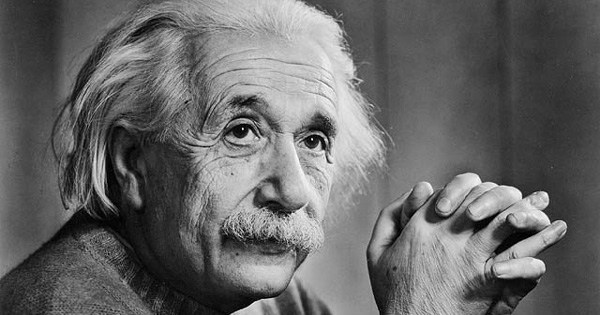
Albert Einstein (1879-1955)

Even Albert Einstein, whom many atheists incorrectly claim as their own, confessed that a godless universe could not account for the universe’s astonishing order and complexity. When asked if he believed in God, Einstein responded:

“I’m not an atheist. The problem involved is too vast for our limited minds. We are in the position of a little child entering a huge library filled with books in many languages. The child knows someone must have written these books. It does not know how. It does not understand the languages in which they are written. The child dimly suspects a mysterious order in the arrangement of the books but doesn’t know what it is. That, it seems to me, is the attitude of even the most intelligent human being toward God. We see the universe marvelously arranged and obeying certain laws but only dimly understand these laws.”[11]

The very fact that we human beings can study and grasp something of nature’s order and complexity cries out for an explanation, too. If we are merely the result of Darwinian evolution, then our brains are the product of chance collisions of atoms. The most we could say is that our brains have evolved according to our species need for survival. But this in no way means that our brains are reliable for getting at the truth. In fact, if our brains really have been fashioned by unguided natural processes, we have every reason to doubt our rational faculties! In the words of atheist John Gray, “Modern humanism is the faith that through science humankind can know the truth and so be free. But if Darwin’s theory of natural selection is true this is impossible. The human mind serves evolutionary success, not truth.”[12] In the end, atheism undercuts itself. The consistent Darwinist must saw off the very branch he is sitting on.

On the other hand, if there is a God and He designed us to be rational creatures who reflect His rational nature, we have every reason to think we can know truth.

Furthermore, Genesis states, “In the beginning, God created the heavens and the earth” (Genesis 1:1). Since God created nature, it is good, but nature is not God, as pantheistic religions teach. Therefore, it is not too sacred to study and explore. In fact, many scientists have been creationists who have been inspired in their research by a literal interpretation of the early chapters of Genesis.[13]

Despite how often we hear it repeated that science and faith are locked in mortal combat, the truth is that the modern scientific enterprise could not have even got off the ground were it not for the firm conviction in a God of reason and order. The history behind the origins of modern science is just one more testimony to the astonishing worldwide impact of that one solitary figure from Nazareth.


[1] Jerry Coyne, Faith vs. Fact: Why Science and Religion Are Incompatible (New York: Viking Press, 2015), xiii.

[2] The multiverse theory suggests that the best explanation for the incredible fine-tuning and life-sustaining properties of our universe is that there are a vast number of universes, and ours just happened to win the lottery when it comes to having the necessary physical constants.

[3] Henry M. Morris, Men of Science, Men of God (Green Forest, AR: Master Books, 1982, 1988, 2012), 21, 22.

[4] J. H. Tiner, Isaac Newton—Inventor, Scientist and Teacher (Milford, MI: Mott Media, 1975).

[5] Johannes Kepler, Defundamentals Astrologiae Certioribus, Thesis 20 (1601).

[6] Morris, Men of Science, Men of God, 21.

[7] John Lennox, Gunning for God, 27.

[8] C. S. Lewis, Miracles: A Preliminary Study (London: Fontana, 1947), 110.

[9] Rodney Stark, The Victory of Reason (New York: Random House, 2005), 35.

[10] Allan Sandage, “Sizing up the Cosmos: An Astronomer’s Quest,” (New York Times, 12 March 1991), B9.

[11] Walter Isaacson, Einstein: His Life and Universe (New York: Simon & Schuster, 2007), 386.

[12] John Gray, Straw Dogs (London: Granta Books, 2002), 26.

[13] For example, Carolus Linnaeus (1707-1778), the “father of taxonomy,” drew his inspiration to classify the various animal species from the account of Genesis 2 where Adam names the animals God brings him. His contemporaries even dubbed him a “Second Adam.” See Heather Malone, “The Second Adam: Linnaeus and His Systema Naturae” (Philosophy of Reason, 13 May 2014) or http://philosophyofreason.com/authors/the-second-adam-linnaeus-and-his-systema-naturae