
“To fear the LORD is to hate evil; I hate pride and arrogance, evil behavior and perverse speech.” (Proverbs 8:13, NIV)
Pride. It never looks good on anyone. If you trace every sin back to its root, you almost certainly will find pride lurking in the shadows. In the biblical sense, pride is an inflated view of oneself, especially with respect to God or others. Scripture urges us, “Do not think of yourself more highly than you ought, but rather think of yourself with sober judgment, in accordance with the faith God has distributed to each of you” (Romans 12:3, NIV).
The biblical Book of Daniel has much to teach us on the problem of pride: why it is an affront to God, and how we can both identify it and avoid it in our lives. Daniel provides three indications that you are struggling with pride:
- When you don’t have time to pray.
- When you have a low view of divine providence.
- When you think lightly of sin.
The Deception of Pride
Pride is subtle, because it is so hard to notice in ourselves. We have no problem noticing it in others. Sometimes, it can even seem glaringly obvious in someone else. By its very nature, pride convinces us that we don’t struggle with it.
C. S. Lewis calls pride “the great sin” and “the utmost evil.” Lewis stresses how deceptive pride can be:
“There is no fault which makes a man more unpopular, and no fault which we are more unconscious of in ourselves. And the more we have it ourselves, the more we dislike it in others.”[1]
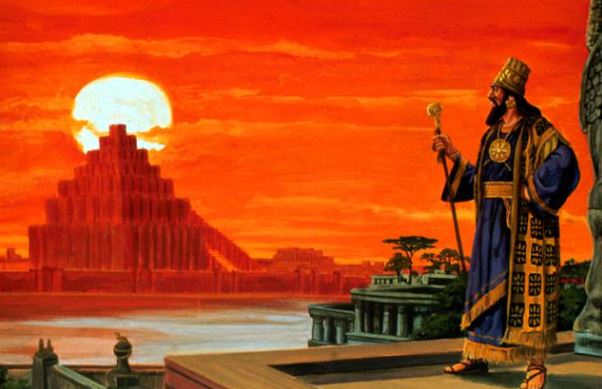
In the book of Daniel, we learn about the proud King Nebuchadnezzar, who was repeatedly warned about the limitations of his kingdom. Throughout this fascinating book, the looming question is “Who’s really in charge here – Nebuchadnezzar or the God of Israel?”
At the beginning of the book, Nebuchadnezzar has just begun his conquest of Jerusalem, the capital of Israel, God’s chosen nation. To the Babylonian king, his victory over Israel might have been all the proof needed that Yahweh, the God of Israel, was defeated. But Daniel provides a theological understanding to what really happened when Jerusalem fell to Nebuchadnezzar: “And the Lord gave Jehoiakim king of Judah into his hand, with some of the vessels of the house of God” (Daniel 1:2, ESV).
While Nebuchadnezzar might have supposed that Jerusalem fell simply because of his great might and military strategy, Daniel is cluing us in to what’s really going on. God gave Jerusalem into Nebuchadnezzar’s hand, because He was judging the nation for their unrepentant sin and idolatry (Jeremiah 20:3-18; 21:1-11; 22:11-30).
One of the lessons of Daniel is that pride blinds us to our own insecurities. We see this when Nebuchadnezzar compels his officials to bow down to a golden image soon after being told in a dream that his great empire will not last forever (Daniel 3).
Toward the end of his reign, Nebuchadnezzar looks across his mighty empire and boasts, “Is not this great Babylon, which I have built by my might power as a royal residence and for the glory of my majesty?” (Daniel 4:30). In that very moment, God humbles this proud man by making him insane and driving him away from his palace to live among beasts for seven years.
Nebuchadnezzar experienced the hard truth of Proverbs 16:18: “Pride goes before destruction, and a haughty spirit before a fall.”
When You Don’t Have Time to Pray
Daniel is the polar opposite of King Nebuchadnezzar in almost every way. Rather than having an inflated view of himself, Daniel consistently exhibits an exalted view of the one true God and a sober view of himself. Rather than claiming he possesses wisdom and power, Daniel says, “Praise be to the name of God for ever and ever; wisdom and power are his” (Daniel 2:20, NIV).
With such a high view of God, Daniel cannot afford not to pray. In fact, Daniel is repeatedly found on his knees throughout this book. In one famous passage, King Darius is inveigled into signing a decree forbidding anyone to pray to anyone but him; those who violate this injunction will have to spend the night with some hungry lions. Of course, this decree is part of a ploy by some jealous officials bent on annihilating Daniel, who now outranks them.
Ironically, the only so-called “flaw” they can find in Daniel is that he consistently and without fail was found on his knees in prayer (Daniel 6:5).
When God grants Daniel the ability to interpret Nebuchadnezzar’s dreams, he doesn’t take credit for this gift. “But as for me, this mystery has been revealed to me, not because of any wisdom that I have more than all the living, but in order that the interpretation may be made known to the king” (2:30).
In one of his prayers, Daniel recognizes that God “removes kings and sets up kings; he gives wisdom to the wise and knowledge to those who have understanding” (2:21).
It’s no accident that a humble man like Daniel had a well-honed prayer life. It’s hard to be proud when you’re on your knees before God. One sure sign that you are struggling with pride is that you rarely express dependence on God through prayer.
Like Daniel, we live in a culture that is hostile to faith in God. Since we are surrounded by secularism, it’s very easy for us to forget the power of prayer or wonder if it’s worth our time. After all, life is busy. But we can learn something from this man who lived some 26 centuries ago. Even when Daniel was a busy executive, he made sure to carve out three times each day for prayer (6:10).
When You Have a Low View of Divine Providence
The Book of Daniel especially highlights the way pride flies in the face of divine providence. Coupled with the need for communion with God through prayer is a high view of God’s sovereign direction of history.
What is tragically lacking among many moderns is a radically God-centered view of all reality. By “God-centered view” I mean a recognition that all reality is in the palm of God’s hand. His purpose in the world is what will ultimately hold sway.
“Many are the plans in the mind of a man, but it is the purpose of the LORD that will stand.” (Proverbs 19:21, ESV)
Christians need to reclaim the truth that all things exist by God’s creative power and are sustained in existence for His glory alone (Romans 11:36).
After being forced to live like a beast for seven years, Nebuchadnezzar finally lifts his eyes to heaven and only then does his reason return to him (Daniel 4:34). Nebuchadnezzar had previously grown proud, looking down on everyone else. To humble him, God gave him the mind of a beast (4:16), as if to demonstrate that a failure to acknowledge God makes you like a beast. It’s only when he lifts his face from the grass he’s been eating to gaze at the heavens above that a sound mind returns.
Nebuchadnezzar had to learn the hard way that God is the one in charge of history. He sets up kings and kingdoms. He determines where and when you live (Acts 17:26). We only have breath in our lungs as long as God supplies it, and He foreordained the date of our death (Acts 17:25; Psalm 139:16).
“A person’s days are determined; you have decreed the number of his months and have set limits he cannot exceed.” (Job 14:5, NIV)
When King Nebuchadnezzar recognized the folly of his former boasting, he now chose to praise the one true God who is sovereign over all:
His dominion is an eternal dominion;
    his kingdom endures from generation to generation.
All the peoples of the earth
    are regarded as nothing.
He does as he pleases
    with the powers of heaven
    and the peoples of the earth.
No one can hold back his hand
    or say to him: “What have you done?” (Daniel 4:34-35, NIV)
Having learned this lesson well, the king declared to all his kingdom: “Now I, Nebuchadnezzar, praise and exalt and glorify the King of heaven, because everything he does is right and all his ways are just. And those who walk in pride he is able to humble” (v. 37).
When You Think Lightly of Sin
In addition to not having time for prayer or having a small view of God’s providence, the Book of Daniel teaches us that pride manifests itself when we think lightly of sin. The Bible teaches that sin is rebellion against the King of heaven that Nebuchadnezzar spoke about. It’s choosing our own way and opposing God’s way.
Sin is so grievous because we were made for fellowship with our Creator, but sin separates us from His holy presence. When we tell ourselves that sin is not a big deal, we are sowing lies that will reap destruction. Small thoughts of God and His holiness are the devil’s playground. When we think lightly of sin, we play right into his hands.
That’s what happened to Belshazzar, Nebuchadnezzar’s successor. Although he had learned about how his predecessor needed to be humbled, he chose to not heed the warning (Daniel 4:22-23). He too lifted himself “against the Lord of heaven” and threw a party where he, his friends, his wives, and his concubines all drank from the sacred vessels that Nebuchadnezzar took from the Jerusalem Temple. Not only did they defile the vessels intended for worship of God, but they began worshiping the Babylonian gods in their drunkenness.
It was some party, I’m sure. That is, until God showed up. The music stopped when a massive hand suddenly appeared, writing a message on the wall of the palace: “Mene, Mene, Tekel, and Parsin” (Daniel 5:25). Daniel gives us a humorous picture of Belshazzar’s reaction.
“His face turned pale and he was so frightened that his legs became weak and his knees were knocking.” (Daniel 5:6, NIV)
When Daniel is summoned, he interprets the message to mean that the king’s days had been numbered, he had been weighed and found wanting, and his kingdom would soon be taken away and given to the Medes and Persians. Sure enough, this is precisely what happened, and Belshazzar was killed that very night (v. 30).
This passage is a good reminder for us today. Sin is still a big deal, and God still judges sin. God weighs the heart and we can be sure that no sin escapes His notice (Hebrews 4:13).
While Belshazzar thought lightly of the sin he committed, we again see the godly contrast in Daniel. When Daniel humbly prays to God in Daniel 9, he begins by acknowledging God’s greatness and love. He then confesses his sin.
“…we have sinned and done wrong. We have been wicked and have rebelled; we have turned away from your commands and laws.” (Daniel 9:5, NIV)
Although Daniel lived a faithful life, he doesn’t pretend he doesn’t have his own sin to confess. Rather than merely talking about Israel’s sin, he includes himself among those who have more obviously turned from God.
That’s the attitude we need to have before our holy God. Not merely, “Lord, this nation has sinned,” but, “Lord, we have sinned.”
When we confess the sin of pride, we are sure to find grace and forgiveness through the saving sacrifice of Jesus Christ.
“If we confess our sins, he is faithful and just to forgive us our sins and to cleanse us from all unrighteousness.” (1 John 1:9, ESV)
That gives great hope for those of us who struggle with the sin of pride.
Have thoughts on this post? Feel free to comment below.
[1] C. S. Lewis, Mere Christianity, 121.

 Lamp and Light