The Hardening of Pharaoh’s Heart

God clearly cares about our hearts. Throughout the Bible, we read about the significance of the heart. The heart is the seat of all human thought, emotion, and activity (Proverbs 4:23). God knows us so well, because His gaze pierces all the way through to our hearts (1 Samuel 16:7). The heart is often portrayed as the secret inner storehouse or the deep well of a person’s soul (Proverbs 20:5; Matthew 12:35; 1 Corinthians 14:26; Hebrews 4:12).

The words on our lips are usually good indicators of what’s brewing within. Jesus wisely said, “For out of the abundance of the heart the mouth speaks” (Matthew 12:34).

King Solomon urges us, “Trust in the Lord with all your heart, and do not lean on your own understanding” (Proverbs 3:5, ESV).

A heart that is right with God is a heart that gladly leans on Him as a child leans on her father’s chest. It is not too proud to trust in His grace.

Pharaoh’s Hard Heart

The Bible records God telling Moses, “When you go back to Egypt, see that you do before Pharaoh all the miracles that I have put in your power. But I will harden his heart, so that he will not let the people go” (Exodus 4:22, ESV).

This is the first time Pharaoh’s hard heart is mentioned. The Hebrew word chazaq literally means “to strengthen,” as in God strengthened Pharaoh’s heart in his rebellion. In 11 cases, chazaq is used to speak of God hardening Pharaoh’s heart (4:21; 9:2; 10:20, 27; 11:10; 14:4, 8) or more generally that Pharaoh’s heart “was hardened” (7:13, 22; 8:19; 9:35).

However, another word is also used to speak of Pharaoh’s hard heart – the Hebrew word kabad’, which literally means “to make heavy.” Three times, this word is used to speak of Pharaoh hardening his own heart (8:15, 32; 9:34), once with the general phrase “was hardened” (9:7), and twice to speak of God hardening Pharaoh’s heart (10:1; 14:4). It is a similar word to chazaq, but it has a special nuance worth noting.

Ancient Egyptians believed that in the afterlife a special ceremony took place called The Weighing of the Heart (pictured above). In this ceremony, overseen by the god Anubis, the heart of the deceased was placed on one side of a great scale and was weighed against the feather of truth. If someone had committed many sins, their heart would be weighed down, and they would be condemned to eternal restlessness. However, if they’d lived a virtuous life, one’s heart would be lighter than the feather. In this case, they would be granted safe passage to the Egyptian paradise, the fields of Aaru.

Because of this belief about one’s heart determining one’s eternal destiny, Egyptians would remove all the organs except the heart when burying their dead. Moses may be alluding to this ancient belief when he writes that Pharaoh’s heart was “made heavy” (Exodus 8:15, 32; 9:7, 34; 10:1; 14:4).

This is a reminder that in nearly every age and culture, people have been religious. God has given humanity a universal sense of right and wrong, and because of this, we all know we are supposed to be good. And we all sense the scales of justice by which our lives will be weighed.

Our Hard Hearts

It is interesting how often Scripture connects salvation to the state of one’s heart. The Bible says that we need to be saved from sin, and Jesus said that all sin ultimately springs from a defiled heart (Matthew 15:18-20). When He saw the prideful religiosity of the Pharisees, Jesus asked them, “Why do you think evil in your hearts?” (9:4). Mark tells us He was “grieved at their hardness of heart” (Mark 5:3). Sometimes, even His disciples didn’t understand because “their hearts were hardened” (6:52). But Jesus also said the greatest commandment was, “You shall love the Lord your God with all your heart and with all your soul and with all your mind” (Matthew 22:37).

It’s popular today for people to say, “Just follow your heart.” It’s cliché and catchy. But in the Bible, that sounds like generally bad advice, like something the devil would urge you to do. Instead, we are warned about the inherent dangers of following one’s heart, which is so prone to self-deception. A heart that is not directed toward God is foolish and darkened (Genesis 3:1-6; Ephesians 4:22; Romans 1:21). The prophet Jeremiah quoted God on the matter:

“The heart is deceitful above all things
    and beyond cure.
    Who can understand it?
I the Lord search the heart
    and examine the mind,
to reward each person according to their conduct,
    according to what their deeds deserve.” (Jeremiah 17:9-10, NIV)

It’s good to know that God is just and will reward people according to what they deserve, but what hope of reward do we have? The Bible also says, “There is no one righteous, not even one; there is no one who understands; there is no one who seeks God” (Romans 3:10-11, NIV). This sounds pretty bleak. Thankfully, this isn’t Scripture’s last word on the matter.

The New Heart We All Need

The prophet Ezekiel records a divine promise about those who would receive a new heart:

“I will give you a new heart and put a new spirit in you; I will remove from you your heart of stone and give you a heart of flesh. And I will put my Spirit in you and move you to follow my decrees and be careful to keep my laws. Then you will live in the land I gave your ancestors; you will be my people, and I will be your God. I will save you from all your uncleanness.” (Ezekiel 36:26-29, NIV)

This means there is hope for those who have hard hearts like Pharaoh. But it’s not a matter of having a new commitment to live a good life; it’s a matter of becoming a new creation in Christ. This can only happen through faith in His finished work on the cross and subsequent resurrection. Speaking of that time when Jesus was on the cross, the prophet Isaiah says, “he was pierced for our transgressions, he was crushed for our iniquities; the punishment that brought us peace was on him, and by his wounds we are healed” (Isaiah 53:5, NIV).

Jesus took all that defiles our hearts onto Himself so that we could be redeemed from the sin that had enslaved us. Salvation is about God cleansing our hearts by grace through faith (see Acts 15:9; Hebrews 10:22; 13:9). A new heart is a forgiven heart, a liberated heart.

Through faith in Christ, the burden of guilt is lifted, and our hearts become lighter than a feather. Jesus comforted His disciples when He was about to die for them, saying, “Let not your hearts be troubled. Believe in God; believe also in Me” (John 14:1). A heart cleansed by the shed blood of Jesus is a heart reconciled to God. “For with the heart one believes and is justified” (Romans 10:10, ESV).

A new heart is soft and fleshy (Ezekiel 36:26). It wants more of God, not less. It desires His name to be famous, not our own. It craves to be filled with His love and His Spirit, not the fleeting pleasures of sin. It seeks His leading and direction, rather than wanting its own way. Though the battle of opposing desires still rages today (Romans 7:15-25), only the fruit produced in the new heart will last into eternity (1 Corinthians 3:12-15)).

And finally, Paul’s prayers for the church were continually about the state of their hearts, showing that the heart is a subject we should not neglect.

“May the Lord direct your hearts to God’s love and Christ’s endurance.” (2 Thessalonians 3:5, HCSB)

That is my prayer for you as well.

Father of mercies, my heart is so prone to wander after worthless pursuits that seem so urgent or attractive today. Give me fresh desires from Your heart of love, that I might live the life You’ve called me to. In Jesus’ name. Amen.

Have thoughts on this post? Feel free to comment below!

Is There Evidence for the Exodus? (Part 2)

“I am the LORD your God, who brought you out of the land of Egypt, out of the house of slavery.” (Exodus 20:2, ESV)

In my last post (Part 1), we considered the archaeological evidence for Hebrew slaves in Egypt before the time of the Exodus. That is significant, but what kind of evidence supports the Exodus event itself?

According to the biblical book of Exodus, when God commissioned Moses for the task of delivering His people out of bondage, Moses was told that Pharaoh would refuse to let the people go, but that there was a purpose to this.

The Lord instructed Moses, “When you go back to Egypt, make sure you do all the wonders before Pharaoh that I have put within your power. But I will harden his heart so that he won’t let the people go.” (Exodus 4:21, HCSB)

Sin always grieves God, and a hard heart stands in opposition to His holy ways. However, the God who works all things together for good (Romans 8:28) wisely used Pharaoh’s stubborn hardheartedness as an occasion to show His glory over the false gods of Egypt. And so God sent ten mighty plagues on the land of Egypt, beginning with Yahweh turning the Nile River into blood. From then on, each plague (frogs, gnats, hail wiping out grain, skin disease, etc.) escalates in magnitude of national devastation. And each time God spares His chosen people from these disasters.

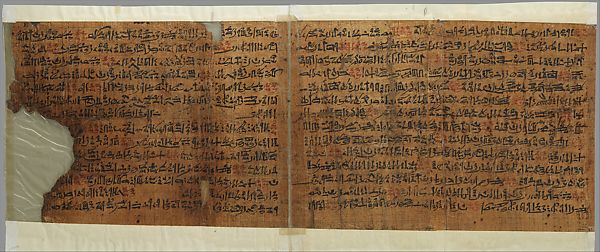
The Ipuwer Papyrus

The Ipuwer Papyrus

While many scholars have tried to come up with natural explanations for the plagues, the sequence and severity of these plagues demonstrate that these were directly from the hand of God. No natural cause would explain why the Egyptians were utterly devastated by these plagues while the Hebrews in neighboring Goshen remained safely untouched, both man and beast (Exodus 8:22; 9:26).

We also have a clue from the only surviving copy of an Egyptian text that has striking parallels to the Exodus account called The Admonitions of an Egyptian Sage, more often known as the Ipuwer Papyrus. Many scholars agree that this is a very early document, some placing it in the 18th Dynasty, the very time of the Exodus (ca. 15th century BC) because of certain linguistic features. The Ipuwer is basically a lengthy poem or prayer to the sun god Ra, written by an Egyptian sage lamenting a series of disasters in the land. I mentioned in my last post that the pharaoh would never let a defeat be recorded in the royal annals. But Ipuwer, the author, seems to be a sage reflecting on the state of the empire he once loved, not a court scribe, because he’s even critical of the pharaoh: “the king has been deposed by the rabble.”[1]

Ipuwer says “pestilence is throughout the land, blood is everywhere, death is not lacking, and the mummy-cloth speaks even before one comes near it.” He writes, “Indeed, the river is blood, yet men drink of it.”

Titus Kennedy neatly sums up the significance of the Ipuwer Papyrus:

“Passages in the poem, such as the river being blood, blood everywhere, plague and pestilence throughout the land, the grain being destroyed, disease causing physical disfigurement, the prevalence of death, mourning throughout the land, rebellion against Ra the sun god, the death of children, the authority of the pharaoh being lost, the gods of Egypt being ineffective and losing a battle, and jewelry now being in the possession of the slaves, are all occurrences in common with the Exodus story.”[2]

To read the Ipuwer Papyrus alongside the Book of Exodus is fascinating. The parallels are simply too clear to downplay. Many scholars have, of course, noted the similarities. However, most have asserted that this reflects a certain genre of “national disaster” folklore at the time rather than concluding that both could be referring to the same historical events. As Hoffmeier observed in the last post, your philosophical presuppositions determine what you will see. The problem with this easy dismissal is that if Ipuwer really was lamenting actual events in history, the above presupposition prevents someone from ever knowing it. One might dare to ask, What would Ipuwer need to say to demonstrate he really was referring to events he witnessed? After all, Ipuwer seems to be talking about a truly devastating time standing in contrast to Egypt’s glorious past.

The Date of the Exodus

There is considerable debate between biblical scholars as to when the Exodus actually took place. Most would place it in either the 15th, 13th, or 12th century BC. Because I take the Bible to be both the authoritative and understandable Word of God, I have no problem accepting the biblical timelines.

One of the clearest statements for dating the Exodus is 1 Kings 6:1: “In the four hundred and eightieth year after the people of Israel came out of the land of Egypt, in the fourth year of Solomon’s reign over Israel, in the month of Ziv, which is the second month, he began to build the house of the Lord.”

Scholars almost universally agree that Solomon began building the temple in 966 BC. We can then take the 480 years given here, do a little math, and come up with an approximate date of 1446 BC for the Exodus. Scholars who come up with a 12th or 13th century date have to say that the 480 years is a nice round number based on the number of idealized generations, allegedly 40 years each.[3] That strikes me as very strange since there is no indication from the text itself that this is what is going on.[4]

The Pharaoh of the Exodus

Once we have determined the date for the Exodus we can know the most probable pharaoh at this time based on Egyptian chronological records. And we can see if we have any supporting evidence for our dating of the Exodus, too.

According to Exodus, Moses was forced to flee from Egypt after killing an Egyptian guard. Moses spent the next 40 years in the Midianite desert, settling down with his wife Zipporah and becoming a nomadic shepherd.

The Bible says, “After a long time, the king of Egypt died” (Exodus 2:23, HCSB). Later, God tells Moses not to fear returning to Egypt “for all the men who were seeking your life are dead” (Exodus 4:19, ESV). Based on these verses, the pharaoh when Moses fled from Egypt must have been king for a long time, possibly at least forty years.

This is a crucial piece of evidence because most pharaohs did not reign for a very long time. Many didn’t even last ten years. There is, however, one and only one pharaoh in either the 18th or 19th dynasties (the possible eras for the Exodus) who reigned more than forty years, and his name was Thutmose III. According to Egyptian chronologies, that would mean his son, Amenhotep II was the king of Egypt when Moses returned for the Exodus. This is another factor supporting the early date of 1446 BC. The long reign of Thutmose III followed by Amenhotep II reigning at the time of the Exodus in 1446 BC fits together nicely.[5] However, no king during the 13th or 12th centuries reigned 40 years.

Since there are clues pointing to Amenhotep II being pharaoh at this time, it’s worth considering what we know about him from archaeology. Here’s what’s really intriguing. Amenhotep II was known for unrestrained arrogance of biblical proportions. Archaeologists have found inscriptions and monuments built in his honor where he claimed to be the greatest pharaoh in history. His boasts included rowing a ship faster than 200 Egyptian sailors, shooting an arrow through a copper target as thick as a palm, slaying 7 of the greatest warriors of Kadesh, and capturing more slaves than any other pharaoh in Egyptian history.

This was the pharaoh’s way of saying, “I’m kind of a big deal.” Does this align with what we know about the pharaoh of the Exodus? Well, let’s see. When Moses announced that Yahweh demanded he let the Hebrews go, the pharaoh proudly scoffed, “Who is Yahweh that I should obey Him by letting Israel go? I do not know anything about Yahweh, and besides I will not let Israel go” (Exodus 5:1, HCSB).

Throughout the Exodus narrative (Exodus 5-14), the pharaoh strikes us as arrogant, stubborn, and foolish – almost like someone who was compensating for some major insecurities. Such a psychological profile directly matches everything we know about Amenhotep II.

Evidence for a Crippled Army and Missing Slaves

In addition to his megalomaniacal boasts, Amenhotep II also completed only two military campaigns during the span of his whole reign. This seems strange when you compare it to all his predecessors, who averaged far more military campaigns. Thutmose III, by comparison, led at least 17 campaigns. What would lead the hotheaded Amenhotep II to drastically reduce the number of Egypt’s armed invasions?

Could it be that his once unstoppable army was drastically crippled – even annihilated – in an event at the Red Sea? This circumstantial evidence certainly fits the narrative given in Exodus 14, which says that after the Hebrews left Egypt, Pharaoh changed his mind and sent his entire army in pursuit, including “all Pharaoh’s horses and chariots and horsemen and his army” (Exodus 14:9, ESV). We then read that after Israel had made it safely across the parted Red Sea,

“…the Lord threw them [the Egyptian army] into the sea. The waters came back and covered the chariots and horsemen, the entire army of Pharaoh, that had gone after them into the sea. None of them survived.” (Exodus 14:27-28, HCSB)

It’s worth noting that Scripture never says that Pharaoh himself drowned in the Red Sea, only that his entire army perished. No wonder Amenhotep II had only one campaign after the Exodus.

Elephantine Stele of Amenhotep II

According to the Elephantine Stele of Amenhotep II inscription, this last campaign was more of a massive slave raid than a conquest of land. Amenhotep II claimed to have captured 101,128 slaves on this raid. If accurate, this would be about 20 times larger than the next largest slave raid in Egyptian history. How interesting that this pharaoh known for ridiculous exaggeration now says he’s also better at bringing in slaves than anyone else! Kennedy observes, “Because this happened right after the Exodus, perhaps it is indicative of an urgent need to replace the lost slave population in Egypt.”[6]

One thing most Exodus scholars agree upon is that future excavations in Egypt will likely shed more light on the timing and details of this central event in Israel’s history. After all, satellite imagery suggests that less than 1 percent of ancient Egypt has actually been excavated to date.[7] The Bible-believing Christian should rejoice in this fact. Once again, archaeological excavations have only strengthened the case for Scripture’s accuracy. We have only examined a portion of the incredible circumstantial evidence that has already been discovered in support of the biblical Exodus.

Have thoughts on this post? Feel free to comment below!

[1] “The Admonitions of Ipuwer,” https://www.worldhistory.org/article/981/the-admonitions-of-ipuwer/

[2] Titus Kennedy, Unearthing the Bible, 55.

[3] This number of 40 years comes from the 40 years of wandering in the desert when a whole generation perished, but that was a specific case not a hard rule that 40 years must always equal one generation in biblical timelines. It’s also worth noting that only those who refused to believe God’s promises perished in the wilderness (Hebrews 3:17), and that the 40 years corresponded with the 40 days they spied out the land (Numbers 14:34). Ironically, supporters of the late view have to take the 40 years mentioned in Numbers 14:34 and Deuteronomy 34:7 literally to make their case, even while they do not take the 480 years given in 1 Kings 6:1 literally.

[4] Other passages supporting the early date of 1446 BC include Judges 11:26.

[5] The problem with the later 13th century or 12th century dates for the Exodus is that in both cases, the pharaoh at those times (Ramesses II or Ramesses III respectively), does not succeed a pharaoh who reigned a long time, which seems to contradict Exodus 2:23.

[6] Kennedy, 57.

[7] Mark Janzen, Five Views on The Exodus, Grand Rapids, MI: Zondervan, 2021, 16.

Is There Evidence for the Exodus? (Part 1)

Modern scholars often assume the massive migration of Hebrew slaves out of Egypt recorded in the biblical book of Exodus never happened. The Exodus is thought to be nothing more than religious folklore, and that there is no hard evidence for such an event in the ruins of Ancient Egypt.

For example, critical scholars Israel Finkelstein and Neil Silberman claim, “The saga of Israel’s Exodus from Egypt is neither historical truth nor literary fiction… to pin this biblical image down to a single date is to betray the story’s deepest meaning. Passover proves to be not a single event but a continuing experience of national resistance against the powers that be.”[1]

But is this really the case? What can we learn from the actual evidence?

Biblical scholar and archaeologist James K. Hoffmeier has found undue skepticism among many of his peers. He observes, “If it were not still Scripture to Jews and Christians, the Bible probably would not be treated in such a condescending and dismissive manner.”[2]

Egyptologists concede that ancient Egyptians almost never recorded embarrassing losses. The pharaohs always made sure they looked like stellar leaders in the history books. Are we at all surprised? We are, after all, talking about the same human nature that craves approval from peers and longs for affirmation wherever it can get it. Even today, politicians will trumpet their successes but rarely begin a speech discussing their failures. But in Ancient Egypt, the pharaoh controlled the press. That being the case, we really shouldn’t expect to find positive evidence for the biblical Exodus in Egypt’s royal annals.

The remarkable thing, however, is that there is a truckload of circumstantial evidence for the biblical Exodus. I say “circumstantial” because while there may not be much in the way of direct evidence outside of Scripture, the evidence we do have strongly supports the circumstances that would have to be true if such an event were indeed historical.

Another point worth mentioning is that the Bible itself must be properly viewed as crucial evidence for the Exodus event. This may sound obvious, but the scholarly consensus often presupposes the Bible is a book full of myths. This is unwarranted, because an unbiased reading of Exodus reveals a text written as history. Furthermore, outside the Exodus narrative itself (Exodus 1-15), this redemptive event is referenced more than 120 times in the Old Testament. And in every case, the author seems to believe the Exodus really happened and that Moses was the historical man at the helm. In fact, it is the event that explains why Israel is a nation in the first place, and why Israel must serve the Creator-God Yahweh.

Circumstantial Evidence: Hebrews Lived in Egypt

So what is the circumstantial evidence supporting the historicity of the Exodus? One argument used by field archaeologist Titus Kennedy is called “The Point A to Point B argument.” Simply put, if there is good evidence for Hebrews living in Egypt (Point A) before the Exodus on the biblical timeline, and there is also good evidence for Hebrews living in Canaan (Point B) after that time, this would suggest that some kind of mass migration occurred.

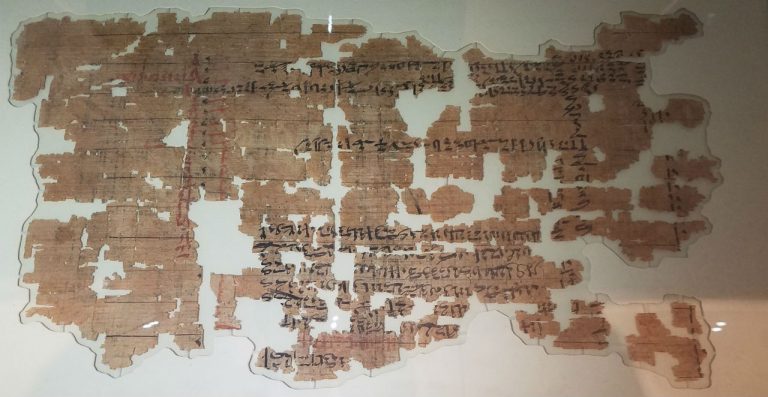
Papyrus Brooklyn

Egyptologists have discovered a list of Semitic servant or slave names on papyrus dated from about the 17th century BC.[3] This list, called Papyrus Brooklyn, gives both the Semitic name of the servant and the Egyptian name they were given. But here’s what’s fascinating. Nine of the servants listed have specifically Hebrew names that can be aligned very closely with other Hebrew names in the Bible. For example, one of the servants is named Shiphrah, the name of one of the Hebrew midwives mentioned in Exodus 1:15. Another servant is even named “Hebrew”!

This papyrus is powerful evidence not only that Semitic people (sometimes called Asiatics) lived in Egypt, but more specifically that Hebrews lived as servants or slaves in Egypt before the biblical Exodus. Interestingly, even critical scholars admit that the evidence points to Semitic people living in Egypt before the date of the Exodus (see Part 2 for a discussion of the Exodus date).[4]

Bricks without Straw

In the Book of Exodus, we read that when Moses first came to Pharaoh demanding he let God’s people go, Pharaoh was insulted. He said that such a demand to be released proved that the Hebrew slaves must be getting lazy. So he commanded his taskmasters to no longer give straw – a necessary ingredient for making bricks – to the slaves, adding that their brick quota would not be reduced. This led to the Hebrew foremen angrily blaming Moses and Aaron for coming to Egypt only to make their hard labor worse (Exodus 5:1-21).  

Mural at Tomb of Thutmose III

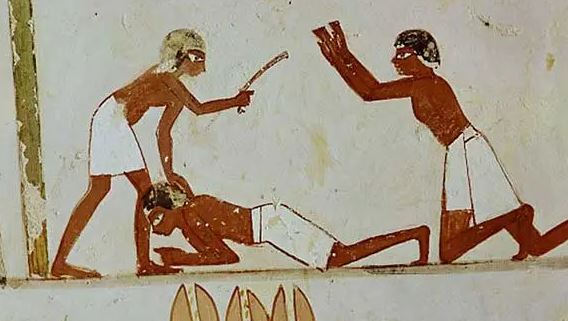
Interestingly, there is a mural on the tomb of Thutmose III, a pharaoh near the time of the Exodus, showing Semitic slaves making bricks. There is also a hieroglyphic text about an Egyptian taskmaster reminding slaves not to be idle or they’ll receive a beating. We also have a wall mural depicting this very thing, lending support to the biblical story of Moses killing a taskmaster who ruthlessly beat a slave (Exodus 2:11-12).

Mural at Tomb of Mennah, with Hebrew slave being beaten.

On top of all this, there is also an Egyptian text called the Louvre Leather Roll. Kennedy notes that this text “describes a situation similar to what is recorded in Exodus – that in this time period quotas of bricks were imposed on slaves, but when they did not have the necessary materials to complete all of the bricks, such as a lack of straw, the slaves were punished.”[5]

Did Hebrew Slaves Build the Pyramids?

Some have wondered if the Hebrews had any part in building the pyramids. First, it’s worth noting how much mystery surrounds the building of these massive ancient structures. The largest of the Great Pyramids, called Cheops, consists of 2.3 million stone blocks. These blocks weigh an average of 2.5 tons, with some of the blocks weighing as much as eighty tons! For comparison, the typical 18-wheeler truck can pull up to 24 tons. So, the question is: How in the world did they do it?

The Greek historian Herodotus (484-425 BC) said that when he visited Egypt, he learned that a work force of 100,000 slaves built the pyramids.[6] The Jewish historian Josephus (AD 37-100) said the Egyptian taskmasters “set them [the Hebrews] also to build pyramids.”[7] The consensus of modern scholars, however, is that slaves were not used because there is evidence of a workforce having their own settlement, with their own homes and provisions for all the food they could want.[8] So who is right?

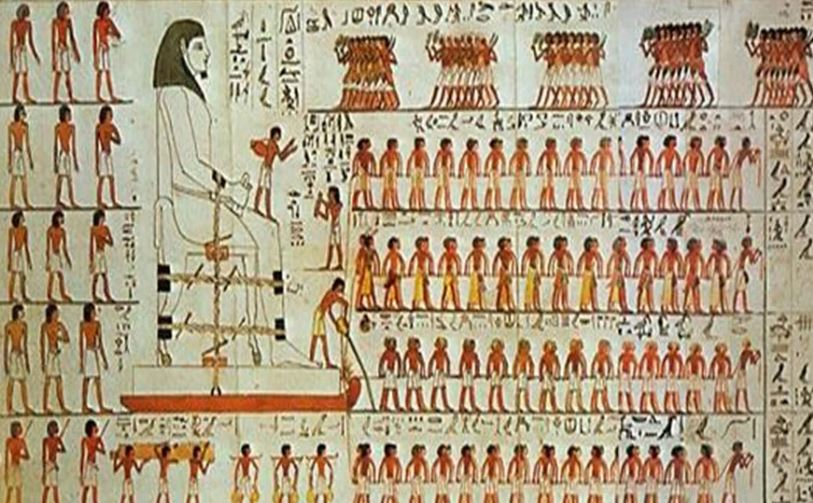
I think it’s impossible to say for sure that Hebrews built the pyramids. But here are some things we do know. Based on the Bible, the Hebrew slaves were used for many massive state projects involving mortar and brick (Exodus 1:10-14). We even have archaeological evidence of a Hebrew slave force in Egypt.[9] There is also a wall mural showing men using ropes to pull massive stones for building the pyramids. One mural seems to depict men using wet sand to help move massive structures.

Mural of slaves pulling large stone structure with ropes.

Again, none of this is conclusive evidence. Most Egyptologists would even date the construction of most of the pyramids to before the Hebrews were even in Egypt. Still, dating methods aren’t infallible; so we can’t rule it out. Scripture never actually claims that the Hebrews built the pyramids, so we shouldn’t be dogmatic on this point. What we can conclude is that a large Hebrew population did live in Egypt prior to the Exodus.

Continue reading in the next post “Is There Evidence for the Exodus? (Part 2)

Have thoughts on this post? Feel free to comment below!


[1] Finkelstein and Silberman, The Bible Unearthed, 70-71.

[2] James K. Hoffmeier, “The Exodus and Wilderness Narratives,” in Ancient Israel’s History: An Introduction to Issues and Sources, edited by Bill Arnold and Richard Hess, Grand Rapids, MI: Baker, 2014, 48.

[3] Titus Kennedy, Unearthing the Bible: 101 Archaeological Discoveries that Bring the Bible to Life, 48-49.

[4] Mark Janzen writes, “Egyptologists agree that excavations in the delta reveal a strong Semitic presence during the Hyksos era (ca. 1650-1540 BC), continuing into the New Kingdom.” Janzen, “The Exodus: Sources, Methodology, and Scholarship,” Five Views on The Exodus, Grand Rapids, MI: Zondervan, 2021, 19.

[5] Kennedy, Unearthing the Bible, 51.

[6] Miroslav Verner. The Pyramids: The Mystery, Culture, and Science of Egypt’s Great Monuments. New York: Grove Press, 2001.

[7] Josephus, Antiquities, 11:9.1.

[8] This shouldn’t be used as evidence against the pyramid builders being slaves. The Bible describes the Hebrew slaves as having their own settlement in Goshen (Genesis 47:27; Exodus 8:22; 9:26), having their own homes (Exodus 12:1-13) and eating plenty of delicious food (Numbers 11:5). Perhaps this is one of the ways the pharaohs compensated the Hebrews for their backbreaking work in hopes of preventing an uprising.

[9] James K. Hoffmeier, Israel in Egypt: The Evidence for the Authenticity of the Exodus Tradition.