Should We Teach Our Kids about Santa?

Santa Claus is coming to town. He’s back in the shopping malls and showing up at various holiday events. The jolly old, white-bearded guy in a red suit certainly is popular in our American culture. What’s not to love about a guy who lives at the North Pole, employs elves, magically soars through the sky with flying reindeer, and delivers Christmas gifts to children all around the world each Christmas Eve?

The question many thoughtful Christian parents have is: “Should we teach our kids about Santa?”

The Purpose of Advent

Let me begin by asking another question: “What is the purpose of the Advent season?” Most Christians would agree this season is about the birth of Jesus.

That first Christmas, the angel proclaimed to the shepherds, “Fear not, for behold, I bring you good news of great joy that will be for all the people. For unto you is born this day in the city of David a Savior, who is Christ the Lord” (Luke 2:10-11, ESV). What made it “good news of great joy” is that the message was about Jesus. If you want your Christmas season to be filled with “great joy,” you will want Jesus to be at the center of all your family’s traditions and festivities. Without Jesus, all the parties and presents are ultimately meaningless and empty.

“Christmas” literally means “Christ’s mass.” From the beginning, Christmas has been a time to especially contemplate the wonder of God’s love for a lost world, that the Son of God would come as a baby. Of course, the goal of Christ’s coming was primarily so that He would one day die as a substitute for sinners and rise again.

The angel told Jesus’ adoptive father Joseph, “She will bear a son, and you shall call his name Jesus, for he will save his people from their sins” (Matthew 1:21, ESV). Jesus came as the true Light of the world, and His primary mission was to save those who were lost in sin.

If Jesus and the salvation He brings is the reason we celebrate Christmas, then as parents, doesn’t it make sense to do all we can to put the focus on Him, not lesser distractions?

Harmless Myth?

As you look around our home during the Christmas season, you won’t find much of Santa Claus among our decorations. That’s not because we are anti-Christmas or even anti-Santa, but because we are very pro-Christmas and pro-Jesus. And my wife and I want our three boys to know that nothing compares with the gift God has given us in His Son, Jesus Christ.

Many parents might say, “But there’s nothing wrong with encouraging kids to believe in a magical myth while they are young.” But is that true? I think it’s a wonderful thing to read fiction to your kids. It fuels their imaginations, can teach deep lessons, and helps them grasp the real world in new and powerful ways. But that’s not the same thing as encouraging your kids to believe the fictional world is true.

Colossians 3:9 says, “Do not lie to one another, seeing that you have put off the old self with its practices.” Is it possible to encourage belief in a myth while not lying? I don’t think it is. And if you are teaching your kids about both Santa and Jesus, yet not distinguishing which is myth and which is true, can you see why this could lead to problems later? They may struggle to believe other things their parents have taught them, because they have a clear example of myth being presented as reality.

Old Man in the Skies?

Santa is often described in ways that remind many people of God. He’s seemingly all-knowing: “He sees you when you’re sleeping; he knows when you’re awake.” He fits the image some have of God as an old, white-bearded guy in the skies. And then he rewards good behavior: “He knows if you’ve been bad or good, so be good for goodness sake.”

But on closer examination, Santa is lightyears from the true God. God is infinite and all-knowing, and Santa is a chubby old man who needs elves and reindeer to help him do his job. The caricature of God as an old man in the sky is both false and dishonoring. God is eternal and all of creation depends on His sustaining power moment by moment. And unlike Santa, God is gracious and forgiving. Rather than merely rewarding the nice and leaving the naughty with a lump of coal, the one true God has given His beloved Son to die for His enemies.

While the mythical Santa can bring toys and trinkets that cannot last, the true and risen Jesus can give eternal life and the hope of an inheritance that is “imperishable, undefiled, and unfading” (1 Peter 1:4). Rather than giving Santa and Jesus equal attention this Christmas season, why not teach your kids about the true and living Jesus as the One who is always present for them (not just once a year!) and will meet their every need?

So why in the world would we focus on the myth of Santa, when we can teach our kids the glorious, joy-giving truth about Jesus? There’s simply no comparison!

The Real Saint Nicholas

Lastly, one thing we have done is teach our boys about the true Saint Nicholas from history, because he’s a great example of one who boldly stood for Jesus Christ and suffered for his faith.

Soon after ascending the throne in AD 284, the wicked Roman emperor, Diocletian, began a full-scale persecution dedicated to wiping Christianity from the face of the earth. Diocletian had copies of Scripture burned and imprisoned many bishops, including Nicholas of Myra. Many years later, Constantine became the Roman emperor, and he ordered the release of all bishops.

Around the time that Christianity was gaining more influence, a heretic named Arius began to deny Jesus was fully God. Arius gained quite the following and his teachings caused a lot of division in the church. So, in the year 325, Constantine called on 300 bishops across the Roman Empire to meet in Nicaea and come to unity on the question of Jesus. As Arius stood up before the assembly and began to pontificate, many of the bishops grew angry.

Many of these bishops at the council still had scars and maimed limbs from suffering brutal persecution for their faith in Jesus. Now they had to listen to this snobbish academic spout blasphemous ideas about their Lord. One man strode right up to Arius and smacked him across the face. Arius cried foul, and that bishop was restricted from the remainder of the Council. That bishop’s name? You guessed it: Saint Nicholas of Myra, better known today as “jolly old Saint Nick.”

The irony of all the attention going to Santa at Christmastime is that the real Saint Nicholas was passionate about people knowing the truth about Jesus. So, if someone asks you if you believe in Santa, you can say, “You bet I do, and he had a mean left hook!”

Let’s commit to worshiping Jesus and making Him known this season, beginning with our own homes.

Have thoughts on this post? Feel free to comment below!

The Complex Emotion of Anger

Uh-oh. There’s that feeling again. It’s like a deep tremor welling up inside. A volcano with growing subterranean pressure. We all know what it’s like to experience the heat of anger. At times, it’s directed at a situation, but more often anger is directed at a person, usually someone you know well. At other times, you are on the receiving end—the volcano is erupting on you!

Anger can wreck friendships and send marriages spiraling into a tailspin. At its worst, it can lead to abuse and tragedy. If left unchecked, anger can be the most destructive human emotion. The Bible gives clear warnings about anger:

“Refrain from anger and turn from wrath; do not fret—it leads only to evil.” (Psalm 37:8, NIV)

Nearly everywhere you look, you can find areas where anger is harming our society. Just consider the problem of road rage. According to a recent study, “More than 1,000 people in the U.S. die each year in road rage incidents.”[1] In their book Anger Kills, authors Redford and Virginia Williams found that those who are prone to angry outbursts are more likely to have coronary heart disease.[2] No wonder the Bible says, “Good sense makes one slow to anger, and it is his glory to overlook an offense” (Proverbs 19:11, ESV).

So how do we rightly deal with this volatile emotion?

Admit You Are Angry

If we are going to make any progress in dealing with our anger, we have to be willing to first admit when we are angry. People like to say, “I gave her a piece of my mind” or “I guess I lost my cool there.” But what they really mean is “I was angry.” Maybe you’ve heard the remark: “I don’t get mad, but I do get even.”

Most often, we Christians struggle to admit we are angry because we have been taught that anger is a sin. And certainly, there are more than a few warnings about anger in the Bible. “An angry man stirs up dissension, and a hot-tempered man abounds in transgression” (Proverbs 29:22, BSB). But I would argue that passages like this speak of misdirected and uncontrolled anger. The Bible says, “In your anger, do not sin” (Ephesians 4:26, NIV).

Anger is not a monochrome emotion that we can so easily file away in the “sin” category. As David Powlison said, anger “is a complex human response to a complex world.”[3] After all, God expresses anger at sin.[4] Throughout Scripture, we read of God’s wrath or righteous indignation in response to injustice, idolatry, and sinful distortions of His good design for humanity.

Jesus Christ, known for His meekness and gentleness, expressed anger many times in the Gospels too – usually in response to self-righteous hypocrisy.[5]

On one occasion, the religious elite demonstrated more concern for catching Jesus in their legalistic trap than for the plight of a man with a withered hand. Their cold-hearted callousness toward real suffering made Jesus hot with righteous anger. He “looked around at them with anger, grieved at their hardness of heart” (Mark 3:5, ESV).

Anger is the natural human response to evil and injustice. It is the heart crying out, This is wrong. So we should not be reticent to admit when we feel angry. Owning our anger will allow us to rightly deal with it.

Restrain Your Immediate Response

While anger can be the natural human response to wrongdoing, that doesn’t mean it’s always expressed in a good way. In fact, because of our sin nature, our tendency is to express anger in an ungodly or self-centered way, rather than in a godly way like Jesus. The Book of James reminds us about the importance of hitting the brakes to “slow down” when we feel that first surge of anger.

“Know this, my beloved brothers: let every person be quick to hear, slow to speak, slow to anger; for the anger of man does not produce the righteousness of God.” (James 1:19-20, ESV)

Consider this scenario. A teenager “borrows” his dad’s Ford Mustang without asking in order to impress a girl and brings it back with an ugly scrape across the door. When his father discovers what happened, what’s his initial response? He’s angry. Very likely, this man will want to fly into a rage, lashing out at his son for his reckless and irresponsible behavior. What his son did was wrong. So to feel anger is only natural, but James would warn this man to hit the brakes. Because a knee-jerk response in anger is almost always destructive.

“People with understanding control their anger; a hot temper shows great foolishness.” (Proverbs 14:29, NLT)

You may be thinking, Sure, controlling my anger is a great idea. Easier said than done. It’s true that stopping yourself in the moment might not be easy. Ultimately, patience, gentleness, and self-control are produced by the Holy Spirit, not something we can achieve through mere human effort.

However, with God’s help we can learn to respond in the moment in a way that honors Him. Practically speaking, this might mean stepping away temporarily when you start to feel your blood boil. Marriage expert Gary Chapman recommends a husband and wife learn to “call timeout” when emotions begin to surge.[6] This means giving each other space for a brief time, so that both can come back to discuss the matter calmly without having said or done something they regret. Sometimes a walk around the block is enough time to cool the temperatures so that feelings aren’t hurt and a peaceful compromise is reached.

Identify the Cause of Your Anger

We’ve all heard stories of school shootings or homicides that didn’t seem to add up. People say things like “He seemed like such a nice guy” and “I never saw it coming.” No doubt this is in large part because people are good at wearing “nice” on the outside even while unaddressed anger is quietly brewing inside.

While such examples may sound extreme, they simply demonstrate what can happen when anger is not confronted. I’ve talked to several people who have admitted that mistreatment, neglect, or a lack of love in their home growing up planted deep seeds of anger. The long-term effect may even be ignored or downplayed for a time. But because the hurt is still there, they are sometimes shocked by their own angry and emotional outbursts.

For others, it is the deep wounds of a past relationship that planted those seeds of anger. They know it’s there, but they can’t help grieving over the pain of the past. And sometimes that grief mingles into bitterness and hatred.

Neil T. Anderson, who has helped countless people deal with deep-seated anger, said, “Whenever we are asked to help someone who has a root of bitterness, the source of the problem has always been unforgiveness.”[7]

It’s no surprise that right after Paul tells the Ephesians, “Get rid of all bitterness, rage, and anger,” he says, “Be kind and compassionate to one another, forgiving each other, just as in Christ God forgave you” (Ephesians 4:31-32, NIV).

The reality is that we all experience anger. I am certainly not exempt from this emotion. We may say, “I’m just strong-willed,” but that might mean we have a fear of being proven wrong. Or we may say, “I just care deeply about the truth,” but oftentimes there’s some insecurity just below the surface.

We are all broken people. But God is in the business of putting broken people back together. By His Spirit and His grace, we can find fresh joy in the Lord. We can experience the peace that He alone gives. But if we don’t deal with the roots of our anger, anger will continue to get the better of us.

Through the Spirit, Paul told the Ephesians, “Be angry and do not sin; do not let the sun go down on your anger, and give no opportunity to the devil” (Ephesians 4:26-27, ESV). In other words, anger is not always sinful. However, it does no good to dwell on your anger. Or, better said, to let anger dwell in you.

Surrender Your Anger to God

Once we have admitted we feel angry, the first and most important thing to do is surrender it to God. Put that rage, animosity, and ill-feelings toward someone else in God’s hands. It’s a burden He can handle, and He wants to take it off your shoulders.

Again, we often have good reasons for feeling angry. That’s not what is sinful. But harboring and nursing anger leads to a warfare mindset rather than a peace-making mindset. And what we really want is to see the wrongs made right. So who better to entrust your anger to than the God of righteousness and justice?

Remember, God cares more about the wrongs done against you than you do.

“The LORD is righteous in all his ways and faithful in all he does.” (Psalm 145:17, NIV)

The Lord is more passionate about justice than you or me. So let’s put our case in His hands. He will do what is right, but with perfect authority and timing.

That’s what Jesus did. “When He was reviled, He did not revile in return” (1 Peter 2:23, ESV). When He was mocked, beaten, and mistreated in the most appalling and shameful ways imaginable, Jesus “continued entrusting Himself to Him who judges justly” (1 Peter 2:23, ESV).

Judas betrayed Jesus with a kiss, but Jesus called him His “friend.”[8] His own disciples scattered when Jesus was arrested and killed. But after His resurrection, the Lord graciously approached those same guys who had abandoned Him. He even embraced the one who had previously denied ever knowing Him.

Jesus had every right to be furious for the way He, the spotless Lamb, was being treated, but He surrendered all His righteous anger to His Father in Heaven. And ultimately that’s what you and I are called to do in the power of the Holy Spirit.

Have thoughts on this post? Feel free to comment below!


[1] “Boiling Point” presented at the Mental Health Action Week, 2008, Mental Health Organization.

[2] Redford and Virginia Williams, Anger Kills.

[3] David Powlison, Good and Angry: Redeeming Anger, Irritation, Complaining, and Bitterness, Kindle edition.

[4] Psalm 7:11.

[5] For example, see Matthew 23.

[6] Gary Chapman, Anger: Handling a Powerful Emotion in a Healthy Way.

[7] Neil T. Anderson and Rich Miller, Managing Your Anger, 152.

[8] Matthew 27:50.

Mothers Are a Gift from God

By Jason Smith

“Sweet Lullaby,” sculpture by Alice Heath.
Honor her for all that her hands have done,
    and let her works bring her praise at the city gate.
(Proverbs 31:31, NIV)

It’s pretty hard to overstate the importance a mother has in her child’s life. Our life journeys begin within our mother’s womb. Moms alone have literally been there from the beginning. The nurture and care flowing from a mother’s heart are irreplaceable. And the love a mother has for her children is simply beyond measure.

I am deeply grateful to God for my mother, Sandy Smith. There are so many times in life that I can look back and reflect on how essential my mother’s love, correction, and care proved to be. She has poured her heart and soul into my life in more ways than I can count.

I can say the same for my wife, Whitney, and the undeniable care she shows to our three boys. That same commitment to her children is also seen in my mother-in-law, Shirleen, and in countless other moms I have met.

Mothers are a gift from God.

Honor Your Mother

I’m thankful that our culture still celebrates Mother’s Day as a day to honor the women who have raised us and helped to mold us into the people we are today. Interestingly, Mother’s Day has only been a national holiday since 1914.[1] But God has been honoring mothers from the very beginning.

Honoring both parents is so essential that God included it in the big Ten Commandments He gave to Moses:

“Honor your father and your mother, that your days may be long in the land that the LORD your God is giving you.” (Exodus 20:12, NIV)

Perhaps one of the biggest ways you can honor your mother is through listening to her.

The logic works like this. She has lived longer than you. She’s been through more experiences than you. She was appointed by God to raise you. Without her, you wouldn’t have survived or become the person you are today. So, listen to her.

In the book of Proverbs, we read about the importance that both a father and a mother have in raising children.  

“Listen, my son, to your father's instruction, and do not forsake the teaching of your mother.” (Proverbs 1:8, BSB)

Again, the need to listen and cherish what both parents say is highlighted. In doing so, she can be joyful.

“Listen to your father who gave you life, and do not despise your mother when she is old… Let your father and mother be glad; let her who bore you rejoice.” (Proverbs 23:22, 25, NIV)

The same message is repeated over and over in Scripture: Your wise decisions lead to Mom being happy. And, as you can imagine, foolish decisions have the opposite result.

Thanks to postmodernism, our children today are being assaulted with a host of cultural lies about God, truth, morality, and history. In her excellent book, Mama Bear Apologetics, Hillary Morgan Ferrer writes about the essential role moms have in preparing their children for a world that is often very hostile to the Christian worldview:

“We need to prepare our children so they aren’t left unprotected for the future. The greatest protection we can give our kids is to equip them to face the cultural lies head-on while remaining gracious, loving, and winsome. It is not enough to simply tell them which ideas are raised against the knowledge of God (2 Corinthians 10:5). We must train them to understand why those ideas are flawed.”[2]

Cultivate a Contagious Love for God’s Word

For mothers, sound advice, careful discernment, and moral instruction are all certainly important. But for followers of the risen Lord, the greatest joy is seeing your children come to saving faith in Jesus Christ.

On his second missionary journey, Paul befriended a young man named Timothy, who was apparently raised by both his Jewish mother and grandmother. His father was a Greek pagan, so it was left to the women who raised him to teach him the faith. Paul notes how important it was that Timothy learned to love the Bible at an early age.

“But as for you, continue in what you have learned and have firmly believed, knowing from whom you learned it and how from childhood you have been acquainted with the sacred writings, which are able to make you wise for salvation through faith in Christ Jesus.” (2 Timothy 3:14-15)

Notice that phrase “knowing from whom you learned it.” So, who’s Paul referring to here? Who taught Timothy “the sacred writings” (the Bible)? If you flip back a page to chapter one, we get the answer. In his greeting to Timothy, Paul writes:

“I am reminded of your sincere faith, a faith that dwelt first in your grandmother Lois and your mother Eunice and now, I am sure, dwells in you as well.” (2 Timothy 1:5)

Although it’s easy for us to read past this if we are reading through the whole letter, I think that it’s worth stopping to consider what Paul is saying here. In chapter 3, he’s telling Timothy to be on guard against false teachers, to rely on God’s Word, and to remember “from whom” he learned God’s Word. It’s significant because Paul can point to both Timothy’s grandma and mom to say, “This faith that you now have that will keep you on the straight and narrow and save you for eternity—this faith—is what you first learned from them.”

I think Paul is showing Timothy—and God is showing us through Paul—just how important a godly mother is. Here we have two generations of godly mothers highlighted and Paul can say, “Look at their lives. Look at how much they depended on God for everything. You want to know that God’s Word is trustworthy and can tremendously help you in life? Well, look at your grandma and mother—the two women who have had the biggest impact on your faith—and consider how God’s Word shaped them into the gracious, loving, hope-filled and pure people they are.”

The Inestimable Impact of a Godly Mother

If you are a mother, my prayer for you is that you would be so committed to reading God’s Word—and so, to knowing Jesus—that your faith would have a tremendous impact on your child’s life and shape how he or she views the God who made them.

The great Baptist preacher of the 19th century, Charles Spurgeon, wrote this after reflecting on the incredible impact his Bible-reading mother had on him:

“Never could it be possible for any man to estimate what he owes to a godly mother. Certainly I have not the powers of speech with which to set forth my valuation of the choice blessing which the Lord bestowed on me in making me the son of one who prayed for me, and prayed with me.”[3]

In Acts 16:1, the author Luke mentions that Timothy’s mother was a believer. Here’s what John Piper said about this passage in a devotional I read recently:

“The apostle of Jesus Christ in this text bestows on motherhood and grandmotherhood a great honor. You have a calling that can become the long-remembered ground of faith, not just for your children — mark this — but for the untold numbers who will be affected by your children. And that’s in addition to all the other thousands of ripple effects of faith in your life.”[4]

Mothers, here’s the good news. Yes, you have an immense privilege and great responsibility in your calling as a mother. But, praise God, you don’t have to do this alone! You have Jesus, who is present with you and in you by the Holy Spirit (Matt. 28:20; 1 Cor. 6:19-20). You have the treasure trove of Scripture, which offers us both wisdom and grace to us every time we pick it up to read (2 Tim. 3:15-17; 2 Cor. 9:8; Col. 1:5-8; Eph. 5:26). You have a God who is both faithful and loving, despite our flaws and failures (Deut. 7:9; Rom. 3:3-4; 1 Cor. 1:9; 2 Tim. 2:13; Titus 1:2). And, by God’s grace, you have others in your life who, while imperfect, are committed to loving you, loving your child, and loving Jesus.

You have been given an incredible charge, and you are also given an endless supply of grace (James 4:6). And, if you ever find your faith faltering, remember to fix your eyes on Jesus (Heb. 12:1-2) and to consider the promise that when we read His Word, our faith is strengthened. “So faith comes from hearing, and hearing through the word of Christ” (Rom. 10:17).


[1] Although it became a holiday in 1914 thanks to President Woodrow Wilson, it was actually originated with Anna Jarvis, who began holding annual memorial in 1908 to honor her mother specifically and every mother also for their love and support.

[2] Hillary Morgan Farrer, Mama Bear Apologetics: Empowering Your Kids to Challenge Cultural Lies.

[3] Charles Spurgeon, Autobiography.

[4] http://www.desiringgod.org/articles/her-children-arise-and-call-her-blessed

The Gospel We Give Our Kids

By Jason Smith

“Now, brothers and sisters, I want to remind you of the gospel I preached to you, which you received and on which you have taken your stand. By this gospel you are saved…” (1 Corinthians 15:1-2a, NIV)

Recently, my wife Whitney and I welcomed our son Ryan into the world. A newborn baby is truly a wonder to behold. Their soft hands are already grasping for another hand. Their mouth already seeking nourishment. Their eyes slowly opening and struggling to focus for the first time on the big bright world around them.

With Ryan’s arrival, we have noticed our older two boys (Logan and Weston) acting up a bit more than usual. I don’t think there’s any surprise here. Children often need time adjusting to the arrival of a new sibling. It’s a new era for them. The truth has gradually dawned on them, on a completely new level, that they are not in fact the center of the universe. I find myself wanting to teach them over and over, “It’s not all about you.” Many a parent can relate to this.

Parents rightly see the need to discipline and correct their misbehaving children. But here’s the question I want us to consider: In the midst of discipline, are we teaching our children the gospel of Jesus Christ? Is our method of correction, discipline, and instruction working to support or deny the truth of the gospel? Does the message we are conveying sound more like self-salvation or divine rescue?

No one has to teach their child to be selfish. Parents know firsthand that we all come into this world with a self-centered bent. We want what we want, and we want it now. It’s a shocking truth to learn that the world and everyone we know is not in orbit around us. Even as adults, however, we tend to live as if the story of the universe is all about us. But the gospel of Jesus Christ tells us a better story. It tells us that we were made for a much higher purpose than to live for ourselves. According to Scripture, we exist for God. To worship Him, love Him, and honor Him. It is only in living according to our God-given purpose rather than our self-made plans that we find true and lasting joy. This is precisely the goal of the gospel, the Bible’s central message.

Over and over, Scripture reminds us that we are on this planet to worship and enjoy God. “So whether you eat or drink, or whatever you do, do it all for the glory of God” (1 Corinthians 10:31, NLT). Anything less will leave us empty, beaten up, and dissatisfied. When we live for God rather than self, our actions correspond to our design.

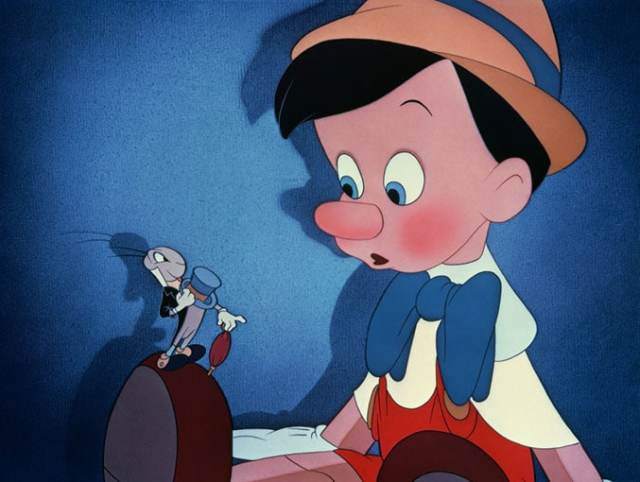
You may remember watching the animated Disney classic Pinocchio as a child. It’s a fascinating story of a puppet that comes to life when his maker wishes upon a star that his little marionette whom he named Pinocchio might become a real boy. That night, a glowing blue fairy partially grants his wish by bringing Pinocchio to life. However, he remains a wooden puppet. Pinocchio awakes and — humorously — is shocked to be alive. The blue fairy tells Pinocchio that if he proves himself “brave, truthful, and unselfish,” Geppetto’s wish will come true. She also assigns the loyal little locust, Jiminy Cricket, to be Pinocchio’s constant companion and voice of conscience.

The tale follows Pinocchio and Jiminy on their many adventures as the puppet sets out to discover what life in the world is really like. While Pinocchio is loved by his “father,” Geppetto, he soon discovers there are many in this world who want to lead him astray. He also learns how easy it is to make wrong choices. I doubt there is another Disney movie that is so chock full of moral lessons and aphorisms, like when the blue fairy says, “You see, Pinocchio, a lie keeps growing and growing until it’s as plain as the nose on your face.”

In the film’s darkest moments, Pinocchio and a friend are lured to Pleasure Island, a place where selfish boys can live it up — smoking, drinking, gambling, and doing whatever else they want — all without the moral restraints of parental authority. Unfortunately for Pinocchio and his friend, the island is cursed so that all the naughty boys who travel there transform into donkeys and are eventually sold into slave labor. One boy-turned-donkey desperately cries out for his mother. In a menacing tone, the island’s owner says, “You boys have had your fun. Now pay for it!” Pinocchio barely escapes, but his friend does not.

In a final act of courage, Pinocchio tries to rescue Geppetto from the belly of a sperm whale that swallowed the puppet maker while he was searching for Pinocchio. While Geppetto and Jiminy Cricket survive the whole ordeal, Pinocchio is killed. At the end of the film, there is a touching moment when Geppetto weeps over his broken puppet lying on the bed. Suddenly, the fairy not only resurrects him but transforms him into a real boy. “Father, I’m a real boy!” Pinocchio shouts in amazement. Apparently, Pinocchio’s final act of bravery proved him worthy of life.

In many ways, Pinocchio is something of a parable for how the modern world understands Christianity. Many today, even in the church, see Christianity as a moral prescription for life. God’s law is a list of dos and don’ts that we are to follow. We can think that, like Pinocchio, we must prove ourselves worthy of life. This way of thinking makes sense to us, but it stems from a wrong view of God.

We can think of God as if He were like a giant fairy, watching over our every move, evaluating our lives to see whether or not we really deserve to be accepted as His child. If we know we’ve blown it — spending too much time at Pleasure Island — we can hear God demanding that we pay up for all that we’ve done. Many people today live with this view of God, persistently uncertain of whether they have done enough or are good enough to go to heaven. Even if we see God as kindhearted and encouraging like the fairy, urging us to listen to our conscience, we can think it’s ultimately about us being good enough to meet God’s expectations.

American sociologist Christian Smith called this version of Christianity “Moralistic Therapeutic Deism.”[1] It essentially boils down to this: God is there for us when we are in a bind, but generally lets us go through life relying on our conscience (rather than His Word). The main thing God cares about is that we try to live a good life and be decent individuals, because heaven is the reward for good people when they die. Makes sense, right? The only problem is that this is nothing like the Christianity of the Bible.

What’s wrong with the above description? Well, for starters, there’s no mention of how Christ fits into that version of Christianity! In Moralistic Therapeutic Deism, Jesus is merely an add-on to Christianity, rather than the hub and center around which everything turns. At best, such a view sees Jesus as a good example or a wise teacher. Certainly, He was the supreme example and wisest teacher ever to live, but to reduce Him to these descriptions is to try to have Christ without the cross. It turns a blind eye to the bleeding and dying man staked to the cross. It ignores the miraculous triumph of the empty tomb. It downplays Jesus’ own radical claims: “I am the way and the truth and the life. No one comes to the Father except through Me” (John 14:6).

Here’s the challenge for Christian parents. It is far easier to skip the gospel and address the moral behavior of our children with rewards or threats. “If you obey, I’ll give you…” “You’d better not disobey me, or else…” Honestly, I catch myself relying on this tactic all the time. I’m certainly not saying that all our rules should be thrown out or that we should stop disciplining our kids. Both of these are essential and sadly not practiced by many parents today.

But when we discipline our kids, are we pointing them to the truth of the gospel? Are we merely addressing their outward behavior, or are we striving to address their heart? The heart is the epicenter for all our children’s thoughts and motives. “Above all else, guard your heart, for everything you do flows from it” (Proverbs 4:23). Jesus said that all our evil thoughts and actions spring from our sin-riddled hearts (Matthew 15:19). If all we ever use is rewards or threats in our discipline, we are actually encouraging our kids to ask the self-centered question: “What’s in it for me?”

Whether we like it or not, we are teaching our kids a gospel not just with what we say but with how we act. The only question is whether the gospel we are giving is the true gospel of Jesus Christ or something else. When I discipline my son for stealing cookies or talking back to Whitney or myself (speaking hypothetically, of course), I want him to know that what he’s doing is a serious problem. And this problem has to do with the sin in his heart. He needs to know not only that his sin saddens me, but that it saddens God, too (Genesis 6:6). I also want him to understand that Jesus loved him so much that He did something about the sin in his heart. In fact, He suffered and died for it, so that God can forgive him and scrub his heart clean of all that sin (1 John 1:8-2:2). My son needs to know that no matter how good he strives to be, he can never work off his guilt. Only Jesus can do that. Beyond this, I want him to know that he’s not alone. “Daddy has sin in his heart, too, and needs Jesus just as much.”

I want my sons — even at a very young age — to recognize their great need to be reconciled to God. The Bible says, “It’s your sins that have cut you off from God” (Isaiah 59:2, NLT). “So we are Christ’s ambassadors; God is making His appeal through us. We speak for Christ when we plead, ‘Come back to God!’ For God made Christ, who never sinned, to be the offering for our sin, so that we could be made right with God through Christ” (2 Corinthians 5:21, NLT). We need to explain to our kids that what makes sin so serious is that we were made for a relationship with a holy God. At the same time, our kids can be confident of their standing with God through faith in Jesus (Romans 8:1; Philippians 1:6).

In every generation, there is a danger of losing or distorting the gospel. Most often this drift from the gospel is well intended. After all, it’s not wrong to want to see our kids live good and moral lives. Pinocchio is a story that resonates with some of our most basic moral intuitions. But what our kids need to see is that there is a much greater story, a powerful story of redemption, that is taught in Scripture and centered around Jesus Christ. Teaching our kids to be good boys and girls is too small a goal. We need to teach them to be Christ-centered, Christ-exalting, and Christ-loving kids. We want their obedience to be rooted in love, not self-centeredness.

Above all else, Jesus-following parents need to embrace the truth that they are in the disciple-making business.

Photos Courtesy of Pixabay and Disney.com


[1] Christian Smith and Melinda Lundquist Denton, Soul Searching: The Religious and Spiritual Lives of American Teenagers (New York: Oxford University Press, 2005).

Raising Boys

By Jason Smith

My two-year-old, Weston, and I, August 2019

“Fathers, do not provoke your children to anger, but bring them up in the discipline and instruction of the Lord.” (Ephesians 6:4)

In a matter of weeks, my wife Whitney is due to deliver our third boy, Ryan David Smith. Thus will begin yet another chapter in our life together. We are experiencing the strange mixture of unbounded excitement and a pinch of sheer terror at what lies in store for us. But mostly we just can’t wait to meet the little guy. God has been so very gracious with us. Whitney and I love our boys and cannot imagine life without them.

Although we are keenly aware of how cranky we can be when sleep deprived, we are, truthfully, just as excited for our third son as we were for our first two. Whitney has pointed out how active Ryan has been in the womb. Many times, she has grabbed my hand and put it over her tummy when Ryan is in the middle of his daily karate exercises. What expectant dad doesn’t get a kick out of that? (Insert groan in response to the dad joke here). So much life and so much vibrant personality already bound up in this tiny person! I have even played this fun little game where I press twice on him, and he immediately responds with a kick as if to say, “Yeah, I felt that!”

I think of what King David — after whom we named Ryan David — wrote about God’s direct and intimate involvement with every step of a baby’s development in the womb:

“For you formed my inward parts; you knitted me together in my mother’s womb. I praise you, for I am fearfully and wonderfully made. Wonderful are your works; my soul knows it very well. My frame was not hidden from you, when I was being made in secret, intricately woven in the depths of the earth. Your eyes saw my unformed substance; in your book were written, every one of them, the days that were formed for me, when as yet there was none of them.” (Psalm 139:13-16)

It is a marvel to me how our older two boys can be so similar, and yet so very different. Both are testosterone-filled boys who love to run wild, crash little cars, pretend they are swash-buckling pirates, jump off the couch, and wrestle their old man on the ground. At the same time, they are remarkably distinct in personality and preferences.

Logan (4) is a thinker. He is deeply empathetic and constantly looking for ways to meet the needs of others. God has given Logan a very organized mind that loves to see how things fit together, and he relishes well-structured environments. Despite his tender heart, Logan also loves the thrill of adventure and hardly a day goes by without him asking to ride his bike. At this point, I’m thinking he would make a fine neurosurgeon, an engineer for skyscrapers, or perhaps someone who does humanitarian relief work overseas.

Weston (2), on the other hand, is a doer. Granted, he is two years younger, but we can already tell he is more action-oriented. The little chunk is in love with every animal he meets, and energetic life seems to pulsate through his tough little body. When Weston enters a new place, the first thing he looks for is the highest point that he can climb to and jump off. Hence, the nickname Whitney and I have given him: “Wild West.” I am guessing he’ll end up as either a lion tamer, a stuntman, or a CIA agent.

Weston (2) and Logan (4), July 2019

With the arrival of our third boy, I feel an even deeper sense of responsibility and accountability for my role in their lives as a father. I am very aware of my many faults and flaws, and, no doubt, there are many more of which I am not aware. But this doesn’t change the fact that I am called to be a godly example to these boys. While I do not expect to be a perfect dad, I want to strive to be all that God calls me to be for them.

It is virtually undisputed that fathers play a tremendous role in the lives of their sons, especially in their formative years, when they are learning what it means to be a man. Research continually bears out the long-term consequences in the lives of both boys and girls when there is no father or father figure at home.[1] There is something profoundly grounding and nurturing about having a loving father who is present for his son and deeply interested in his life. I myself was blessed to have such a father in my life, and he continues to be a role model for me today.

Obviously, mothers play an essential role in the boy’s life, too — mine certainly did! However, there are certain things that a boy can only learn from a man. For example, as their dad, I can show my sons how a man ought to respect and honor a woman. From an early age, my boys are noting the way I treat Whitney. If I were to give her only a minimal level of attention, dismiss her concerns as trivial, or ignore her comments and suggestions, my boys would begin to pick up the false idea that men need not respect women.

A lack of respect for women from a young age invariably results in teenage boys viewing girls as objects for their pleasure rather than persons deserving their respect and thoughtful consideration. This subject is not popular to talk about, but it needs to be said more often. Whenever men disregard the inherent value of women, this always leads to devastating consequences. One of the primary roles for a father of boys is to model for his sons the great importance of honoring women. For example, they need to know from an early age that it is never okay to hit a girl.

This is important because a boy’s wiring is different from a girl. Recent studies have discovered more ways male and female brains are different even at the molecular level.[2] Aside from the obvious genetic and anatomical dissimilarities, boys have higher levels of testosterone and lower levels of serotonin. Serotonin is a hormone that helps regulate self-control and “facilitates good judgment” when emotions run high.[3] It explains at the chemical level why men often act violently and recklessly when they lose their tempers.[4]

My wife Whitney with Weston and Logan, July 2019

Something I have learned about my boys is that everything is a race for them. If you ask one to set the table (with their little plastic plates and cups), the other seizes the opportunity to beat him to the punch. The same is true when it is time to go to the park, pick out a bedtime story, or brush their teeth. It does not matter if there is no prize whatsoever. Everything is a race. This competitive streak in boys is both a good thing and a bad thing.

Research has shown that higher levels of testosterone correlate with higher levels of competitive, aggressive, and even, sometimes, violent behavior. This explains why, by nature, boys tend to be more competitive than girls. Girls, on the other hand, tend to be more relational. Granted, there are exceptions, but overall this tendency holds true. Psychologist James Dobson writes, “Testosterone almost certainly plays a role in the fact that the vast majority of crimes of violence are committed by men, and that the prison population is occupied by a vastly disproportionate number of males.”[5][6]

The point here is not that boys are a bunch of little criminals in a cute disguise and that girls are sweet little angels incapable of doing wrong. Parents around the world can testify this is not quite true! Neither is the point that boys are biologically preprogrammed to act violently. As a Christian, I believe what the Bible says about the spiritual and moral brokenness of every person, and his or her desperate need of a perfect Savior (Romans 3:9-25). I also believe what the Bible says about each person being responsible for his or her own behavior (Romans 2:1-16; 2 Corinthians 5:10).

By God’s grace, boys can grow up to be men who lead a life where they respect others — especially women and those in authority — and use their strength ultimately to promote peace. There is nothing inherently evil about testosterone, but it is essential to recognize the inevitable fallout when parents do not raise their boys to make wise, moral, and God-honoring decisions.

Moreover, that competitive streak in boys can be a very good thing, because it can lead to them pushing one another to improve, work hard, and always strive for excellence in whatever they do. Young men can actually build a deep bond of brotherhood through their competition with one another. “As iron sharpens iron, so one man sharpens another” (Proverbs 27:17). So, please don’t feel the need to hamper that adrenaline and stifle all forms of rivalry. Instead, help your boy channel that grit and determination to win into right behavior. Boys need to know there is a time to be tough, and there is a time to be tender. Helping them distinguish between those two times is of paramount importance.

That is why it is so important for not just the mom, but also the dad to provide guidance and discipline for boys regarding how they treat others. In fact, because boys tend to respond better to male authority figures, it is the dad’s responsibility to lead the way in both loving discipline and gentle instruction (Ephesians 6:4). As a Christian, I see my primary responsibility in raising my boys is to both share the gospel of Jesus Christ with them and model a life consistent with that message. Only the gospel is “the power of God for salvation to everyone who believes” (Romans 1:16). Therefore, it alone has the power to transform hearts and make them disciples (followers) of the Lord Jesus.

Christian parents are not merely parents; they are disciple makers. By God’s grace, my generation can raise a generation of godly men who know what it means to love God and neighbor. For those of us who know Christ, we can take great courage in knowing that we are not left alone to this branch of discipleship we call parenting. Jesus said, “I am with you always, to the end of the age” (Matthew 28:20).


[1] I have tremendous respect for single moms. When I talk about the importance of a father, in no way am I suggesting that single moms should despair. Rather, your role is vital in your child’s upbringing, and godly men who are not your child’s father can and do serve a significant role in helping to guide and instruct a child, even though this will look different from a father’s role. A helpful resource is Emerson Eggerichs, Mother and Son: The Respect Effect (Nashville: Thomas Nelson, 2016). It also needs to be said that God can overcome all statistics and circumstances. Time and time again, I have met men who grew up without a father, but have been radically transformed by Jesus Christ, the One who is not limited by statistical trends.

[2] Catherine S. Woolley, et al, “Sex Differences in Molecular Signaling at Inhibitory Synapses in the Hippocampus,” (The Journal of Neuroscience, 12 August 2015), 11252-11266. Woolley, who was originally averse to the concept of sex differences in the brain, later had to admit that the evidence overwhelmingly demonstrated that male and female brains are fundamentally different at the molecular level. Her article is found here: https://www.jneurosci.org/content/jneuro/35/32/11252.full.pdf

[3] James C. Dobson, Bringing Up Boys (Tyndale House Publishers, 2018), 25.

[4] It is important to acknowledge what is happening at the chemical and neurological level as a partial explanation, but certainly not the full explanation.

[5] Dobson, Bringing Up Boys, 22.

[6] However, another interesting statistic is that men with absentee fathers are more likely to commit violent crimes than men who had a loving father in the home. See Don Elium, Raising a Son (New York: Random House, 2004); James C. Dobson, Bringing Up Boys, chapters 5 and 6.