If there is one truth that Christians have always believed about Christmas it is that Jesus was conceived not by natural human means, but supernaturally in the womb of a virgin named Mary.
The Nicene Creed of AD 325 states, “For us men and for our salvation He came down from heaven, and by the Holy Spirit was incarnate of the Virgin Mary, and became man.” And yet, this same Jesus of Nazareth was known during His lifetime as the son of Joseph of Nazareth. Joseph was not the birth father of Jesus, but he was his father by adoption. Not only do Mary and other Nazareth locals call Joseph Jesus’ father, Scripture itself speaks this way: “The child’s father and mother marveled at what was said about him” (Luke 2:33, ESV).
In every culture, children are inevitably known through their parents. After Jesus baffled His hometown with His profound teaching, many asked, “Isn’t this the carpenter’s son?” (Matthew 13:55). In other words, “How did old Joseph’s boy learn to talk like this?”
We don’t always consider how central Joseph was to Jesus’ upbringing. Joseph would have been there for all of Jesus’ firsts. Because Jewish men at this time were more likely to be literate than the women, it was likely Joseph who lifted the boy Jesus on to his lap and read Him the Torah.[1] As a blue collar worker,[2] Joseph was the man working hard to provide for his family. What little we do know about Joseph is that he was willing to make sacrifices to care for his family (see Matthew 2:13-23). And given what we know about that culture, Jesus would have spent vast amounts of time alongside Joseph, learning the trade of carpentry from His father.
New Testament scholar Gary Burge writes:
“Like other boys in his village, from the age of six to ten Jesus became literate in Hebrew through the study of the Torah in the Nazareth synagogue, and he memorized vast quantities of Scripture. From ages ten to twelve he became acquainted with the oral laws under the direction of the synagogue teacher and custodian, the hazzan. At this point he ended his schooling and began working full time with his father.”[3]
Jesus would have called Joseph Abba (“Dad” or “Daddy”) from a young age. When Joseph had something to say, Jesus would listen. When Joseph needed Jesus to run an errand for him in town, Jesus gladly obeyed. The Bible says Jesus was obedient and submissive to both Mary and Joseph (Luke 2:51). As the One who fulfilled the Law of God, Jesus honored both parents perfectly.
In a first century Jewish culture that prized father-son relationships highly, the local townspeople couldn’t help thinking of Joseph every time they saw Jesus. He was His father’s son—not biologically, but in every other sense, humanly speaking.
Interestingly, we don’t have a recorded word from Joseph in Scripture. Joseph may have been the strong silent type, but we know he was a man of action. Scripture describes him as “a just man” who kept the law of God faithfully (Matthew 1:19). You can imagine the hurt Joseph felt when he learned that Mary, his betrothed, was pregnant. Yet even in his anguish, he was “unwilling to put her to shame,” one more clue that Joseph was a man of both integrity and compassion.
When God sent an angel to reveal the truth—Mary had conceived Jesus by the Holy Spirit—Joseph stepped forward to fulfill his calling of taking Mary as his wife as God intended.
“When Joseph woke from sleep, he did as the angel of the Lord commanded him: he took his wife, but knew her not until she had given birth to a son.” (Matthew 1:24-25a, ESV)
As the legal father, Joseph even had the privilege of naming his son “Jesus,” just as the angel had instructed (v. 25).
Despite the scandal of marrying a pregnant woman in that culture, Joseph stepped up to the challenge. He was willing to bear the shame along with Mary, and together they submitted to God’s glorious plan of raising His incarnate Son—a daunting task difficult to fathom.
Joseph’s role in the story of Christmas is not peripheral. Although he is a silent character in the narrative, his part is crucial to everything that unfolds. The angel calls him “Joseph, son of David” to remind him of his royal ancestry and to foreshadow the messianic claims that will be granted to Jesus, his legal heir. Joseph is a strong and faithful man—a true knight of his day who honors women, protects the vulnerable, loves his family, and courageously follows the orders of his King.
In a culture that often devalues the role of husbands and fathers, we need to see again the impact that Joseph had on the life of Jesus. Although he was put in his role by God’s grace alone, everything we know about Joseph tells us that Jesus was raised by a good man and was honored to call him “Dad.”
[1] While New Testament skeptics have said things like “Jesus was an illiterate peasant,” these skeptics underestimate how essential it was for Jewish boys to go to synagogue from a young age and learn the Hebrew Scriptures, often from their fathers (see Deuteronomy 6:4-9). Do we really want to suppose that the same Jesus who often prefaced a quote from Scripture with the question, “Have you not read?” was Himself not reading that very Scripture? This is why blatant skepticism of Jesus cannot be taken seriously; it ignores the evidence and crafts a Jesus with which skeptics are more comfortable.
[2] The Greek word tekton can mean both carpenter and craftsman.
[3] Gary M. Burge. The New Testament in Antiquity (Zondervan, 2009).
Some might ask, “Why bring up the Bible when we talk about abortion? Isn’t that a political debate?”
Many people would say the Bible is irrelevant to the issue of abortion. But as a follower of Jesus, I take the Bible to be the authoritative Word of God. Jesus had the highest view for Scripture, and Scripture claims to be the very words of God. It’s good to remember that everyone looks to some authority for shaping the way they view the world. These can include your family, your church, your friends, your professors, the scientific community, or your favorite YouTube channel. But we all have sources of authority, and as a follower of Jesus, I’ve become convinced that the Bible really is the authoritative Word of God.
So, the Bible matters to the question of abortion, because what really matters is what the Creator of everything says about this issue. But I think it’s worth pointing out something first.
Contrary to what many want to say, the abortion debate is not about those on the side of science, progress, and women’s rights versus those on the side of religion, faith, and superstition. That’s how many try to frame the debate in order to stack the deck so that religion and faith look silly. But historically, modern science has its roots in a biblical worldview.
As the great thinker, C. S. Lewis, pointed out: “Men became scientific because they expected Law in Nature, and they expected Law in Nature because they believed in a Legislator.”[1] So true science – going out and exploring this world and trying to discover the law and order in the universe is right at home in a theistic, rather than an atheistic, worldview.
So, when we talk about the nature of the unborn, the Christian wants to know both what can be gleaned from science and what can be gleaned from Scripture. Traditionally, this has been called looking at natural revelation and looking at special revelation.
Choice Is not the Issue
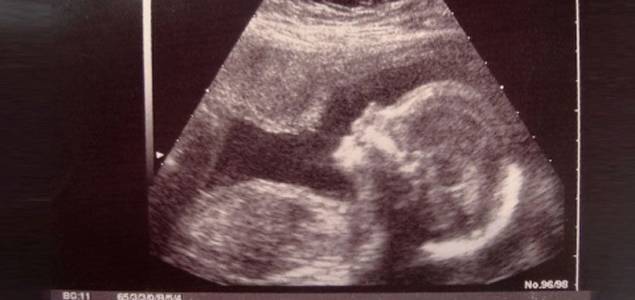
Something else needs to be cleared up. The big question about abortion is not whether someone is pro-choice or anti-choice. Nearly everyone is anti-choice when it comes to rape, genocide, and race-based slavery. People don’t want those choices to be legal, because they are immoral. So, the question isn’t whether you are for or against choice. The whole issue is about the nature of the unborn. Are they a full-fledged human being, imbued with personhood, dignity, and rights, or are they just a parasite, a clump of cells, or some other subhuman creature that can be killed?
On a personal note, something else needs to be said. If you have somehow been involved in an abortion in the past, you need to know that not only does the Bible talk about the unborn child, it also talks about the love, grace, and forgiveness of God found in Jesus Christ. So, you need to know – if that’s you – I don’t write any of this in a spirit of condemnation. I aim to follow the model of Jesus, who the Bible says was “full of grace and truth” (John 1:14).
So what does the Bible say about the unborn child? Well, one thing I’ll want to show from a handful of passages is that the Bible everywhere affirms both the value and personhood of the unborn.
Why the Incarnation Matters in this Debate
Just a couple months back, we Christians celebrated the Advent of Christ. The truth of Christmas is that God Himself entered this world – not directly to a manger – but through the womb of a virgin. It’s astonishing to consider that the Incarnation – God becoming a man – took place first in Mary’s womb. So Jesus Himself was an unborn child in utero.
There’s a unique encounter we read about in the Gospel of Luke, chapter 1. Mary comes to see Elizabeth, her relative, who is also pregnant at this time. So you have two pregnant women greeting each other here. And here’s what we read:
And when Elizabeth heard the greeting of Mary, the baby leaped in her womb. And Elizabeth was filled with the Holy Spirit, and she exclaimed with a loud cry, “Blessed are you among women, and blessed is the fruit of your womb! And why is this granted to me that the mother of my Lord should come to me? For behold, when the sound of your greeting came to my ears, the baby in my womb leaped for joy.”(Luke 1:41-44, ESV)
This passage has some remarkable implications for the nature of the unborn child. First, notice that word “baby” used. In the Greek, it’s the word brephos. That same word is used in the next chapter of baby Jesus after He is born. That tells us that, according to the Bible, whether the child is unborn or born, either way it’s a baby – not merely a clump of cells or a non-person.
Secondly, notice what Elizabeth says: When I heard your greeting “the baby in my womb leaped for joy” (v. 44). This unborn baby – later known as John the Baptist – is already fulfilling his purpose of pointing others to Jesus. And he does this by leaping for joy. Joy is an attribute of human beings; it indicates personhood. A clump of cells doesn’t have joy. And notice that Elizabeth also calls Mary “the mother of my Lord” (v. 43). Even though Mary was only in that first trimester with Jesus, Elizabeth says she’s already a mother – not a potential mother.
So, everything here assumes the unique personhood of the baby in the womb.
Biblical ethicist Scott Rae writes:
“From the earliest points of life in the womb, Mary and Elizabeth realize that the incarnation has begun. This lends support to the notion that the incarnation began with Jesus’s conception and that the Messiah took on human form in all of its stages, embryonic life included.”[2]
David in the Womb
Let’s look briefly at another couple passages.
In Psalm 51, King David is confessing his sin to God. And here’s what he says:
“Behold, I was brought forth in iniquity,
    and in sin did my mother conceive me.” (Psalm 51:5, ESV)
Keep in mind, David is confessing his own sin here. But he says that this sin nature is something he’s had, not only from birth, but from conception. To have a sin nature from conception is something that can only be true of persons, who have the dignity of being moral creatures.
Or here again is a passage where David speaks of his life in his mother’s womb:
“You created my inmost being; you knit me together in my mother’s womb.” (Psalm 139:13, ESV)
David speaks of God’s meticulous care in forming him and knitting him together. And notice he doesn’t say, “You knit the clump of cells that would become me together,” or even, “You knit together the fetus that would become me in my mother’s womb.” No, he says, “You knit me together in my mother’s womb.” So, from conception, that fetus or baby in the womb was David, not some impersonal parasite.
So even though David in the womb was tiny, not yet fully developed, and lacked many functional abilities, he was still at that time David. Though there would be changes in his development over time, there was no change to his fundamental nature at birth or any time before or after that.
And by the way, science supports this conclusion. Dianne Irving is a biochemist and biologist and teaches at Georgetown University. She had this to say:
“Scientifically something radical occurs between the processes of gametogenesis and fertilization… During the process of fertilization, the sperm and the oocyte cease to exist as such, and a new human being is produced.”[3]
Where Does Human Value Come From?
All of us have an inborne awareness that human beings have value. That’s why when the choice is given between saving the life of a drowning dog or a drowning child, the answer should be obvious. Of course, we should care for animals, too, but there is something unique and sacred about human life. But even though we all have the sense that human beings are valuable, this concept has no basis in a secular worldview.
The Declaration of Independence states that:
“We hold these truths to be self-evident, that all men are created equal, that they are endowed by their Creator with certain unalienable Rights, that among these are Life, Liberty and the pursuit of Happiness.”
It makes sense that if God created us, human beings have equal value and certain natural rights – including the right to life. But if there is no God, where do human rights come from?
Many of my secular friends want to hold on to human rights – they hate things like human trafficking, rape, and racist acts of violence. But the question is, if we all came about through purely natural processes that didn’t have us in mind, then why on earth do we assume human life has value? Wouldn’t we have the same status as pigs and cows and mice and dung beetles?
As Yuval Noah Harari explained in his book Sapiens:
“The idea of equality is inextricably intertwined with the idea of creation. The Americans got the idea of equality from Christianity, which argues that every person has a divinely created soul, and that all souls are equal before God.”[4]
He then writes:
“Homo Sapiens has no natural rights, just as spiders, hyenas, and chimpanzees have no natural rights.”[5] Harari is an atheist, but he recognizes the place that Christianity and the Bible had in introducing the concept of human rights to the world. Without the God of the Bible, he says, this whole idea of human rights and equality is an illusion. This is why having a theistic view of reality is so important.
The Bible teaches that you have intrinsic value – not because you have reached a certain level of development or because you have great hair or are especially smart or have contributed something to society. No. You have intrinsic value simply by nature of being made in the image of God.
Then God said, “Let us make man in our image, after our likeness….”
So God created man in his own image,
    in the image of God he created him;
    male and female he created them (Genesis 1:26-27, ESV)
Notice that this is the very first word on human beings in the Bible. The first and most foundational thing God wanted us to understand is that we are made in His image and likeness, and thus have intrinsic value.
That’s why, just a few chapters later we read:
“Whoever sheds the blood of man,
    by man shall his blood be shed,
for God made man in his own image.” (Genesis 9:6, ESV)
So because we are uniquely created in God’s image and likeness, all humans have intrinsic value. And human life should be protected for that reason. That’s why we should never mistreat others based on skin color, age, sex, or anything else – including whether they are born or unborn.
“But the Bible Doesn’t Mention Abortion”
Here is what some people argue. They say that since the Bible doesn’t explicitly mention the word “abortion,” pro-life people shouldn’t condemn it as a sin. But there’s a real problem with an argument from silence like this. The Bible also doesn’t specifically say we shouldn’t slash people’s tires or spray paint our neighbor’s house or shoplift at 7-Eleven, but that doesn’t mean those things aren’t wrong. Our cultural context is different; but the fact remains that if abortion is the killing of an innocent human being – something that science supports – then it is in fact condemned in the Bible, because all killing of innocent human beings is condemned in Scripture.
Furthermore, I would argue that a case law describing an accidental abortion is mentioned in Scripture. Here’s what we read in the Law of Moses:
“If people are fighting and hit a pregnant woman and she gives birth prematurely but there is no serious injury, the offender must be fined whatever the woman’s husband demands and the court allows. But if there is serious injury, you are to take life for life, eye for eye, tooth for tooth, hand for hand, foot for foot, burn for burn, wound for wound, bruise for bruise.” (Exodus 21: 22-25, NIV)
This law addresses the very specific situation where two people recklessly fight, hit a pregnant woman, and subsequently cause her to give birth prematurely. If no one is seriously harmed, then the husband can demand a fine be paid according to what the court allows. However, if there is any serious harm done, the lex talionis (the principle of retributive justice) ensures that every harm is matched with a proportional punishment.
In the case where either the mother or the baby are killed, the culprit had to face capital punishment (“life for life”). This is significant, because elsewhere in the Mosaic law, accidental killings did not require capital punishment. The killer was still guilty of involuntary manslaughter and would have to flee to a city of refuge until the death of the high priest (Numbers 35:9-15, 22-29). It is significant that God has a far more severe punishment in the case of accidentally killing either a pregnant woman or the baby in her womb than other accidental killings. If God views unintentional abortions this severely, what does He think of intentional abortions?
Commenting on this passage (Exodus 21:22), the 17th century reformer John Calvin wrote:
“…the unborn, though enclosed in the womb of his mother, is already a human being, and it is an almost monstrous crime to rob it of life which it has not yet begun to enjoy…”
It is interesting that Calvin said this based on Scripture and without all the benefits of what modern science tells us about the unborn.
In many passages in the Bible, we are urged to care especially for those who are helpless and need our protection.
“Defend the weak and the fatherless;
    uphold the cause of the poor and the oppressed.
Rescue the weak and the needy;
    deliver them from the hand of the wicked.” (Psalm 82:3-4, NIV)
Final Word on Forgiveness
Before I conclude, I want to add that the great message of the Bible isn’t that “abortion is wrong.” The big message is the Gospel, which states that our God is full of grace and mercy. He sent His Son Jesus to reverse the consequences of our decisions and bear our sin and guilt in our place.
He himself bore our sins in his body on the tree, that we might die to sin and live to righteousness. By his wounds you have been healed.” (1 Peter 2:24, ESV)
That means that because of Jesus’s sin-bearing death, God can heal us of all our sin – including the sin of abortion. All God requires of us is that we get honest with Him, and He’ll wash us clean as we come to Him in repentance and faith.
If we confess our sins, he is faithful and just to forgive us our sins and to cleanse us from all unrighteousness.(1 John 1:9, ESV)
Have thoughts on this post? Feel free to comment below


 Lamp and Light