I remember like it was yesterday the drive back from the coast with two of my long-time buddies, Andy and Daniel. We were seniors in high school, and we had just completed our annual trip to Lincoln City, Oregon. As we rounded the bend of the highway, the Toyota Camry I was driving suddenly lurched and sputtered. Very quickly, I realized the gas pedal was no longer responding and we rolled to an undignified stop on the highway’s shoulder.
Gulp! I told the guys I didn’t know what went wrong, but very quickly the truth began to dawn on me. The fact is, I had been putting off an oil change for several weeks now. And, as it turns out, car engines really do need oil to run well. In fact, as any mechanic will tell you, it’s a simple matter of physics: without lubrication, the metal parts of your engine are bound to overheat. And when they overheat, they begin to warp and wear down.
Because of my automotive negligence, not only did I have a hearty portion of embarrassment to swallow, but I also needed to come up with the cash for a new car.
Simply put, some things are bound to self-destruct if you don’t operate them according to their intended use. If you doubt this, just try using your smartphone as a wheel chock. This is not just true of the physical realm but the spiritual realm, too. God designed your soul for a relationship with Him. Just as cars cannot run without gasoline, human beings are dependent on the life that comes from God.
When we try to do life apart from God, we are bound to self-destruct. And yet, according to the Bible, many people don’t live as if this were true.
In Galatians 6:7-8, the Apostle Paul warns, “Do not be deceived: God cannot be mocked. A man reaps what he sows. Whoever sows to please their flesh, from the flesh will reap destruction; whoever sows to please the Spirit, from the Spirit will reap eternal life.”
Paul says, “Don’t be fooled about this,” because, honestly, a lot of us are. In fact, on our own, we all tend to fall for this lie. What lie? That God can be mocked without repercussions. Every single one of us has, at one time or another, believed that we can actually outsmart God. Don’t believe me?
Every time we knowingly disobey God, we are essentially saying to God, “I would make a better god than you.” The essence of sin is making a bid for the throne of the universe. To disregard God’s law is to choose self-sovereignty rather than live under His perfect rule.
Here’s the problem: Going down this road of self-rule never ends well. There is an unalterable law of reality that you will reap what you sow. And God created us to live under His rule, not our own. Paul says, “Don’t be deceived about this one, guys.” You can be wrong about the weather, who will win American Idol, or most of the questions on Jeopardy! But don’t be wrong about this.
One of the most popular falsehoods of our time is this idea that I can do whatever I want without ever being held accountable for my actions. But Scripture everywhere denies this.
“God will repay each person according to what they have done. To those who by persistence in doing good seek glory, honor, and immortality, He will give eternal life. But for those who are self-seeking and who reject the truth and follow evil, there will be wrath and anger.” (Romans 2:6-8, NIV).
God is immeasurably merciful and patient, but this remains God’s universe. Not ours.
“In the past God overlooked such ignorance, but now He commands all people everywhere to repent. For He has set a day when He will judge the world with justice by the man He has appointed. He has given proof of this to everyone by raising Him from the dead.” (Acts 17:30-31, NIV).
Notice: God will judge the world, but He will do so with perfect “justice.” No one will be able to say on that day, “But I didn’t know” or “This isn’t fair.” We will all know God to be the perfectly just Judge that He is.
Let this truth be emblazoned across your heart: God cannot be mocked. If you think you can fool God, you’re only fooling yourself.
The mighty Goliath tried to test this truth when he taunted the armies of the living God (1 Samuel 17). How did that work out for him? He’s forever remembered for being slain by a young shepherd boy without any real military training. Herod encouraged people to worship him as a god. How did he fare? “Immediately, because Herod did not give praise to God, an angel of the Lord struck him down, and he was eaten by worms and died” (Acts 12:23). Yikes! I don’t care who you are, that’s got to be one of the worst ways to go! Throughout Scripture, this same truth is repeated: You and I will reap what we sow.
What does it mean to “sow to please your flesh” (v. 8)?
John Stott writes: “Every time we allow our mind to harbor a grudge, nurse a grievance, entertain an impure fantasy, or wallow in self-pity, we are sowing to the flesh. Every time we linger in bad company whose insidious influence we know we cannot resist, every time we lie in bed when we ought to be up and praying, every time we read pornographic literature, every time we take a risk which strains our self-control, we are sowing, sowing, sowing to the flesh. Some Christians sow to the flesh every day and wonder why they do not reap holiness. Holiness is a harvest; whether we reap it or not depends almost entirely on what and where we sow.”[1]
We may think all our sowing to the flesh won’t have consequences. We may rationalize and downplay the seriousness of the secret sins we harbor. Eventually, however, what we have sown will come to full bloom. If you take the elephant across the old wooden footbridge too many times, eventually it will collapse.
Thankfully, the Bible doesn’t just leave us with this hard truth. If it did, karma, not the gospel, would be the final rule of the universe. We would forever see God in heaven, frowning down on us with arms crossed, saying, “Well, you had it coming.”
But the gospel of Jesus Christ points us the way to find a new life and a new beginning. We don’t need to stay locked up by the shame of our past. The point of this warning about mocking God is to lead us to the foot of the cross at Calvary, where God’s love poured out for rebels like you and me. When Christ shed His blood on the cross, He was in fact reaping what we have sown. This was only possible because of grace. He died in our place and suffered the consequences we justly deserved.
Hear this promise: “If we confess our sins, He is faithful and just and will forgive us our sins and purify us from all unrighteousness” (1 John 1:8). To confess means to get honest before God, humbly prepared to live in a new direction.
Because of Christ’s cross, God does not rule as some kind of karmic dictator. Instead, He reigns in grace, inviting everyone who has arrogantly tried to take His throne to kneel humbly before His throne (Hebrews 4:16).
[1] John R. W. Stott, The Message of Galatians: Only One Way, The Bible Speaks Today (Downers Grove, IL: InterVarsity, 1968), 170.
“That is why a man leaves his father and mother and is united to his wife, and they become one flesh.” (Genesis 2:24)
Perhaps you’ve heard the oft-quoted line that “men are from Mars, and women are from Venus.” This statement highlights the noteworthy differences between men and women.
For many couples, these differences truly surface after the wedding bells ring. The story is told of a boy who asked his father, “Dad, what’s the difference between love and marriage?” The father replied, “Love is blind, but marriage is a real eye-opener!”
Many a young couple could relate to this sentiment. In the days anticipating their wedding, the bride and groom both imagined the blissful life they are about to begin together. Of course, no one told them that their idealistic pictures are likely very different from one another. Perhaps, no one told them how much of marriage involves sacrifice. Perhaps, no one told them how many surprises there would be.
She didn’t know how much he liked working long hours on his car. He didn’t know how much she liked discussing paint colors. One woman was overheard at a garden-club meeting saying, “I never knew what compost was until I met my husband.”
I wonder how her husband interpreted that remark.
Whitney and I are in our seventh year of marriage, and although we know each other so well, I expect we will continue learning new things about one another for the rest of our lives. I think most married couples would agree. Just when you think you’ve solved the puzzle that is your spouse, you discover there’s a lot more pieces you didn’t even know about.
And yet, despite the incredible differences between men and women, marriage really is a beautiful thing.
How do I know? Because it was God’s idea. If You’re the infinite, all-wise, sovereign Creator of the universe, one thing a puny-brained human can’t legitimately accuse You of is a bad idea. Now, one thing we could legitimately say to Him is “God, this is a mystery.” In fact, the apostle Paul used that precise word. Speaking of marriage, he said, “This mystery is profound” (Ephesians 5:32).
So, as we navigate the wonderfully mysterious world of marriage, what wisdom can we glean from Scripture? Here, it is worth looking at the very first marriage. After all, God used Adam and Eve’s nuptials as something of a blueprint for how marriage is supposed to work.
Right after creating the man out of the dust of the earth and breathing life into His nostrils, God made a vast and paradisiacal garden in which he could dwell. Then we read this:
“The Lord God took the man and put him in the Garden of Eden to work it and take care of it. And the Lord God commanded the man, ‘You are free to eat from any tree in the garden; but you must not eat from the tree of the knowledge of good and evil, for when you eat from it you will certainly die’” (Genesis 2:15-17).
God tells him to take his fill of all he wants from the garden. He can sink his teeth into any of the delicious, tantalizing fruits he finds — except, of course, for that one that’ll kill him. Best to leave that one alone.
But aside from this curious prohibition, notice what the text says about man’s job. He has a calling to “work” and “take care of” the lush garden. In other words, God placed Adam there to cultivate the garden. A lot could be said about how this relates to humanity’s purpose in ruling over creation as God’s image-bearing vice-regents — spoken about in the chapter before this (see Genesis 1:26-28). But for now, it’s important to see that God planned for the man to work before sin ever entered the world.
Now, notice what God says next: “It is not good for the man to be alone. I will make a helper fit for him” (Genesis 2:18). In a perfectly good world created by a perfectly good God, this “not good” is a bit jarring. The man has God. He has all the furry animals. He has a beautiful and sumptuous garden full of delicious fruits. Nevertheless, something is “not good.” Adam is one solitary dude. He needs a companion. He needs another human with whom he can relate and do life.
So what did God do? He created woman to be “a helper fit for him.” Don’t be put off by the language of “helper.” It’s actually a term of great honor. In fact, the Bible even calls God “helper” many times (see Psalm 54:4; 118:7). The big takeaway is this: Adam needs help. He cannot do the garden work God called him to all on his own.
Far too many men today are passive about the responsibilities God has given them. They don’t see themselves as having a purpose. They just kind of drift along without any real and clear direction. That’s a tragic thing. God calls us to take initiative in working hard for the good of others. He calls us to be diligent and passionate about improving the world around us.
At the same time, God did not intend for man to go it alone. Although the concept of rugged individualism appeals to many men, it really doesn’t fit with how God wired us. Genesis 2:18 forever stands as a witness to the fact that human beings were made for relationship with one another. And chief among those human relationships is marriage. In marriage, intimacy between two souls reaches its zenith.
But note something else. God said, “I will make a helper fit for him.” That is, God fashioned the woman with the man in mind. In the words of Goldilocks, the man and woman are “just right” for each other. God specially designed the man and the woman foreach other. What makes marriage so powerful is that it taps into God’s genius for how two of his image bearers bond together for life.
In the words of Jesus, “Therefore what God has joined together, let no one separate” (Matthew 19:6). To a world that has embraced no-fault divorce, the Son of God says, “Don’t try to split what God has spliced.” Marriage is not like an old watch that you can discard when it stops working for us. It is more like a precious jewel that you would never even dangle over the edge of a dock. Granted, everyone comes to this text with their unique set of challenges and circumstances. Nevertheless, it remains true that marriage is by nature a binding covenant before God. He never said marriage wouldn’t take some work. He never said it would always be a cakewalk. He did say it was designed for permanence.
Tim Keller wisely said, “Wedding vows are not a declaration of present love but a mutually binding promise of future love.”[1]
When it was clear that none of Adam’s furry friends quite fit the bill, God performed the first surgery to craft the first female.
“So the Lord God caused the man to fall into a deep sleep; and while he was sleeping, he took one of the man’s ribs and then closed up the place with flesh. Then the Lord God made a woman from the rib he had taken out of the man, and he brought her to the man.” (Genesis 2:21-22)
Why did God form the woman from one of the man’s ribs? Consider this for a moment. God could have fashioned the woman any way He saw fit. He didn’t take a portion of the man’s brain (think of the endless jokes there would have been!). He didn’t take a portion of his feet (think of the trouble this could have led to). She came from his rib — from his side. Doesn’t God’s choice to use the man’s rib indicate that the woman was intended to be neither his superior nor his inferior, but instead, his equal? Men and women are distinct, but equal in their intrinsic dignity. Both are made in the image of God (Genesis 1:27).
But they are also made of the same “stuff,” the same flesh. God took from Adam’s body so that Eve’s DNA was inevitably connected to his. They are biologically related. As it turns out, men and women are not from Mars and Venus respectively. But more than merely creating a genetic link between the two, God did it this way so that they could see from the very beginning that He created them for a one-flesh union that they alone can share.
Upon first laying eyes on the feminine beauty before him, Adam impulsively broke into song.
“This is now bone of my bones and flesh of my flesh; she shall be called ‘woman,’ for she was taken out of man.” (Genesis 2:23)
Okay, so maybe the lyrics aren’t your idea of romantic. Nevertheless, it set a pattern, and love songs like Pat Benatar’s “We Belong” and Bruno Mars’ “Marry You” have been a hit ever since.
Then God Himself summarizes, “Therefore a man shall leave his father and his mother and hold fast to his wife, and they shall become one flesh. Adam and his wife were both naked, and they felt no shame” (vv. 24-25). The “therefore” seems to be saying, “The man and woman can unite as one flesh, because woman is made from man’s flesh.” In other words, the man and woman really were made for each other. Nothing and no one should ever come between the husband and his wife, and the union they share.
This one-flesh union of marriage goes beyond sexual intimacy. It is a whole-life covenant that unites the man and woman as a permanent and unique couple who live together, eat together, sleep together, and go through all of life together. To men and women alike, marriage is a mystery. However, in Ephesians 5, Paul goes on to say it is a mystery pointing to the union of Christ and His church. If we needed one more reason to treat marriage as a weighty thing, here it is. It is a powerful, flesh-and-blood picture of the gospel. Thus, we ought to treasure marriage for the incredible gift that it is.
“Be careful not to forget the covenant of the Lord your God that he made with you; do not make for yourselves an idol in the form of anything the Lord your God has forbidden. For the Lord your God is a consuming fire, a jealous God.” (Deuteronomy 4:23-24)
Oprah Winfrey tells the story of a time when she first began to question the teaching of Scripture. She was sitting in a church, hearing the preacher talk about God’s attributes, such as His omnipotence and omnipresence. She continues,
“Then he said, ‘The Lord thy God is a jealous God.’ I was caught up in the rapture of that moment until he said ‘jealous,’ and something struck me. I was like 27 or 28 and I’m thinking, ‘God is all. God is omnipresent. And God is also jealous?’ God is jealous of me? And something about that didn’t feel right in my spirit because I believe that God is love, and that God is in all things… And that is where the search for something more than doctrine started to stir within me.”
The passage the preacher quoted is indeed in the Bible (Deuteronomy 5:9). In fact, there are many references to God’s jealousy in Scripture. “You shall worship no other god, for the Lord, whose name is Jealous, is a jealous God” (Exodus 34:14). God even grows angry when we spurn Him and go after worthless pursuits. “For the Lord your God is a consuming fire, a jealous God” (Deuteronomy 4:24).
On the one hand, I want to sympathize with Oprah. Our God? Jealous? Never! That’s because in our current cultural climate, “jealousy” usually carries a negative connotation. In many cases, it describes someone who has an unwarranted suspicion of anything and anyone that could threaten a cherished relationship. At the same time, we need to consider that this is the supreme God we are talking about. However we construe this word “jealousy” as it relates to God, we need to remember that He is the all-sufficient God who doesn’t need anything from us. After all, He is the Maker of everything. “If I were hungry I would not tell you, for the world is mine, and all that is in it” (Psalm 50:12).
Our tendency is to say, “My God is not like that… He’s like this…” The problem is that whenever we do that before carefully consulting Scripture, we are actually creating a god in our own image. Rather than listening to what God says of Himself, we place our own opinions above the authority of the Bible. Instead, we need to humbly come to God’s Word, expecting there to be many cases where our own thoughts and opinions will be challenged. Rather than assert that something can’t be true simply because it doesn’t sit right with us, we need to consider why God is described as “jealous.”
In order to understand what is meant by passages like these that speak of God’s jealousy, we have to first see that there are in fact both good and bad kinds of jealousy. For example, there is a petty jealousy a self-centered young man may feel when a slightly older man offers to carry a heavy suitcase for his girlfriend. The older man’s offer may be a simple, courteous response to seeing the young woman struggling with the heavy load. In this case, the young man is not thinking of his girlfriend’s needs. He is threatened by the courteous gentleman because he cares more about his status as the girl’s boyfriend than the girl herself.
This young man is persistently suspicious and insecure. He doesn’t want any other man to even show common courtesy to his girlfriend. His jealousy is like the unhealthy possessiveness of a terrier that growls and snaps at anyone coming near his bone, despite the fact that no one actually wants to steal the bone. Rather than protecting her, his unhealthy jealousy actually smothers the young girl. From the outsider’s perspective, it’s plain to see that the young man is consumed with self-love, rather than genuine love for the girl.
Now, what is an example of a good kind of jealousy? Think of a husband and wife at an office party. The husband notices that a good-looking young man, who is constantly bragging about his sexual exploits, has approached his wife. The young man is clearly hitting on his wife and even tenderly takes hold of her hand. Now, ask yourself, in this situation, is it wrong for the husband to feel a kind of jealousy? After all, he is passionately devoted to his wife, wanting nothing to come between them. His wife might even be quite pleased to see her husband tell off such a womanizer for trying to threaten their marriage.
If you’re still struggling with whether jealousy can ever be a good thing, imagine now that this same husband sees the young man make advances on his wife, then shrugs and passively walks away. What would you conclude? Clearly, such a husband doesn’t really love his wife!
When you think of God being jealous, think of a devoted husband who is passionately in love with his wife. God wants nothing to come between you and Him. As our Creator, He alone has the right to be the Lord of our lives. God is jealous for our affection, not because He is needy or insecure, but because He is passionate about our flourishing, which comes from being in a right relationship with Him.
False gods — such as fame, power, lust, or money — are persistently trying to steal our hearts away. Not only do these counterfeit gods threaten our relationship with the one true God, they only hurt us in the long run. In such cases, God indeed grows angry, but the heat of His anger displays the vibrancy of His love for us. Whenever we give something else our ultimate devotion, we are falling prey to idolatry. God made us for Himself, so nothing else will truly satisfy our longings like He will. “Know that the LORD is God. It is He who made us, and we are His; we are His people, the sheep of His pasture” (Psalm 100:3). As the all-glorious, all-satisfying God, He and He alone has every right to command our allegiance to Him.
I would want Oprah to understand that, yes, God is a “jealous God” (Exodus 20:5), but He’s jealous for us in all the right ways. We ought to thank God that He is the kind of God who is incredibly passionate about His relationship with us.
“Blessed be the God and Father of our Lord Jesus Christ, the Father of mercies and God of all comfort, who comforts us in all our affliction, so that we may be able to comfort those who are in any affliction, with the comfort with which we ourselves are comforted by God.” (2 Corinthians 1:3-4)
Have you ever found yourself venting to God? I know I have. For some, it’s like a knee-jerk reaction: “Why God?” For others, it can take the form of a long, tear-filled prayer. Although I typically think of myself as a positive person, I can feel discouraged for a number of reasons. I can vent to God when those I have been praying for haven’t been healed or when something I’ve eagerly anticipated doesn’t happen as expected.
Perhaps you know that sinking feeling I’m talking about. We’ve all had those days where everything seems to go sideways. I remember one day last year where a series of unfortunate events piled up on one day. It started with me opening up an unexpected bill in the morning. On the way to work, I spilled coffee on my shirt. Later, a client got angry with me for a mistake I made. While at work, my wife Whitney called to say that our son Weston’s fever was spiking. After grabbing medicine, I had to move my car, but then discovered a parking ticket on my windshield. On top of all that, when I got home I stubbed my toe so badly it turned a nasty shade of purple. Needless to say, I earned a few gray hairs that day.
To borrow the title of a famous children’s book, it was just a “terrible, horrible, no good, very bad day.” But, of course, in retrospect, it wasn’t really that terrible. I’m sure there were a lot of good things that happened to me that day, too, but I let the not-so-good things overshadow them. It’s crazy how quickly a day of sunshine can flip into a day of downpours, isn’t it?
Just flipping on the news for five minutes can dishearten us. Pointless violence, disease, and hatred run rampant across our world every day. Evil often appears to be winning the day. However … that’s not the whole story. When the tide of discouragement rolls in, what we most need is a fresh word from the “God of all comfort, who comforts us in all our affliction” (2 Corinthians 1:3-4).
How Long, O Lord?
A man named Habakkuk knew what discouragement felt like. Habakkuk was a prophet of God roughly 2,600 years ago. He looked around at the horrendous evil and injustice in his culture with great dismay. “Why aren’t you doing anything, God?” Habakkuk wailed. “Why don’t you care about what’s happening down here?” Maybe you can relate to Habakkuk. He begins his book in the Bible by trotting out a list of complaints.
“How long, O Lord, must I call for help,
    but you do not listen?
Or cry out to you, “Violence!”
    but you do not save?
Why do you make me look at injustice?
    Why do you tolerate wrongdoing?
Destruction and violence are before me;
    there is strife, and conflict abounds.
Therefore the law is paralyzed,
    and justice never prevails.
The wicked hem in the righteous,
    so that justice is perverted.” (Habakkuk 1:2-4)
The same objections ring down through the centuries to today. “How long, O Lord?” Do those words ever find a place on your lips or in your mind? For many of us, those words can surface instinctively. It can happen when your friend with cancer doesn’t heal. It can happen when you get the rejection letter. It can happen when a man you looked up to has a moral failure.
Why does God seem so absent during these dark times? Many have called this dilemma “the problem of evil” or “the problem of pain.” The more we squarely face the reality of evil, the more we need a solid hope to hang on to before the wave of despair sweeps us away.
Here’s the incredible thing: God responded to Habakkuk’s complaint with a word of hope. God didn’t chastise Habakkuk for voicing his discouragement. Instead, God agreed with Habakkuk that the injustice was intolerable. In fact, God hates injustice! Here’s how God responded:
“Look at the nations and watch — and be utterly amazed. For I am going to do something in your days that you would not believe, even if you were told” (Habakkuk 1:5). The Lord goes on to say that He is about to use the Babylonians to bring swift judgment on the treacherous people of Judah.
This is essentially the same response He gives to us today. If you are disheartened by the violence taking place in the world today — take heart! Aslan is on the move. God hasn’t abandoned us. He is still among His people. “If you passionately long to see justice restored,” God says, “know that I care about it even more.”
Interestingly, Habakkuk is still upset. After all, God plans to use an even more wicked nation — Babylon — to accomplish His good judgment of Judah. “Aren’t You the eternally holy God?” Habakkuk asks. “So how can You have anything do with wicked Babylon” (see 1:12-2:1).
Justice Will Surely Come
Remarkably, this turns out to be even more reason for Habakkuk to take heart. Why? Because God’s use of evil Babylon to accomplish His judgment demonstrates God’s sovereign power over evil. This is good news, God says, because evil is not in fact the ultimate power in the universe, even though it may seem that way at times. Babylon is like a tool in His hand. Not only that, but Babylon will have to answer for her crimes, too.
We, like Habakkuk, may feel like God is moving too slowly. But God replies, “If it seems slow, wait for it; it will surely come; it will not delay” (2:3).
Then God reminds Habakkuk of something else. He doesn’t just deal with evil by using the sledgehammer of justice. He also uses the healing balm of grace. That’s good news for us who are discouraged not only by the evil “out there” in the world, but also by the evil residing in our own hearts.
In the wise words of Aleksandr Solzhenitsyn, “If only there were evil people somewhere insidiously committing evil deeds, and it were necessary only to separate them from the rest of us and destroy them. But the line dividing good and evil cuts through the heart of every human being. And who is willing to destroy a piece of his own heart?”[1]
The good news is that through the cross and resurrection of Jesus, God found a way to deal with that evil without destroying us. The judgment for our sin landed, not on us, but on our King. “He Himself bore our sins in His body on the tree, that we might die to sin and live to righteousness. By His wounds you have been healed” (1 Peter 2:24). Through trusting in that sacrifice, we are “healed.” Our moral crimes and misdemeanors are expunged from our record and totally removed from us. God tells Habakkuk justice is surely coming, “but the righteous shall live by his faith” (Habakkuk 2:4). Through faith in Jesus, God renders us righteous and clean — all by sheer grace.
Whether by justice or by grace, God will deal with every trace of evil that exists in the world today. Keeping this truth close to our hearts will give us hope-filled confidence to face another day.
[1] Aleksandr Solzhenitsyn, The Gulag Archipelago (New York: Collins, 1974), 17.
“A person’s days are determined; you have
decreed the number of his months and have set limits he cannot exceed.” (Job 14:5, NIV)
What are you waiting for? I frequently find myself wishing things were
happening faster. Maybe it’s because I’m naturally an impatient person, or
maybe it’s because I love the thrill of seeing things get done. Either way, I
often feel that one of the greatest struggles in life is living in the tension
of waiting.
So what are you waiting for? A new job? A new house? A new relationship? A
call from your doctor? Take inventory of your heart for a moment. Have you ever
noticed how the other highway lane or the other grocery line always seems to be
moving faster than the one you’re in? What tends to happen to you when you feel
like something you’re waiting for is taking too long? Do you grow agitated by
your circumstances? Do people start to rub you the wrong way?
It’s very easy to be short with others when life seems to be stuck at a red light. It gets worse when others seem to be finding or achieving the very things for which you are most longing. It’s as if you’ve been stuck in the back of the line for a ride at Disneyland, and you keep watching one person after another jump ahead of you with their fast pass. You begin to wonder, Where’s my fast pass in life?
It can be discouraging to the point of debilitating when you live in a
fast-paced world, yet seem to be stuck in slow motion. We think, Boy, wouldn’t it be nice to have a
fast-forward button for life? We all know what it’s like to experience the
unwelcome tension of waiting. Millennials like myself probably struggle with
this even more than former generations. After all, we are enmeshed in the world
of fast food, next-day delivery, and real-time news alerts. Every bit of
information we need is merely a click away. Our culture has programmed us to view
waiting as an unpleasant part of life. When we do have to wait for something,
we see it as nothing but an inconvenient obstacle to our life plans.
But what if waiting is part of
the plan? What if God intends to do something in us while we wait that could
not otherwise happen? This is where a healthy view of God’s sovereignty can be
indescribably freeing. “My times are in Your hand” (Psalm 31:15).
Scripture offers this promise to our restless hearts: “And we know that for
those who love God all things work together for good, for those who are called
according to His purpose” (Romans 8:28). Read that promise again, only slower. The
first thing we need to see is that God is working out “all things” for the good
of His beloved children. “All things” has to include even the tiniest details
in life. How we choose to respond to waiting reflects our confidence in God’s
sovereign goodness and wisdom in that moment. I intentionally say we choose how we respond, because while we
cannot always change our circumstances, we can
always change our attitude (Philippians 2:14).
Over a dozen passages in the Bible talk about waiting on or for the Lord. To wait for the Lord is “to put your hope
in the Lord with great anticipation.”
“Wait for the LORD; be strong, and let your heart take courage; wait for
the LORD!” (Psalm 27:14)
“For the evildoers shall be cut off, but those who wait for the LORD shall
inherit the land.” (Psalm 37:9)
“Do not say, ‘I will repay evil’; wait for the LORD, and He will deliver
you.” (Proverbs 20:22)
“…but they who wait for the LORD shall renew their strength; they shall
mount up with wings like eagles; they shall run and not be weary; they shall walk
and not faint.” (Isaiah 40:31)
The oft-repeated cliché “Good things come to those who wait” could be
amended to “Great things come to those who wait on the Lord.” But let’s be
careful not to reduce waiting on the Lord
to some version of hyper spiritualized laziness. It is an act of faith, whereby
we live in the present in full reliance on the One who holds the future. It’s
not an excuse for passivity. Followers of Christ are to be passionately
involved in loving service in the midst of the waiting (Romans 12:6-13). “Never
be lazy, but work hard and serve the Lord enthusiastically” (Romans 12:11,
NLT).
While the late Tom Petty was talking about his romantic relationship, the
chorus from his song “The Waiting is the Hardest Part” can well apply to our
situation: “You take it on faith, you take it to the heart/ The waiting is the
hardest part.”
We see many examples in Scripture of those who had to wait a long time for
their prayers to be answered. The woman with a bleeding problem had to wait
twelve long years for healing (Luke 8:43-48). Despite their faithfulness and
courage, Joshua and Caleb had to wait 40 years to enter the Promised Land (Deuteronomy
2:7; Joshua 5:6). Abraham and Sarah had to wait until they were 100 and 90 to
have children (Genesis 21:5-7). The lame man at the Pool of Bethesda waited 38
years before God healed him (John 5:5-9).
In each of these cases, God was doing something in those who were waiting
while they waited. Think of it. The man of John 9 who had been blind from birth
had the unspeakable privilege of not only being healed by Christ but coming to
know Jesus as Messiah and Savior (John 9:35-39). In the words of Jesus, all
those years of blindness “happened so the power of God could be seen in him”
(John 9:3).
Treasure this truth: God is never idle. He is doing something in and through you today to reveal His power in you tomorrow. He is always at work in the waiting.
“Humble yourselves, therefore, under the mighty hand of God so
that at the proper time He may exalt you, casting all your anxieties on Him,
because He cares for you.” (1 Peter
5:6-7)
Not long ago, I was teaching a small group on the importance of seeing God as supremely glorious. I pulled out a “fun size” Snickers bar. I said, “This represents how many of us are tempted to view God. He’s handy when we are in a pinch, makes us feel good, and always strives to bless us — when he can. The problem with this ‘fun size’ view of God is that, because this god is small, he’s also incapable of handling all the problems of this world. You see, this ‘fun size’ god would like to do something about suffering and your personal struggles, but ultimately he can’t. He’s trying his best, but it’s a challenge to keep all the plates spinning.”
I then pulled out a “king size” Snickers bar. “This represents the true God,” I said, “who is King over all His creation. Nothing is too difficult for this God, because He truly is in control. This sovereign and unlimited God is on the throne, and He alone can be trusted with everything we are going through. This is the right view of God that we need to get.” After a few people nodded their heads, someone pointed at the king size bar. “You going to eat that?”
According
to the Bible, much of our anxiety and other stress-related feelings are rooted
in a small view of God. Only a great and awesome God can truly calm our fears. “Do
not fear, for I am with you. Do not anxiously look about you, for I am your
God. I will strengthen you; surely, I will help you. Surely I will uphold you
with My righteous right hand” (Isaiah 41:10). Such a statement is comforting,
but only if spoken by a God who reigns.
Here
is what Peter says: “Humble yourselves, therefore, under the mighty hand of God
so that at the proper time He may exalt you, casting all your anxieties on Him,
because He cares for you” (1 Peter 5:6-7). Peter tells us what to do with our
anxieties — throw them all on God! But he doesn’t just tell us what to do with our anxiety, but also
both how and why.
This
is too important to miss when we read this passage. God is bigger than your circumstances. He is bigger than your
worries. He is bigger than all of your struggles in life, no matter how massive
they may seem right now. God is more powerful, more glorious, and more fearsome
than anything that could possibly scare you right now. Let that truth soak into
your heart: God is immense.
All of heaven is flooded with the majesty of His greatness. That is why Peter tells us to submit to the “mighty hand of God” (1 Peter 5:6). The most massive, blazing hot star out there in the night sky does not even come close to approximating the awesome power of God’s hand. According to astronomers, the largest known star in the universe goes by the name “UY Scuti,” a hypergiant boasting a radius 1,700 times the size of our own sun.[1] It is hard for us to comprehend how much light and energy must emit from such a massive star like UY Scuti. Yet even the ginormous Scuti cannot hold a candle to the power of God’s little finger. Consider what God Himself says about His “mighty hand”: “It was My hand that laid the foundations of the earth, My right hand that spread out the heavens above. When I call out the stars, they all appear in order” (Isaiah 48:13). That is the first point Peter wants us to get.
Photo Courtesy of Our Planet
So much of our worries, anxieties, and stress-induced thoughts about what we are going through stems from having a diminished view of God. You might be thinking, Really? That tightness in my chest and high blood pressure I get can have something to do with the way I view God? Yes, it can. Here’s why.
When you have a “fun size” view of God, you will inevitably convince yourself that He cannot handle the biggest, most heart-pounding things in your life. You know the things I am referring to: financial concerns, family struggles, that long battle to find a good job, kids that won’t stop throwing fits, health issues, difficult people, and that lurking temptation that won’t leave you alone. These struggles are real.
We
often adopt a “fun size” view of God, because on the surface a small God makes
sense to us. Although we don’t verbalize it, we can think, Isn’t God just like me, only a little bigger, smarter and more
powerful? That kind of God is manageable, understandable, and still
available to help us out when we are in a pinch. So, we could say he is useful. But such a deity does not
command our worship. As Evelyn Underhill wrote, “A god small enough to be
understood is not big enough to be worshipped.” A god who is wringing his hands
and constantly struggling to get a handle on a world spinning out of his
control cannot calm our fears. Such a god is just as anxious as we are — if
not, more so because there is more for him to worry about! More importantly,
such a deity is not the God of
Scripture.
It may be that you do not actively think about God as small and weak. But the question is: Do your responses to difficulties reflect a belief in a small god or God Almighty?
For the Israelites to catch a small glimpse of “the glory of the LORD” was like looking into “a devouring fire” on top of a great mountain (Exodus 24:17). This was no small brush fire. When this glorious God merely touched the mountain with the tip of His finger, smoke completely enveloped Mount Sinai. “The smoke billowed into the sky like smoke from a brick kiln, and the whole mountain shook violently” (Exodus 19:18, NLT).
Knowing we are accountable to such a God deflates our arrogance and cuts us down to size. When you catch a vision of who God truly is in all His glory, you are less inclined to boast of your accomplishments. You are less likely to see yourself as a spiritual giant, but instead you will recognize how you have dishonored such a God in countless ways. In those moments, His grace and forgiveness will never taste so sweet. It is only when you see and confess the depths of your sin that you can see and experience the heights of His love. Only the humble can praise Him as the “God of all grace” (1 Peter 5:10). Your heart will sing, “Amazing grace, how sweet the sound that saved a wretch like me.” “Where sin increased, grace abounded all the more” (Romans 5:20). In other words, if your sin and God’s grace were to go toe-to-toe, God’s grace would win with a triumphant knockout every time.
That is why Peter says, “Humble yourselves, therefore, under the mighty hand of God so that at the proper time He may exalt you” (1 Peter 5:6). Humility is a big deal in this passage. Right before this statement, Peter writes, “Clothe yourselves, all of you, with humility toward one another, for ‘God opposes the proud but gives grace to the humble’” (v. 5).
All through Scripture, we see that God utterly hates the foolish, self-exalting
pride of humanity. “And the haughtiness of man shall be humbled, and the lofty
pride of men shall be brought low, and the LORD alone will be exalted in that
day” (Isaiah 2:17). Those who refuse to acknowledge they owe everything to God
— including their very lives — will one day be humbled.
J. D. Greear writes, “The real God is not a god who simply completes us and
makes us feel sentimental during worship; he is a God who humbles us and
transforms us from the inside out. When you really see him, you’ll either love
him or hate him. The one thing you will not be is bored.”[2]
You may be thinking, What does all this have to do with anxiety? Wouldn’t a more immense view of God only give me more anxiety? No, and here is why: “God… gives grace to the humble” (1 Peter 5:5). We need this glorious vision of God to humble us, because it is only from our knees that we will be able to give Him all our anxious thoughts. Peter makes this connection clear: “Humble yourselves… casting all your anxieties on Him” (v. 7).
Only when you fear God more than your circumstances are you able to look to Him as your only hope. It is in handing over all those anxious thoughts that plague your mind at night to this immense God of all grace that you experience relief. Hold nothing back. Cast “all your anxieties on Him.” Lastly, Peter says to throw all your anxieties into His hands, “because He cares for you” (v. 7b). Don’t miss the great importance of this little statement.
If you are a follower of the risen Lord, then you not only have a Savior but also a Father. This Father has laid claim to you. You are his beloved child. In the darkest hour, He will not let you go. Just as an earthly father longs to calm and comfort his children when they awake from a nightmare in the darkness of night, so our heavenly Father loves to relieve His children of anxious, worrisome, and fearful thoughts. All He asks is that you bring them to Him. All of them. Whatever is weighing heavily on your mind, tell Him about it and admit they are too big for you. Don’t give in to pride and tell yourself you can handle them on your own. Hurl them into your Father’s strong hands, because only He can bear them.
So, here’s a question I leave with you: What is something you are struggling to give over to God? And lastly: Knowing that God is a loving Father who can handle everything you could possibly throw at Him, what is keeping you from handing it over?
“And after you have suffered a little while, the God of all grace, who has called you to His eternal glory in Christ, will Himself restore, confirm, strengthen, and establish you. To Him be the dominion forever and ever. Amen” (1 Peter 5:10-11).
“When I consider your
heavens, the work of your fingers, the moon and the stars, which you have set
in place, what is mankind that you are mindful of them, human beings that you
care for them? You have made them a little lower than the angels and crowned
them with glory and honor.” (Psalm 8:3-5, NIV)
Have you ever reflected on the purpose of your existence?
Have you ever sensed deep within your bones that this short life cannot
possibly be all there is — that there must be something more?
Where did we come from? Are humans merely biological
machines, or is there something more to us? Why is there something rather than
nothing?
Throughout the centuries, humanity has asked these perennial
questions related to our origins. We are persistently curious about where we
came from. What got this whole thing
going anyway? It is for this reason that inquisitive children ask their
parents, “Where do babies come from?” Atheists and theists alike agree that our
meaning is rooted in our origins. Our past is the key to our future.
Having said that, I fear that our culture often discourages honest reflection on the deeper purpose of life. The vast majority of Hollywood scripts and commercial advertisements suggest that true happiness and pleasure is found in the here and now. It is not just our culture, however. Something in us prefers immediate gratification to thoughtful reflection. We seem hesitant to consider what may lie beyond the horizon of our material world. Nevertheless, despite our endless pursuits, there remains the nagging sense that we were made for something transcendent.
In the words of A. W. Tozer, “The yearning to know what
cannot be known, to comprehend the Incomprehensible, to touch and taste the
Unapproachable, arises from the image of God in the nature of man. Deep calleth
unto deep, and though polluted and landlocked by the mighty disaster
theologians call the fall, the soul senses its origin and longs to return to
its Source.”[1]
Cosmically
Irrelevant?
Consider the alternative: “Man is the result of a
purposeless and natural process that did not have him in mind.”[2]
Now really, can anyone actually believe this? Can anyone truly live as if they
are the result of a mindless, purposeless, and accidental process? Harvard
professor James Wood writes of an atheist friend who at times awakes in the
middle of the night with a piercing anxiety:
“How can it be that this world is the result of an
accidental big bang? How could there be no design, no metaphysical purpose? Can
it be that every life — beginning with my own, my husband’s, my child’s, and
spreading outward — is cosmically irrelevant?”[3]
Even for the atheist, this bleak picture of existence is a tough
pill to swallow. For life to be utterly devoid of meaning seems impossible. I’m
reminded of a line from the film On the Waterfront,
spoken by Marlon Brando’s character, Terry Malloy. Terry longs to be a prizefighter,
but one obstacle after another prevents him from achieving his dream. He tells
his brother, “I coulda had class. I coulda been a contender. I coulda been somebody,
instead of a bum, which is what I am.” We all want to be somebody in this world.
We want to matter. Yet, the atheistic worldview mocks the whole human race for being
caught in some grand delusion.
When nearing his death, Apple’s co-founder Steve Jobs said, “I’m about fifty-fifty on believing in God… For most of my life, I’ve felt that there must be more to our existence than meets the eye… It’s strange to think that you accumulate all this experience, and maybe a little wisdom, and it just goes away. So I really want to believe that something survives, that maybe your consciousness endures.”[4]
Photo Courtesy of Wikipedia
Most of my friends know that I am an avid Seattle Seahawks fan. My friends and I have joked about how the four preseason games that precede the regular NFL season are a waste of time to watch. After all, many of the stars play for only a small portion of each preseason game and the wins and losses have no bearing on the regular season and postseason. Even when aired on national television, the fact that these games are merely preseason seems to suck all of the magic and drama right out of the stadium.
Now think about this: if you really are the accidental byproduct of nature and you are ultimately headed for non-existence, then it is not just NFL preseason games that are meaningless. Everything is ultimately meaningless. Whenever we push the transcendent out of our thinking, life becomes, in the words of Thomas Hobbes (1588-1679), “solitary, poor, nasty, brutish and short.” If there is no God, we have no basis for ultimate meaning in life, and we are compelled to agree with Shakespeare’s Macbeth that life “is a tale told by an idiot full of sound and fury, signifying nothing.”
Without God,
we have no explanation for how the universe came to be, and we have no reason
to think our lives have more value than the bug squished against your
windshield.
On the other hand, what if the Bible got it right, and we
are the creation of an all-wise and beneficent Creator who molded us and
designed us with a purpose, namely, to know Him?
How you answer the question of origins has profound
implications for what it means to be human and for understanding our ultimate destiny.
Ancient Wisdom for
Today
To solve this perplexing enigma, we need to return to the ancient wisdom of Genesis, the biblical book of beginnings. However, before we consider the sacred text, I think it is important to consider some of the biases that inevitably effect the way we read Genesis.
Despite the oft-repeated motif that science and religion are
forever at war, this view is misguided for several reasons. Everyone comes to
the evidence of nature with certain presuppositions, and these presuppositions
color our interpretation. Science is based on observations of natural processes
today, but this does not explain the origin
of those natural processes.
Metaphysical naturalism is the worldview that nature is all
there is. Carl Sagan articulated this view when he famously began his
television series Cosmos with the
line, “The cosmos is all there is, or has been, or will be.”
In contrast to this
nature-is-all-there-is perspective, Scripture begins with the radical claim “In
the beginning, God created the heavens and the earth” (Gen. 1:1).
In response to all false worldviews
which would have nature be eternal or be god itself, the Bible claims that the
cosmos had an absolute beginning and that God created it, and therefore stands
outside and over it. Therefore, God — not nature — is the eternally
self-existent ultimate reality.
“Before the
mountains were brought forth,
or ever you had formed the earth and the world, from everlasting to everlasting you are
God.” (Psalm 90:2, my emphasis)
“To whom then will you compare me, that I should be like him? says the Holy One. Lift up your eyes on high and see: who created these? He who brings out their host by number, calling them all by name, by the greatness of his might, and because he is strong in power not one is missing.” (Isaiah 40:25-26)
M31 Spiral Galaxy. Photo Courtesy of Jason Ware, NASA
Imago Dei
Genesis not only tells us how God created the universe in
general, but also how He created the first human beings. After creating all the
other creatures, great and small, God speaks within His own Trinitarian
council, “Let us make mankind in our image, in our likeness, so that they may
rule over the fish in the sea and the birds in the sky, over the livestock and
all the wild animals, and over all creatures that move along the ground”
(Genesis 1:26). The Bible is very clear that the first humans did not descend
from apelike creatures. [5]
Instead, God directly fashioned them and breathed life into their nostrils (see
Genesis 2:7, 21-22).
In creating human beings, God’s purpose was to have a creature uniquely designed to image — or reflect — His character and nature in a way no other creature could. Unlike all the animals, we alone have the ability to reason and reflect on our own existence. All it takes is one visit to the zoo to witness the striking differences between a human being and every other creature. You will never find a chimpanzee writing a sonnet, a dolphin studying algebra, or an orangutan making laws by which his fellow apes should live. Human beings alone are morally accountable to God. We all know this intuitively. After all, no one ever charges the lion who preys on a zebra with murder.
Bearing God’s image has many implications. Because God is
personal, we are personal. Thus, we can relate to one another with language.
And, I would argue, we experience the fullness of our humanity when we have
learned to love as God loves.
Ostensibly, we are but specks in a vast and uncharted universe, and yet the Bible everywhere affirms humanity’s sacred value. There is even a strange dignity to us because God created us to “rule” (Hebrew, radah רָדָה, v. 26). As God’s image bearers, we are called to represent God’s good and loving rule over His world. Lastly, the Imago Dei (image of God) means that we all have a profound sense of morality deeply embedded in our soul. Intuitively, we know that it is evil to violate another human being, and that we all possess intrinsic worth.
This is why the Deist Thomas Jefferson could pen the
following words in the Declaration of Independence: “We hold these Truths to be
self-evident, that all Men are
created equal, that they are endowed by their Creator with certain unalienable
Rights, that among these are Life, Liberty, and the Pursuit of Happiness.” All
of this makes sense in light of the fact that we have been “crowned… with glory
and honor” (Psalm 8:5).
Some time ago, my friend Matt and I were in conversation with a university student who identified herself as an atheist. We’ll call her Madison. [6] We discussed with Madison the evidence for and against God.[7] “If there is no God, then you and I have no more intrinsic worth than a bug, since we are all here by accident,” I pointed out. She shrugged. “I’m okay with being a bug.” Later on, in a moment of transparency, Madison gave one reason for doubting the existence of a good God: such a God had apparently allowed men in her life to mistreat her. I expressed sincere sorrow over what they had done and affirmed her intuition that what these men had done really was evil. I also told her that their sinful actions grieved the heart of God, too (see Genesis 6:5-6; Isaiah 63:10). “Madison, I don’t think you are just a bug. You were made by a God who loves you more than you know. And no one should ever treat you as if you were a bug.”
Modern atheists find themselves in a conundrum. They want to
deny God, but they are also innately aware their lives have value — something only
possible with a sovereign Creator.
The Inner Clue of
Meaning
Genesis also explains why God is our authority: He authored us. We belong to God by His
divine Creator’s rights. When an author writes a book, she owns that book and
thus it bears her name. In the same way, a musician has rights over the song he
composed. We have laws about trademarks, copyrights, and patents because
we recognize that the maker has ownership over what he has made. Because we
belong to God, we are accountable to Him.
When the religious leaders questioned Jesus about paying taxes to Caesar, He asked to see an imperial coin. “Whose image and inscription are on it?” Jesus asked. The men, who were really just seeking grounds to accuse Jesus of insurrection, replied, “Caesar’s.” With a twinkle in His eye, Jesus responded, “Then give to Caesar what is Caesar’s, and to God what is God’s” (Matthew 22:15-22). What was Jesus’ point? That which bears the image of the Creator — a human being — belongs to the Creator.
This is the foundation for what makes you valuable. It is what gives your life infinite purpose. You were made by God… for God. The gospel of Jesus Christ unlocks the mystery of your existence, because it explains you to yourself. Our yearning for something more comes down to this: Having a relationship with God is what life is all about. The ultimate potential you crave for is bound up in knowing Him.
According to the Bible, when our first parents, Adam and Eve, chose to go their own way and defied His authority over them, this broke that priceless intimacy with the God of infinite love. Jesus Christ, the God who came to earth and clothed Himself with human flesh, makes reconciliation possible. Death is the penalty for sin, but God wanted to save us from what we justly deserved (Romans 6:23). Therefore, God resolved to send His own Son to die in our place. In order to do that, the Son of God needed to become human. In coming to save those who bear the image of God, Jesus came as the supreme “image of the invisible God” (Colossians 1:15).
The Bible says that Jesus, the God-man, “bore our sins in His own body on the tree,” because they separated us from our Creator (1 Peter 2:24). “For Christ also suffered once for sins, the righteous for the unrighteous, that He might bring us to God, being put to death in the flesh but made alive in the spirit” (1 Peter 3:18). When we repent of our sin and trust in Christ’s saving death and death-conquering resurrection, God restores us to the fellowship with Him we were originally created for. Meaning, as it turns out, is not some trick of the mind or useless fiction. It is the inner clue pointing you back to the Source from which you came.
[1] A.
W. Tozer, The Knowledge of the Holy (Indo-European
Publishing, 2018), 9.
[2] George
Gaylord Simpson, The Meaning of Evolution,
revised edition (New Haven: Yale University Press, 1967), 345.
[3]
James Wood, “Is That All There Is? Secularism and Its Discontents,” New Yorker, August 14, 2011.
[4]
Walter Isaacson, Steve Jobs (New
York: Simon & Schuster, 2011), 571.
[5]
More and more fossil and DNA evidence supports this divergence between the
great apes and human beings. See Marvin Lubenow, Bones of Contention (Grand Rapids, MI: Baker Books, 1992, rev. ed.,
2007); Jon Cohen, “Relative Differences: The Myth of 1%,” Science 316:1836, 2007.; Jeffrey Tomkins and Jerry Bergman,
“Genomic monkey business — estimates of nearly identical human-chimp DNA
similarly re-evaluated using omitted data,” Journal
of Creation 26(1):94-100, 2012, or online at https://creation.com/human-chimp-dna-similarity-re-evaluated.
Astronomer Copernicus depicted in Conversations with God, 1873, by Matejko, Wikipedia
Many atheist philosophers and scientists will declare reason and faith are forever locked in a battle for the minds of men. In his book Faith vs. Fact: Why Science and Faith Are Incompatible, Jerry Coyne asserts that there is no evidence “for anything divine.”[1] Therefore, he contends, genuine science must be naturalistic and exclude any appeals to a theistic explanation. This is ironic because Coyne is open to the multiverse theory,[2] an idea that is supported by absolutely no evidence. He also believes that matter arose from non-matter and life arose from non-life. These are counter-intuitive ideas, considering every form of life we see today came from preexisting forms of life. Besides all this, it is simply unreasonable to pit science and reason against religion and faith when the founders of modern science believed in God’s existence.
In fact, many prominent scientists in the 16th and 17th centuries were unabashedly Christian by conviction and firmly committed to biblical authority. These include Robert Hooke (1635-1703), William Harvey (1578-1657), who discovered the way blood circulates throughout the body, Christian Huygens (1629-1695), Tycho Brahe (1545-1601), and Nicholas Copernicus (1473-1543). It’s a little known fact that Copernicus not only proposed the heliocentric solar system but also wrote a commentary on the book of Genesis.[3] And what about Isaac Newton (1643-1727), the so-called “father of modern science”? He wrote, “I have a fundamental belief in the Bible as the Word of God, written by men who were inspired. I study the Bible daily.”[4] Somehow I don’t think Newton would agree that faith is the archenemy of fact. Many more names could be added to this list. Johannes Kepler (1571-1630), who discovered the laws of planetary motion, wrote, “The chief aim of all investigations of the external world should be to discover the rational order which has been imposed on it by God, and which he revealed to us in the language of mathematics.”[5]
Even
Galileo, whom many have tried to pit against Christianity, was in fact a
Bible-believing Christian. His conflict with the Church was more a result of
the Church’s irresponsible adherence to Aristotle’s view of the universe. It
had nothing to do with the truthfulness of Christianity or even whether the
Bible was the Word of God. Henry Morris writes, “Even though Galileo
(1564-1642), for example, was officially censured for his heliocentric
teachings by the Church, he himself believed the Bible and that it supported
his views.”[6]
John
Lennox argues that “there is strong evidence that the biblical worldview was
intimately involved in the meteoric rise of science in the sixteenth and
seventeenth centuries.”[7] As
C. S. Lewis wrote, “Men became scientific because they expected law in nature
and they expected law in nature because they believed in a lawgiver.”[8]
Historians unanimously agree that modern science chiefly arose in the Christian culture of Western Europe in the 16th and 17th centuries. But why did it emerge in that specific context and nowhere else? Rodney Stark argues that it has everything to do with Christianity’s inherent rationality and recognition that a rational God has created an orderly universe, upheld through various natural laws. The universe is not eternal, but the remarkable creation of God. Contrary to what many pagan cultures have believed, nature is not too holy to analyze and investigate. Contrary to what many Eastern religions hold, nature is not an illusion but has an objective reality that we can discover. Furthermore, nature is subject to rational inquiry and scientific investigation because it is the result of a divine Mind. Many have bought into the whole idea that prior to the irreligious Renaissance, everyone lived in the so-called “Dark Ages” of medieval religion. Stark vehemently disagrees: “… the Dark Ages is a hoax originated by antireligious, eighteenth-century intellectuals who were determined to assert the cultural superiority of their own time.”[9] In other words, the whole notion of there ever being “the Dark Ages” has more to do with the imagination and hubris of intellectual elitists in the 18th century than a true description of Europe during that era in history.
Many historians
have similarly argued that modern science required certain basic assumptions
that only a Judeo-Christian understanding of the world could provide. For
example, according to the Bible, God in Christ “upholds the universe by the
word of His power” (Hebrews 1:3). Therefore, the universe exhibits regularity
and structure, so that observations made today still apply tomorrow. Only an
orderly universe can be subject to experimentation and documentation.
The fact that nature also fits so perfectly with mathematical description is a feature easily overlooked, but points to it being the result of a Mind, not random chaos. Allan Sandage, known as the father of modern astronomy and discoverer of quasars does not mask the wonder he feels as a scientist: “I find it quite improbable that such order came out of chaos. There has to be some organizing principle. God to me is a mystery but is the explanation for the miracle of existence — why is there something rather than nothing.”[10]
Albert Einstein (1879-1955)
Even Albert Einstein, whom many atheists incorrectly claim as their own, confessed that a godless universe could not account for the universe’s astonishing order and complexity. When asked if he believed in God, Einstein responded:
“I’m not an atheist. The problem
involved is too vast for our limited minds. We are in the position of a little
child entering a huge library filled with books in many languages. The child
knows someone must have written these books. It does not know how. It does not
understand the languages in which they are written. The child dimly suspects a
mysterious order in the arrangement of the books but doesn’t know what it is.
That, it seems to me, is the attitude of even the most intelligent human being
toward God. We see the universe marvelously arranged and obeying certain laws
but only dimly understand these laws.”[11]
The very fact that we human beings can study and grasp something of nature’s order and complexity cries out for an explanation, too. If we are merely the result of Darwinian evolution, then our brains are the product of chance collisions of atoms. The most we could say is that our brains have evolved according to our species need for survival. But this in no way means that our brains are reliable for getting at the truth. In fact, if our brains really have been fashioned by unguided natural processes, we have every reason to doubt our rational faculties! In the words of atheist John Gray, “Modern humanism is the faith that through science humankind can know the truth and so be free. But if Darwin’s theory of natural selection is true this is impossible. The human mind serves evolutionary success, not truth.”[12] In the end, atheism undercuts itself. The consistent Darwinist must saw off the very branch he is sitting on.
On
the other hand, if there is a God and He designed us to be rational creatures who reflect His rational nature, we have every
reason to think we can know truth.
Furthermore,
Genesis states, “In the beginning, God created the heavens and the earth”
(Genesis 1:1). Since God created nature, it is good, but nature is not God, as pantheistic religions teach.
Therefore, it is not too sacred to study and explore. In fact, many scientists
have been creationists who have been inspired in their research by a literal
interpretation of the early chapters of Genesis.[13]
Despite how often we hear it repeated that science and faith are locked in mortal combat, the truth is that the modern scientific enterprise could not have even got off the ground were it not for the firm conviction in a God of reason and order. The history behind the origins of modern science is just one more testimony to the astonishing worldwide impact of that one solitary figure from Nazareth.
[1] Jerry Coyne, Faith vs. Fact: Why Science and Religion Are Incompatible (New
York: Viking Press, 2015), xiii.
[2] The multiverse theory suggests
that the best explanation for the incredible fine-tuning and life-sustaining
properties of our universe is that there are a vast number of universes, and
ours just happened to win the lottery when it comes to having the necessary
physical constants.
[3] Henry M. Morris, Men of Science, Men of God (Green
Forest, AR: Master Books, 1982, 1988, 2012), 21, 22.
[4] J. H. Tiner, Isaac Newton—Inventor, Scientist and Teacher (Milford, MI: Mott
Media, 1975).
[5] Johannes Kepler, Defundamentals Astrologiae Certioribus,
Thesis 20 (1601).
[8] C.
S. Lewis, Miracles: A Preliminary Study (London:
Fontana, 1947), 110.
[9] Rodney Stark, The Victory of Reason (New York: Random House, 2005), 35.
[10] Allan Sandage, “Sizing up the
Cosmos: An Astronomer’s Quest,” (New York
Times, 12 March 1991), B9.
[11] Walter Isaacson, Einstein: His Life and Universe (New
York: Simon & Schuster, 2007), 386.
[12] John Gray, Straw Dogs
(London: Granta Books, 2002), 26.
[13] For example, Carolus Linnaeus
(1707-1778), the “father of taxonomy,” drew his inspiration to classify the
various animal species from the account of Genesis 2 where Adam names the
animals God brings him. His contemporaries even dubbed him a “Second Adam.” See
Heather Malone, “The Second Adam: Linnaeus and His Systema Naturae” (Philosophy
of Reason, 13 May 2014) or http://philosophyofreason.com/authors/the-second-adam-linnaeus-and-his-systema-naturae
“If God created the universe, then who created God?” I have lost count of the number of times I have been asked this question when interacting with university students about the Christian faith. I must admit that I believe it is usually asked as something of a smokescreen, a convenient question to avoid facing the evidence for God’s existence. However, I always try to to deal honestly with questions and not disparage the one asking a question, even when the answer may be simple. God by nature is eternal, without beginning or end, and therefore was not created. In fact, created gods are everywhere condemned in the Bible as idols, and thus false gods.
The creation myths of the ancient pagans give an
account of how the various deities came into being. These stories are called theogonies. The radically different fact
about Yahweh, the God of the Hebrew Scriptures, is that He never had a
beginning. “Before the mountains were brought forth, or ever you had formed the
earth and the world, from everlasting to everlasting you are God” (Psalm 90:2).
God always has existed. “In the beginning, God” was already there (Genesis
1:1). So, there’s no need to account for His existence, because God exists in a
category all on His own as the eternal and transcendent One.
There is a famous passage in the Torah, where God manifests
Himself to Moses in the form of a burning bush that never actually burns up. Imagine
Moses’s trepidation as he slowly approaches this strange sight. Then think of
how shocked he must have been when this burning bush began speaking to him! God tells Moses his assignment is to redeem his
people Israel out of slavery to the Egyptian empire. God promises to show His
power over the Egyptian gods with mighty signs and wonders. Moses initially
objects to God’s plan. “I think you’ve got the wrong guy, God. It’s me, Moses,”
he seems to say. “You can’t possibly think that I can stand up to Pharaoh and demand he let my people go. After
all, I have a speech impediment, and I’m already despised by the Egyptians.” God
assures Moses that He will be with Moses and accomplish His rescue plan through
him. But then Moses asks a crucial question.
“If I come to the people of Israel
and say to them, ‘The God of your fathers has sent me to you,’ and they ask me,
‘What is his name?’ what shall I say to them?’” (Exodus 3:13)
This is a legitimate question. Moses may be looking for excuses here, but it seems reasonable that after telling Israel that he is their God-appointed deliverer, they are going to wonder who exactly this God is. It is not enough to say that he was the God of their fathers. They want to know His name. The Lord’s response is fascinating.
“God said to Moses, ‘I AM WHO I AM.’
And He said, ‘Say this to the people of Israel: “I AM has sent me to you.”’
(Exodus 3:14)
Of all the names that God could have given, why did He
say His name is “I Am” (Hebrew, ‘ehyeh)?
God goes on to use a different form of the name when He tells Moses to say, “The LORD, the God of your fathers… has
sent me to you” (Exodus 3:15, emphasis added). The Hebrew name that English
Bibles typically translate as “the LORD” is actually Yahweh, meaning “He Who Is.” Significantly, Yahweh is the name most frequently used of God from this point on
in the Hebrew Scriptures. So what is the meaning behind this sacred name? The
point is actually quite simple. Every other so-called god had an origin — they
all beganto exist in time. But this God of Israel is utterly unique in that
He alone has always existed outside the
bounds of time. He’s not merely the God who was long ago. Instead, God is the eternal “I Am,” the changeless
One “who inhabits eternity” (Isaiah 57:15). God’s name is Yahweh —“He Who Is” — because
He forever lives as the one and only self-existent One. As Dennis Prager put
it,
“If God were created, God wouldn’t be God.
God’s creator — we’ll call him God’s Dad — would be God. But the same people
who ask, ‘Who created God?’ would then ask, ‘Who created God’s Dad?’ And after
that, they would ask ‘Who created God’s Dad’s dad?’ Ad infinitum.”[1]
To ask, “Who created God?” is to commit a category mistake. God, by definition, is uncreated. So it is really a meaningless question, no different than asking, “Who created the uncreated One?” This point seems completely lost on many atheists. In The God Delusion, arch-atheist Richard Dawkins argues that Thomas Aquinas’s “Unmoved Mover” does not work because one still has to account for the existence of God.[2] But Dawkins fails to account for the fact that in order for anything to exist, you have to begin with something that is self-existent. As I argue below, there is powerful evidence for the universe having a beginning. Thus, some entity that transcends the physical universe must have brought it into being.[3] But once you have come to an eternal and transcendent First Cause, you don’t need to account for its existence. R. C. Sproul writes:
“The force of the First Cause
argument is this: If something exists, something somehow, somewhere, at
some time has the power of being intrinsically. It is not an effect. The only
logical alternative to a First Cause is a No Cause.”[4]
However, as Sproul goes on to argue, to say that the
universe came into existence without a cause violates the law of causality.
The law of causality is one of the most basic laws of
logic. It states that every effect must have a sufficient cause. Whenever you
come across spilled coffee, hear a knock at the front door, or hear a crowd
burst into laughter, you intuitively know there must be a cause. Our rational
minds come equipped with this recognition that every effect must have a cause.
We simply cannot conceive of a scenario where footprints in the sand, for
example, have no cause whatsoever. Our minds rail against the idea that an
effect can exist without a cause. This also explains why even little
three-year-olds begin asking the question “But why, Mommy?” Our minds hunger
for explanations.
Inevitably, when explaining the existence of all
reality, you have to go back to the First Cause. Einstein demonstrated that the
space-time universe had a beginning, so we cannot say that the universe has
eternally existed and is the First Cause. You have to go back to something supernatural, something that transcends
the universe. And the more you investigate what this supernatural, transcendent
First Cause must have been like, the more you come away with something — or Someone — looking very much like the God
of the Bible.
In recent years, William Lane Craig has been the
biggest proponent among Christian apologists for what is known as the Kalam Cosmological Argument.[5]
The following syllogism captures this argument:
Whatever begins to exist has a cause of its existence.
The universe began to exist.
Therefore, the universe has a cause of its existence.
This simple argument is logically valid, but many have
challenged its first two premises. We should hope that most everyone would
accept the first premise, but, alas, even highly esteemed scientists, at times,
deny the straightforward notion that every event has a cause. The late
physicist Stephen Hawking argued in his book, The Grand Design, that the laws of physics have dispensed with any
need for a Creator. He writes, “Because there is a law such as gravity, the
universe can and will create itself from nothing.”[6] I
find it somewhat shocking that Hawking, who had such a brilliant mind, could
have said this. To say that something can “create itself” is logically
incoherent. In order to do anything —
let alone create — the universe would already have to exist. Therefore, to say
that the cosmos created itself is
simply absurd. Regarding Hawking’s statement, Oxford mathematician John Lennox
observed, “What this shows is that nonsense remains nonsense even when talked
by world-famous scientists.”[7]
Contrary to doing away with God, the laws of physics
actually point up the need for a Designer and Lawmaker. When Hawking speaks of the laws of physics having creative power, he makes a category
mistake. For example, the law of gravity is merely a description of the way the physical world behaves under normal conditions.
However, the laws of physics are not actual entities and therefore can actually
do nothing. Furthermore, the very
precision and mathematical elegance of these laws demonstrate the hand of God,
as even the famous atheist-turned-deist, Anthony Flew, recognized.[8]
Many atheists in the last hundred years have recoiled at the idea that the universe truly had a beginning because of its obvious theistic implications. Cambridge cosmologist Sir Arthur Eddington (1882-1944) said, “Philosophically, the notion of a beginning of the present order of Nature is repugnant… I should like to find a genuine loophole.”[9] Nevertheless, the evidence for a beginning of the universe is powerful. For example, the Second Law of Thermodynamics — or the law of entropy — states that usable energy in the cosmos is running out. Whenever your phone battery goes into the red, your once hot coffee becomes lukewarm, or you stop your car to refuel, you are experiencing the law of entropy. If usable energy is running out, then it is obvious that there has never been an infinite supply.
Consider this illustration. If you were to come across
an hourglass with half the amount of sand still in the upper portion, it is
clear that at some point someone turned the hourglass over. In other words, at
some definite point in time, the sand began
to trickle down to the bottom portion. If the amount of sand in the upper
portion is decreasing, you can know with certainty that it could not have been there
forever. In the same way, the fact that entropy is increasing (usable energy is
decreasing) proves that the universe had an absolute beginning — much to the
chagrin of many atheists.
So, who created God? No one, because no one ever could. God is the First Cause that gives explanation to everything else. As the American lawyer and Christian apologist, John Warwick Montgomery affirmed, “Nothing in this world is able to explain its own existence; thus, there must be a God in order to explain the world in which we find ourselves.”[10]
[1] Dennis Prager, The Rational
Bible: Genesis (Washington, DC: Regnery Faith, 2019), Kindle edition.
[2] Richard Dawkins, The God
Delusion (London: Bantam Press, 2006), 77-78. The quality of Dawkins’
arguments throughout this book are so poor that, in his review of The God
Delusion, Marxist philosopher Terry Eagleton remarked: “Imagine someone
holding forth on biology whose only knowledge of the subject is the Book of
British Birds, and you have a rough idea of what it feels like to read
Richard Dawkins on theology.” Terry Eagleton, “Lunging, flailing, mispunching,”
London Review of Books 28(20), 19 Oct. 2006, www.irb.co.uk/v28/n20/eagl01_html, 25 Jan. 2007.
[3] The word for “created” (Hebrew, bara)
in Genesis 1:1 (“In the beginning, God created the heavens and the earth”)
suggests an absolute beginning, with God creating the cosmos out of nothing. Bara
(create) is only ever used of God and suggests He alone preexisted
creation.
[4] R. C. Sproul, Not a Chance: The
Myth of Chance in Modern Science and Cosmology (Grand Rapids, MI: Baker
Books, 1999), 179.
[5] William Lane Craig and Paul Copan,
Creation out of Nothing (Grand
Rapids, MI: Baker and Apollos, 2004), chapter 6.
[6] Stephen Hawking and Leonard
Mlodinow, The Grand Design (London: Bantam Press, 2010), 180.
[7] John Lennox, Gunning for God: Why the New Atheists are Missing the Target
(Oxford: Lion Hudson, 2011), 32.
[8] Anthony Flew, There Is a God (New York: Harper Collins, 2007), 121.
[9] Sir Arthur Eddington, The End of the World: From the Standpoint of
Mathematical Physics (Nature, 127, 1931), 450.
[10] Quoted in Steve Kumar, Christianity for Skeptics (Atlanta:
Creation Book Publishers, 2012), 12.
“By faith we understand that the
universe was created by the word of God, so that what is seen was not made out
of things that are visible.” (Hebrews 11:3)
On Christmas Eve, 1968, the crew of Apollo 8 had the unique privilege of becoming the first human beings to see the far side of the moon. Coming out of their fourth orbit, these astronauts — Frank Borman, James Lovell, and William Anders — were mesmerized by the breathtaking view of earth, with all its beautiful and vibrant colors. It stood in stark contrast to the barren landscape of the moon in the foreground. In that captivating moment, the crew thought it was only fitting to read reverently from the majestic first verse in the Bible: “In the beginning, God created the heavens and the earth” (Genesis 1:1).
Thus begins the grand story of Scripture. How different this account is from all the ancient pagan creation myths. For example, the Babylonian epic, Enuma Elish, speaks of the gods warring with one another and finally forming the worlds out of the carcasses of slain gods. In contrast, this God of Genesis, Yahweh, does not need already existing matter to create His universe. There is no battle raging in Genesis 1. God simply speaks, and a vast universe stretches into existence.
That phrase “the heavens and the earth” is called a merism, where two ends of a spectrum are
used to encompass the whole. In Genesis 1:1, we are meant to take “the heavens
and the earth” as the entire cosmos being created by the one God. Modern
science has now caught up to Genesis in recognizing that there had to have been
an absolute beginning to the universe, but for many centuries the consensus
among secular scientists was that the universe was eternal. In contrast,
Christians and Orthodox Jews have always believed that only God is eternal.
“Before the
mountains were brought forth,
or ever you had formed the earth and the world,
from everlasting to everlasting you are God.” (Psalm 90:2)
God Speaks and Things Happen
“And God said, ‘Let there be light.’ And there was light”
(Genesis 1:3). God merely speaks and things burst into existence. This same basic
pattern is followed throughout the whole first chapter (see verses 6-7, 9, 11,
14-15, 20-21, 24, 26-27). And what’s the point? I think Psalm 33 best captures
this.
In Psalm 33:6, we read: “By the word of the LORD the heavens
were made, and by the breath of His mouth all their host.” Verse 9: “For He
spoke, and it came to be; He commanded, and it stood firm.”
The whole point is that creation was instantaneous, just
like the miracles of Jesus. Jesus did not need to take that water from the
wedding in Cana, run to grab grapes from a local vineyard, press them down, and
wait for the whole process of fermentation to be completed before He finally
made wine. No, the whole point of this first “sign” was that Jesus transformed
the water into wine in a moment (see John 2:1-11).
In the same way, God did not need long ages of stellar
evolution before creating the first star.[1]
Genesis offers no rhetorical flourish when describing the creation of those
massive gas giants with all their incredible combustion. Almost as an
afterthought, we read, “He also made the stars” (Genesis 1:16, NIV).
This instantaneous creation by His word displays God’s infinite creative power. All He has to do is exhale, as it were, and galaxies spin into space, whole worlds take shape, and all the various living creatures fill the earth. Just imagine how much power this Creator must wield!
Photo courtesy of DesktopBackground
God of Infinite Power
Yahweh is not like the gods of the ancient cultures, who
needed humans to be their slaves because they were too tired.
“Have you
not known? Have you not heard?
Yahweh is the everlasting God,
the Creator of the ends of the earth.
He does not faint or grow weary;
His understanding is unsearchable.” (Isaiah 40:28)
Nor did He need to kill other gods in order to form the worlds. It
is simply the awesome power of Almighty God on full display. This is the God we were made to
know and with whom we have to do (Hebrews 4:13).
You and I were made to bow down and worship such a God. And after
considering His infinite power, this only makes sense.
“Worthy are
You, our Lord and God,
to receive glory and honor and power,
for You created all things,
and by Your will they existed and were created.” (Revelation 4:11)
Wired for Glory
But more than that, we were created to know Him. This is the greatest privilege imaginable: to know the Creator. That is why we ought to consider what the Bible says about Him. For knowing God is the key to finding true and abundant life. From the beginning, humankind was designed to be in relationship with this infinite Creator. We are wired for glory. That is why we hunger for glorious experiences, achievements, and relationships. But everything else will ultimately leave us empty and unsatisfied until we come to know the One who authored our life.
“And this
is eternal life, that they know you the only true God, and Jesus Christ whom
you have sent” (John 17:3).
Eternal life is found in repenting of sin against this Creator and trusting in Jesus Christ alone as Savior from that sin. I invite you to open your Bible and discover this awesome God for yourself.
[1] As an aside, the current theory of stellar evolution that is widely accepted in the secular academy is that stars are born from the elements produced by already existing stars. The problem for the atheist is how those first stars came to be. While the current theory among secular scientists is that the first stars formed from a collapsing cloud of gas, this theory has numerous problems. See Rod Bernitt, “Stellar Evolution and the Problem of First Stars,” https://creation.com/stellar-evolution-and-the-problem-of-the-first-stars. Even the agnostic astrophysicist Neil deGrasse Tyson has admitted: “Not all gas clouds in the Milky Way can form stars at all times. More often than not, the cloud is confused about what to do next. Actually, astrophysicists are the confused ones here. We know the cloud wants to collapse under its own weight to make one or more stars. But rotation as well as turbulent motion within the cloud work against that fate. So, too, does the ordinary gas pressure you learned about in high-school chemistry class. Galactic magnetic fields also fight collapse: they penetrate the cloud and latch onto any free-roaming charged particles contained therein, restricting the ways in which the cloud will respond to its self-gravity. The scary part is that if none of us knew in advance that stars exist, front line research would offer plenty of convincing reasons for why stars could never form.” Neil deGrasse Tyson, Death by Black Hole: And Other Cosmic Quandaries (New York: W. W. Norton & Company, Inc., 2007), 187.








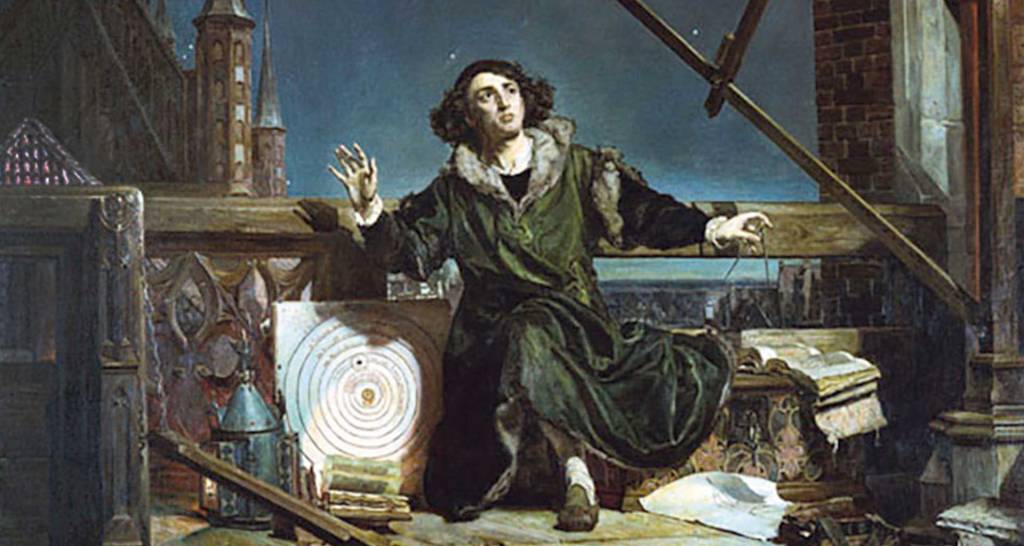
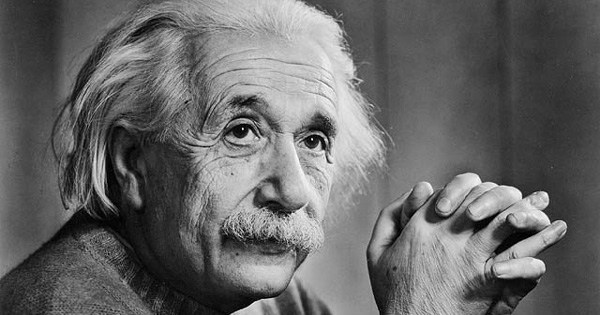
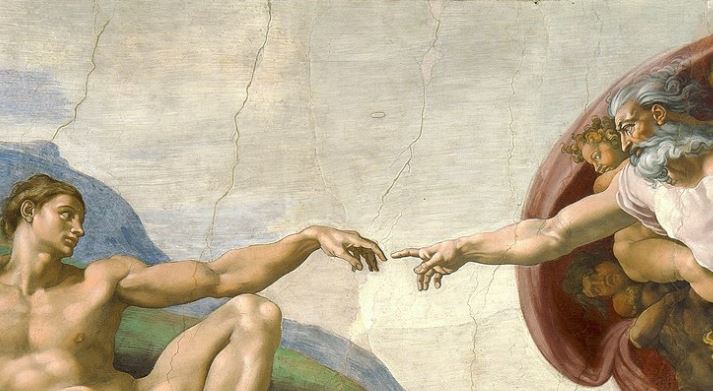


 Lamp and Light