
By Jason Smith
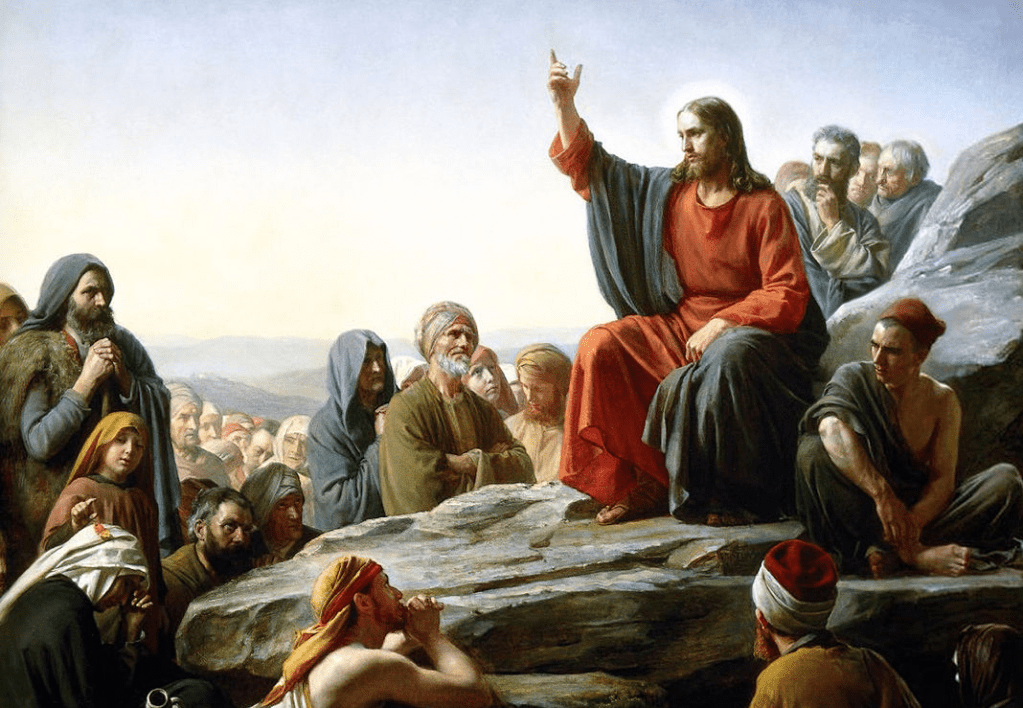
“Everyone then who hears these words of mine and does them will be like a wise man who built his house on the rock.” (Matthew 7:24, ESV)
With these words, Jesus concluded His world famous discourse found in the Gospel of Matthew, now called the Sermon on the Mount.[1]
It’s hard to overstate the impact this sermon has had on the church throughout history. Augustine called it “a perfect standard of the Christian life.”[2] Others have devoted their whole lives to searching out its meaning and understanding its application for today. Regarding the Sermon on the Mount, biblical scholar R. Kent Hughes has said, “Every phrase can bear exhaustive exposition and yet never be completely plumbed.”[3]
Dietrich Bonhoeffer, the German Lutheran pastor who resisted Hitler’s tyrannical rule, based his famous work The Cost of Discipleship on this power-packed sermon. The Sermon is all about what it means to enter the Kingdom of God. It’s an explication of what it means to live your life under God’s rule.
It has even influenced non-Christians, such as Gandhi who came to revere (but not worship) Jesus because of His words spoken here in Matthew 5-7. Nietzsche hated it. He said that the Sermon captures the “slave morality” of Christianity. Apparently, he wasn’t a big fan of loving your enemies. But to be fair to Nietzsche, Jesus’s words here are pretty shocking to all of us, and so we all naturally resist them. Here are some statements found in the Sermon:
“If your right eye causes you to stumble, gouge it out and throw it away. It is better for you to lose one part of your body than for your whole body to be thrown into hell.” (Matthew 5:29, NIV)
“Enter through the narrow gate. For wide is the gate and broad is the road that leads to destruction, and many enter through it. But small is the gate and narrow the road that leads to life, and only a few find it.” (Matthew 7:13-14, NIV)
“You have heard that it was said, ‘Eye for eye, and tooth for tooth.’ But I tell you, do not resist an evil person. If anyone slaps you on the right cheek, turn to them the other cheek also. And if anyone wants to sue you and take your shirt, hand over your coat as well. If anyone forces you to go one mile, go with them two miles. Give to the one who asks you, and do not turn away from the one who wants to borrow from you. You have heard that it was said, ‘Love your neighbor and hate your enemy.’ But I tell you, love your enemies and pray for those who persecute you, that you may be children of your Father in heaven.” (Matthew 5:38-45, NIV)
Again, these words come from the lips of the Lord Jesus Himself. The fact that He, the incarnate Son of God, lived out this ethic is incredible, but that doesn’t make them easy to obey. If we really take them seriously, they are indeed jarring.
There are some Christians who have softened the blow by arguing that Jesus preached the Sermon on the Mount as a lofty ideal, a virtually impossible ethic that was only for the spiritual elite.[4] Others have proposed that the Sermon on the Mount was only for the old covenant Jew or for the age to come when Christ’s kingdom is fully consummated.[5] For many reasons, I cannot accept that interpretation.
For instance, in this very sermon, Jesus taught His followers to pray for the kingdom’s arrival: “Your kingdom come, your will be done, on earth as it is in heaven” (Matthew 6:10, ESV). So how could this sermon be addressing a future era and not today?
Those who claim this ethic is too lofty for the Christian today are forgetting that we now have the supernatural power of the Holy Spirit at work in our hearts and lives. In fact, it’s worth comparing all that Jesus calls His followers to in the Sermon on the Mount with the fruit of the Spirit listed in Galatians 5:22-23: “Love, joy, peace, patience, kindness, goodness, faithfulness, gentleness, and self-control.” I would also add humility, a trait implied in all of these and one which Paul commonly lists elsewhere (see Ephesians 4:2; Philippians 2:3; Colossians 3:12).
I’m not arguing for Christian perfectionism. But like Paul I believe we are to strive for holiness through God’s empowering grace. “Not that I have already obtained all this, or have already arrived at my goal, but I press on to take hold of that for which Christ Jesus took hold of me” (Philippians 3:12, NIV).
Those who claim that the Sermon on the Mount doesn’t apply to today’s world remind me of something G. K. Chesterton said: “The Christian ideal has not been tried and found wanting. It has been found difficult; and left untried.”[6] Followers of Jesus should never avoid the difficult passages in Scripture. They are there for a reason.
Without a doubt, Jesus has set a high goal for us to aim at. To claim that the Sermon on the Mount’s ethic is too lofty to attain may sound humble. But ultimately such a response ignores what Jesus later told His disciples: “If you love Me, you will keep My commandments” (John 14:15, NASB). He also ended His sermon by saying, “Everyone then who hears these words of mine and does them will be like a wise man who built his house on the rock” (Matthew 7:24, ESV).
Jesus is our King today, not merely in the future. And this is His kingly address to us. If we consider ourselves followers of King Jesus, the Sermon on the Mount isn’t an optional add-on. It is something we need to read, cherish, and obey now more than ever. Why don’t you read through Matthew 5-7 right now? It might just change your life.
[1] Matthew 5-7. Portions of the sermon are restated in Luke 6:20-49.
[2] Quoted in Philip Schaff, NPNF1-06. St. Augustine: Sermon on the Mount; Harmony of the Gospels; Homilies on the Gospels, Chapter 1.
[3] The Sermon on the Mount, R. Kent Hughes, 14.
[4] This was Thomas Aquinas’s view. See Charles Quarles, The Sermon on the Mount: Restoring Christ’s Message to the Modern Church, Kindle edition.
[5] For instance, Lewis Sperry Chafer said, “As a rule of life, it is addressed to the Jew before the cross and to the Jew in the coming kingdom, and is therefore not now in effect.” L. S. Chafer, Systematic Theology (Dallas: Dallas Theological Seminary, 1948), 5:97.
[6] G. K. Chesterton, What’s Wrong with the World.
 Lamp and Light