
By Jason Smith
Many atheist philosophers and scientists will declare reason and faith are forever locked in a battle for the minds of men. In his book Faith vs. Fact: Why Science and Faith Are Incompatible, Jerry Coyne asserts that there is no evidence “for anything divine.”[1] Therefore, he contends, genuine science must be naturalistic and exclude any appeals to a theistic explanation. This is ironic because Coyne is open to the multiverse theory,[2] an idea that is supported by absolutely no evidence. He also believes that matter arose from non-matter and life arose from non-life. These are counter-intuitive ideas, considering every form of life we see today came from preexisting forms of life. Besides all this, it is simply unreasonable to pit science and reason against religion and faith when the founders of modern science believed in God’s existence.
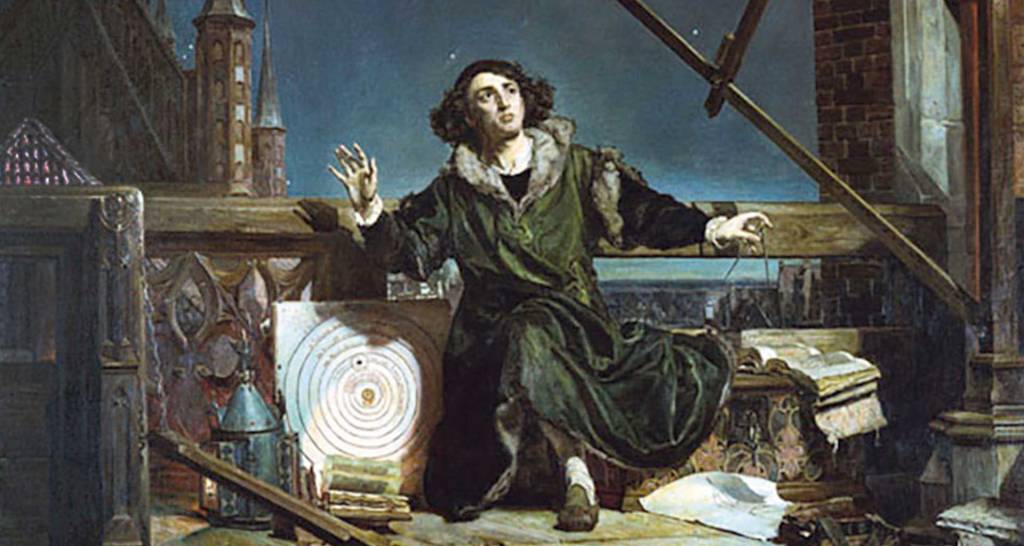
In fact, many prominent scientists in the 16th and 17th centuries were unabashedly Christian by conviction and firmly committed to biblical authority. These include Robert Hooke (1635-1703), William Harvey (1578-1657), who discovered the way blood circulates throughout the body, Christian Huygens (1629-1695), Tycho Brahe (1545-1601), and Nicholas Copernicus (1473-1543). It’s a little known fact that Copernicus not only proposed the heliocentric solar system but also wrote a commentary on the book of Genesis.[3] And what about Isaac Newton (1643-1727), the so-called “father of modern science”? He wrote, “I have a fundamental belief in the Bible as the Word of God, written by men who were inspired. I study the Bible daily.”[4] Somehow I don’t think Newton would agree that faith is the archenemy of fact. Many more names could be added to this list. Johannes Kepler (1571-1630), who discovered the laws of planetary motion, wrote, “The chief aim of all investigations of the external world should be to discover the rational order which has been imposed on it by God, and which he revealed to us in the language of mathematics.”[5]
Even Galileo, whom many have tried to pit against Christianity, was in fact a Bible-believing Christian. His conflict with the Church was more a result of the Church’s irresponsible adherence to Aristotle’s view of the universe. It had nothing to do with the truthfulness of Christianity or even whether the Bible was the Word of God. Henry Morris writes, “Even though Galileo (1564-1642), for example, was officially censured for his heliocentric teachings by the Church, he himself believed the Bible and that it supported his views.”[6]
John Lennox argues that “there is strong evidence that the biblical worldview was intimately involved in the meteoric rise of science in the sixteenth and seventeenth centuries.”[7] As C. S. Lewis wrote, “Men became scientific because they expected law in nature and they expected law in nature because they believed in a lawgiver.”[8]
Historians unanimously agree that modern science chiefly arose in the Christian culture of Western Europe in the 16th and 17th centuries. But why did it emerge in that specific context and nowhere else? Rodney Stark argues that it has everything to do with Christianity’s inherent rationality and recognition that a rational God has created an orderly universe, upheld through various natural laws. The universe is not eternal, but the remarkable creation of God. Contrary to what many pagan cultures have believed, nature is not too holy to analyze and investigate. Contrary to what many Eastern religions hold, nature is not an illusion but has an objective reality that we can discover. Furthermore, nature is subject to rational inquiry and scientific investigation because it is the result of a divine Mind. Many have bought into the whole idea that prior to the irreligious Renaissance, everyone lived in the so-called “Dark Ages” of medieval religion. Stark vehemently disagrees: “… the Dark Ages is a hoax originated by antireligious, eighteenth-century intellectuals who were determined to assert the cultural superiority of their own time.”[9] In other words, the whole notion of there ever being “the Dark Ages” has more to do with the imagination and hubris of intellectual elitists in the 18th century than a true description of Europe during that era in history.
Many historians have similarly argued that modern science required certain basic assumptions that only a Judeo-Christian understanding of the world could provide. For example, according to the Bible, God in Christ “upholds the universe by the word of His power” (Hebrews 1:3). Therefore, the universe exhibits regularity and structure, so that observations made today still apply tomorrow. Only an orderly universe can be subject to experimentation and documentation.
The fact that nature also fits so perfectly with mathematical description is a feature easily overlooked, but points to it being the result of a Mind, not random chaos. Allan Sandage, known as the father of modern astronomy and discoverer of quasars does not mask the wonder he feels as a scientist: “I find it quite improbable that such order came out of chaos. There has to be some organizing principle. God to me is a mystery but is the explanation for the miracle of existence — why is there something rather than nothing.”[10]
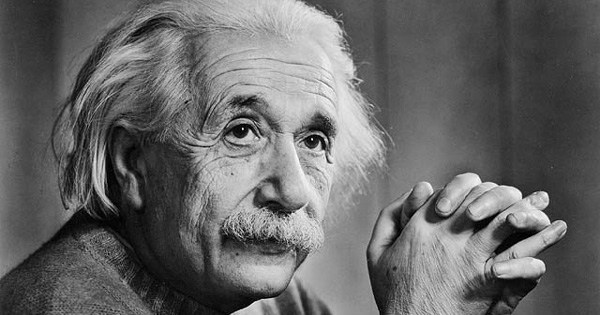
Even Albert Einstein, whom many atheists incorrectly claim as their own, confessed that a godless universe could not account for the universe’s astonishing order and complexity. When asked if he believed in God, Einstein responded:
“I’m not an atheist. The problem involved is too vast for our limited minds. We are in the position of a little child entering a huge library filled with books in many languages. The child knows someone must have written these books. It does not know how. It does not understand the languages in which they are written. The child dimly suspects a mysterious order in the arrangement of the books but doesn’t know what it is. That, it seems to me, is the attitude of even the most intelligent human being toward God. We see the universe marvelously arranged and obeying certain laws but only dimly understand these laws.”[11]
The very fact that we human beings can study and grasp something of nature’s order and complexity cries out for an explanation, too. If we are merely the result of Darwinian evolution, then our brains are the product of chance collisions of atoms. The most we could say is that our brains have evolved according to our species need for survival. But this in no way means that our brains are reliable for getting at the truth. In fact, if our brains really have been fashioned by unguided natural processes, we have every reason to doubt our rational faculties! In the words of atheist John Gray, “Modern humanism is the faith that through science humankind can know the truth and so be free. But if Darwin’s theory of natural selection is true this is impossible. The human mind serves evolutionary success, not truth.”[12] In the end, atheism undercuts itself. The consistent Darwinist must saw off the very branch he is sitting on.
On the other hand, if there is a God and He designed us to be rational creatures who reflect His rational nature, we have every reason to think we can know truth.
Furthermore, Genesis states, “In the beginning, God created the heavens and the earth” (Genesis 1:1). Since God created nature, it is good, but nature is not God, as pantheistic religions teach. Therefore, it is not too sacred to study and explore. In fact, many scientists have been creationists who have been inspired in their research by a literal interpretation of the early chapters of Genesis.[13]
Despite how often we hear it repeated that science and faith are locked in mortal combat, the truth is that the modern scientific enterprise could not have even got off the ground were it not for the firm conviction in a God of reason and order. The history behind the origins of modern science is just one more testimony to the astonishing worldwide impact of that one solitary figure from Nazareth.
[1] Jerry Coyne, Faith vs. Fact: Why Science and Religion Are Incompatible (New York: Viking Press, 2015), xiii.
[2] The multiverse theory suggests that the best explanation for the incredible fine-tuning and life-sustaining properties of our universe is that there are a vast number of universes, and ours just happened to win the lottery when it comes to having the necessary physical constants.
[3] Henry M. Morris, Men of Science, Men of God (Green Forest, AR: Master Books, 1982, 1988, 2012), 21, 22.
[4] J. H. Tiner, Isaac Newton—Inventor, Scientist and Teacher (Milford, MI: Mott Media, 1975).
[5] Johannes Kepler, Defundamentals Astrologiae Certioribus, Thesis 20 (1601).
[6] Morris, Men of Science, Men of God, 21.
[7] John Lennox, Gunning for God, 27.
[8] C. S. Lewis, Miracles: A Preliminary Study (London: Fontana, 1947), 110.
[9] Rodney Stark, The Victory of Reason (New York: Random House, 2005), 35.
[10] Allan Sandage, “Sizing up the Cosmos: An Astronomer’s Quest,” (New York Times, 12 March 1991), B9.
[11] Walter Isaacson, Einstein: His Life and Universe (New York: Simon & Schuster, 2007), 386.
[12] John Gray, Straw Dogs (London: Granta Books, 2002), 26.
[13] For example, Carolus Linnaeus (1707-1778), the “father of taxonomy,” drew his inspiration to classify the various animal species from the account of Genesis 2 where Adam names the animals God brings him. His contemporaries even dubbed him a “Second Adam.” See Heather Malone, “The Second Adam: Linnaeus and His Systema Naturae” (Philosophy of Reason, 13 May 2014) or http://philosophyofreason.com/authors/the-second-adam-linnaeus-and-his-systema-naturae
 Lamp and Light