If there is one truth that Christians have always believed about Christmas it is that Jesus was conceived not by natural human means, but supernaturally in the womb of a virgin named Mary.
The Nicene Creed of AD 325 states, “For us men and for our salvation He came down from heaven, and by the Holy Spirit was incarnate of the Virgin Mary, and became man.” And yet, this same Jesus of Nazareth was known during His lifetime as the son of Joseph of Nazareth. Joseph was not the birth father of Jesus, but he was his father by adoption. Not only do Mary and other Nazareth locals call Joseph Jesus’ father, Scripture itself speaks this way: “The child’s father and mother marveled at what was said about him” (Luke 2:33, ESV).
In every culture, children are inevitably known through their parents. After Jesus baffled His hometown with His profound teaching, many asked, “Isn’t this the carpenter’s son?” (Matthew 13:55). In other words, “How did old Joseph’s boy learn to talk like this?”
We don’t always consider how central Joseph was to Jesus’ upbringing. Joseph would have been there for all of Jesus’ firsts. Because Jewish men at this time were more likely to be literate than the women, it was likely Joseph who lifted the boy Jesus on to his lap and read Him the Torah.[1] As a blue collar worker,[2] Joseph was the man working hard to provide for his family. What little we do know about Joseph is that he was willing to make sacrifices to care for his family (see Matthew 2:13-23). And given what we know about that culture, Jesus would have spent vast amounts of time alongside Joseph, learning the trade of carpentry from His father.
New Testament scholar Gary Burge writes:
“Like other boys in his village, from the age of six to ten Jesus became literate in Hebrew through the study of the Torah in the Nazareth synagogue, and he memorized vast quantities of Scripture. From ages ten to twelve he became acquainted with the oral laws under the direction of the synagogue teacher and custodian, the hazzan. At this point he ended his schooling and began working full time with his father.”[3]
Jesus would have called Joseph Abba (“Dad” or “Daddy”) from a young age. When Joseph had something to say, Jesus would listen. When Joseph needed Jesus to run an errand for him in town, Jesus gladly obeyed. The Bible says Jesus was obedient and submissive to both Mary and Joseph (Luke 2:51). As the One who fulfilled the Law of God, Jesus honored both parents perfectly.
In a first century Jewish culture that prized father-son relationships highly, the local townspeople couldn’t help thinking of Joseph every time they saw Jesus. He was His father’s son—not biologically, but in every other sense, humanly speaking.
Interestingly, we don’t have a recorded word from Joseph in Scripture. Joseph may have been the strong silent type, but we know he was a man of action. Scripture describes him as “a just man” who kept the law of God faithfully (Matthew 1:19). You can imagine the hurt Joseph felt when he learned that Mary, his betrothed, was pregnant. Yet even in his anguish, he was “unwilling to put her to shame,” one more clue that Joseph was a man of both integrity and compassion.
When God sent an angel to reveal the truth—Mary had conceived Jesus by the Holy Spirit—Joseph stepped forward to fulfill his calling of taking Mary as his wife as God intended.
“When Joseph woke from sleep, he did as the angel of the Lord commanded him: he took his wife, but knew her not until she had given birth to a son.” (Matthew 1:24-25a, ESV)
As the legal father, Joseph even had the privilege of naming his son “Jesus,” just as the angel had instructed (v. 25).
Despite the scandal of marrying a pregnant woman in that culture, Joseph stepped up to the challenge. He was willing to bear the shame along with Mary, and together they submitted to God’s glorious plan of raising His incarnate Son—a daunting task difficult to fathom.
Joseph’s role in the story of Christmas is not peripheral. Although he is a silent character in the narrative, his part is crucial to everything that unfolds. The angel calls him “Joseph, son of David” to remind him of his royal ancestry and to foreshadow the messianic claims that will be granted to Jesus, his legal heir. Joseph is a strong and faithful man—a true knight of his day who honors women, protects the vulnerable, loves his family, and courageously follows the orders of his King.
In a culture that often devalues the role of husbands and fathers, we need to see again the impact that Joseph had on the life of Jesus. Although he was put in his role by God’s grace alone, everything we know about Joseph tells us that Jesus was raised by a good man and was honored to call him “Dad.”
[1] While New Testament skeptics have said things like “Jesus was an illiterate peasant,” these skeptics underestimate how essential it was for Jewish boys to go to synagogue from a young age and learn the Hebrew Scriptures, often from their fathers (see Deuteronomy 6:4-9). Do we really want to suppose that the same Jesus who often prefaced a quote from Scripture with the question, “Have you not read?” was Himself not reading that very Scripture? This is why blatant skepticism of Jesus cannot be taken seriously; it ignores the evidence and crafts a Jesus with which skeptics are more comfortable.
[2] The Greek word tekton can mean both carpenter and craftsman.
[3] Gary M. Burge. The New Testament in Antiquity (Zondervan, 2009).
I always want to encourage my fellow Christians that theology is not a stuffy subject reserved for uptight scholars to study in their ivory towers. Theology literally means “the study of God.” It is our extraordinary privilege to investigate the God-breathed text of the Bible and discover the truth about God and what He calls us to be. And if the goal is the knowledge and worship of God, there’s hardly anything more life-giving and thrilling to the soul than theology. On that note, I want to share four big reasons why the virgin conception matters for you today, and why there is no Christmas without it.
“How will this be,” Mary asked the angel, “since I am a virgin?” (Luke 1:34, NIV)
Why the Virgin Conception Matters:
1.The virgin conception shows that the coming of Jesus Christ is the sovereign work of God alone.
With every other birth that has taken place, both a mother and a father were needed to create new life in the mother’s womb. One modern embryology textbook explains:
“Human development begins at fertilization when a sperm fuses with an oocyte to from a single cell, the zygote. This highly specialized, totipotent cell (capable of giving rise to any cell type) marks the beginning of each of us as a unique individual.”[1]
This is the natural process that God has designed from the beginning. One of the reasons God created marriage to be for one man and one woman is that in God’s design, a baby can only be conceived through the sexual union of a man and a woman. But here in this one unique case, we see a baby growing in the womb of a woman who has never been with a man.
This proves that God is the One who sovereignly sent Jesus into this world. The fact that no human father was needed demonstrates that God didn’t need our help to bring Jesus into this world. He did it supernaturally to show that salvation could only be accomplished by Him.
Also, note that God didn’t come down and start asking several Jewish women who would be willing to carry His Son. He simply chose Mary for this task. He didn’t ask Mary whether she was willing or have her sign any papers. God sovereignly chose her alone to have this extraordinary responsibility of carrying and giving birth to His Son.
2. The virgin conception proves that Jesus has always been the eternal God.
If Jesus was merely a man, then there would be no need for a virgin conception. But because the Son of God existed from all eternity, it only makes sense for Him to be born apart from human means.
In the virgin conception, we have the most astonishing miracle in all of human history. This is God Himself coming to earth, becoming one of us.
There have been numerous heresies throughout history that have gotten Jesus wrong, and it all comes down to His nature. Was He truly God in human flesh? Some early heretics tried to say that Jesus was such a remarkable human being that God adopted Him as His Son and gave Him a godlike status. Others have tried to argue that Jesus was the first and greatest creation of God the Father. But Scripture is clear. Christmas is about God Himself becoming one of us.
Speaking of Jesus, John 1:1 says:
In the beginning was the Word, and the Word was with God, and the Word was God. (John 1:1, ESV)
And the Word became flesh and dwelt among us, and we have seen his glory, glory as of the only Son from the Father, full of grace and truth. (John 1:14, ESV)
This “becoming flesh” is what happened in Mary’s womb. This is not something we can analyze, dissect, or figure out scientifically. Satan loves it when people worship at the altar of scientific materialism. Those religiously devoted to scientific materialism have adopted a belief system that rules out God and miracles from the start. I can almost hear the devil cackling when I hear people say, “I only accept what science tells me.” Such an absolute statement exposes a deeply religious conviction and idolatrous form of worship, akin to saying, “I only accept what the priests of Baal tell me.”
The virgin conception is a supernatural work of God, meant to draw our attention to the truth about Jesus. Jesus has been divine from all eternity, and yet he took on a human nature that He inherited from His mother, Mary. So in Jesus, we have the only one in history who is somehow both fully God and fully man.
3.The virgin conception means that Jesus understands us completely.
Of course, as God, Jesus already had perfect knowledge about what it means to be human. He made us, after all. But because of Christmas, Jesus now knows experientially what it means to be human. He can relate to us and personally identify with all the struggles, temptations, and miseries that come with being human in a fallen world.
For we do not have a high priest who is unable to sympathize with our weaknesses, but one who in every respect has been tempted as we are, yet without sin.(Hebrews 4:15, ESV)
Think of this. Right now, in Heaven, at the Father’s right hand, you have an advocate, a high priest who knows exactly what it is like to be human. Have you lost your temper recently with someone in your family? Jesus understands. Have you been tempted to lust or to want to control everything? Jesus understands.
He understands you completely, and yet He is totally free of sin. Jesus knows what it means to live as a full-fledged human in this world.
4.The virgin conception ensures that Jesus would be the perfect and sinless sacrifice we need.
We all came into this world through a mom and a dad. And we inherited from them both their genetic traits that make us who we are and the corruption of original sin.[2] We all arrive stained with the corruption of Adam. So for Jesus to come as that perfect atoning sacrifice who could bear our sin and endure the penalty we deserved, He needed to come in a supernatural way.
“Therefore he had to be made like his brothers in every respect, so that he might become a merciful and faithful high priest in the service of God, to make propitiation for the sins of the people.” (Hebrews 2:17, ESV)
That word “propitiation” is a very important word. Some translations render this verse to say “atonement” instead of “propitiation.” But propitiation has a very specific meaning: “a sacrifice that removes or satisfies wrath.” By dying in the place of sinners, the sinless Jesus absorbed the wrath of God that we deserved. By trusting in Jesus, we are trusting in His sacrifice in our place. The Bible teaches that we are naturally enemies of God and that the most urgent need for every man, woman, and child is to trust in the saving blood of Jesus Christ.
“Since, therefore, we have now been justified by his blood, much more shall we be saved by him from the wrath of God.” (Romans 5:9, ESV)
Baptist pastor Adrian Rogers summed it up:
“All Christianity is described in three sentences. 1) I deserve hell. 2) Jesus took my hell. 3) There’s nothing left for me but His heaven.”
Only through being born of a virgin could He be human in every way and yet utterly sinless, too. He never once failed His Father. Because of that, He could be our atoning sacrifice and represent us so that we could be reconciled to God.
The famous Heidelberg Catechism teaches the importance of Jesus being both truly divine and truly human:
Q.17. Why must he also be true God?
A. So that, by the power of his divinity, he might bear in his humanity the weight of God’s wrath, and earn for us and restore to us righteousness and life.
The virgin conception matters because we can’t understand the purpose of Christmas without it. The whole purpose of Christmas is that Jesus is the God-man who was born to live, die, and rise again to save us from the wrath of God and reconcile us to Himself.
Have thoughts on this post? Feel free to comment below!
[1] Keith L. Moore, T. V. N. Persaud, and Mark G. Torchia, The Developing Human: Clincially Oriented Embryology, 11th ed. (Philadelphia, PA: Elsevier, 2020), 11.
Santa Claus is coming to town. He’s back in the shopping malls and showing up at various holiday events. The jolly old, white-bearded guy in a red suit certainly is popular in our American culture. What’s not to love about a guy who lives at the North Pole, employs elves, magically soars through the sky with flying reindeer, and delivers Christmas gifts to children all around the world each Christmas Eve?
The question many thoughtful Christian parents have is: “Should we teach our kids about Santa?”
The Purpose of Advent
Let me begin by asking another question: “What is the purpose of the Advent season?” Most Christians would agree this season is about the birth of Jesus.
That first Christmas, the angel proclaimed to the shepherds, “Fear not, for behold, I bring you good news of great joy that will be for all the people. For unto you is born this day in the city of David a Savior, who is Christ the Lord” (Luke 2:10-11, ESV). What made it “good news of great joy” is that the message was about Jesus. If you want your Christmas season to be filled with “great joy,” you will want Jesus to be at the center of all your family’s traditions and festivities. Without Jesus, all the parties and presents are ultimately meaningless and empty.
“Christmas” literally means “Christ’s mass.” From the beginning, Christmas has been a time to especially contemplate the wonder of God’s love for a lost world, that the Son of God would come as a baby. Of course, the goal of Christ’s coming was primarily so that He would one day die as a substitute for sinners and rise again.
The angel told Jesus’ adoptive father Joseph, “She will bear a son, and you shall call his name Jesus, for he will save his people from their sins” (Matthew 1:21, ESV). Jesus came as the true Light of the world, and His primary mission was to save those who were lost in sin.
If Jesus and the salvation He brings is the reason we celebrate Christmas, then as parents, doesn’t it make sense to do all we can to put the focus on Him, not lesser distractions?
Harmless Myth?
As you look around our home during the Christmas season, you won’t find much of Santa Claus among our decorations. That’s not because we are anti-Christmas or even anti-Santa, but because we are very pro-Christmas and pro-Jesus. And my wife and I want our three boys to know that nothing compares with the gift God has given us in His Son, Jesus Christ.
Many parents might say, “But there’s nothing wrong with encouraging kids to believe in a magical myth while they are young.” But is that true? I think it’s a wonderful thing to read fiction to your kids. It fuels their imaginations, can teach deep lessons, and helps them grasp the real world in new and powerful ways. But that’s not the same thing as encouraging your kids to believe the fictional world is true.
Colossians 3:9 says, “Do not lie to one another, seeing that you have put off the old self with its practices.” Is it possible to encourage belief in a myth while not lying? I don’t think it is. And if you are teaching your kids about both Santa and Jesus, yet not distinguishing which is myth and which is true, can you see why this could lead to problems later? They may struggle to believe other things their parents have taught them, because they have a clear example of myth being presented as reality.
Old Man in the Skies?
Santa is often described in ways that remind many people of God. He’s seemingly all-knowing: “He sees you when you’re sleeping; he knows when you’re awake.” He fits the image some have of God as an old, white-bearded guy in the skies. And then he rewards good behavior: “He knows if you’ve been bad or good, so be good for goodness sake.”
But on closer examination, Santa is lightyears from the true God. God is infinite and all-knowing, and Santa is a chubby old man who needs elves and reindeer to help him do his job. The caricature of God as an old man in the sky is both false and dishonoring. God is eternal and all of creation depends on His sustaining power moment by moment. And unlike Santa, God is gracious and forgiving. Rather than merely rewarding the nice and leaving the naughty with a lump of coal, the one true God has given His beloved Son to die for His enemies.
While the mythical Santa can bring toys and trinkets that cannot last, the true and risen Jesus can give eternal life and the hope of an inheritance that is “imperishable, undefiled, and unfading” (1 Peter 1:4). Rather than giving Santa and Jesus equal attention this Christmas season, why not teach your kids about the true and living Jesus as the One who is always present for them (not just once a year!) and will meet their every need?
So why in the world would we focus on the myth of Santa, when we can teach our kids the glorious, joy-giving truth about Jesus? There’s simply no comparison!
The Real Saint Nicholas
Lastly, one thing we have done is teach our boys about the true Saint Nicholas from history, because he’s a great example of one who boldly stood for Jesus Christ and suffered for his faith.
Soon after ascending the throne in AD 284, the wicked Roman emperor, Diocletian, began a full-scale persecution dedicated to wiping Christianity from the face of the earth. Diocletian had copies of Scripture burned and imprisoned many bishops, including Nicholas of Myra. Many years later, Constantine became the Roman emperor, and he ordered the release of all bishops.
Around the time that Christianity was gaining more influence, a heretic named Arius began to deny Jesus was fully God. Arius gained quite the following and his teachings caused a lot of division in the church. So, in the year 325, Constantine called on 300 bishops across the Roman Empire to meet in Nicaea and come to unity on the question of Jesus. As Arius stood up before the assembly and began to pontificate, many of the bishops grew angry.
Many of these bishops at the council still had scars and maimed limbs from suffering brutal persecution for their faith in Jesus. Now they had to listen to this snobbish academic spout blasphemous ideas about their Lord. One man strode right up to Arius and smacked him across the face. Arius cried foul, and that bishop was restricted from the remainder of the Council. That bishop’s name? You guessed it: Saint Nicholas of Myra, better known today as “jolly old Saint Nick.”
The irony of all the attention going to Santa at Christmastime is that the real Saint Nicholas was passionate about people knowing the truth about Jesus. So, if someone asks you if you believe in Santa, you can say, “You bet I do, and he had a mean left hook!”
Let’s commit to worshiping Jesus and making Him known this season, beginning with our own homes.
Have thoughts on this post? Feel free to comment below!
At the end of Jim Carrey’s How the Grinch Stole Christmas, the Grinch recognizes that despite taking all the presents of Whoville, he hadn’t truly stopped Christmas from coming. The film is a ridiculous comedy, but I’m always touched as it slowly dawns on old Grinchy: “Maybe Christmas doesn’t come from a store. Maybe Christmas perhaps means a little bit more.”
As I read the New Testament, I might add my own line: “Maybe Christmas isn’t just myth and lore. Maybe Jesus came for the spiritually poor.”
“God with Us”
To grasp the true meaning of Christmas, we cannot miss the uniqueness of that baby in the manger. All our wonderful Christmas traditions are for naught if we fail to see that Jesus Christ really is God come in the flesh.
“Behold, the virgin shall conceive and bear a son, and they shall call his name Immanuel.” (Isaiah 7:14)
Immanuel. What a necessary word for every age, including ours. Immanuel means “God with us” (Matthew 1:23). We’ll never outgrow our need to hear this word and peer deeper into its meaning. It captures the heart of Christmas.
The gods of the pagans would sometimes meddle in the affairs of men, but they were always up and out there, aloof and distant from the cares of this world. The New Testament sharply differs from every other faith and tradition by boldly declaring that the transcendent God has become one of us in Jesus Christ. Every other human being who has walked the planet emerged from history, but Jesus is totally unique. Jesus entered into history.
The true light, which gives light to everyone, was coming into the world. (John 1:9, ESV)
Not only so, but the Incarnation was permanent. Jesus chose to forever become one of us—to literally be “God with us.” This theme of Immanuel bookends Matthew’s Gospel. After His final commission to His disciples, Jesus says, “And behold, I am with you always, to the end of the age.”
This is how loving God is: He looked at the human race and saw what a mess we had made of things in our rebellion against Him. And what did He do? Did He decide to move on to something bigger and better—like humanity 2.0? No! In fact, before the foundation of the world Christ had already decided to go down into this sin-stained world and be subject to all the human frailties and struggles that we experience each day (Ephesians 1:4; 1 Peter 1:20). No longer did God merely send prophets to herald His message—He Himself has entered the very world He created.
How can we fathom the profound depths of Immanuel? In terms of magnitude, this could be compared to you stooping so low as to become a grasshopper (see Isaiah 40:22). We are talking about the God who created every last one of the trillions of stars and galaxies. Nothing happens outside His sovereign power! And yet, this same God willingly subjected Himself to all the limitations that we humans face. He got tired, hungry, and thirsty. Jesus wasn’t like Clark Kent, invincible superhero only pretending to be mortal man. Nor was He born with a halo around His head, like we might see on Christmas cards. No, He came out as a crying baby that needed to be fed and changed and nurtured just like every one of us.
Peering Deeper Still
If we really understood the heights of glory from which Jesus came, we would not be unmoved by Christmas. Jesus chose to identify with us, the very ones who have sinned against Him.
“For we do not have a high priest who is unable to empathize with our weaknesses, but we have one who has been tempted in every way, just as we are—yet he did not sin.” (Hebrews 4:15, NLT)
“Since he himself has gone through suffering and testing, he is able to help us when we are being tested.” (Hebrews 2:18, NLT)
Do you see what this means? Jesus knows firsthand what it’s like to suffer as we do, physically, emotionally, and mentally. He knows what it means to be lonely, rejected, and even despised by others (Isaiah 53:3).
Agnostic Bart Ehrman writes, “I came to think that there is not a God who is actively involved with this world of pain and misery—if he is, why doesn’t he do something about it?”[1] But what if God did do something about it? What if God got so involved with this world of pain and misery that He Himself experienced suffering and death in order to one day bring about full redemption of His people and His world?
I’m with John Stott:
“I could never myself believe in God, if it were not for the cross… In the real world of pain, how could one worship a God who was immune to it? I have entered many Buddhist temples in different Asian countries and stood respectfully before the statue of Buddha, his legs crossed, arms folded, eyes closed, the ghost of a smile playing round his mouth, a remote look on his face, detached from the agonies of the world. But each time after a while I have to turn away. And in imagination I have turned instead to that lonely, twisted, tortured figure on the cross, nails through hands and feet, back lacerated, limbs wrenched, brow bleeding from thorn-pricks, mouth dry and intolerably thirsty, plunged in Godforsaken darkness. That is the God for me! He laid aside his immunity to pain. He entered our world of flesh and blood, tears and death. He suffered for us. Our suffering becomes more manageable in light of his.”[2]
In becoming a man, Jesus linked arms with us who have descended from Adam and said, “I’m with them. I know they’re sinners. I know they’ve rebelled against Me. I know they’ve spat in My face. But I choose to identify with them!” God chose to send Jesus not to destroy the human race, but to redeem all who would ever trust in His sacrifice on Calvary.
Some things lose their hold on me after I have given them enough thought. But the more I ponder the Incarnation, the more it blows my mind. But even then I realize that I’m so finite and God is so infinite that I simply cannot hold the wonder of it all in my mind. All I can do is stand back in awe and be thankful that God did not abandon us. He chose to “save His people from their sins” (Matthew 1:21). He chose to become one of us. To be “God with us.”
High and Holy, with the Lowly
Consider what God said of Himself in Isaiah 57:15: “For thus says the One who is high and lifted up, who inhabits eternity, whose name is Holy: ‘I dwell in the high and holy place, and also with him who is of a contrite and lowly spirit, to revive the spirit of the lowly, and to revive the heart of the contrite.’”
Do you see what God is saying here? In His nature, He is completely unlike us! He is majestic, glorious, and holy. We are finite, small, and sinful. There is a Grand Canyon of difference between God and us. And yet, God is saying that though He is holy and far above us, in His grace, He chooses to dwell with those who are humble, contrite, and lowly. This is the incredible grace of God that we find in the gospel. We don’t work our way up to God. What could be more impossible? Instead, He comes down to dwell with us and rescue us from our sin.
“Blessed are the poor in spirit,” Jesus said, “for theirs is the kingdom of heaven” (Matthew 5:3, NIV).
A while back, I heard a pastor sharing about a time when he was talking with a Hindu leader, and they were trying to understand one another’s beliefs. Finally, the Christian pastor said, “Let me see if I understand what you believe. You believe something like this: God is on the top of a vast and tall mountain. And all the religions of the world are climbing this mountain, and their journey is different because they are climbing different faces of the mountain, but they all end up in the same place.”
The Hindu priest’s eyes widened and he said, “Finally, you understand what we believe.” Then the Christian pastor said, “Well, this is where our beliefs are fundamentally different. As a Christian, I believe that though men have tried to scale this mountain to God, none can ever do it. Because we are all carrying too great a weight—that’s our sin. But see, in the Gospel, we learn that this God atop this mountain has descended to us. He didn’t wait for us to try and struggle to come to Him. He knew we would never make it. Instead, He came down to us in order to take our great burden upon Himself on the cross at Calvary.”
This is the wonder of Immanuel. Jesus came not only to suffer with us, but to suffer for us, in our place. May we never stop peering at the meaning of Christmas.
He made the One who did not know sin to be sin for us, so that we might become the righteousness of God in Him. (2 Corinthians 5:21, HCSB)
Have thoughts on this post? Feel free to comment below!
[1] Bart Ehrman, God’s Problem (New York: HarperOne, 2009), 128.
[2] John R. W. Stott, The Cross of Christ (Downers Grove, IL: InterVarsity, 1986), 335-36.
Parents love to see their children eagerly expecting the arrival of Christmas. They get Advent calendars with the countdown to Christmas and share in their growing excitement with each passing day. God did that with His children, too. He gave them prophecy after prophecy as if to build up that sense of expectation for when the Savior would arrive.
Has God Spoken?
While many doubt the Bible’s accuracy and authority today, one clear proof for its divine origin is the numerous fulfilled prophecies found within its pages, especially from the Old Testament. Only the all-knowing God could tell His people about future events, not merely in vague generalities, but with incredible precision.[1]
The Bible we have today was written down by men, but Christians have always believed that it’s not merely a human word. It is God speaking through faithful men. We weren’t meant to only see the red letters spoken by Jesus as God’s Word. 2 Timothy 3:16 says that “All Scripture”—all of the Bible—is “breathed out by God.” And God wants you to have the confidence that every time you take up and read His Word, you are hearing from the Creator Himself in plain language.
Because the Bible is God-breathed text, it is utterly unique. It is not just one more “conversation partner” among a host of helpful voices, as I heard one self-identifying progressive Christian claim recently.[2] Scripture is authoritative, because it comes from the transcendent authority of God. The Apostle Peter writes, “For no prophecy was ever produced by the will of man, but men spoke from God as they were carried along by the Holy Spirit” (2 Peter 1:21, ESV).
And throughout the whole Old Testament, God spoke through His chosen servants to tell His people of a coming Savior.
The Promised Redeemer
One of the most amazing things we see in the Bible is that from the time that humankind first rebelled against God in the Garden of Eden, God has been working out His plan of redemption.
Of course, the all-knowing God always planned on redeeming His fallen creation (Revelation 13:8). But how incredible to think that when Adam and Eve first reject His authority by eating the fruit, God doesn’t charge in with fury and smite them with a lightning bolt. Nor does He throw up His hands and say, “Well, I guess I’ll scrap this whole humanity project!” No, because He is a God of astonishing grace, He took that moment when they were so vulnerable—and so obviously guilty—to draw them close. He symbolically forgives them by covering their nakedness with animal skins and promises that a Redeemer would come to fix what they had broken (Genesis 3:21).
God promises One who will be an offspring of the woman, who will crush the devil underfoot (Genesis 3:15). In other words, He would come to undo the devastation caused by our first parents.
But He doesn’t stop there. Throughout the Old Testament, God continues to give promise after promise of a coming Redeemer. As the timeline progresses, more and more light is shed on Who this Savior would be and what He would be like. By the time you get to the New Testament, you’re eagerly expecting this Redeemer that God has promised for thousands of years.
God didn’t leave His people to wonder if there was any hope for them. He gave specific predictive prophecies so that they would know what to expect. And the fact that God carried out all these prophecies so precisely shows that He really is sovereign over this world.
A God in Control of History
In order for God to give prophecies that are fulfilled with such precision as we’ll see these were, He must be in absolute control of history.
Some pastors and theologians today are trying to argue that God doesn’t know the future in its entirety. They imagine God as a master chess player shrewdly strategizing and moving the pieces with incredible wisdom as He experiences changing circumstances, but that in the final analysis, He doesn’t know what decisions we will make. This is called open theism, because the future is allegedly “open” and unknown to God Himself.[3]
Well, there is a big problem with that idea. If God doesn’t know the future in its entirety, then how can we say He’s in full control? In fact, how can we say for sure that everything will end as He said it will end, if the future is a bit foggy even to God?
Theologians who teach this are trying to get God off the hook so that when bad things happen, they can say, “Oh, but see, God didn’t know it would happen like this.” But that sounds more like a bumbling friend than the El Shaddai—God Almighty—of Scripture. A God who is just trying His best but is often mistaken is hardly worthy of our trust and certainly unworthy of our worship.
But the Bible leaves us with no doubt about this: God is in absolute control of history.[4] Consider Isaiah 7:14.
The Virgin Conception
In context, God is giving the king of Judah a pledge of His trustworthiness. And this is given around 700 years before Christ’s birth. God essentially says through the prophet Isaiah, “Listen up! Here’s how you will know that I’m a God who keeps His Word.”
And Isaiah says, “Therefore the Lord Himself will give you a sign. Behold, the virgin shall conceive and bear a son, and shall call His name Immanuel.” (Isaiah 7:14, ESV)
That’s a pretty clear sign. Where else in all of human history do we have someone who was born of a virgin? So we can know when this happens, God is doing something extraordinary. And this is important to keep in mind. I can hear the skeptic asking, “Well, how do we know Mary was even telling the truth about being a virgin?” But this is not a case of one random woman making wild claims. There are numerous pieces of corroborating evidence supporting Mary’s claim.
First of all, consider who Mary’s son, Jesus, turned out to be. What cannot be dismissed even by secular historians is that Jesus lived an extraordinary life. If a virgin did conceive a baby supernaturally, we would expect this baby to turn out to be something special. Like, for instance, having one-third of the world claim to follow Him 2,000 years later and splitting history in half (BC and AD). Consider also that Joseph got the memo, too. He wasn’t even going to marry her until the angel showed up and explained everything.[5] It wasn’t just Mary’s word. But there’s also this promise in Isaiah 7:14 that God will perform this incredible miracle one time—and only one time—when a virgin will conceive.
If you’re going to assume someone must be lying simply because something sounds incredible, no amount of evidence will convince you if a miracle really happened. According to Luke’s report, Mary was just as bewildered as any modern person would be by the news that she—a virgin—would conceive (see Luke 1:34). One thing you have to realize is that miracles in Scripture always have a theological context. They are not random; they serve a revelatory and redemptive purpose. They point to the God who redeems. As we will see, it’s not just Isaiah’s one prophecy. There is an extraordinary convergence of fulfilled prophecies that center on the one person, Jesus of Nazareth.
Is the Messiah Divine?
Many Jews today deny that the Messiah will be divine. They think God becoming a human baby is preposterous, because “God is not a man” (Numbers 23:19). But while God is totally distinct from man in His divine nature, prophecies like Isaiah 7:14 do lead to us to conclude that the coming Messiah must be in some sense both human and divine. Indeed, this virgin-born son will be called Immanuel, meaning “God with us.”
But then if you flip forward a page to Isaiah 9, we’re told this:
“But in the future he [God] will bring honor to the way of the sea, to the land east of the Jordan, and to Galilee of the nations. The people walking in darkness have seen a great light; a light has dawned on those living in the land of darkness.” (Isaiah 9:1b-2, CSB)
Galilee was a region in the north of Israel, where the town of Nazareth was. So the prophecy here is that God will send One who will be like a “great light” to Galilee. Well, that certainly would fit with a man who 700 years later would be called “Jesus of Nazareth (in Galilee)” who was also known as “the Light of the World.”
But then just a few verses later, Isaiah tells us more about this coming Messiah.
“For a child will be born for us,
a son will be given to us,
and the government will be on his shoulders.
He will be named
Wonderful Counselor, Mighty God,
Eternal Father, Prince of Peace.” (Isaiah 9:6, CSB)
The rabbinic scholars must have scratched their heads at this point. The Messiah will come as a little baby “born for us.” Fair enough. But He will also be named “Wonderful Counselor, Mighty God, Eternal Father, Prince of Peace.” How could this be? How can a fragile little baby also be called “Mighty God” and “Eternal Father (or Creator)”? So, just like with Isaiah 7:14, they were left with this mystery unsolved. It was baffling, because God had always said He was not like humans. Yet, these prophecies seemed to say that the coming Messiah would be both a flesh and blood boy and the eternal Creator.
In fact, as you look at this prophecy, is there really any other way to interpret this? The Messiah had to be both God and man.
From Bethlehem or Nazareth?
Isaiah goes on to confirm that this one would also reign on David’s throne, which fits with other prophecies to show that he’s talking about the coming Messiah.
But then we come to Micah 5. And this one also vexed the rabbis. The context here is God promising a coming Redeemer, and even the ancient rabbis took this as a messianic prophecy.
“But you, Bethlehem Ephrathah,
    though you are small among the clans of Judah,
out of you will come for me
    one who will be ruler over Israel,
whose origins are from of old,
    from ancient times.” (Micah 5:2, ESV)
That final phrase “from ancient times” is the Hebrew phrase mi-vemey ‘olam, which is usually translated “from eternity.” And that would tell us that this coming Ruler actually has an eternal origin. But the big thing to note is that Micah says the Messiah would come from the little town of Bethlehem.
Earlier I noted that Nazareth was in Galilee. But Bethlehem was in Judea, not Galilee. So here’s the question: If Isaiah said that the Messiah would be from Galilee (where Nazareth is), how could He also be from Bethlehem (in Judea)?
For the Jews, this was a puzzle. Perhaps some even claimed it was unresolvable. But what if this coming Messiah would be born to a virgin from Galilee and even be raised in Nazareth of Galilee for most of His growing up years, so that He would be known as someone from Nazareth? But what if a census was decreed by the ruling Emperor, Caesar Augustus, so that His mother and her husband—who were both descendants of David—would have to return to their ancestral home of Bethlehem to be registered? And what if this census just happened to be exactly when Mary’s baby was born?
Wouldn’t we have to say that in one sense He was from Galilee, but in another sense He was from Bethlehem?
Ultimately, there are no accidents in history. The Sovereign God can give such precise prophecies with such incredible accuracy only because He really is in control of history.
The God of Christmas
Because the Christmas prophecies were fulfilled exactly, we can trust God’s Word entirely. All of these prophecies conclusively point to Jesus of Nazareth as the virgin-born divine Messiah sent to rescue us from our sins (Matthew 1:21). While God as God is certainly unlike us in important ways, He chose to become one of us when “the Word became flesh and dwelt among us” (John 1:14, ESV).
This is but a small fraction of the already fulfilled prophecies in the Bible. We could keep going if we had more space. But here’s the point we cannot miss: only a supernatural book can give us the future. The Jews who have rejected Jesus throughout history still have to acknowledge that these prophecies were in their Hebrew Bibles long before Jesus was born.
All of this is very good news for sinners like you and me. We have a God who has not left us alone. He promised in ages past to send a Savior. He fulfilled that promise on that first Christmas. And today this promise-keeping God shows mercy to all who call on the name of Jesus.
Have thoughts on this post? Feel free to comment below!
[1] Keep in mind, Orthodox Jews have had copies of the Hebrew Scriptures (Old Testament) since it was first penned long before the birth of Christ, so one cannot claim that Christians came along and modified the Hebrew Scriptures to fit the portrait of Jesus.
[3] See a powerful refutation of this theology in Bruce Ware’s book God’s Lesser Glory: The Diminished God of Open Theism.
[4] Scripture supporting this claim is found in Deuteronomy 32:39; 1 Samuel 2:6-8; Psalm 103:19; 115:3; 135:6; Proverbs 21:1; Isaiah 25:1; Daniel 2:21; 4:34-35; Romans 8:28-30; Ephesians 1:11.
One of the sure signs that the Christmas season is upon us is all the twinkling lights that suddenly adorn nearby homes and businesses. The tradition of putting up lights during the Advent season can be traced back to the Protestant Reformer Martin Luther. On a late-night hike in December, he was struck by the way the starlight beautifully danced on the boughs of a fir tree. Luther said he felt as if the hand of God had touched his soul. It was so moving, he set out to create a similar experience for his family in the home. Luther attached candle holders to the branches of their tree, and his family and friends were dazzled by the spectacle of a well-lit Christmas tree. Thus began a longstanding tradition, today replicated with the far safer set of electric lights you string around your Christmas tree.
From the beginning, light has symbolized the Christmas hope.
The World in Darkness
The first Christmas came at a time when the world felt very dark. Interestingly, the historian Luke begins his Gospel narrative by focusing not on Mary and Joseph, but on another couple that was far older, Zechariah and Elizabeth.
Zechariah is a priest chosen by lot to present the incense offering before the Lord at the altar in the Jerusalem temple. As a Jew, this was an incredible honor for Zechariah. Most priests only dreamed of being the one who got to burn the incense on the altar of God. Since a priest could only win the lottery one time, this was quite literally a once in a lifetime opportunity for Zechariah.
But as he stood in this place of great honor, Zechariah struggled to feel blessed. For one thing, he and Elizabeth had failed to conceive in a culture where children were a sign of God’s blessing. Over the years, many of Elizabeth’s peers may have looked at her with an arched eyebrow as they hurried along with their train of youngsters.
On top of their personal pain, as a nation Israel felt oppressed by the Roman Empire. Rome’s overbearing rule and hefty taxes had become a weighty burden for an already beleaguered nation. Long gone were the glory days of King David and King Solomon and the First Temple. Long gone, even, were the courageous Maccabees to lead a revolution against all the foreign oppressors.
Many wondered, Where is the Deliverer God promised through the prophets? Why has God abandoned us to become pawns in the hands of pagans? In short, it was a bleak time for Israel.
From Zechariah’s perspective, it didn’t look like God and His people were winning. The forces of darkness seemed to be having their way and showed no sign of weakening.
Hero of God
It’s in this context that old Zechariah is at the altar when an unexpected visitor shows up: the angel Gabriel. Gabriel – whose name means “hero of God” – had visited the prophet Daniel hundreds of years earlier to foretell a yet future arrival of a Messiah who would “put an end to sin” and “bring in everlasting righteousness” (Daniel 9:24). In a sense, Gabriel’s message hadn’t changed. But he now told Zechariah that he would father this Messiah’s forerunner. This son, whose name would be John (the Baptist), would prepare the nation and “turn many of the children of Israel to the Lord their God” (Luke 1:16).
Zechariah’s initial response is to doubt. Like many skeptics today who treat the Christmas story as an outmoded myth, Zechariah’s problem was spiritual, not intellectual, in nature. After all, a glorious angel of the living God was standing before his eyes. His unbelief was not caused by a lack of evidence. You see, doubt had probably infected his heart long before Gabriel showed up.
Luke tells us Zechariah and Elizabeth had lived upright and moral lives, but Zechariah had probably struggled to trust God for some time. Why? Today, we would say he lived with the anguish of unanswered prayers. Perhaps when he was younger his prayer for a child was fervent, but in his old age, he had almost certainly given up on such a request. Like the psalmist, he had probably pleaded with God to not forget His people, to break through the heavens, come down, and set things right.[1] But time after time, the Romans had reminded him and his fellow Jews that they were the ones in charge. In his head, he knew that the God of Israel ruled over all, but most days it felt like Caesar reigned supreme.
Heaven’s Perspective
Rather than coddling Zechariah, the angel challenges his unbelief: “I am Gabriel. I stand in the presence of God, and I was sent to speak to you and to bring you this good news. And behold, you will be silent and unable to speak until the day that these things take place, because you did not believe my words, which will be fulfilled in their time” (Luke 1:19-20, ESV). It’s as if Gabriel is saying, “Zechariah, things may look dark from where you are standing, but I stand in the presence of the Almighty God Himself. And there is no darkness in Him.”
Zechariah had seen all of life’s circumstances from one angle, and to him, it looked like tragedy upon tragedy. It looked like the light of hope had all but burned out. But Gabriel brought heaven’s perspective, a perspective that is easy to lose in this broken world of suffering and death, but greatly needed.
Many think of Christianity as a nice fairytale for those who simply cannot deal with all of life’s agony, as if faith was an anesthetic that numbs us to the pain of reality. But Christianity never tries to downplay the truth of suffering. Christians have long called this world “fallen” because it no longer displays the ideal of what life was supposed to look like. Cancer, war, oppression, hunger, poverty, and death were not part of God’s original design. But Christianity announces that all this misery is ultimately rooted in humanity’s rebellion against its Maker, and our only hope is to be reconciled back to Him.
Indeed, for one to say that something is wrong implies that there is a way things ought to be. When someone gets away with murder, we don’t say, “Personally, I find murder objectionable. But who am I to judge?” No, we say, “This is evil!” That’s because deep down we recognize that “all have sinned and fallen short of the glory of God” (Romans 3:23).
Atheism’s Problem of Suffering
People may claim that the world’s suffering shows that a good God does not exist, but the Bible says the real reason we deny God’s existence is that we don’t like being held accountable for the ways we have fallen short.[2]
If you resort to atheism, you still have to deal with the problem of suffering, but now you have a problem with no resolution. Many young atheists claim to be “scientifically minded,” as if science stood in opposition to belief in God. But when you turn to science for answers to life’s most perplexing problems (like death and our desire for lasting happiness), it doesn’t offer much help. Consider atheist Bertrand Russell’s perspective:
“Such, in outline, but even more purposeless, more void of meaning, is the world which Science presents for our belief… That Man is the product of causes which had no prevision of the end they were achieving; that his origin, his growth, his hopes and fears, his loves and his beliefs, are but the outcome of accidental collocations of atoms; that no fire, no heroism, no intensity of thought and feeling, can preserve an individual life beyond the grave; that all the labors of the ages, all the devotion, all the inspiration, all the noonday brightness of human genius, are destined to extinction in the vast death of the solar system, and that the whole temple of Man’s achievement must inevitably be buried beneath the debris of a universe in ruins… Only within the scaffolding of these truths, only on the firm foundation of unyielding despair, can the soul’s habitation henceforth be safely built.”[3]
And that was poor Russell on a good day. But isn’t Russell giving an honest appraisal that without God, we are left with “the firm foundation of unyielding despair”?
Without heaven’s perspective, the picture grows ever more hopeless and dull. But one reason we can know atheism isn’t true is that it is totally unlivable. No one can live as if there is no objective moral standard. Atheists cry out for justice when they get hit by porch pirates, too! And no one can live as if there is no meaning and purpose to life. It’s the most barren worldview imaginable, and it leaves us only in despair.
The Good News of Christmas
This world is in desperate need of hope, and Gabriel had come to announce good news. That’s why he began by telling Zechariah that his prayer was not ignored or forgotten, but had been answered. He would have a son and great joy would accompany his birth.
Later in the same chapter, Gabriel shows up again, this time with an announcement for a very young woman. The virgin Mary is told that she is highly favored and will bear a Son, Jesus. Gabriel says, “He will be great and will be called the Son of the Most High. And the Lord God will give to him the throne of his father David” (Luke 1:31-32). The angels would later tell the shepherds, “Fear not, for behold, I bring you good news of great joy that will be for all the people” (Luke 2:10).
The very Messiah Gabriel had foretold to Daniel was now arriving. And once John was born, Zechariah understood the significance of his role. Holding up his newborn boy, he said, “And you, child, will be called the prophet of the Most High; for you will go before the Lord to prepare his ways, to give knowledge of salvation to his people in the forgiveness of their sins” (Luke 1:76-77).
Zechariah no longer doubted God’s goodness. Now, he saw afresh that God’s timing is always perfect, that He hadn’t forgotten His people, but rather that He had sent them a Redeemer. This Messiah would not only deliver them from all enemies (v. 71), but would “give light to those who sit in darkness and in the shadow of death” (v. 79).
Science and technology have given us many good gifts, but they could never solve our greatest problems of sin and death. God sent His own Son, the divine Messiah, to bring the light of hope where human effort only leaves us in darkness.
Martin Luther told his children the same thing I tell my boys. The lights on the house and the Christmas tree and the lit candles of the Advent wreath all signify the same truth: Jesus, the Light of the world, has come. And because of His coming, life, death, resurrection, and ascension, we now have hope. The good news of Christmas is that a Savior has come to defeat humanity’s greatest enemies and grant forgiveness and new life to all who throw themselves on His mercy, by trusting in the risen Christ’s substitutionary death on the cross.
Have thoughts on this post? Feel free to comment below!
From the very birth of Christianity, the church has always believed in the virgin conception of Jesus Christ. It is part and parcel of the gospel message. It is an essential, not merely incidental, component for understanding who Jesus is.
While some skeptics would have us believe that Jesus’ virgin conception and divine nature were late inventions by the church, nothing could be farther from the truth. From the earliest sources on the life of Jesus, the four Gospels (Matthew, Mark, Luke, and John), we have the testimony of credible and early eyewitnesses who said Jesus Himself claimed to be the great “I Am” or Yahweh God.
One famous historian, Dr. William Ramsay, conducted a thorough investigation of every name and location mentioned in the Gospel of Luke and in Luke’s second volume, the book of Acts. Ramsay was an atheist convinced that Christianity was just one more myth of the ancient world. He planned to catalog all of Luke’s errors in order to make the story of the virgin-born Messiah look as ridiculous as the myths of Zoroaster and Zeus.
To Ramsay’s dismay, however, Luke proved to be a top-notch historian. He triple-checked every name and place Luke mentions against every historical record he could find pertaining to the first century. In the end, Ramsay could not deny Luke’s incredible accuracy. Eventually, Ramsay surrendered his life to the Jesus he had set out to debunk.
As mentioned, the Gospels of the New Testament claim to be based on eyewitness testimony, and the authors express a concern for what really happened in the life of Jesus. Names and places are often mentioned that could only be known by people who were actually there when the events took place. These were people who knew Jesus personally. Most historians agree that Jesus’ mother, Mary, was the primary source for the nativity story found in Luke. The virgin conception was not only based in history, but also a necessary component of the gospel.
Writing at the beginning of the second century, the church father Ignatius wrote:
“For our God, Jesus the Christ, was conceived in the womb by Mary, according to a dispensation, of the seed of David but also of the Holy Ghost.”[1]
The Bible teaches that ever since Adam’s sin, children inherit the sinful condition of their parents.[2] Had Jesus come into this world like you and me, with a mother and father, He could not have been the sinless Savior and spotless sacrifice for sins that we all need. This could only happen if Jesus entered this world through a supernatural conception.
The Myth of the “Jesus Myth”
There are many out there, like comedian Bill Maher, who have tried to say that the virgin birth is just part of the “Jesus myth.” He argues that the Christians plagiarized this idea of the virgin birth from pagan mythologies that had already been around for centuries. But on closer examination, this skeptical claim falls apart. Not only are the pagan stories not really virgin births because they involve a god sleeping with a goddess or woman, but they don’t make any attempt to be rooted in history, as the Gospels do.
In his mockumentary film Religulous, Maher tries to argue that long before the Jesus story, the Egyptians believed that their god Horus, the son of Osiris, was born of a virgin, walked on water, performed healing miracles, died by crucifixion, and was resurrected as savior after three days. Oh yeah, and the film claims this is all recorded in the Egyptian book of the dead written in 1280 BC. This is meant to catch viewers off guard. Wait a minute. The Jesus story sounds just like that!
No doubt, it sounds pretty compelling. The only problem? Almost none of this is based in actual history; this is a deliberate misrepresentation of the facts. As Egyptian pastor Shaddy Soliman said, “If you made this kind of claim in Egypt, people would think you’re crazy.”[3]
The only thing truly accurate about the above description of Horus was that he was indeed supposed to be the son of the Egyptian god Osiris. But before considering the other claims, something needs to be clarified.
With nearly every one of the examples that skeptics like Maher cite, it is painfully obvious that they are mythological. They were not written as historical accounts. In fact, there is really no effort by the authors to root these polytheistic tales in a real historical context. By contrast, consider how Luke begins his Gospel:
“Inasmuch as many have undertaken to compile a narrative of the things that have been accomplished among us, just as those who from the beginning were eyewitnesses and ministers of the word have delivered them to us, it seemed good to me also, having followed all things closely for some time past, to write an orderly account for you, most excellent Theophilus, that you may have certainty concerning the things you have been taught.” (Luke 1:1-4, ESV)
Luke talks about his account being based on the testimony of eyewitnesses. He says he did his research, following “all things closely for some time past.” He set out “to write an orderly account” so that his reader would have “certainty” about the Jesus story. This is how you begin a work of history, not mythology. He doesn’t start with “Once upon a time,” but instead gives specific names and times when kings and emperors were reigning, so that there would be no question, this is a carefully researched historical account. As it turns out, the real myth is that there even was a “Jesus myth,” since the Jesus story is based on credible eyewitness accounts of history.
Is Jesus Based on Horus?
So what about Horus?
Was he too said to be born of a virgin?
According to author Rice Broocks, here’s what really happened in the Horus myth (brace yourself, it’s pretty gross):
“Osiris was killed and dismembered, and his body parts cast into a river. Isis retrieved his genitals and then inseminated herself in order to get pregnant and have the son, Horus.”[4]
Oookay then. To call that a virgin birth is a bit of a stretch, to say the least. Well, what about Horus performing healing miracles? Nope, there’s no record of him ever healing anyone. What about Horus being crucified? Again, no, nothing like that is recorded other than his hands being spread apart at death. But no cross. No nails. In fact, crucifixion wasn’t even practiced by the Egyptians. So again, the claim doesn’t fit the facts of history. What about rising from the dead? As Broocks explains, in one account Horus is said to be resuscitated, but that is nothing like the Jewish understanding of resurrection where you are raised to new bodily life in glory.
I would encourage those who have been told that the Jesus story is just a copycat of other ancient religions to actually delve into the accounts themselves. Do the research to see if this claim stands up to historical analysis. Ask critical questions. Does the copycat claim make sense of the facts? Where do certain beliefs or ideas show up in historical records? Don’t just blindly accept the claims of those who are bent on making Christianity look foolish.
In most cases, my guess is that these skeptics don’t want the Jesus story to be true, because if Jesus really did die and rise again, then they are undoubtedly accountable to Him; He’s Lord. But if the Jesus story is just a reshuffled version of what was already out there, and it has no grounding in historical truth, they can shunt it aside as another fable and Jesus could be safely ignored along with Zeus and Thor. But what if this retelling is pure fiction?
In his book, Reinventing Jesus, J. Ed Komoszewski writes:
“Only after the rise of Christianity did mystery religions begin to look suspiciously like the Christian faith. Once Christianity became known, many of the mystery cults consciously adopted Christian ideas so that their deities would be perceived to be on par with Jesus. The shape of the mystery religions prior to the rise of Christianity is vague, ambiguous, and localized. Only by a huge stretch of the imagination, and by playing fast and loose with the historical data, can one see them as having genuine conceptual parallels to the Christian faith of the first century.”[5]
The simple fact is that the vast majority of historians today accept that the basic facts about Jesus’ life are rooted in history, not mythology. Not only that, but no historian or scholar ever tried to argue against the Jesus of history for the first 1,700 years following His life. While some disputed His resurrection appearances, nobody tried to argue that Jesus was not a figure of history or that His story was just cobbled together from ancient mythologies. Even today, no historian worth his or her salt will try to deny that Jesus ever existed.
It wasn’t until the Enlightenment that a handful of historians began to argue that since miracles cannot happen (a premise they assumed a priori based on naturalistic convictions), then the story of the miraculous Jesus cannot be real either.
Komoszewski writes:
“As far back as the 1840s, Bruno Bauer began to publish views that the story of Jesus was rooted in myth. Bauer’s greatest influence was on one of his students, Karl Marx, who promoted the view that Jesus never existed. This view eventually became part of communist dogma.”[6]
The Jewish Context of Christian Origins
A glaring problem with this “copycat theory” is that it ignores the Jewish theological and historical context into which Christianity was born. While many forget this, the first Christians were all Jewish. One thing is clear about the Jews of the first century: they utterly repudiated all forms of polytheistic and pagan worship. That being the case, the early Christians would abhor the idea of borrowing ideas about God or worship from the pagan myths of the Gentiles.
It’s clear from the New Testament that the early Christian leaders saw myths as a dangerous threat, not something from which to learn. The Apostle Paul warned his fellow Christians about those who “devote themselves to myths” (1 Timothy 1:4, NIV). He predicted that many, even in churches, “will turn their ears away from the truth and turn aside to myths” (2 Timothy 4:4, NIV). The Apostle Peter said, “For we did not follow cleverly devised myths when we made known to you the power and coming of our Lord Jesus Christ, but we were eyewitnesses of his majesty” (2 Peter 1:16, ESV). The argument that Christians just adopted pagan mythical ideas makes no sense, given their leaders continual warnings to run away as far as they could from myths.
Again, Komoszewski writes:
“The first-century Jewish mindset loathed syncretism. Unlike the Gentiles of this era, Jews refused to blend their religion with other religions. Gentile religions were not exclusive; one could be a follower of several different gods at one time. But Judaism was strictly monotheistic, as was Christianity. As the gospel spread beyond the borders of Israel, the apostles not only found themselves introducing people to the strange idea of a man risen from the dead; they also came face-to-face with a polytheistic culture. But they made no accommodation on this front.”[7]
Is Christmas a Pagan Holiday?
I’ve come across numerous internet bloggers, YouTubers, and conversation partners who try to argue that Christianity so closely parallels the ancient mystery religions that Christians must have just copied them to sound legitimate. This erroneous idea is found on the lips of one of Dan Brown’s characters in The Da Vinci Code: “Nothing in Christianity is original.” The novel claims that everything from Jesus’ virgin birth to His birthday on December 25th to the idea of Him receiving “gold, frankincense, and myrrh” has its origin in pagan mythologies, like that of Mithras.
But this is so inaccurate, it’s almost laughable. None of Brown’s claims stand up to scrutiny. To be as charitable as possible, we’d have to say that he didn’t do his homework when writing the book. More likely, he knew that the sensational sells while the truth is often ignored. It’s simply not true that Mithras was born of a virgin – he was born of a rock![8] Let’s not pretend rocks can be called virgins now. In fact, what you don’t find in any of the mystery religions is anything remotely like the virgin conception in the New Testament – which was also prophesied 700 years in advance in Isaiah 7:14. You have gods like Zeus sleeping with human women and producing beings that are half-man and half-god. But obviously if a god had sex with a woman, then she’s not a virgin.
What about December 25th? It’s true that this was the date chosen by the Emperor Aurelius to dedicate his pagan temple to Sol Invictus, the god of the “Unconquerable Sun,” because it was close to the winter solstice. Since Mithraism was closely associated with the worship of Sol, there is a connection between Mithras and that particular date. But let me explain why that does not mean Christmas itself has pagan origins.
No one knows the actual date of Christ’s birth. The earliest known date for celebrating it was actually January 6th and many Eastern churches still celebrate Christmas on that day. But here’s the important point to be made: Thecelebration of Christmas preceded the choice of December 25th as the day on which to celebrate. So why do we celebrate it on December 25th? According to historians, we have Constantine, the first Roman emperor to convert to Christianity, to thank for that. Prior to becoming a Christian, Constantine worshiped Sol Invictus. It seems that in AD 336, the year before Constantine died, he chose December 25th to now be a day for celebrating Christ, not Sol Invictus. In the decades that followed, many popes and emperors argued for appropriating the pagan holidays to demonstrate the redemptive power of Christ.
What about this idea in The Da Vinci Code that gold, frankincense, and myrrh were presented to Krishna at his birth long before the Jesus story? This one is just false. There’s nothing like this found in the story of Krishna’s birth,[9] and I would guess that Brown got this idea from Dorothy Murdock, who has no academic training. While she is a popular writer, many of her claims – such as this one—are roundly rejected by the scholarly community.
The most we could say is that certain cultural practices appear to have overlap between Christianity and ancient pagan religions, but that only makes sense when you consider that by the end of the first century, the vast majority of Christians were former pagans. Nevertheless, there’s good reason to conclude that Christian theology and the Jesus story were not influenced by Mithraism or other pagan mythologies. In the most profound sense, the Christian gospel is both original and unique. The so-called parallels are either gross exaggerations or complete fabrications. All claims to the contrary are evidence of shoddy scholarship and a hunger for the sensational.
Eddy and Boyd make the point well:
“While there are certainly parallel terms used in early Christianity and the mystery religions, there is little evidence for parallel concepts. For example, as we have noted, both Christianity and the mystery religions spoke of salvation—as do many religions throughout history. But what early Christians meant by this term had little in common with what devotees of mystery religions meant by it. To site just one difference, there was in the mystery religions nothing similar to Paul’s idea that disciples participate in the death and resurrection of their Savior and are adopted as God’s children by placing their trust in him.”[10]
So, yes, you’ll find similarities in the general, but you won’t find specific parallels. Christianity is utterly unique in the kind of story it tells. It’s a story of grace – of the one true God coming to the rescue of humanity by being born of a virgin, living a sinless life, dying as a substitute sin-bearer in the place of lost sinners, and rising again bodily. The testimony we find in the New Testament belongs to those who actually saw the risen Christ, felt His nail-pierced hands, and saw Him ascend into the clouds.[11] History records not only His first followers doggedly sticking with the same story from the beginning but also their willingness to die for what they witnessed firsthand. What about the pagan adherents of those other supposed “dying and rising god” myths out there? We don’t have any record of them claiming to see their god in the flesh or being willing to die for this claim. Only Christianity can say this. That’s the power and uniqueness of the Jesus story.
[1] Quoted in Josh McDowell and Don Stewart, Answers to Tough Questions Skeptics Ask about the Christian Faith (San Bernardino: Here’s Life Publishers, 1980), 56.
[2] See my previous article “Does the Bible Teach Original Sin?”
[3] Quoted in Rice Broocks, Man, Myth, Messiah, 119.
[4] Rice Broocks, Man Myth Messiah, Kindle edition.
During the Christmas season, our schedule is often crammed with all the festivities to attend, gifts to deliver, and shopping to complete. The race against the clock and the stress of getting things “just right” can be a bit overwhelming. That is why we all could use a reminder to pause, step back, and take it all in. Consider with me what Christmas is really all about.
Selah
The Bible has a wonderful word for this: selah. Selah means stop. Consider. Absorb. Don’t hurry on to the next task to accomplish. Instead, take a deep breath and reflect on the wonder of what God has done out of His unspeakable love for you.
One reason we need to pause is that we often think we have already “figured out” Christmas. We imagine that since we have heard the Christmas story so many times before that we already have a good grasp on it. But, in truth, Christmas is about an event we could never fully wrap our minds around.
“The Word became flesh.” (John 1:14)
We are talking about the infinite becoming finite; the omnipotent One becoming small and weak; the eternal Son of God who created time entering into time itself as the Son of Mary. The Creator entered His creation. The Author wrote Himself into His play.
There is great mystery here. In the words of the Lutheran theologian, Dietrich Bonhoeffer, the incarnation is a holy mystery. It’s a mind-bending mystery to consider how divinity and humanity could be so closely intertwined in a single person. And yet, that is precisely what we have with Jesus. He is not merely the greatest man who ever lived. He is the one and only God-man.
His hands were the hands that placed the stars in the sky. His voice was the one that spoke light into existence at the very beginning. His were the eyes that have peered into the soul of every man, woman, and child. Yet, here He was on Mary’s lap, the glory of Heaven was there as a little baby, nursing from His mother’s breast.
And we are meant to pause and wonder, to allow ourselves the time to ponder the incredible truth of it all. As we do that, the Spirit of God opens His glorious truth to us.
We are like the person with impaired vision who went into surgery to have his vision corrected, and when he comes out, he can see color for the first time. “I never dreamed that the sky could be so blue!” he says. “I never imagined grass to be so green.” Although he could see things before, he’s now seeing everything in a brand new way, as it was always meant to be seen.
That’s what we must do as we consider the coming and incarnation of the Son of God. As we stare into the face of the infant in the manger, we begin to see everything and everyone else in the light of God’s glory.
“He Was in the Form of God”
Writing about the incarnation, the Apostle Paul said:
“Have this mind among yourselves, which is yours in Christ Jesus, who, though he was in the form of God, did not count equality with God a thing to be grasped, but emptied himself, by taking the form of a servant, being born in the likeness of men.” (Philippians 2:5-7, ESV)
To say that Jesus existed “in the form of God,” is to say that the Son has always had the nature of God. We typically think of “form” as the outward design, but in first-century Greek, the word morphe (“form”) meant something more like “inner substance” and “nature.” Paul is saying that at no point in time did Jesus ever become a god or graduate to godhood. He always has been and always will be the eternal God of all. The fact that He is the Son of God doesn’t make Him any less divine, because a son always shares the nature of his father.
Paul goes on to say that this Son who has always existed as God “did not count equality with God a thing to be grasped” (v. 6) or clutched. The idea is that the Son didn’t cling to His divine rights so as to avoid coming to our rescue. In fact, He did the opposite. Rather than seeing His divine nature as a reason to overlook us, He saw it as the thing that qualified Him to save us.
“He Emptied Himself”
Now, when some scholars early in the 20th century looked at the text that says Christ “emptied Himself” (v. 7), they assumed this meant He emptied Himself of His divine nature. As if, in order to become a man, Jesus had to shed His deity. But there’s a fundamental misunderstanding here. It doesn’t say He emptied something out of Himself, but that He “emptied Himself, by taking the form of a servant” (v. 7). This self-emptying is talking about Christ’s incredible humility – that He who was exalted above all would stoop to such a low and degrading level out of love.
It’s not that being human is degrading; it’s not. We alone are the prized creation made in God’s own image (Genesis 1:26-27). But the Son of God was willing to subject Himself to being servant of all.
Christ didn’t have His Godhood taken away. This might sound like a mathematical paradox, but what we have here is subtraction by addition. Christ emptied Himself – not by losing His deity, but by adding a human nature.
Remember Christ’s words to the disciples when they were bickering about who was the greatest?
“Whoever would be great among you must be your servant, and whoever would be first among you must be slave of all. For even the Son of Man [speaking of Himself] came not to be served but to serve, and to give His life as a ransom for many.” (Mark 10:43-45, ESV)
How much egg do you think was on their face after that? They had just been arguing back and forth. Peter says, “I’m taller, so I should lead.” James says, “No, I’m smarter, so I should be in charge.” Jesus says, “Guys, stop looking to be served. Even I came here to serve you all and even die for you.” You can bet their mouths were snapped shut after that!
“And being found in human form, He humbled Himself by becoming obedient to the point of death, even death on a cross.” (Philippians 2:8, ESV)
Once again, “form” here means nature. So Jesus really did become fully human in every way. He wasn’t just wearing a human disguise. And He came as an obedient servant of His Father – all the way to the point of dying a criminal’s death on a cross.
“Even Death on a Cross”
This statement would have been shocking. To say that the cross was God’s idea would have sounded absurd to people at the time. They didn’t think of the cross as something you find on top of churches or worn around a neck. A cross — or stauros in the Greek — would have been viewed as the epitome of shame and agony. The word “cross” is something that even Romans wouldn’t say in polite company, because it conjured up the image of gore and shame.
Crucifixion – which originally was invented by the Persians – and then “perfected” by the Romans was designed to maximize both the pain and shame of the victim. In fact, the very word “excruciating” literally means “out of the cross.” This horrendous experience needed a whole category of its own to describe this level of torture.
Now consider that at Calvary, that was God on the cross. According to this verse, the cross was always the goal of Christ’s coming. This was not Plan B; God had always intended it to happen in this way. The reason for the manger of Christmas is the cross of Good Friday. The Son of God came to this earth as a man ultimately to pay for our sin and die the death we deserved.
Now ask yourself, “How much love is required to willingly undergo that kind of torture for those who are spitting in your face?” Jesus lived out the very humility Paul is calling us to embody. That’s why Paul brings up Christ’s incarnation and death. Earlier, he said, “Do nothing from selfish ambition or conceit, but in humility count others more significant than yourselves” (Philippians 2:3, ESV). Who but Christ embodied this perfectly?
It was Christ who looked not merely “to His own interests, but… to the interests of others” (v. 4). At the cross, we see the ultimate act of selflessness – God Himself pouring out His love, enduring the penalty for our sins, so that we could be forgiven in full.
“God Has Highly Exalted Him”
Charles Wesley, who is known for his many hymns, including “Hark! The Herald Angels Sing” also wrote the famous hymn, “And Can It be that I Should Gain.”
The first stanza goes like this:
“And can it be that I should gain An int’rest in the Savior’s blood? Died He for me, who caused His pain? For me, who Him to death pursued? Amazing love! How can it be That Thou, my God, shouldst die for me?”
When we consider Christmas, we should see a Savior God who was willing to lay aside every privilege and right in order to secure the freedom of those who deserved death. Jesus looked at you and considered your need, and because of His great love, He willingly made that vast journey from heaven to earth. And because He did that, words like “Bethlehem,” “manger,” and “wise men” mean something to us today.
Let’s join Paul in letting the truths of Christmas and Calvary turn out hearts to worship.
“Therefore God has highly exalted him and bestowed on him the name that is above every name, so that at the name of Jesus every knee should bow, in heaven and on earth and under the earth, and every tongue confess that Jesus Christ is Lord, to the glory of God the Father.” (Philippians 2:9-11, ESV)
Have thoughts on this post? Share in the comments below!
Thomas Cole, “The Angel Appearing to the Shepherds,” 1834
During the Christmas season, my wife, Whitney, and I like to sit down and enjoy a good holiday movie together. Frequently, we turn to the Hallmark channel to watch one of their one million Christmas movies. I don’t want to knock Hallmark movies, because they are generally good, wholesome films with a guaranteed happy ending. Nevertheless, something I’ve found while watching these movies is that after you have watched a few of them, you begin to see some (how shall I put it?) consistency to the plot and character development. Before long, you can’t help but make some surefire predictions in the first five minutes, like “Oh, there’s the guy she’s going to fall in love with” and “That’s the guy who’s about to be dumped… Somebody better warn him!”
But for many of us, this predictability is not a bad thing. If you are watching a Hallmark movie, you’re not looking for a surprising plot twist or a suspense-filled ending. You just want to get into the Christmas spirit with an escape to the land of “feel good fiction.”
Maybe you can think of a time you were reading a book or watching a film, and you assumed the conclusion was well in hand. You can already imagine how everything is going to work out for all the characters involved. But then, in the final minutes, the plot takes a shocking twist, and the ending rocks your world.
As we read the Christmas story found in the Bible, one thing we have to see is that this is a script no one but God could write. Despite how familiar with the story we may be, there is a surprising truth to Christmas. Imagine, for example, what it would be like to be Joseph and to have your whole world turned upside down when you learn that your fiancée is pregnant via supernatural conception.
Or put yourself in the sandals of Mary, a young Jewish virgin probably still a teenager, who is visited by an angel telling her that she is about to give birth to the long-expected Messiah, who is also the eternal Son of God. What do you think was running through her head? She probably already had a life planned out for herself. Although we may know how the Christmas story goes, Mary did not. This was the last news she expected to receive.
Nevertheless, she humbly responded, “I am the Lord’s servant. May your word to me be fulfilled” (Luke 1:38, NIV). As her belly began to swell in the following months, she must have pondered late at night many times the magnitude of what was about to happen. She was going to give birth to the Savior of the world.
The problem with familiarity is that we can sometimes grow numb to how shocking the gospel really is. It is the news that the angels call “good news of great joy” (Luke 2:10). Because the Creator of all laid aside the glory of Heaven to come as a little baby, we can have joy beyond measure.
The true story of Christmas tells us that God has not abandoned us. He did not leave us to the misery and chaos of this world. He came after us in Christ to redeem a lost and hurting world.
Recently, Whitney and I were with another couple, and the wife complimented her husband by simply saying, “He gets me.” That statement encapsulates what we all truly want: to be fully known and fully loved. Because of Christmas, we can say of God, “He gets me.” Because He has lived a full human life on this planet, He is acquainted with all our sorrows, joys, struggles, and emotions. Because of Christmas, no one can say, “God doesn’t understand me.” He does.
Now think of this. When the Sovereign King of the universe steps into His world, shouldn’t we expect Him to be raised in a palace, reigning over the world empire, and wearing a crown of gold? But what happens instead? When God finally shows up, we can’t even make room for Him in a small town inn. Instead of being wrapped in silk and laid in an ornate crib, He is laid in a manger — a feeding trough for farm animals! If you’ve spent any time on a farm, you know that this a filthy nursery for a newborn baby. This is how the Lord God came to us.
Many have wondered, Why the shepherds? Of all the people that God could have chosen to make His great announcement to, why them? He doesn’t send the angels to make a royal announcement in Caesar’s palace or among the Jewish nobility in the temple. He didn’t come at a time when He could broadcast the announcement on cable news. No, He sent those angels out to the grassy fields outside of Bethlehem to tell none other than lowly shepherds – the guys who spend their whole lives chasing stubborn sheep around.
And while this too could be surprising, isn’t it only fitting that the God whom the Jews have long called the “Good Shepherd” should send the first invitation to them. Shepherds, after all, picture one who must care for, protect, and at times rescue those who are constantly wandering from the fold.
The Bible says that we are all like sheep who have gone astray. And that, ultimately, this is the whole purpose of Christmas. Jesus came as a baby, but He didn’t stay a baby. Jesus came not only to identify with us in our struggles but to save us from our sin. That is why Jesus came not to wear a crown of gold, but a crown of thorns. And that’s why He came to ascend not a throne, but a cross.
It is at the cross that our ultimate need is met – our need for forgiveness. Because of His great love for you, the Lord God Himself came from the highest realm of glory to the lowest of lows. He bore your burden of sin so that you can be free of your past – totally forgiven and restored to fellowship with your Creator. In the end, that is the surprise of Christmas.
“You will conceive and give birth to a son, and you are to call him Jesus.” (Luke 1:31, NIV)
In the ancient world, human life was viewed as very cheap. Someone’s value came from what they could offer to others. If you were useful or skilled, you had value in the eyes of others; if not, you were expendable. Babies were often viewed as disposable, and women and children were treated as property. Before Jesus came, human beings almost universally had only instrumental value in the eyes of others, not intrinsic value.
The birth of Jesus Christ changed all that. The Bible says of Jesus, “God was pleased to have all his fullness dwell in him” (Colossians 1:19, NIV). His primary purpose for coming was to accomplish our redemption from sin and make us new. Yet the Creator of the cosmos was not above entering this world through a virgin’s womb. Although He was supernaturally conceived, He otherwise entered this world like you did, growing inside His mother’s belly for most of a year. And like you, after coming down the birth canal, He was totally dependent on His mother’s nourishment and care.
Here lies the greatest enigma of all. The Supreme Creator who spoke everything into being was coddled and nursed by His teenage mother. No wonder the angels look on in stunned amazement at what God has done (1 Peter 1:12). The One through whom and for whom all things exist had made Himself small. Simply put, Jesus was a fetus.
The word fetus simply means an “unborn baby.” Although there’s nothing degrading about the term itself, it is often used as a way to dehumanize the unborn. Not long ago, my wife, Whitney, and I visited OMSI (Oregon Museum of Science and Industry). One of the most fascinating exhibits is called Prenatal Development. In a circular room, you find preserved unborn babies at every stage of development in utero.[1] What struck me was that from a very early stage, perhaps around nine weeks, the tiny baby revealed features that were so undeniably human. Already at that point, miniscule limbs have sprouted and little black eyes can be seen on the bean-shaped head. I came away from the exhibit agreeing with King David that we truly are “fearfully and wonderfully made” (Psalm 139:14). How incredible to think that Jesus too passed through each one of those stages in Mary’s womb!
Luke records that when the pregnant Mary visited her cousin Elizabeth, who was also pregnant, Elizabeth’s baby – later known as John the Baptist – leaped in his mother’s womb. And then Elizabeth tells Mary:
“Blessed are you among women, and blessed is the fruit of your womb! And why is this granted to me that the mother of my Lord should come to me? For behold, when the sound of your greeting came to my ears, the baby in my womb leaped for joy.” (Luke 1:42-44, ESV)
Today, many in our nation are asking, “Why should we care about the unborn?” One abortion rights advocate even mockingly called the pro-life position a “love affair with the fetus.”[2] The unborn child has even been likened to a parasite or blob of tissue.[3] No doubt the dehumanization of these precious little image bearers of God has led to the slaughter of millions.
So, why should we care about the baby in the womb? Here is one very good reason: Because Jesus was once a baby in the womb. And even while unborn, He brought joy to another unborn baby! If experiencing joy in the presence of another doesn’t qualify for personhood, I don’t know what would!
It’s worth noting that the Greek word used for baby here –βρέφος(brephos) – is the same word Luke uses for babies outside the womb elsewhere, showing that God’s Word doesn’t distinguish between babies inside and babies outside the womb (see Luke 2:12, 16; 18:15). Either way, they’re all babies.
It is because Jesus came as a baby and welcomed and loved the little children He encountered that Christians have always made the care of children a priority. In ancient Rome, where babies were often aborted or abandoned, the early Christians were known for saving thousands of babies. They brought them into their homes, adopted them as their own, and taught them the Christian faith.
When the disciples tried to hold the children back as little nuisances, Jesus famously said, “Let the little children come to Me, and do not forbid them” (Matthew 19:14a, NIV). Those words inspired Christians throughout history to be the first to start orphanages, foundling homes, and eventually start Sunday Schools for children to learn about Jesus at an early age.[4]
Christians today are known for being at the forefront of the pro-life movement and starting the 3,000 to 4,000 crisis pregnancy centers across the United States. These clinics are known for offering free services and demonstrating compassion to thousands of young pregnant women in difficult situations and empowering them to make wise and informed decisions.
Many today view the pro-life movement as an obstacle to the women’s rights movement. However, those who hold this notion ignore the fact that the same Jesus movement that brought about the pro-life position also paved the way for equal treatment of women.
In ancient times, nearly every culture viewed women as having a lower status than men. Aristotle even argued that a woman ranked somewhere between a free man and a slave. Considering that a slave held no more value than cattle in ancient times, you get a glimpse of how poorly women were treated. As you review the accounts from ancient India, China, Rome, and Greece, the widespread consensus was that wives were the property of their husbands. Modern westerners can hardly fathom such a low view of women. So what changed all that? What inspired the now widespread perspective that women and men have equal value, rights, and dignity?
In the words of historian Rodney Stark, the elevation of women has its roots in the “triumph of Christianity.”[5] That is, Jesus Himself elevated women to a level of dignity and respect. He honored the women who followed Him, engaged them in conversation, and was eager to teach them alongside the men, all social taboos at the time. Jesus treated women as equals to their male counterparts. It is the early Christians who taught the then-pagan world that husbands are to love and be faithful to their wives, widows should be cared for, and polygamy was forbidden by God. Stark writes, “In response to the special appeal that the faith had for women, the early church drew substantially more female than male converts, and this in a world where women were in short supply.”[6]
What does all this have to do with Christmas?
By daring to become a human Himself, Jesus imbued all human life with greater dignity than it ever had before His birth. In the Christian worldview, unborn children, women, and men all have equal value as image bearers of God, and consistent followers of Jesus have always stood for the rights of each.
All this because of Christmas. When you trace the roots of all these changes back far enough, you will find that they all began in a little manger in Bethlehem some 2,000 years ago.
[1] According to the display, all of the unborn children died as a result of “natural causes or accidents,” not abortion.


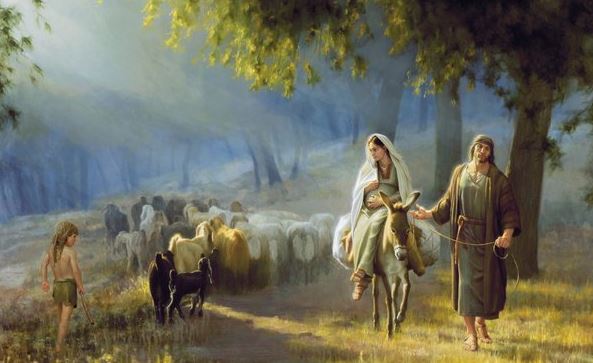

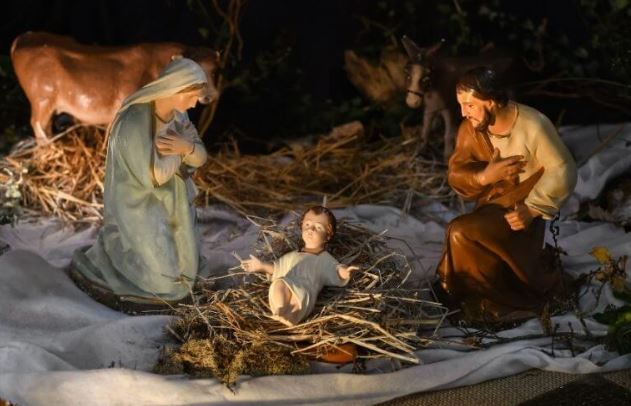




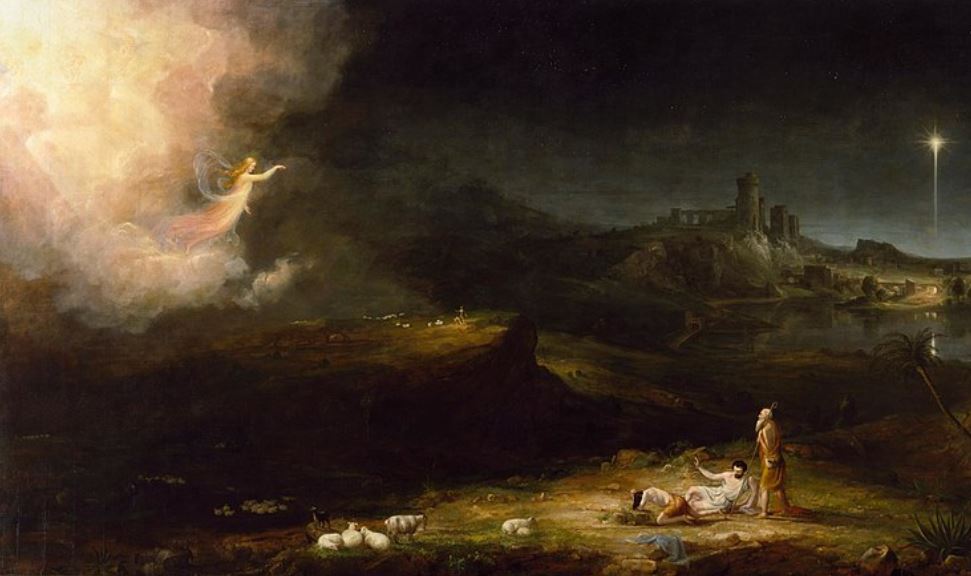

 Lamp and Light