What Does the Bible Say about Abortion?

By Jason Smith

Some might ask, “Why bring up the Bible when we talk about abortion? Isn’t that a political debate?”

Many people would say the Bible is irrelevant to the issue of abortion. But as a follower of Jesus, I take the Bible to be the authoritative Word of God. Jesus had the highest view for Scripture, and Scripture claims to be the very words of God. It’s good to remember that everyone looks to some authority for shaping the way they view the world. These can include your family, your church, your friends, your professors, the scientific community, or your favorite YouTube channel. But we all have sources of authority, and as a follower of Jesus, I’ve become convinced that the Bible really is the authoritative Word of God.

So, the Bible matters to the question of abortion, because what really matters is what the Creator of everything says about this issue. But I think it’s worth pointing out something first.

Contrary to what many want to say, the abortion debate is not about those on the side of science, progress, and women’s rights versus those on the side of religion, faith, and superstition. That’s how many try to frame the debate in order to stack the deck so that religion and faith look silly. But historically, modern science has its roots in a biblical worldview.

As the great thinker, C. S. Lewis, pointed out: “Men became scientific because they expected Law in Nature, and they expected Law in Nature because they believed in a Legislator.”[1] So true science – going out and exploring this world and trying to discover the law and order in the universe is right at home in a theistic, rather than an atheistic, worldview.

So, when we talk about the nature of the unborn, the Christian wants to know both what can be gleaned from science and what can be gleaned from Scripture. Traditionally, this has been called looking at natural revelation and looking at special revelation.

Choice Is not the Issue

Something else needs to be cleared up. The big question about abortion is not whether someone is pro-choice or anti-choice. Nearly everyone is anti-choice when it comes to rape, genocide, and race-based slavery. People don’t want those choices to be legal, because they are immoral. So, the question isn’t whether you are for or against choice. The whole issue is about the nature of the unborn. Are they a full-fledged human being, imbued with personhood, dignity, and rights, or are they just a parasite, a clump of cells, or some other subhuman creature that can be killed?

On a personal note, something else needs to be said. If you have somehow been involved in an abortion in the past, you need to know that not only does the Bible talk about the unborn child, it also talks about the love, grace, and forgiveness of God found in Jesus Christ. So, you need to know – if that’s you – I don’t write any of this in a spirit of condemnation. I aim to follow the model of Jesus, who the Bible says was “full of grace and truth” (John 1:14).

So what does the Bible say about the unborn child? Well, one thing I’ll want to show from a handful of passages is that the Bible everywhere affirms both the value and personhood of the unborn.

Why the Incarnation Matters in this Debate

Just a couple months back, we Christians celebrated the Advent of Christ. The truth of Christmas is that God Himself entered this world – not directly to a manger – but through the womb of a virgin. It’s astonishing to consider that the Incarnation – God becoming a man – took place first in Mary’s womb. So Jesus Himself was an unborn child in utero.

There’s a unique encounter we read about in the Gospel of Luke, chapter 1. Mary comes to see Elizabeth, her relative, who is also pregnant at this time. So you have two pregnant women greeting each other here. And here’s what we read:

And when Elizabeth heard the greeting of Mary, the baby leaped in her womb. And Elizabeth was filled with the Holy Spirit, and she exclaimed with a loud cry, “Blessed are you among women, and blessed is the fruit of your womb! And why is this granted to me that the mother of my Lord should come to me? For behold, when the sound of your greeting came to my ears, the baby in my womb leaped for joy.”(Luke 1:41-44, ESV)

This passage has some remarkable implications for the nature of the unborn child. First, notice that word “baby” used. In the Greek, it’s the word brephos. That same word is used in the next chapter of baby Jesus after He is born. That tells us that, according to the Bible, whether the child is unborn or born, either way it’s a baby – not merely a clump of cells or a non-person.

Secondly, notice what Elizabeth says: When I heard your greeting “the baby in my womb leaped for joy” (v. 44). This unborn baby – later known as John the Baptist – is already fulfilling his purpose of pointing others to Jesus. And he does this by leaping for joy. Joy is an attribute of human beings; it indicates personhood. A clump of cells doesn’t have joy. And notice that Elizabeth also calls Mary “the mother of my Lord” (v. 43). Even though Mary was only in that first trimester with Jesus, Elizabeth says she’s already a mother – not a potential mother.

So, everything here assumes the unique personhood of the baby in the womb.

Biblical ethicist Scott Rae writes:

“From the earliest points of life in the womb, Mary and Elizabeth realize that the incarnation has begun. This lends support to the notion that the incarnation began with Jesus’s conception and that the Messiah took on human form in all of its stages, embryonic life included.”[2]

David in the Womb

Let’s look briefly at another couple passages.

In Psalm 51, King David is confessing his sin to God. And here’s what he says:

Behold, I was brought forth in iniquity,
    and in sin did my mother conceive me.” (Psalm 51:5, ESV)

Keep in mind, David is confessing his own sin here. But he says that this sin nature is something he’s had, not only from birth, but from conception. To have a sin nature from conception is something that can only be true of persons, who have the dignity of being moral creatures.

Or here again is a passage where David speaks of his life in his mother’s womb:

“You created my inmost being; you knit me together in my mother’s womb.” (Psalm 139:13, ESV)

David speaks of God’s meticulous care in forming him and knitting him together. And notice he doesn’t say, “You knit the clump of cells that would become me together,” or even, “You knit together the fetus that would become me in my mother’s womb.” No, he says, “You knit me together in my mother’s womb.” So, from conception, that fetus or baby in the womb was David, not some impersonal parasite.

So even though David in the womb was tiny, not yet fully developed, and lacked many functional abilities, he was still at that time David. Though there would be changes in his development over time, there was no change to his fundamental nature at birth or any time before or after that.

And by the way, science supports this conclusion. Dianne Irving is a biochemist and biologist and teaches at Georgetown University. She had this to say:

“Scientifically something radical occurs between the processes of gametogenesis and fertilization… During the process of fertilization, the sperm and the oocyte cease to exist as such, and a new human being is produced.”[3]

Where Does Human Value Come From?

All of us have an inborne awareness that human beings have value. That’s why when the choice is given between saving the life of a drowning dog or a drowning child, the answer should be obvious. Of course, we should care for animals, too, but there is something unique and sacred about human life. But even though we all have the sense that human beings are valuable, this concept has no basis in a secular worldview.

The Declaration of Independence states that:

“We hold these truths to be self-evident, that all men are created equal, that they are endowed by their Creator with certain unalienable Rights, that among these are Life, Liberty and the pursuit of Happiness.”

It makes sense that if God created us, human beings have equal value and certain natural rights – including the right to life. But if there is no God, where do human rights come from?

Many of my secular friends want to hold on to human rights – they hate things like human trafficking, rape, and racist acts of violence. But the question is, if we all came about through purely natural processes that didn’t have us in mind, then why on earth do we assume human life has value? Wouldn’t we have the same status as pigs and cows and mice and dung beetles?

As Yuval Noah Harari explained in his book Sapiens:

“The idea of equality is inextricably intertwined with the idea of creation. The Americans got the idea of equality from Christianity, which argues that every person has a divinely created soul, and that all souls are equal before God.”[4]

He then writes:

Homo Sapiens has no natural rights, just as spiders, hyenas, and chimpanzees have no natural rights.”[5] Harari is an atheist, but he recognizes the place that Christianity and the Bible had in introducing the concept of human rights to the world. Without the God of the Bible, he says, this whole idea of human rights and equality is an illusion. This is why having a theistic view of reality is so important.

The Bible teaches that you have intrinsic value – not because you have reached a certain level of development or because you have great hair or are especially smart or have contributed something to society. No. You have intrinsic value simply by nature of being made in the image of God.

Then God said, “Let us make man in our image, after our likeness….”
So God created man in his own image,
    in the image of God he created him;
    male and female he created them (Genesis 1:26-27, ESV)

Notice that this is the very first word on human beings in the Bible. The first and most foundational thing God wanted us to understand is that we are made in His image and likeness, and thus have intrinsic value.

That’s why, just a few chapters later we read:

“Whoever sheds the blood of man,
    by man shall his blood be shed,
for God made man in his own image.” (Genesis 9:6, ESV)

So because we are uniquely created in God’s image and likeness, all humans have intrinsic value. And human life should be protected for that reason. That’s why we should never mistreat others based on skin color, age, sex, or anything else – including whether they are born or unborn.

“But the Bible Doesn’t Mention Abortion”

Here is what some people argue. They say that since the Bible doesn’t explicitly mention the word “abortion,” pro-life people shouldn’t condemn it as a sin. But there’s a real problem with an argument from silence like this. The Bible also doesn’t specifically say we shouldn’t slash people’s tires or spray paint our neighbor’s house or shoplift at 7-Eleven, but that doesn’t mean those things aren’t wrong. Our cultural context is different; but the fact remains that if abortion is the killing of an innocent human being – something that science supports – then it is in fact condemned in the Bible, because all killing of innocent human beings is condemned in Scripture.

Furthermore, I would argue that a case law describing an accidental abortion is mentioned in Scripture. Here’s what we read in the Law of Moses:

“If people are fighting and hit a pregnant woman and she gives birth prematurely but there is no serious injury, the offender must be fined whatever the woman’s husband demands and the court allows. But if there is serious injury, you are to take life for life, eye for eye, tooth for tooth, hand for hand, foot for foot, burn for burn, wound for wound, bruise for bruise.” (Exodus 21: 22-25, NIV)

This law addresses the very specific situation where two people recklessly fight, hit a pregnant woman, and subsequently cause her to give birth prematurely. If no one is seriously harmed, then the husband can demand a fine be paid according to what the court allows. However, if there is any serious harm done, the lex talionis (the principle of retributive justice) ensures that every harm is matched with a proportional punishment.

In the case where either the mother or the baby are killed, the culprit had to face capital punishment (“life for life”). This is significant, because elsewhere in the Mosaic law, accidental killings did not require capital punishment. The killer was still guilty of involuntary manslaughter and would have to flee to a city of refuge until the death of the high priest (Numbers 35:9-15, 22-29). It is significant that God has a far more severe punishment in the case of accidentally killing either a pregnant woman or the baby in her womb than other accidental killings. If God views unintentional abortions this severely, what does He think of intentional abortions?

Commenting on this passage (Exodus 21:22), the 17th century reformer John Calvin wrote:

“…the unborn, though enclosed in the womb of his mother, is already a human being, and it is an almost monstrous crime to rob it of life which it has not yet begun to enjoy…”

It is interesting that Calvin said this based on Scripture and without all the benefits of what modern science tells us about the unborn.

In many passages in the Bible, we are urged to care especially for those who are helpless and need our protection.

“Defend the weak and the fatherless;
    uphold the cause of the poor and the oppressed.
Rescue the weak and the needy;
    deliver them from the hand of the wicked.” (Psalm 82:3-4, NIV)

Final Word on Forgiveness

Before I conclude, I want to add that the great message of the Bible isn’t that “abortion is wrong.” The big message is the Gospel, which states that our God is full of grace and mercy. He sent His Son Jesus to reverse the consequences of our decisions and bear our sin and guilt in our place.

He himself bore our sins in his body on the tree, that we might die to sin and live to righteousness. By his wounds you have been healed.” (1 Peter 2:24, ESV)

That means that because of Jesus’s sin-bearing death, God can heal us of all our sin – including the sin of abortion. All God requires of us is that we get honest with Him, and He’ll wash us clean as we come to Him in repentance and faith.

If we confess our sins, he is faithful and just to forgive us our sins and to cleanse us from all unrighteousness.(1 John 1:9, ESV)

Have thoughts on this post? Feel free to comment below


[1] C. S. Lewis, Miracles, 140.

[2] Scott Rae, Moral Choices: An Introduction to Ethics.

[3] Dianne N. Irving, “When Do Human Beings Begin?” Catholic Education Resource Center, https://www.catholiceducation.org/en/controversy/abortion/when-do-human-beings-begin.html.

[4] Yuval Noah Harari, Sapiens.

[5] Ibid.

Photo courtesy of thewonderweeks.com

How Can I Know God’s Will for My Life?

By Jason Smith

If you’re a Christian, it is in you to want to do what pleases God. You don’t want to oppose His will. You’ve had enough of that in your life, and you know how badly that can go. But sometimes you come across situations in life where you’re unsure what God would have you do. And these are just a small sampling of the thousands of decisions we make every day – what to wear, what to say, how to spend time, and what to do first. Life is full of decisions!

Many decisions in life are very much in the moment and either don’t require or don’t allow for a lot of careful thinking beforehand. Other times, you have more time to make a decision, and usually these are the decisions that weigh on you the most when you’re considering what is God’s will. Where should I look for work? Should I marry this person? When should I retire? I want to consider some of the basic principles for knowing God’s will for your life. Then I want to conclude with how this works out in practice, considering the example of how to know who to marry or even whether one should marry at all.

Begin with Biblical Principles

God’s will is that His children would be sanctified – or set apart – in the truth of His Word (John 17:17). As we regularly immerse ourselves in the Word and apply its truths to our lives, it will begin to shape our critical thinking and become the foundational worldview out of which we make all our decisions. In other words, as you submit your mind to God’s Word, God will work in your heart and mind so that you better understand His will.[1] While many assume that Scripture doesn’t speak directly to their situation, I have found that Scripture provides the counsel we need to follow God’s leading. Even though the Bible doesn’t spell out the answer to every specific question, it equips us with the truth and wisdom necessary to make that decision.

“All Scripture is breathed out by God and profitable for teaching, for reproof, for correction, and for training in righteousness, that the man of God may be complete, equipped for every good work.” (2 Timothy 3:16-17, ESV)[2]

The Bible teaches that we are first and foremost to focus on Christ and aspire to become more like Him in all we think, say, and do. Jesus is not only our Savior; He is our example (1 Peter 2:21). As you do this, both the momentary decisions and the prolonged decisions will be shaped by the character of Christ, as revealed in God’s Word.

Ask God for Wisdom

Seeking God’s guidance through prayer and communion with God is essential. Jesus spent the whole night in prayer before choosing His twelve disciples (Luke 6:12). It’s clear that He sought out communion with God before making this all-important decision. Likewise, we are to lay out every decision before the Lord, pleading for the wisdom that only He can give.

“If any of you lacks wisdom, let him ask God, who gives generously to all without reproach, and it will be given him. But let him ask in faith, with no doubting, for the one who doubts is like a wave of the sea that is driven and tossed by the wind.” (James 1:5-6, ESV)

One caution here. We shouldn’t try and demand that God give us a miraculous sign so that we know what to do. I remember wondering about this in the past. For example, if God wants me to try out for the basketball team, can I just ask Him to prove that by having the Portland Trailblazers win their next game?

Should I Put Out a Fleece?

In the book of Judges, we read about a man named Gideon who is told by God that he will have victory over the Midianites, a neighboring tribe (Judges 6:14-16). And so, as a test, Gideon puts out a fleece, asking God to prove this is His will by having the fleece filled with dew while having the surrounding dirt be completely dry in the morning. Sure enough, in the morning, only the fleece is soaked. But that’s not enough for Gideon. He asks God to do the very opposite the next morning – dry fleece and wet dirt (Judges 6:36-40). Once again, God is willing to comply with Gideon’s request. So you could say that Gideon asked God to prove something He had already revealed by giving Him a miraculous sign.

Many people have tried to use this as an example to follow, saying things like, “God wants us to put out a fleece” – i.e., ask God for a miraculous sign so that we’ll know His will. But Gideon’s story is not given as an example to follow. By Gideon’s own admission, God had already told him He would give Israel victory (v. 36). God chooses to comply with Gideon’s request, but not because Gideon is right to ask for this sign. Instead, this demonstrates God’s patience with a weak-willed man who was filled with doubts and lived in a difficult time.

So, before you lay a sponge on your back patio tonight, consider that Jesus said “a wicked and adulterous generation seeks after a sign” (Matthew 12:39). Also consider that Gideon did not have a Bible. And there’s really no example of someone “putting out a fleece” in the New Testament after the Holy Spirit comes at Pentecost.

The one time you could argue there’s an example of seeking God’s will through some kind of external sign is when, in choosing Judas’s replacement among the Apostles, the disciples cast lots, much like what was done for determining priestly duties in the Old Testament era (Acts 1:26). But I think we have to conclude that this was a very unique situation. The Apostles were the specially commissioned men who represented Christ’s authority in a unique way after Christ’s ascension. Their teaching was authoritative because they had spent considerable time with Christ on earth and witnessed His resurrection. So, it makes sense that they wanted to have a very public event like casting lots for determining the twelfth Apostle, who would be Matthias. No one could dispute Matthias’s authority, because this was done by the Apostles and in front of the church.

Invite the Leading of the Holy Spirit and the Counsel of Loved Ones

All true believers in Jesus Christ are indwelled by the Holy Spirit. The Holy Spirit is God, and He directly leads us according to Scripture. “For all who are being led by the Spirit of God, these are sons of God” (Romans 8:14). The Holy Spirit gives us God-honoring desires, grants us various gifts with which to build up the church, produces spiritual fruit in our lives, and prompts us to obey the Lord. It is incredible to think that God is with us wherever we go in life!

At the same time, there’s an important caution that I should make here. The Holy Spirit will never lead someone to disobey the revealed Word of the Bible. Therefore, you should first seek to understand the moral principles of God’s Word, and not simply “pray about” a moral question, hoping the Holy Spirit will give you a new moral insight on an issue that Scripture already addresses. While the Holy Spirit empowers us to obey and freshly applies biblical truths to our hearts, He will never contradict the Bible He gave us.[3]

I have come across people who have tried to justify a behavior that clearly violates Scripture, stating something along the lines of “The Holy Spirit okayed this one for me.” That is a dangerous position to be in, my friend. While subjective impressions can certainly be helpful in making a decision, they must be tested by the objective Word of God, our primary source for moral truth.[4]

Seeking the counsel of others is always wise, especially those who share the same biblical worldview and faith commitments that you do. Proverbs 15:22 says, “Without counsel plans fail, but with many advisers they succeed.”

Even if you can’t meet with someone personally about a decision, you can read books on the subject. One especially useful place to look for guidance on ethical decisions is in the various Christian teachers of church history. It’s amazing how so many issues we face today are described and considered by great minds from the past. Once again, counsel from others should always be tested against the authoritative Word of God.

Consider the Consequences

A good question to consider when weighing competing decisions is the potential consequences of a given action: What will result if I do this and not that? Paul encouraged the Corinthians to think through what will build their brothers and sisters up as they conduct the worship service:

“What then, brothers? When you come together, each one has a hymn, a lesson, a revelation, a tongue, or an interpretation. Let all things be done for building up.” (1 Cor. 14:26, ESV)

Elsewhere, Paul talks about the potential consequences of eating foods that were considered “unclean” in the Old Testament, like pork, in front of a “weaker brother” (Romans 14:13-16). We should consider the long-term consequences of our decisions. The vast majority of bad decisions come from a failure to consider the long-term cost, because our focus is only on the short-term benefit.

An Example of Seeking God’s Will in Action: Who Should I Marry?

So, for instance, if a believer in Christ is wanting to know who they should marry or whether they should even be pursuing marriage, there are some clear Scriptural guidelines to follow:

  1. The person you plan to marry must be a believer. 1 Corinthians 7:39 says that a single person is “free to be married to whom she wishes, only in the Lord.” And 2 Corinthians 6 warns against being “unequally yoked with unbelievers” (2 Corinthians 6:14). So, the point to be made here is that missionary dating is always a bad idea. Many Christians enter into romantic relationships with non-Christians, trying to convince themselves that they will convert that person before the wedding date arrives. Allow me to be somewhat blunt here. That’s a colossal mistake. God doesn’t want you to even start down the road toward marriage – which is what dating is – if you would be unequally yoked. It’s like trying to unite two people with radically different centers of gravity.[5] This isn’t a matter of “praying about it” to see if it is God’s will. God has already spoken to this issue. Christians must only pursue marriage with other Christians.
  2. You should consider the Scriptural commands related to the marriage relationship, like in 1 Peter 3 and Ephesians 5, and decide if you are willing to submit to what Scripture commands for what your role in that relationship must look like. God calls wives to “submit to your own husbands, as to the Lord” (Ephesians 5:22) and husbands to “love your wives, as Christ loved the church and gave himself up for her” (v. 25). If these God-ordained marital roles seem too burdensome to accept, then perhaps you’re not as ready to marry as you may have thought.
  3. If you desire marriage, that’s a very good thing. The Bible says, “He who finds a wife finds a good thing” (Proverbs 18:22). Marriage is part of God’s original created design for human flourishing and reproduction. But there’s also a word spoken for those who are called to singleness, particularly in 1 Corinthians 7. The Apostle Paul, a single man, explains that the single life has its benefits. It frees you up to serve the Lord without having to also consider the needs of your spouse (1 Corinthians 7:32-35).
  4. How do you know if you are called to singleness? Well, however long you may be called to the single life, the main point is that you will be able to serve the Lord in a special way if you are single. But if you have a strong desire for marriage, there’s no reason to assume you are called to singleness. After commending the single life as a worthy pursuit, Paul bluntly says “But if they cannot exercise self-control, they should marry. For it is better to marry than to burn with passion” (1 Corinthians 7:9). In other words, if you are struggling with sexual temptation and long to be married, then by all means, seek out a spouse. Some might argue that this doesn’t seem like a very romantic reason to marry someone, but Paul is simply being realistic about the power of sexual temptation and our need to live pure lives – whether we are single or married. It’s not that Paul doesn’t see other good reasons to pursue marriage, such as a strong attraction to another single person, a desire to have lifelong companionship with two souls knit together as one, and a hope of raising a family together.
  5. Invite the Holy Spirit’s leading and the input of others. The more you intentionally yield this decision to the Lord, the more you will be at peace with whatever direction God leads. Ask parents, family members, close friends, pastors, and confidantes to give their thoughts on the prospective marriage. If you’re afraid to ask someone, it might be that you already sense it is a bad idea.
  6. Who can you see yourself growing old with? Since marriage is a lifelong commitment, it’s worth considering this question carefully. It’s not merely a matter of finding someone who checks all the boxes, such as who will be the best financial provider or who seems to have the most friends. The big issue is: Who do you want to enter into covenant with? Again, the single person is “free to be married to whom she wishes, only in the Lord” (1 Corinthians 7:39). That means that you should marry the one you wish to spend the rest of your days with.

Check Your Motives

Lastly, Scripture encourages us to consider our motives when we weigh various decisions. As Paul says, “If I give away all I have, and if I deliver up my body to be burned, but have not love, I gain nothing” (1 Corinthians 13:3, ESV). This somewhat shocking statement should prompt us to consider the intentions of our heart. While we don’t want to fall prey to “analysis paralysis,” it’s also worth examining motives before plunging headlong into a weighty decision. Ask yourself questions like:

  • Is this an action done for the glory of God?
  • Is this an action done in love?
  • Will this build others up or tear them down?
  • Is this in line with what Scripture says?

Have thoughts on this post? Feel free to comment below!


[1] See Romans 12:2 and Philippians 2:13.

[2] See Philippians 2:13; Ephesians 5:10; Hebrews 13:20-21; 1 John 3:21-22.

[3] See 2 Peter 1:21 to see the Holy Spirit’s role in giving Scripture.

[4] See Ephesians 5:30; 1 Thessalonians 5:20-21; 1 John 4:1.

[5] For believers who are already married to an unbeliever, the Bible calls them to stay committed to the marriage vows, but because this will inevitably create friction in the relationship, it is not given as the ideal.

Mothers Are a Gift from God

By Jason Smith

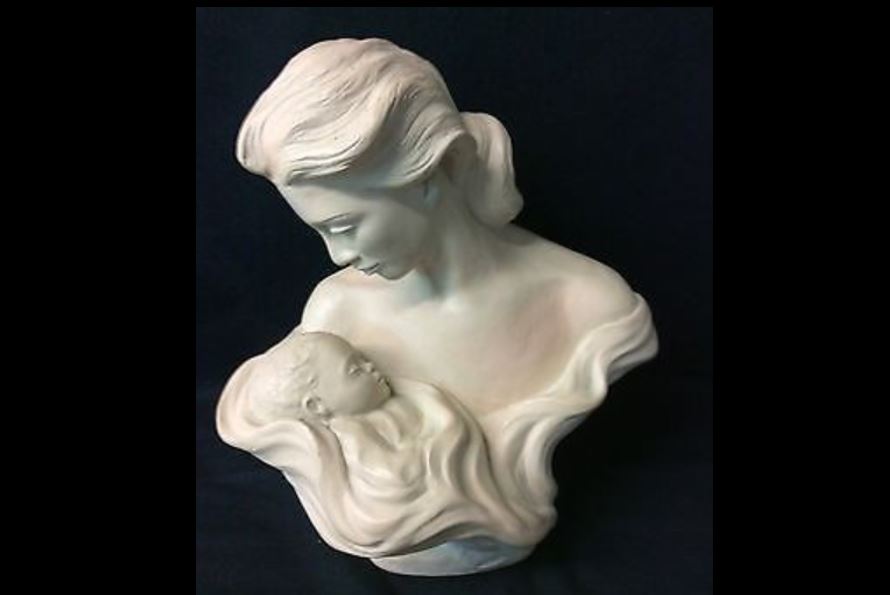
“Sweet Lullaby,” sculpture by Alice Heath.
Honor her for all that her hands have done,
    and let her works bring her praise at the city gate.
(Proverbs 31:31, NIV)

It’s pretty hard to overstate the importance a mother has in her child’s life. Our life journeys begin within our mother’s womb. Moms alone have literally been there from the beginning. The nurture and care flowing from a mother’s heart are irreplaceable. And the love a mother has for her children is simply beyond measure.

I am deeply grateful to God for my mother, Sandy Smith. There are so many times in life that I can look back and reflect on how essential my mother’s love, correction, and care proved to be. She has poured her heart and soul into my life in more ways than I can count.

I can say the same for my wife, Whitney, and the undeniable care she shows to our three boys. That same commitment to her children is also seen in my mother-in-law, Shirleen, and in countless other moms I have met.

Mothers are a gift from God.

Honor Your Mother

I’m thankful that our culture still celebrates Mother’s Day as a day to honor the women who have raised us and helped to mold us into the people we are today. Interestingly, Mother’s Day has only been a national holiday since 1914.[1] But God has been honoring mothers from the very beginning.

Honoring both parents is so essential that God included it in the big Ten Commandments He gave to Moses:

“Honor your father and your mother, that your days may be long in the land that the LORD your God is giving you.” (Exodus 20:12, NIV)

Perhaps one of the biggest ways you can honor your mother is through listening to her.

The logic works like this. She has lived longer than you. She’s been through more experiences than you. She was appointed by God to raise you. Without her, you wouldn’t have survived or become the person you are today. So, listen to her.

In the book of Proverbs, we read about the importance that both a father and a mother have in raising children.  

“Listen, my son, to your father's instruction, and do not forsake the teaching of your mother.” (Proverbs 1:8, BSB)

Again, the need to listen and cherish what both parents say is highlighted. In doing so, she can be joyful.

“Listen to your father who gave you life, and do not despise your mother when she is old… Let your father and mother be glad; let her who bore you rejoice.” (Proverbs 23:22, 25, NIV)

The same message is repeated over and over in Scripture: Your wise decisions lead to Mom being happy. And, as you can imagine, foolish decisions have the opposite result.

Thanks to postmodernism, our children today are being assaulted with a host of cultural lies about God, truth, morality, and history. In her excellent book, Mama Bear Apologetics, Hillary Morgan Ferrer writes about the essential role moms have in preparing their children for a world that is often very hostile to the Christian worldview:

“We need to prepare our children so they aren’t left unprotected for the future. The greatest protection we can give our kids is to equip them to face the cultural lies head-on while remaining gracious, loving, and winsome. It is not enough to simply tell them which ideas are raised against the knowledge of God (2 Corinthians 10:5). We must train them to understand why those ideas are flawed.”[2]

Cultivate a Contagious Love for God’s Word

For mothers, sound advice, careful discernment, and moral instruction are all certainly important. But for followers of the risen Lord, the greatest joy is seeing your children come to saving faith in Jesus Christ.

On his second missionary journey, Paul befriended a young man named Timothy, who was apparently raised by both his Jewish mother and grandmother. His father was a Greek pagan, so it was left to the women who raised him to teach him the faith. Paul notes how important it was that Timothy learned to love the Bible at an early age.

“But as for you, continue in what you have learned and have firmly believed, knowing from whom you learned it and how from childhood you have been acquainted with the sacred writings, which are able to make you wise for salvation through faith in Christ Jesus.” (2 Timothy 3:14-15)

Notice that phrase “knowing from whom you learned it.” So, who’s Paul referring to here? Who taught Timothy “the sacred writings” (the Bible)? If you flip back a page to chapter one, we get the answer. In his greeting to Timothy, Paul writes:

“I am reminded of your sincere faith, a faith that dwelt first in your grandmother Lois and your mother Eunice and now, I am sure, dwells in you as well.” (2 Timothy 1:5)

Although it’s easy for us to read past this if we are reading through the whole letter, I think that it’s worth stopping to consider what Paul is saying here. In chapter 3, he’s telling Timothy to be on guard against false teachers, to rely on God’s Word, and to remember “from whom” he learned God’s Word. It’s significant because Paul can point to both Timothy’s grandma and mom to say, “This faith that you now have that will keep you on the straight and narrow and save you for eternity—this faith—is what you first learned from them.”

I think Paul is showing Timothy—and God is showing us through Paul—just how important a godly mother is. Here we have two generations of godly mothers highlighted and Paul can say, “Look at their lives. Look at how much they depended on God for everything. You want to know that God’s Word is trustworthy and can tremendously help you in life? Well, look at your grandma and mother—the two women who have had the biggest impact on your faith—and consider how God’s Word shaped them into the gracious, loving, hope-filled and pure people they are.”

The Inestimable Impact of a Godly Mother

If you are a mother, my prayer for you is that you would be so committed to reading God’s Word—and so, to knowing Jesus—that your faith would have a tremendous impact on your child’s life and shape how he or she views the God who made them.

The great Baptist preacher of the 19th century, Charles Spurgeon, wrote this after reflecting on the incredible impact his Bible-reading mother had on him:

“Never could it be possible for any man to estimate what he owes to a godly mother. Certainly I have not the powers of speech with which to set forth my valuation of the choice blessing which the Lord bestowed on me in making me the son of one who prayed for me, and prayed with me.”[3]

In Acts 16:1, the author Luke mentions that Timothy’s mother was a believer. Here’s what John Piper said about this passage in a devotional I read recently:

“The apostle of Jesus Christ in this text bestows on motherhood and grandmotherhood a great honor. You have a calling that can become the long-remembered ground of faith, not just for your children — mark this — but for the untold numbers who will be affected by your children. And that’s in addition to all the other thousands of ripple effects of faith in your life.”[4]

Mothers, here’s the good news. Yes, you have an immense privilege and great responsibility in your calling as a mother. But, praise God, you don’t have to do this alone! You have Jesus, who is present with you and in you by the Holy Spirit (Matt. 28:20; 1 Cor. 6:19-20). You have the treasure trove of Scripture, which offers us both wisdom and grace to us every time we pick it up to read (2 Tim. 3:15-17; 2 Cor. 9:8; Col. 1:5-8; Eph. 5:26). You have a God who is both faithful and loving, despite our flaws and failures (Deut. 7:9; Rom. 3:3-4; 1 Cor. 1:9; 2 Tim. 2:13; Titus 1:2). And, by God’s grace, you have others in your life who, while imperfect, are committed to loving you, loving your child, and loving Jesus.

You have been given an incredible charge, and you are also given an endless supply of grace (James 4:6). And, if you ever find your faith faltering, remember to fix your eyes on Jesus (Heb. 12:1-2) and to consider the promise that when we read His Word, our faith is strengthened. “So faith comes from hearing, and hearing through the word of Christ” (Rom. 10:17).


[1] Although it became a holiday in 1914 thanks to President Woodrow Wilson, it was actually originated with Anna Jarvis, who began holding annual memorial in 1908 to honor her mother specifically and every mother also for their love and support.

[2] Hillary Morgan Farrer, Mama Bear Apologetics: Empowering Your Kids to Challenge Cultural Lies.

[3] Charles Spurgeon, Autobiography.

[4] http://www.desiringgod.org/articles/her-children-arise-and-call-her-blessed

What Did Jesus Think of the Bible?

By Jason Smith

It’s an intriguing question, isn’t it? Just what did the carpenter from Nazareth think of the writings that Christians today call “the Bible”?

It’s a question worth asking because today there are many self-identifying Christians who claim unswerving loyalty to the King of kings while taking a much more ambivalent approach to Scripture than Christians generally have throughout the last 2,000 years. Why is it, for instance, that there is a growing number of Christians who hesitate to even call the Bible “the Word of God”? Such progressive Christians will often express great love and admiration for the Bible, but they are less certain about its abiding authority for believers today.

Take, for example, what Rob Bell says about Scripture’s origin:

“The Bible is a library of books reflecting how human beings have understood the divine. People at that time believed the gods were with them when they went to war and killed everyone in the village. What you’re reading is someone’s perspective that reflects the time and the place they lived in. It’s not God’s perspective — it’s theirs. And when they say it’s God’s perspective, what they’re telling you is their perspective on God’s perspective. Don’t confuse the two.”[1]

The problem with this assertion is that the Bible is filled with claims that it is God’s perspective, not merely man’s perspective on God’s perspective.[2] For instance, the Apostle Paul seems to be alluding to compromises similar to Bell’s when he writes,

“And we also thank God constantly for this, that when you received the word of God, which you heard from us, you accepted it not as the word of men but as what it really is, the word of God, which is at work in you believers” (1 Thessalonians 2:13, emphasis added).

Paul is crystal clear. The words he writes are the very words of God. They ultimately originate not with Paul, but with God. They are not primarily Paul’s perspective on God’s perspective (whatever that means), but God’s perspective written through the vantage point of a human author. While human authors were the means — and certainly they expressed their personalities and styles in their writing — what they wrote ultimately has a divine Author.

What Is at Stake

Theologian James White rightly observes,

“A solid view of the Bible begins with the recognition that God is its principle author, the origin and source of its very essence. All sub-Christian systems must, by definition, attack God’s Word at this very point, for the survival of their unbiblical teachings and views of authority is dependent upon overthrowing this precise truth.” [3]

Therefore, Scripture’s divine authorship is a truth that Christians cannot neglect, and the church must persistently and unapologetically teach it with unwavering confidence.

Is it possible that many Christians in the West are being deeply influenced by secularism without even realizing it? To claim that Scripture is not truly from God is to strip it of all authority. And that, my friend, is the point. After all, if the Bible doesn’t really have a divine origin, then it doesn’t have any say over how I live my life.

Let me be candid. To claim to follow Jesus while denying the Bible’s divine authority over your life is both a grave dishonor to the Lord and a tragic rejection of a precious gift we ought to cherish. But beyond this, how can anyone deny Scripture’s authority while claiming to love the very Jesus described in those pages?

Jesus’ View of the Bible

So, what did Jesus think of the Bible? Would Jesus have considered the Bible to be the very Word of God?

In the Gospel of Matthew, we read of a time when a group of religious leaders, known as Sadducees, attempted to trip Jesus up with a somewhat ridiculous scenario of a widow who consecutively married seven brothers, all of whom died soon after saying “I do.” (As an aside, shouldn’t we begin to suspect this widow of murder?)

Now, something you should know is that the Sadducees didn’t believe in bodily resurrection. They only considered the first five books of the Bible to be Scripture, and resurrection isn’t explicitly taught until later revelation. So they ask Jesus a “gotcha” question: “So tell us, Jesus, whose wife will she be in the resurrection? For all seven were married to her” (Matthew 22:28). Their aim was to make the resurrection look nonsensical. Jesus’ response is remarkable:

“You are mistaken, not understanding the Scriptures nor the power of God. For in the resurrection they neither marry nor are given in marriage, but are like angels in heaven. But regarding the resurrection of the dead, have you not read what was spoken to you by God: ‘I am the God of Abraham, and the God of Isaac, and the God of Jacob’? He is not the God of the dead but of the living” (Matthew 22:29-32 NASB, emphasis added).

Not only does Jesus demonstrate His belief in the absolute power and clarity of Scripture, but notice His question: “Have you not read what was spoken to you by God” (v. 31). According to Jesus, when we read from the pages of Scripture, the Creator God Himself is speaking to us. Consider the way Jesus frequently quotes Scripture with the preface “It is written.”[4] When settling a theological issue with the religious leaders, Jesus repeatedly asks, “Have you not read?”[5] Christ’s basic assumption is that if the so-called “experts” in the Law had only carefully read and submitted to the Law, they wouldn’t be mistaken. By appealing to Scripture in this way, Jesus was displaying His unyielding conviction that Scripture is the final word on the matter.

That’s because Jesus believed the Bible was the Word of God, and He had no problem calling it that.

For example, when the Pharisees and scribes confront Jesus and His disciples on their apparent disregard for the traditions of the elders (v. 2), Jesus turns the accusation around, calling these religious leaders to account for exalting their tradition while disregarding “the word of God.”

[Jesus] answered them, “And why do you break the commandment of God for the sake of your tradition? For God commanded, ‘Honor your father and your mother,’ and, ‘Whoever reviles father or mother must surely die.’ But you say, ‘If anyone tells his father or his mother, “What you would have gained from me is given to God,” he need not honor his father.’ So for the sake of your tradition you have made void the word of God.” (Matthew 15:3-6, emphasis added)

Notice how Jesus clearly affirms Scripture as the “commandment of God.” His point is not that human tradition is all bad. Rather, Jesus is confronting the fact that their reverence and esteem for merely human tradition has supplanted Scripture’s rightful place of authority in their lives. God had clearly taught the great importance of honoring one’s parents, but there was a tradition handed down by the ancient rabbis that essentially nullified this teaching and muted what God had clearly said on the matter. By clinging so tightly to man-made teachings they had “made void the word of God” (v. 6, cf. v.9). This is a serious charge, and it demonstrates Jesus’ view both on the origin of Scripture and its supreme authority on every area of human life.

But the Pharisees and scribes aren’t alone here. Jesus would have us recognize this tendency even in our own hearts to exalt the wisdom of mere humans and disregard the wisdom of God. It’s a symptom of the brokenness from which Jesus came to set us free.

“Your Word Is Truth”

God has been so very gracious to give us the Bible. He didn’t have to do that. How tragic it is when we sneer at it and claim it is filled with human error.

For example, the late progressive Christian Rachel Held Evans wrote,

“While Christians believe the Bible to be uniquely revelatory and authoritative to the faith, we have no reason to think its many authors were exempt from the mistakes, edits, rewrites, and dry spells of everyday creative work.”[6]

She so emphasizes the human side that she discounts the fact that “those prophets were moved by the Holy Spirit, and they spoke from God” (2 Peter 1:21, NLT).

Compare Evans’ claim that the Bible is marked by “mistakes, edits, rewrites and dry spells of everyday creative work” with Jesus’ claim that “Scripture cannot be broken” (John 10:35). Jesus told God the Father “Your word is truth” (John 17:17). When facing Satan’s temptations in the desert, Jesus counters by quoting Deuteronomy 8:3: “It is written, ‘Man should not live by bread alone, but by every word that comes from the mouth of God.’”[7]

Not even once does Jesus express even the slightest doubt that every word we find in Scripture is spoken by God, and, therefore, without error. Jesus would no doubt affirm Proverbs 30:5, “Every word of God proves true.” Kevin DeYoung has rightly concluded that “it is impossible to revere the Scriptures more deeply or affirm them more completely than Jesus did.”[8]

So this beckons the question: Do you share Jesus’ view of Scripture? Do you believe that what is written is “spoken by God” (Matthew 22:31)? Would you be willing to affirm that it is “the word of God” (Matthew 15:6). Do you believe those who wrote it “spoke from God” (2 Peter 1:21), and thereby gave us an unbreakable “truth” (John 17:17)? Here’s my encouragement. If you consider yourself a Christian or follower of Jesus, you should want to see the Bible the way He saw it. God’s Word can give you the confidence to face each day and the certainty of what lies in store for you beyond the grave.


[1] Rob Bell, What Is the Bible? (New York: HarperCollins, 2017), 295-296.

[2] 2 Timothy 3:16 calls all of Scripture theopneustos, meaning “God-breathed.” 2 Peter 1:20 clearly says that Scripture does not come “from someone’s own interpretation. For no prophecy was ever produced by the will of man, but men spoke from God as they were carried along by the Holy Spirit.” Clearly, Scripture teaches that its origin, source, and wisdom begins not with humans, who are the active agents writing Scripture, but with God Himself who oversaw their environment, life, and activity, and carried them along in the writing process.

[3] James R. White, Scripture Alone (Grand Rapids, MI: Bethany House, 2004), 50.

[4] See the previous footnote. For but a small sampling see Matthew 4:4, 7, 10; 11:10; 21:13; 26:24, 31; Mark 7:6; 9:12-13; 11:17; 14:21, 27; Luke 4:4, 8, 10; 7:27; 10:26; 18:31; 19:46; 20:17; 21:22; 22:37; 24:44, 46; John 6:45; 8:17; 10:34; 15:25.

[5] cf. Matthew 12:3, 5; 19:4; 21:16, 42; 22:31; Mark 2:25; 12:10, 26; Luke 6:3; 10:26.

[6] Rachel Held Evans, Inspired (Nashville, TN: Thomas Nelson, 2018), xxiii. Evans fails to recognize that when Paul uses the word “inspired” (theopneustos in the original Greek) in 2 Timothy 3:16, he is calling the Scriptures themselves “God-breathed.” She re-imagines inspiration to mean something totally foreign to the original text. She writes, “Inspiration, on both the giving and receiving end, takes practice and patience. It means showing up when you don’t feel like it, even when it seems as if no one else is there. It means waiting for wind to stir.” I don’t know of any Christian throughout church history who would have agreed with her definition.

[7] The familiar Greek phrase γέγραπται, usually translated “It is written” or “Scripture has it,” is repeated over 90 times by Jesus and the New Testament authors to connote Scripture’s authoritative declaration on a matter.

[8] Kevin DeYoung, Taking God at His Word (Wheaton, IL: Crossway, 2014), 109.

Photo credit: Lawrie Cate, Wikimedia Commons

God Creates by His Word

By Jason Smith

Photo courtesy of Wikipedia

By faith we understand that the universe was created by the word of God, so that what is seen was not made out of things that are visible.” (Hebrews 11:3)

On Christmas Eve, 1968, the crew of Apollo 8 had the unique privilege of becoming the first human beings to see the far side of the moon. Coming out of their fourth orbit, these astronauts — Frank Borman, James Lovell, and William Anders — were mesmerized by the breathtaking view of earth, with all its beautiful and vibrant colors. It stood in stark contrast to the barren landscape of the moon in the foreground. In that captivating moment, the crew thought it was only fitting to read reverently from the majestic first verse in the Bible: “In the beginning, God created the heavens and the earth” (Genesis 1:1).

Thus begins the grand story of Scripture. How different this account is from all the ancient pagan creation myths. For example, the Babylonian epic, Enuma Elish, speaks of the gods warring with one another and finally forming the worlds out of the carcasses of slain gods. In contrast, this God of Genesis, Yahweh, does not need already existing matter to create His universe. There is no battle raging in Genesis 1. God simply speaks, and a vast universe stretches into existence.

That phrase “the heavens and the earth” is called a merism, where two ends of a spectrum are used to encompass the whole. In Genesis 1:1, we are meant to take “the heavens and the earth” as the entire cosmos being created by the one God. Modern science has now caught up to Genesis in recognizing that there had to have been an absolute beginning to the universe, but for many centuries the consensus among secular scientists was that the universe was eternal. In contrast, Christians and Orthodox Jews have always believed that only God is eternal.

“Before the mountains were brought forth,
or ever you had formed the earth and the world,
from everlasting to everlasting you are God.” (Psalm 90:2)

God Speaks and Things Happen

“And God said, ‘Let there be light.’ And there was light” (Genesis 1:3). God merely speaks and things burst into existence. This same basic pattern is followed throughout the whole first chapter (see verses 6-7, 9, 11, 14-15, 20-21, 24, 26-27). And what’s the point? I think Psalm 33 best captures this.

In Psalm 33:6, we read: “By the word of the LORD the heavens were made, and by the breath of His mouth all their host.” Verse 9: “For He spoke, and it came to be; He commanded, and it stood firm.”

The whole point is that creation was instantaneous, just like the miracles of Jesus. Jesus did not need to take that water from the wedding in Cana, run to grab grapes from a local vineyard, press them down, and wait for the whole process of fermentation to be completed before He finally made wine. No, the whole point of this first “sign” was that Jesus transformed the water into wine in a moment (see John 2:1-11).

In the same way, God did not need long ages of stellar evolution before creating the first star.[1] Genesis offers no rhetorical flourish when describing the creation of those massive gas giants with all their incredible combustion. Almost as an afterthought, we read, “He also made the stars” (Genesis 1:16, NIV).

This instantaneous creation by His word displays God’s infinite creative power. All He has to do is exhale, as it were, and galaxies spin into space, whole worlds take shape, and all the various living creatures fill the earth. Just imagine how much power this Creator must wield!

Photo courtesy of DesktopBackground

God of Infinite Power

Yahweh is not like the gods of the ancient cultures, who needed humans to be their slaves because they were too tired.

“Have you not known? Have you not heard?
Yahweh is the everlasting God,
the Creator of the ends of the earth.
He does not faint or grow weary;
His understanding is unsearchable.” (Isaiah 40:28)

Nor did He need to kill other gods in order to form the worlds. It is simply the awesome power of Almighty God on full display. This is the God we were made to know and with whom we have to do (Hebrews 4:13).

You and I were made to bow down and worship such a God. And after considering His infinite power, this only makes sense.

“Worthy are You, our Lord and God,
to receive glory and honor and power,
for You created all things,
and by Your will they existed and were created.” (Revelation 4:11)

Wired for Glory

But more than that, we were created to know Him. This is the greatest privilege imaginable: to know the Creator. That is why we ought to consider what the Bible says about Him. For knowing God is the key to finding true and abundant life. From the beginning, humankind was designed to be in relationship with this infinite Creator. We are wired for glory. That is why we hunger for glorious experiences, achievements, and relationships. But everything else will ultimately leave us empty and unsatisfied until we come to know the One who authored our life.

“And this is eternal life, that they know you the only true God, and Jesus Christ whom you have sent” (John 17:3).

Eternal life is found in repenting of sin against this Creator and trusting in Jesus Christ alone as Savior from that sin. I invite you to open your Bible and discover this awesome God for yourself.


[1] As an aside, the current theory of stellar evolution that is widely accepted in the secular academy is that stars are born from the elements produced by already existing stars. The problem for the atheist is how those first stars came to be. While the current theory among secular scientists is that the first stars formed from a collapsing cloud of gas, this theory has numerous problems. See Rod Bernitt, “Stellar Evolution and the Problem of First Stars,” https://creation.com/stellar-evolution-and-the-problem-of-the-first-stars. Even the agnostic astrophysicist Neil deGrasse Tyson has admitted: “Not all gas clouds in the Milky Way can form stars at all times. More often than not, the cloud is confused about what to do next. Actually, astrophysicists are the confused ones here. We know the cloud wants to collapse under its own weight to make one or more stars. But rotation as well as turbulent motion within the cloud work against that fate. So, too, does the ordinary gas pressure you learned about in high-school chemistry class. Galactic magnetic fields also fight collapse: they penetrate the cloud and latch onto any free-roaming charged particles contained therein, restricting the ways in which the cloud will respond to its self-gravity. The scary part is that if none of us knew in advance that stars exist, front line research would offer plenty of convincing reasons for why stars could never form.” Neil deGrasse Tyson, Death by Black Hole: And Other Cosmic Quandaries (New York: W. W. Norton & Company, Inc., 2007), 187.

Where Intimacy with God Is Forged

By Jason Smith

Your word is a lamp to my feet and a light to my path” (Psalm 119:105).

Columbia Gorge

This last weekend, I stood atop Mount Defiance, a peak that overlooks the Columbia River Gorge. The view was breathtaking. Across the hills, pine forests comingled with the orange, yellow, and red of leaf-bearing trees turning their autumn hue. The broad river below shimmered under the bright sun that shone alone in the blue vault above. To the north stood the majestic peaks of Mount Rainier, Mount Adams, and Mount St. Helens. To the south, Mount Hood towered over the surrounding landscape. It was beautiful, and I thanked God for His work of art. One might wonder what could possibly move the heart to worship the Creator like such an experience outdoors. Psalm 119 provides an answer.

Psalm 119 is something of a love poem written about God’s Word, the Bible. We read statements like: “Oh how I love your law! It is my meditation all the day” (v. 97). It gives us a sense of just how central Bible reading must be for the man or woman who desires to walk hand-in-hand with God on the journey of life. There is a powerful lesson here for the committed follower of Jesus. Our relationship with God is not primarily strengthened through nature hikes, where the grandeur of God’s creative power is on full display, or through reading the great works of clear-thinking theologians. It’s certainly true that staggering views of creation can ignite a sense of awe and worship that is God-directed. Similarly, soul-thrilling treasures can be mined from the writings of Augustine, Edwards, Spurgeon, and many more. And yet, above and beyond these, God has made it clear that it is the Bible alone that should occupy the central place in the believer’s relationship with God.

It is through reading Scripture that true intimacy with God is forged. It is God’s Word that moves our hearts to bring bold requests to our Maker in prayer. It is through studying the Bible that we are guided, not by vague notions of what a good God might want, but by clear enunciations of His will for every believer (1 Thessalonians 4:1-8; 5:18; 1 Peter 2:25). It is the Bible — not creation — that tells us how we come into a relationship with God (2 Timothy 3:15). Every follower of Christ should reflect the attitude of the psalter in Psalm 119:35-40:

“Lead me in the path of your commandments, for I delight in it.

Incline my heart to your testimonies, and not to selfish gain!

Turn my eyes from looking at worthless things; and give me life in your ways.

Confirm to your servant your promise, that you may be feared.

Turn away the reproach that I dread, for your rules are good.

Behold, I long for your precepts; in your righteousness give me life!”

From this passage, we learn that the Lord’s commandments are not burdensome; they are “good” (v. 39). In fact, they are a source of “delight” (v. 35). The implication of verses 36-38 is that when Scripture is not central to our lives and constantly redirecting our thoughts, we are prone to selfishness (v. 36), to “looking at worthless things” (v. 37), and to ignoring rather than fearing the God for whom we are made (v. 38). The words of Scripture are the words of life — apart from which we have no hope. Your Creator authored them, and they are intended for your good. As Peter said to Jesus, “Lord, to whom shall we go? You have the words of eternal life” (John 6:68).

Prayer: Father God, I often feel the pull of temptation to all kinds of worthless pursuits. Please redirect my thoughts and attitudes by Your mighty Word. Like the psalter, fill me with an unhindered longing for the Spirit-inspired Word of God (Psalm 119:40)!


Photo credit: Marilee Janzen