Our hope in this article is to set the stage for how to think about racism in our nation through a biblical and gospel lens. Racism is so deeply enmeshed in our nation that we cannot afford to ignore it for the problem that it is. We also need to look for peaceful and sustainable solutions. Each of us needs to ask, “How can I do my part in seeing racial reconciliation happen?”
It’s so easy for people of different skin color to talk past one another rather than listen carefully with the goal of understanding. That’s why we made a point of writing this article as a collaborative effort between a black man (Derek) and a white man (Jason). Both of us love Jesus dearly and pray that those in the throes of racial violence may find the hope and peace that only our Lord can give. Although we want to confront some tragic realities in our world, we are also filled with hope because the gospel of God’s grace is greater than all our sin.
Only One Race
We both believe that the Bible is emphatically opposed to any and all forms of racism, bigotry, and hatred. Some have ignorantly claimed that the Bible supports racism by misreading and distorting certain passages, but the reality is that the biblical message offers the only genuine remedy to the plague of racism.
The very first chapter in Genesis, the Bible’s first book, tells us that God created the first man and woman in His image (Genesis 1:26-27). Of all the descriptions of humanity’s origin available, in both ancient and modern literature, you will not find a more magisterial description of our nature. In the Bible alone, we see the fascinating combination of humanity’s extraordinary greatness and tragic depravity. Because we bear God’s image, every person has unfathomable dignity. Because we are fallen, we are all prone to treat our fellow humans in horrendous ways.
The Bible’s teaching on the image of God condemns every form of racism. God did not create a white Adam, a black Adam, and a brown Adam, and so on, so that we might wonder if one is superior to another. Instead, the biblical argument goes like this: If we are all images of God, how can you hate another image of God (James 3:9)? How can you say you love God, whom you have never seen, but hate your brother, your neighbor, God’s image, whom you see every day (1 John 4:20-21)?
According to the Apostle Paul, we all have descended from one man (Acts 17:26). Therefore, we are all blood relatives. The black man and the white man truly are brothers by blood. This doesn’t squelch the beauty of cultural diversity; rather, it affirms the dignity of every person because of our common bond as image bearers of God – a truth that transcends every culture.
The Ultimate Source and Cure for Racism
Many have spoken about the need to end “systemic racism,” and we agree that racial injustice has infected nearly every corner of our nation. However, we also believe that every sin – including racism – begins with the human heart. Our Lord Jesus put it this way, “For out of the heart come evil thoughts, murder, adultery, sexual immorality, theft, false witness, slander” (Matthew 15:19). Therefore, it requires a solution that addresses the heart.
In other words, while new laws and policies certainly must be worked for, they ultimately lack the power to uproot all forms of racism. Each of us personally needs nothing less than a total renovation of the heart. That’s where the gospel of Christ comes in. In Christ, people of every ethnicity, background, and gender are united. The ground is level at the foot of the cross. Jesus died for those of every nation and skin color, and through Him, believers are all brought into the one family of the church together.
Paul writes that Christ Himself “is our peace, who has made the two groups one and has destroyed the barrier, the dividing wall of hostility… His purpose was to create in himself one new humanity out of the two, thus making peace, and in one body to reconcile both of them to God through the cross, by which he put to death their hostility” (Ephesians 2:14-16, ESV).
We all have equal access to God through the one cross. All the racial injustice and prejudice that is all too prevalent in this world is rendered powerless by Christ’s bloody cross, where He absorbed all our sin and reconciled us to our Maker.
The Need to Listen Well
When we hear about racial injustice in the news, we’re often guilty of jumping too quickly to conclusions. I (Jason) know, as a white person, how easy it is to minimize the prevalence of racism in our nation. In many ways, I would like to think that we’ve moved past the racism that has plagued our nation’s history. But in reality the stain of racism has not gone away, and we need to do our part in confronting prejudice wherever we find it, beginning with our own hearts.
We need to listen to those of a different skin tone and background to try and understand and help contribute to the solution. The point of Derek sharing the stories below isn’t to undermine the necessary and noble service of good and faithful police officers, but to give a better understanding of the experience of countless black men and women in America.
There are so many things I (Derek) can say about the death of innocent and/or unarmed black people at the hands of white police officers. I could say that this a new phenomenon, but that would be a lie. It’s being recorded on camera more often, but this has been happening for years. There are television shows and movies that try to shine a light on “The Talk” black parents have with their children, but I don’t know if it is understood by non-blacks that these types of conversations are real.
As a teenager, I was sat down by my father who taught me how to react to police officers who pull you over or seek to question you. “Always make your hands visible, always be polite, always follow directions, and always repeat vocally the directions as you’re doing them.” But the lesson that has always stuck with me is when my father told me that the police will always see me as black first. Not as human, not as a man, not as a person, just black. What’s really sad is that I have now had to have the same conversation with my son, and he’s only 11.
The color of my skin comes with certain stereotypical misconceptions. To some I’m seen as a criminal, dirty, less than, worthless, unintelligent or uneducated, a thief, a murderer, and a gang member. This has been the plight of the black man and woman for centuries.
I will give one example of my run in with law enforcement. As an Oakland, California, native, I know most areas of the city. While in my early twenties, I was in the Rockridge area of Oakland near College Boulevard. It is a more astute area of Oakland. I was coming from a friend’s dance studio in the area one evening, just after dark. The crosswalk light was so fast you would not be able to walk across before it changed. So, as the light turned green, I ran across the street just as a police officer was coming down the street and stopping at the red light. I got into my Honda Accord and waited to see if the police officer would drive past, because in my experience he was going to follow me. He didn’t move after the light turned green. I knew if I could make it to the freeway about a mile away, I’d be fine. So, I started my car and began to drive. Of course, the police officer began to follow behind me.
As I drove towards the freeway, I was extra cautious to follow all traffic laws. The police officer followed me the entire mile. Just before I got to the freeway, he turned his lights on and pulled me over. I remember what my father taught me. Before the officer made it to my door, I already had my wallet out with my license and registration on my dash and my hands on the steering wheel, with window down and engine off. So, when the officer made it to my car’s driver’s side window, he didn’t ask the usual, “License or registration?” He stated, “This car has been reported stolen.”
Now, my little light blue Honda Accord wasn’t much to look at, but it was the first car I bought with my own money and it was in my name. So, how did my car get reported as stolen? The officer then asked for my license. As I gave him my driver’s license, an operator came over his radio stating the car belongs to Derek Jackson. The officer looked at my license, then at me, and reluctantly handed my driver’s license back to me and told me I was free to go as he walked back to his car.
It may not be a big thing to some, but the fear I had at that moment is something that I should not have had. This officer didn’t ask if my car had been stolen, he stated that it had been reported as stolen. I believe if I had not heard what the operator said, it would have been a different story. That, I believe, was God’s protection.
I have other stories, such as being cursed out by a cop for being young and black or another incident of being handcuffed and put in the back of a police car after being pulled over driving to school. I can’t even get into the times I’ve been followed by police or followed in a store. God has protected me because those situations could have ended with someone posting an RIP on their Instagram or Facebook page.
We (Derek and Jason) both thank God for those police officers of every skin color who have faithfully served and protected the citizens under their care with diligence, sacrifice, and justice. We need more like them now more than ever.
What Can We Do About It?
But what about those who have suffered death, beatings, false accusations, and harassment from the police or Caucasians who hate blacks because of their skin color? Neither of us had a say in our skin color, but we exult in the fact that we are “fearfully and wonderfully made” (Psalm 139:14). You were made the way you were on purpose, and we affirm God’s joyful creativity seen in the mosaic of all our varying skin tones. With grieved hearts, we both acknowledge the hatred and racism that can be traced through every era of our nation’s history. From the unjust killings of American Indians to the unspeakable atrocities of the enslavement of African men and women.
Together, we affirm God’s denunciation of hate and racism. He tells us to love our neighbors as ourselves (Matthew 22:39). He doesn’t say, “Love the neighbor who shares your skin color.” He just says, “Love your neighbor.” Your neighbor is anyone you come in contact with. We’re to love as God loves, and He loved us so much He sacrificed His Son on a cross to save us from our sin. The blood of Jesus can wash away the stain of hate, the stain of racism, and the stain of bigotry and discrimination.
Scripture tells us to speak up for the rights of the hurting and the oppressed (Proverbs 31:8-9). To be silent is to be complicit in the evil happening before our eyes. At the same time, we must not take personal vengeance into our own hands. Violence only begets more violence. Martin Luther King, Jr. said, “Nonviolence is a powerful and just weapon, which cuts without wounding and ennobles the man who wields it. It is a sword that heals.” We must demand justice for those who are oppressed, but we must always do so in love. “Do not be overcome by evil, but overcome evil with good” (Romans 12:21, NIV). Will you join us in working for racial reconciliation today?
It’s an intriguing question, isn’t it? Just what did the carpenter from Nazareth think of the writings that Christians today call “the Bible”?
It’s a question worth asking because today there are many self-identifying Christians who claim unswerving loyalty to the King of kings while taking a much more ambivalent approach to Scripture than Christians generally have throughout the last 2,000 years. Why is it, for instance, that there is a growing number of Christians who hesitate to even call the Bible “the Word of God”? Such progressive Christians will often express great love and admiration for the Bible, but they are less certain about its abiding authority for believers today.
Take, for example, what Rob Bell says about Scripture’s origin:
“The Bible is a library of books reflecting how human beings have understood the divine. People at that time believed the gods were with them when they went to war and killed everyone in the village. What you’re reading is someone’s perspective that reflects the time and the place they lived in. It’s not God’s perspective — it’s theirs. And when they say it’s God’s perspective, what they’re telling you is their perspective on God’s perspective. Don’t confuse the two.”[1]
The problem with this assertion is that the Bible is filled with claims that it is God’s perspective, not merely man’s perspective on God’s perspective.[2] For instance, the Apostle Paul seems to be alluding to compromises similar to Bell’s when he writes,
“And we also thank God constantly for this, that when you received the word of God, which you heard from us, you accepted it not as the word of men but as what it really is, the word of God, which is at work in you believers” (1 Thessalonians 2:13, emphasis added).
Paul is crystal clear. The words he writes are the very words of God. They ultimately originate not with Paul, but with God. They are not primarily Paul’s perspective on God’s perspective (whatever that means), but God’s perspective written through the vantage point of a human author. While human authors were the means — and certainly they expressed their personalities and styles in their writing — what they wrote ultimately has a divine Author.
What Is at Stake
Theologian James White rightly observes,
“A solid view of the Bible begins with the recognition that God is its principle author, the origin and source of its very essence. All sub-Christian systems must, by definition, attack God’s Word at this very point, for the survival of their unbiblical teachings and views of authority is dependent upon overthrowing this precise truth.” [3]
Therefore, Scripture’s divine authorship is a truth that Christians cannot neglect, and the church must persistently and unapologetically teach it with unwavering confidence.
Is it possible that many Christians in the West are being deeply influenced by secularism without even realizing it? To claim that Scripture is not truly from God is to strip it of all authority. And that, my friend, is the point. After all, if the Bible doesn’t really have a divine origin, then it doesn’t have any say over how I live my life.
Let me be candid. To claim to follow Jesus while denying the Bible’s divine authority over your life is both a grave dishonor to the Lord and a tragic rejection of a precious gift we ought to cherish. But beyond this, how can anyone deny Scripture’s authority while claiming to love the very Jesus described in those pages?
Jesus’ View of the Bible
So, what did Jesus think of the Bible? Would Jesus have considered the Bible to be the very Word of God?
In the Gospel of Matthew, we read of a time when a group of religious leaders, known as Sadducees, attempted to trip Jesus up with a somewhat ridiculous scenario of a widow who consecutively married seven brothers, all of whom died soon after saying “I do.” (As an aside, shouldn’t we begin to suspect this widow of murder?)
Now, something you should know is that the Sadducees didn’t believe in bodily resurrection. They only considered the first five books of the Bible to be Scripture, and resurrection isn’t explicitly taught until later revelation. So they ask Jesus a “gotcha” question: “So tell us, Jesus, whose wife will she be in the resurrection? For all seven were married to her” (Matthew 22:28). Their aim was to make the resurrection look nonsensical. Jesus’ response is remarkable:
“You are mistaken, not understanding the Scriptures nor the power of God. For in the resurrection they neither marry nor are given in marriage, but are like angels in heaven. But regarding the resurrection of the dead, have you not read what was spoken to you by God: ‘I am the God of Abraham, and the God of Isaac, and the God of Jacob’? He is not the God of the dead but of the living” (Matthew 22:29-32 NASB, emphasis added).
Not only does Jesus demonstrate His belief in the absolute power and clarity of Scripture, but notice His question: “Have you not read what was spoken to you by God” (v. 31). According to Jesus, when we read from the pages of Scripture, the Creator God Himself is speaking to us. Consider the way Jesus frequently quotes Scripture with the preface “It is written.”[4] When settling a theological issue with the religious leaders, Jesus repeatedly asks, “Have you not read?”[5] Christ’s basic assumption is that if the so-called “experts” in the Law had only carefully read and submitted to the Law, they wouldn’t be mistaken. By appealing to Scripture in this way, Jesus was displaying His unyielding conviction that Scripture is the final word on the matter.
That’s because Jesus believed the Bible was the Word of God, and He had no problem calling it that.
For example, when the Pharisees and scribes confront Jesus and His disciples on their apparent disregard for the traditions of the elders (v. 2), Jesus turns the accusation around, calling these religious leaders to account for exalting their tradition while disregarding “the word of God.”
[Jesus] answered them, “And why do you break the commandment of God for the sake of your tradition? For God commanded, ‘Honor your father and your mother,’ and, ‘Whoever reviles father or mother must surely die.’ But you say, ‘If anyone tells his father or his mother, “What you would have gained from me is given to God,” he need not honor his father.’ So for the sake of your tradition you have made void the word of God.” (Matthew 15:3-6, emphasis added)
Notice how Jesus clearly affirms Scripture as the “commandment of God.” His point is not that human tradition is all bad. Rather, Jesus is confronting the fact that their reverence and esteem for merely human tradition has supplanted Scripture’s rightful place of authority in their lives. God had clearly taught the great importance of honoring one’s parents, but there was a tradition handed down by the ancient rabbis that essentially nullified this teaching and muted what God had clearly said on the matter. By clinging so tightly to man-made teachings they had “made void the word of God” (v. 6, cf. v.9). This is a serious charge, and it demonstrates Jesus’ view both on the origin of Scripture and its supreme authority on every area of human life.
But the Pharisees and scribes aren’t alone here. Jesus would have us recognize this tendency even in our own hearts to exalt the wisdom of mere humans and disregard the wisdom of God. It’s a symptom of the brokenness from which Jesus came to set us free.
“Your Word Is Truth”
God has been so very gracious to give us the Bible. He didn’t have to do that. How tragic it is when we sneer at it and claim it is filled with human error.
For example, the late progressive Christian Rachel Held Evans wrote,
“While Christians believe the Bible to be uniquely revelatory and authoritative to the faith, we have no reason to think its many authors were exempt from the mistakes, edits, rewrites, and dry spells of everyday creative work.”[6]
She so emphasizes the human side that she discounts the fact that “those prophets were moved by the Holy Spirit, and they spoke from God” (2 Peter 1:21, NLT).
Compare Evans’ claim that the Bible is marked by “mistakes, edits, rewrites and dry spells of everyday creative work” with Jesus’ claim that “Scripture cannot be broken” (John 10:35). Jesus told God the Father “Your word is truth” (John 17:17). When facing Satan’s temptations in the desert, Jesus counters by quoting Deuteronomy 8:3: “It is written, ‘Man should not live by bread alone, but by every word that comes from the mouth of God.’”[7]
Not even once does Jesus express even the slightest doubt that every word we find in Scripture is spoken by God, and, therefore, without error. Jesus would no doubt affirm Proverbs 30:5, “Every word of God proves true.” Kevin DeYoung has rightly concluded that “it is impossible to revere the Scriptures more deeply or affirm them more completely than Jesus did.”[8]
So this beckons the question: Do you share Jesus’ view of Scripture? Do you believe that what is written is “spoken by God” (Matthew 22:31)? Would you be willing to affirm that it is “the word of God” (Matthew 15:6). Do you believe those who wrote it “spoke from God” (2 Peter 1:21), and thereby gave us an unbreakable “truth” (John 17:17)? Here’s my encouragement. If you consider yourself a Christian or follower of Jesus, you should want to see the Bible the way He saw it. God’s Word can give you the confidence to face each day and the certainty of what lies in store for you beyond the grave.
[1] Rob Bell, What Is the Bible? (New York: HarperCollins, 2017), 295-296.
[2] 2 Timothy 3:16 calls all of Scripture theopneustos, meaning “God-breathed.” 2 Peter 1:20 clearly says that Scripture does not come “from someone’s own interpretation. For no prophecy was ever produced by the will of man, but men spoke from God as they were carried along by the Holy Spirit.” Clearly, Scripture teaches that its origin, source, and wisdom begins not with humans, who are the active agents writing Scripture, but with God Himself who oversaw their environment, life, and activity, and carried them along in the writing process.
[3] James R. White, Scripture Alone (Grand Rapids, MI: Bethany House, 2004), 50.
[4] See the previous footnote. For but a small sampling see Matthew 4:4, 7, 10; 11:10; 21:13; 26:24, 31; Mark 7:6; 9:12-13; 11:17; 14:21, 27; Luke 4:4, 8, 10; 7:27; 10:26; 18:31; 19:46; 20:17; 21:22; 22:37; 24:44, 46; John 6:45; 8:17; 10:34; 15:25.
[5] cf. Matthew 12:3, 5; 19:4; 21:16, 42; 22:31; Mark 2:25; 12:10, 26; Luke 6:3; 10:26.
[6] Rachel Held Evans, Inspired (Nashville, TN: Thomas Nelson, 2018), xxiii. Evans fails to recognize that when Paul uses the word “inspired” (theopneustos in the original Greek) in 2 Timothy 3:16, he is calling the Scriptures themselves “God-breathed.” She re-imagines inspiration to mean something totally foreign to the original text. She writes, “Inspiration, on both the giving and receiving end, takes practice and patience. It means showing up when you don’t feel like it, even when it seems as if no one else is there. It means waiting for wind to stir.” I don’t know of any Christian throughout church history who would have agreed with her definition.
[7] The familiar Greek phrase γέγραπται, usually translated “It is written” or “Scripture has it,” is repeated over 90 times by Jesus and the New Testament authors to connote Scripture’s authoritative declaration on a matter.
[8] Kevin DeYoung, Taking God at His Word (Wheaton, IL: Crossway, 2014), 109.
Then Jesus said to Thomas, “Put your finger here and look at My hands. Reach out your hand and put it into My side. Stop doubting and believe.” (John 20:27, BSB)
The apostle Paul made the startling claim that “if Christ has not been raised, your faith is futile and you are still in your sins” (1 Corinthians 15:17). Such a statement is astonishing when you consider the implications. Everything in Christianity, Paul says, everything in the faith depends on the truth that Jesus bodily rose from the dead. If Christ didn’t truly rise from the dead, then He did not conquer death — death conquered Him!
The dark and terrifying shadow still hangs over all mankind (Isaiah 25:7-8), and we have no guarantee that we will ever escape the cords of death. That is, unless Jesus’ resurrection is true. Eternal life with God. Hope beyond the grave. Forgiveness of sins. The deity and identity of Christ. It’s all based on the resurrection of Jesus being true. No resurrection, no Christianity.
The good news is that God has left us compelling evidence that the Easter event is a solid fact of history. Here are five pieces of evidence I encourage you to consider before giving a verdict on the truth of Christ’s resurrection.
Evidence #1: Jesus’ death is an undeniable fact of history
Despite the fact that some may doubt Jesus’ death (such as many Muslims) and some radical scholars will doubt that He even existed (such as Richard Carrier),[1] Jesus’ life and death really are historically undeniable. Both Christian and non-Christian sources from the ancient world confirm that Jesus died as a victim of crucifixion.[2] Roman soldiers were highly trained in executing criminals, and they were motivated to not let a self-proclaimed king survive.
In his Gospel, the apostle John tells us He is an eyewitness of Jesus’ death on the cross.[3] In describing the event, John records something fascinating:
“But when they came to Jesus and saw that he was already dead, they did not break his legs. But one of the soldiers pierced his side with a spear, and at once there came out blood and water. He who saw it has borne witness—his testimony is true, and he knows that he is telling the truth—that you also may believe.” (John 19:33-35)
The fact that he reports seeing both blood and a watery fluid flowing out is powerful evidence that John really did watch Jesus die. Here’s why. Although John had no medical training to interpret what he saw, his eyewitness testimony is exactly what a medical doctor would have expected due to something called pericardial effusion, in which the membrane surrounding the heart fills with fluid as a result of heart failure.[4] John’s testimony stands as 2,000-year-old evidence that he really was an eyewitness of Christ’s death.
Even very liberal scholars, such as John Dominic Crossan, accept Jesus’ death as indisputable fact. He writes, “That [Jesus] was crucified is as sure as anything historical ever can be, since both Josephus and Tacitus … agree with the Christian accounts on at least that basic fact.”[5] Skeptical historian and biblical scholar James Tabor, who has studied the rise of early Christianity in depth, has written, “I think we need have no doubt that given Jesus’ execution by Roman crucifixion he was truly dead.”[6]
Evidence #2: On the Sunday following Jesus’ crucifixion, His tomb was empty.
All four Gospels record that Joseph of Arimathea, a secret disciple, was the one with the courage to bury Jesus. Since Joseph was a member of the Sanhedrin (Luke 23:50-51), the very council that condemned Jesus to death, it’s very unlikely that Christ’s earliest followers would make this up. We are also told that while the men were hiding from the Jewish authorities, the women followers of Jesus were the faithful ones who wanted to anoint His body in the tomb (Luke 23:55-56). Not only that, but the women are the ones who first discover the tomb is empty.
This, too, demonstrates the Gospels give an authentic record of what happened. In the first century, the testimony of women was not even admitted into court. The Jewish Talmud even says that a woman’s testimony was as valid as a criminal’s![7] To be sure, this low view of a woman’s testimony is not only politically incorrect today, it’s also not found in Scripture. Nevertheless, it was the prevailing view of the ancient world. Here’s the point: if you were making up this whole resurrection story in the first century, you wouldn’t pick women as the first eyewitnesses of the empty tomb. The apostles’ willingness to share this somewhat embarrassing fact demonstrates they were committed to faithfully sharing the truth, despite the awkward position it put them in at the time.
Additionally, history tells us that the counter claim from Christianity’s opponents was always that the disciples must have stolen the body.[8] This was an indirect admission that they knew the tomb was empty. It’s also very telling that we have no contradictory burial account whatsoever from either Christian or non-Christian sources. The fact that the tomb was well-known, as Josephs’ tomb, rules out the possibility that the women or other disciples went to the wrong tomb. If we are not told whose tomb or any details about where Jesus was buried, we might have reason to wonder if they went to the right tomb on that first Easter morning, but there are no competing accounts of another tomb being the real tomb.
Evidence #3: Jesus’ disciples believed they saw Him alive from the dead.
We have every reason to believe that the resurrection appearances that are recorded in the Gospels are based on eyewitness testimony, not legendary accretion over time. The gospel creed that Paul passes on in 1 Corinthians 15:3-7 can be dated to within a few years of the cross, which does not allow time for legendary development. From the earliest records of Christianity, we have people claiming that they truly saw the risen Jesus. The fact that Jesus is recorded as appearing to groups as large as 500 rules out the hallucination theory, because hallucinations are individual experiences that take place in the mind.
We also see the risen Jesus eating with His disciples, cooking them a meal, and telling them to touch the scars on His hands and His side to know He is real.[9] Jesus tells them, “Why are you troubled, and why do doubts arise in your hearts? See my hands and my feet, that it is I myself. Touch me, and see. For a spirit does not have flesh and bones as you see that I have” (Luke 24:38-39). This was an undeniably real and physical Jesus. It’s also very difficult for the historian to make sense of the conversion of Jesus’ brother James, the former skeptic (John 7:5), or Paul the one-time enemy of Christianity (Acts 26:10; 1 Corinthians 15:9). Biases are very powerful and both of them formerly thought of Jesus as a false messiah. Only an appearance of the risen Jesus could have turned their world upside down and convinced them that He really was their Lord and Messiah.
Evidence #4: The apostles were willing to suffer and die for their belief in the resurrection.
We can also safely rule out any conspiracy theory that claims the apostles stole Jesus’ body, because we have numerous historical records proving that these men were willing to suffer and die for the truth of the resurrection. While people of other faiths have been willing to die for their faith, the apostles were in the unique position of knowing for sure whether or not they’d seen the risen Jesus. As Michael Licona says, “Liars make poor martyrs.”[10] Origen (c. 185-c. 254), a church father, wrote that Jesus “so thoroughly persuaded” the apostles that He’d risen that they were willing to endure countless sufferings for His name, knowing that eternal life had been guaranteed them through Christ’s resurrection.[11]
In fact, we have numerous accounts of early Christians writing about Peter, Paul, and other apostles willingly going to their death and refusing to deny that they had seen the risen Jesus in the flesh. Under Nero’s rule, Paul was beheaded and Peter was crucified upside down – his final request was that he not be killed in the same manner as his Lord.[12]
I truly want to be sympathetic to the doubting skeptic. I acknowledge that many people feel they have good reason to doubt the resurrection accounts — at least initially. After all, haven’t we been lied to by numerous public figures? And haven’t we been trained to only accept claims that are rational and scientifically supported? Therefore, we have good reason to not blindly accept what we’re told simply because it’s been believed for a long time by many people.
At the same time, we should consider what it would mean if the disciples did lie and the resurrection was just a big hoax. Ask yourself, what would they gain from lying? People generally tell lies when it benefits them in some way. Either they get something out of it, or it makes them look better. Yet, as we’ve seen, the only things assured for the disciples were persecution and martyrdom.
The evidence is so powerful that the disciples were radically transformed by some kind of experience of seeing the risen Jesus that even agnostic historians will concede that something life-changing must have occurred. Atheist and historian Gerd Lüdemann provides this astonishing admission, “It may be taken as historically certain that Peter and the disciples had experiences after Jesus’ death in which Jesus appeared to them as the risen Christ.”[13]
Evidence #5: The resurrection led the disciples to radically alter their religion.
We need to remember that the first Christians were Jews, and as faithful Jews, they had been taught to never worship a mere man[14] as if he was the transcendent God or call anyone “Creator,” “Savior,” and “Redeemer” other than Yahweh, the one true God of Israel.[15] Thus, by worshiping Jesus as God, they were also risking eternal divine condemnation for promoting blatant idolatry — that is, if they were wrong about Jesus’ resurrection.
N. T. Wright has made the case that no faithful Jew anticipated a dying, let alone rising, Messiah. In fact, the resurrection was never viewed as something that would happen to one individual in the middle of history, but rather as something that happened to everyone at the end of history.[16] The fact that Jesus’ messianic claims got Him crucified should have been the divine signal that Jesus was certainly not the Messiah, because, according to the Jewish law, a man hanged on a tree is “cursed by God” (Deuteronomy 21:23).[17] But the interesting thing is that the disciples didn’t try to muffle this passage from their law. Instead, they shouted it from the rooftops! Peter said of Jesus, “They put him to death by hanging him on a tree” (Acts 10:39, italics added). Paul explains that after Jesus died to fulfill Jewish prophecy, “they took him down from the tree and laid him in a tomb” (Acts 13:29, italics added).
Jesus’ death, the apostles proclaimed, fulfilled God’s promise to put away man’s sin through His substitutionary death. Jesus died in our place, they explained. We must remember, however, that the disciples didn’t come to this conclusion until after they saw the resurrected Christ. In a very real sense, the resurrection gave the disciples permission to worship the man Jesus as God.
In addition to worshiping Jesus as God, the first Christians came to understand that the one true God existed as three distinct persons. They also moved their day of worship from Saturday to Sunday, the day the resurrection took place. They stopped sacrificing animals because they saw Jesus as the final and ultimate Lamb of God. In lieu of the Jewish Passover, they began observing the Lord’s Supper, which remembers not Jesus’ life but His death. For the faithful Jew to suddenly trade in all these long held and treasured religious practices in exchange for new ones has to be explained by the historian. My argument is that it can only be explained by the resurrection of Jesus.
I have been discussing the most important, unique, and defining event in all of history. In a remarkable display of grace and self-sacrifice, Jesus allowed Himself to be swallowed by death for us. But having done so, Jesus then broke the jaws of death from the inside and came forth. As a result, sin and Satan have no claim on the believer, and we no longer need to fear death. We have seen that there are indeed good reasons and evidence for taking the resurrection seriously. If true, we not only have hope for life after death, but for bodily life after death, because Jesus Himself rose bodily from the grave and promises to raise us in like manner.[18] Therefore, you can have a real and solid hope — something you can confidently stake your life on. Jesus’ tomb is empty, and He is alive! Now, what will your response be?
[1] Richard Carrier, On the Historicity of Jesus: Why We Might Have Reason for Doubt (Sheffield, UK: Sheffield Phoenix Press, 2014). Even the skeptical historian Bart Ehrman writes, “Jesus existed, and those vocal persons who deny it do so not because they have considered the evidence with the dispassionate eye of the historian, but because they have some other agenda that this denial serves.” Bart Ehrman, Did Jesus Exist?: The Historical Argument for Jesus of Nazareth (New York: HarperCollins Publishers, 2012).
[2] Josephus, Antiquities 18.64. Josephus in Ten Volumes, vol. 9, Jewish Antiquities, Loeb Classical Library, Louis H. Feldman, trans. (Cambridge, MA: Harvard University Press, 1981); Tacitus, Annals 15.44 (c. AD 115).
[3] John repeatedly emphasizes the importance of his personally witnessing the events of Jesus’ life in his writings: John 19:35; 20:30-31; 21:24-25; 1 John 1:1-5.
[5] John Dominic Crossan, Jesus: A Revolutionary Biography (San Francisco: HarperCollins, 1994), 163.
[6] James D. Tabor, The Jesus Dynasty: The Hidden History of Jesus, His Royal Family, and the Birth of Christianity (New York: Simon & Schuster, 2006), 230.
[7] “Any evidence which a woman [gives] is not valid (to offer), also they are not valid to offer. This is equivalent to saying that one who is Rabbinically accounted a robber is qualified to give the same evidence as a woman” (Talmud, Rosh Hashannah 1.8). The first century Jewish historian Josephus similarly writes, “But let not the testimony of women be admitted, on account of the levity and boldness of their sex, nor let servants be admitted to give testimony on account of the ignobility of their soul; since it is probable that they may not speak truth, either out of hope of gain, or fear of punishment.” (Josephus, Antiquities 4.8.15)
[8] Not only is this the story being spread by the guards and high priests according to Matthew 28:11-15, Justin Martyr writes in his Dialogue with Trypho, written in AD 150-155, that this was still the story being propagated by opponents of Christianity.
[10] Michael Licona, quoted in Lee Strobel, The Case for the Real Jesus (Grand Rapids: Zondervan, 2007) Location 2203 on Kindle edition.
[11] Origen, Contra Celsum, 2.56 in Roberts, Donaldson, and Coxe, eds. and trans., The Ante-Nicene Fathers.
[12] 1 Clement 5:2-7; 42:3; Polycarp, To the Philippians 9:2, Cited and translated in Gary Habermas and Michael Licona, The Case for the Resurrection of Jesus, 54. Also see Scorpiace, 15, in Roberts, Donaldson, and Coxe, eds. And trans., The Ante-Nicene Fathers.
[13] Gerd Lüdemann, What Really Happened to Jesus? Trans. John Bowden (Louisville: Westminster John Knox, 1995), 80.
[14] Numbers 23:19 says, “God is not man, that he should lie, or a son of man, that he should change his mind.” Also see 1 Samuel 15:29; 1 Kings 8:27; Psalm 139:7; Jeremiah 23:24.
There are numerous cases in the New Testament of two or more individuals sharing the same name. That can be confusing, because we have to decipher who is being talked about. On the other hand, this is also a mark of authenticity. Fiction authors don’t typically give two different characters the same name, because they don’t want their readers to get lost. However, an authentic historical account is most concerned with sharing the truth, so we should expect to find popular names showing up multiple times.
So…how do we know John the Apostle (aka John the Evangelist) wrote the fourth Gospel bearing his name?
I’m glad you asked. There are several reasons we know that John the Apostle authored this Gospel. And since many have tried to argue otherwise, I think it’s worth taking a little time to explain why we know John and not somebody else is the author. Whatever your worldview or beliefs may be, it’s important for you to see that the Christian faith rests on good, reliable evidence. And John’s Gospel is central to Christianity.
The Internal Evidence
First of all, there is the internal evidence. The author describes certain events as an eyewitness and even tells us that he was there.
For example, in chapter 19, the author describes how the soldiers did not break the legs of Jesus at the crucifixion, as they often would, to hasten the victim’s death. Well, Jesus was already dead. So instead, they pierced His side to ensure He really was dead.
John 19:34-35 says:
"Instead, one of the soldiers pierced Jesus’ side with a spear, bringing a sudden flow of blood and water. The man who saw it has given testimony, and his testimony is true. He knows that he tells the truth, and he testifies so that you also may believe."
John’s saying, “Look, I was there. I’m giving a true testimony about what I personally saw.” There are other times when John refers to himself as the “disciple whom Jesus loved” (13:23). When John uses that term, he’s not saying Jesus only loved him. As in, “I’m the guy Jesus really cared about.” Instead, he’s talking about his own personal experience. At the core of his being, he knew Jesus loved him. And notice, when John uses that term, he focuses on who Jesus is rather than himself.
Since the author describes himself as being there at intimate times when only the Apostles were present, and since the other Gospels mention that John was there, it only makes sense that John is the author (see John 13:21-26; 20:1-8; 21:4-7, 18-24).
The Manuscript Evidence
Outside of the internal evidence that John wrote this Gospel, there’s also the fact that every manuscript for the fourth Gospel we have found always – without exception – is attributed to John. In other words, there is always a title given, like “The Gospel According to John,” or something very close to that. In fact, no extant manuscripts for any of the Gospels are anonymous. This is a truly remarkable thing that often goes overlooked.
Skeptics like the well-known author, Bart Ehrman, have tried to discredit the Gospels. And skeptics have especially attacked John’s Gospel, because John makes the most explicit claims about Christ’s deity. But one of the frequent charges that guys like Ehrman have made is that we have no clue who really wrote the four Gospels. In fact, according to Ehrman, not only were the Gospels “written anonymously,” but also the authors were most definitely not eyewitnesses of the events they record.[1]
I’m going to be blunt here. Those claims are just absurd. I know that sounds a bit harsh, but there’s really no nice way to say it. The idea that the Gospels are all anonymous is simply absurd. Here’s why: Every single manuscript we have is respectively attributed to the traditional authors of Matthew, Mark, Luke, and John.
Look at what historian Brant Pitre had to say about this: “The first and perhaps biggest problem for the theory of the anonymous Gospels is this: no anonymous copies of Matthew, Mark, Luke, or John have ever been found. They do not exist. As far as we know, they never have.”[2] This just proves your mom was right when she told you that you can’t trust everything you read!
So, how can Ehrman make such bold claims about the Gospels being written anonymously? How can he be so sure they weren’t written by the apostolic eyewitnesses? He responds that “the followers of Jesus, as we learn from the New Testament itself, were uneducated lower-class Aramaic-speaking Jews from Palestine. These books are not written by people like that.”[3]
But again, we have to ask how Ehrman can be so sure. True, John was a commercial fisherman by trade, but that doesn’t rule out his ability to read and write well. In fact, his father, Zebedee, was likely the business owner (Matthew 4:21-22) and would want his sons to have the necessary literary skills for commerce — including reading and writing Greek, the lingua franca of the Roman Empire.[4] Given that the fourth Gospel is always attributed to John the Apostle, Ehrman’s bald assumption that John was too ignorant to write it is unjustified, highly speculative, and, I must add, a bit unfair to dear old John .
According to tradition, John wrote this Gospel as an elderly man and would have had plenty of time to hone his skills as a literary genius. Besides, after seeing the risen Jesus in the flesh, he had all the motivation he needed to learn how to communicate the gospel well.
Consider that the author of the fourth Gospel also wrote these words:
"That which was from the beginning, which we have heard, which we have seen with our eyes, which we have looked at and our hands have touched—this we proclaim concerning the Word of life. The life appeared; we have seen it and testify to it, and we proclaim to you the eternal life, which was with the Father and has appeared to us. We proclaim to you what we have seen and heard, so that you also may have fellowship with us. And our fellowship is with the Father and with his Son, Jesus Christ." (1 John 1:1-3)
Ehrman has to claim that the author who wrote that is lying through his teeth. But if the manuscript records we do have confirm that John wrote this as the eyewitness he passionately claims to be, why assume he’s not telling the truth?
Reza Aslan’s book Zealot: The Life and Times of Jesus of Nazareth has become very popular. In it, Aslan tries to paint Jesus as a failed Jewish revolutionary who ended up getting crucified for trying to lead a violent rebellion against Rome. Much like Ehrman, Aslan asserts that “with the possible exception of the gospel of Luke, none of the gospels we have were written by the person after whom they were named.”[5] But on what basis does Aslan make this claim?
According to Aslan, the Jesus of the Gospels is too exalted to be historical. But his reasoning is circular. It’s as though his argument is: “Since we know Christians in the second century worshiped Jesus of Nazareth as God, the Gospels must be a reflection of their beliefs.” But why make that assumption, especially when the early Christians point to these very Gospels as the basis for their belief that Jesus is God?[6]
If every manuscript of John that we have is attributed to John, why would we ignore this? Aslan doesn’t bother to tell the reader that there are no anonymous Gospel manuscripts. None! Zippo. Zero. Zilch. Instead, he just makes a baseless claim that John didn’t write the fourth Gospel without bothering to prove it.
It is hard to avoid the unflattering conclusion that Aslan’s only reason for making this assumption is that he wants to reconstruct a Jesus after his own imagination. The careful reader ought to be immediately suspicious of any conclusions by an author who makes such a blatantly false statement in the introduction of a book allegedly about the real Jesus of Nazareth.
Again, New Testament scholar Michael Bird affirms: “There is an absolute uniformity in the authors attributed to the four Gospels. Matthew is always called ‘Matthew,’ and Luke is always called ‘Luke,’ and so forth.”[7]
The Testimony of the Early Church
“That’s nice for modern day scholars,” you might say, “But what about the early church? What did they believe about the authorship of the fourth Gospel?” Here’s the incredible thing: Despite being in various regions around the Mediterranean Sea, the early church fathers unanimously agreed that John the Apostle set down his eyewitness account alongside the other three Gospels.
Irenaeus of Lyons (c. 130-202 AD) wrote, “Then [after the publication of the Gospels of Matthew, Mark, and Luke] John, the disciple of the Lord, who had even rested on his breast, himself also gave forth the Gospel, while he was living at Ephesus in Asia.”[8]
Clement of Alexandria (c. 150-215 AD) likewise confirms that John authored the fourth Gospel: “Of all those who had been with the Lord only Matthew and John left us their recollections, and tradition says that they took to writing perforce…. John, it is said, used all the time a message which was not written down, and at last took to writing for the following cause. The three gospels which had been written down before were distributed to all including himself; it is said he welcomed them and testified to their truth but said that there was only lacking to the narrative the account of what was done by Christ at first and at the beginning of the preaching…. They say accordingly that John was asked to relate in his own gospel the period passed over in silence by the former evangelists.”[9]
In the Muratorian Canon (originally written in the second century), we read: “The fourth of the Gospels is that of John, [one] of the disciples.”[10]
In response to non-Christians who were claiming otherwise, Tertullian of Carthage (155-220 AD) took his stand with the rest of the early church: “We lay it down as our first position, that the evangelical Testament has apostles for its authors…. Of the apostles, therefore, John and Matthew first instill faith into us; whilst of apostolic men, Luke and Mark renew it afterwards.”[11]
I wanted you to see this evidence, because the reality is that many skeptics misrepresent what we know about the authorship of the Gospels. My assertion is that these skeptics have an agenda to discredit the Gospels, and if they can cast doubt on the original authorship, then they have already reached their goal. They reject the authenticity of the Gospels because they reject the authority of the Jesus found therein. Nevertheless, followers of Jesus and curious seekers have no reason to doubt the authenticity of the four Gospels, and the authorship traditionally ascribed to each. The uniform testimony of the early church is that John the son of Zebedee, the Apostle and close associate of Jesus, wrote the fourth Gospel. So, my friend, I encourage you to take up and read.
[1] Bart D. Ehrman, How Jesus Became God: The Exaltation of a Jewish Preacher from Galilee (San Francisco: HarperOne, 2014), 90.
[2] Brant Pitre, The Case for Jesus (New York: Random House, 2016), 26.
[4] Matthew, as a tax collector, would have certainly known how to write and read Greek, something Ehrman seems to totally ignore.
[5] Reza Aslan, Zealot: The Life and Times of Jesus of Nazareth (New York: Random House, 2014), xxvi.
[6] For example, the second-century church father Irenaeus wrote, “Therefore neither would the Lord, nor the Holy Spirit, nor the apostles, have ever named as God, definitely and absolutely, him who was not God, unless he were truly God.” Irenaeus, Against Heresies, Book 3, Chapter 6, Section 1. For additional examples, see Polycarp, Letter to the Philippians, 12:3 and Justin Martyr, Dialogue with Trypho, chapters 56, 63 and 128.
[7] Michael F. Bird, The Gospel of the Lord: How the Early Church Wrote the Story of Jesus (Grand Rapids, MI: Eerdmans, 2014), 259.
[8] Cited in Eusebius, Church History, 5.8; compare Irenaeus, Against Heresies, 3.1.1.
C. S. Lewis was born 121 years ago this Friday, November 29, 2019. I am one of many who can say that his writings have profoundly affected my life — even from childhood. I can still vividly recall my mom reading his classic series, The Chronicles of Narnia, to my brother and me as a child.Later in life, books like Mere Christianity and essays like The Weight of Glory left an indelible mark on my life. I have read and heard countless testimonies of men and women who note that his writings were instrumental in leading them to consider seriously the claims of Christ. In light of all that this Irish man has contributed to the cause of Christ and the world of literature in general, I thought it would be fitting to write a tribute in his honor.
The Making of an Imagination
First,
let me offer a brief biography of the man. Clive Staples Lewis was born in Belfast,
Northern Ireland, in 1898. Lewis’s mother died when he was only ten years old,
and the experience left a deep impression on him. As a result, the young Lewis
felt a deep sense of longing for what could have been. Lewis would later
describe this deep sense of longing for a better world simply as joy.
In
1917, Lewis enlisted in the British Army and was commissioned as an officer
during World War I. Although his war experiences dramatically shaped him as a
man, he deliberately strove to forget them. In fact, he devotes very little
space to his time in the Great War in his autobiography, Surprised by Joy. But with all the horrors and life-changing trauma
that war inevitably brings, why recount so little of the experience? Lewis
biographer Alister McGrath answers, “The simplest explanation is also the most
plausible: Lewis could not bear to remember the trauma of his wartime
experiences, whose irrationality called into question whether there was any
meaning in the universe at large or in Lewis’s personal existence in
particular.”[1]
This is all the more fascinating when one considers that Lewis was no pacifist.
Later in life, Lewis defended his own brand of just war theory, concluding that
in certain unfortunate circumstances, war is inevitable but always grievous.[2]
After the war, Lewis finished his schooling at Oxford, and eventually became an Oxford don. It is worth noting that while Lewis had a very tense relationship with his father, it was also likely his father’s death that spurred him out of his youthful atheism to reflect on spiritual realities.[3] While at Oxford, Lewis began his well-known friendship with J. R. R. Tolkien, the author of The Lord of the Rings.[4] In fact, the two mutually benefited from one another in incredible ways. When Tolkien grew discouraged about ever finishing his great fantasy epic, Lewis encouraged him to see it through, something for which I am immeasurably grateful. Furthermore, it was Tolkien who proved instrumental in Lewis’s conversion to Christ.[5]
Lewis
saw hints of the Christian story in nearly all the old pagan myths from various
cultures throughout history. This initially bothered him — was Christianity just
borrowing the grand themes of sacrifice and redemption from the pagans?
However, Tolkien helped him to see that these other myths merely accentuated
the innate longings we all have that Christ alone fulfills. Therefore,
Christianity is what Lewis called the “true myth” because it alone truly
happened in our space-time world and can satisfy the heart’s deepest longings.[6]
McGrath
calls Lewis an “eccentric genius”[7]
because he was an unusual blend of a clear-thinking, rational philosopher and
an imaginative lover of fables and ancient myths. Although he was a first-rank
Oxford scholar and professor, he took some flak from many of his peers for his
willingness to write popular works of fiction and Christian apologetics.[8]
Lewis
is perhaps best known for his classic The
Chronicles of Narnia, a fantasy series aimed at children and filled with
Christian themes. He wrote many other fictional works, such as The Screwtape Letters and The Great Divorce. However, the bulk of
Lewis’s published writings can be classified as works of theology, ethics, and
Christian apologetics. His best known apologetic work, Mere Christianity, is written with a skeptical British audience in
mind. In the first part of the short book, Lewis makes a case for Christianity,
and in the second part he explains what he believes are the chief issues
related to living a faithful Christian life.
Late
in life, Lewis met Joy Davidman, a woman who so enchanted him that he ended up
marrying her with the purpose of conferring her British citizenship in order
for her to avoid deportation.[9] To
Lewis’s great dismay, after only being married for about four years, their
blossoming romance came to an end. Joy died as a victim of cancer, the same
disease that had claimed Lewis’s mother so many years before. In November 1963,
Lewis himself was diagnosed with end-stage renal failure and ended up dying in
his own home, a week before his 65th birthday.[10]
A Man for All Ages
Part
of what makes Lewis still popular in evangelical circles today is his ability
to convincingly demonstrate how Christianity makes sense of our world. “I
believe in Christianity as I believe that the Sun has risen, not only because I
see it, but because by it I see everything else.”[11] His
arguments powerfully show how Christianity rings true when we are willing to
carefully examine the claims. Thus, his writings have proven instrumental in
bringing many skeptics to faith over the last half century.
Throughout
his writings, Lewis expresses his deep suspicion of the new and flashy brands
of theology. Ideas that try to be trendy often overshadow that which is tried
and true. “Novelty, simply as such, can have only an entertainment value.”[12] Just
because something entertains, suggests Lewis, does not mean it is either
helpful or true. That is a good word for us to heed in our entertainment-driven
culture.
For
Lewis, Christianity is not merely a matter of private devotion but a public
issue, because it encompasses our entire outlook on life. Lewis came to see
that atheism simply could not account for our world. Universal moral principles
that we all share make little sense if we are merely the product of our genes.
In Mere Christianity, Lewis argues
that we are all aware of a natural law of human behavior, a sense of justice
that we cannot ignore.[13] Since
we all recognize this inner law, there must be an authority higher than
humankind to whom we all are accountable. Only God could be the great Author of
the moral law we all find within ourselves.
The
“true myth” of Christianity is about the great Author entering into His world
in order to work out our redemption and restoration. Lewis likens the
incarnation of the Son of God to Shakespeare writing himself into one of his
plays. “Shakespeare could, in principle, make himself appear as Author within
the play, and write a dialogue between Hamlet and himself. The ‘Shakespeare’
within the play would of course be at once Shakespeare and one of Shakespeare’s
creatures. It would bear some analogy to Incarnation.”[14] In
fact, Lewis seemed to do just this when you consider to whom the professor (Digory
Kirke) bears a striking resemblance in The
Lion, the Witch, and the Wardrobe.
In his essay Is Theology Poetry?, Lewis explains his view that theology must by nature include metaphor since we are speaking about a God that we can’t see, taste, or smell.[15] What theologians are trying to do, he explains, is draw a map charting a vast land that has not been exhaustively explored. And theology — this is important — is always meant to lead us to God, never to replace God. “Doctrines are not God: they are only a kind of map.”[16] This is a powerful reminder for every student of theology. Ultimately, our studies should lead us to worship and love our Lord and Savior — and they certainly can help in that endeavor. However, we must also be content in what God has revealed to us and not go beyond what Scripture has told us about Him. Even if we were granted 1,000 years to study theology, we’d only be scratching the surface of God’s infinite depths. “Oh, the depths of the riches and wisdom and knowledge of God! How unsearchable are his judgments and how inscrutable his ways!” (Romans 11:33).
At
one point in his Letters to Malcolm,
Lewis scolds his fictional friend Malcolm for criticizing a woman named Rose
Macaulay for reciting prayers written by others rather than composing her own. Apparently,
such a practice lacked personal devotion to God in the eyes of Malcolm. Lewis
defends Miss Macaulay and playfully calls Malcolm “a bigot”. He then movingly
points out that we should not expect every Christian to worship in the same
way. “If grace perfects nature it must expand all our natures into the full
richness of the diversity which God intended when He made them, and heaven will
display more variety than hell.”[17]
Prayer, Lewis recognizes, is often very difficult for the believer. This is an
indication that we are not yet perfect. “If we were perfected, prayer would not
be a duty, it would be delight. Some day, please God, it will be. The same is
true of many other behaviours which now appear as duties. If I loved my
neighbor as myself, most of the actions which are now my moral duty would flow
out of me as spontaneously as song from a lark or fragrance from a flower.”[18]
According to Lewis, theology helps us recognize just how great and generous God
is, and prayer leads us to respond accordingly.
Lewis
recognizes that Christianity offers an understanding of life beyond the grave
that is shot through with infinitely more hope than all its competitors.
Believers are promised rewards — an “eternal weight of glory” (2 Corinthians
4:17) — far beyond compare with whatever small joys we may find in this life.[19]
In looking forward to our ultimate reconciliation with God, Lewis seems nearly incapable
of containing his joy. “To please God … to be a real ingredient in the divine
happiness … to be loved by God, not merely pitied, but delighted in as an
artist delights in his work or a son — it seems impossible, a weight or burden
of glory which our thoughts can hardly sustain. But so it is.”[20]
Scripture
speaks of a God of immeasurable grace who has chosen rebel sinners, sacrificed
His only Son for their redemption, secured them with the seal of His Holy
Spirit, and bestowed on them His fatherly love. As redeemed and adopted sons
and daughters, our Father sings over us in delight — despite the fact that we
have not earned this blessing (see Psalm 149:4; Zephaniah 3:17). It’s all by
grace! One day we will see this clearly when we see God as He truly is. “No
longer will there be anything accursed, but the throne of God and of the Lamb
will be in it, and his servants will worship him. They will see his face, and
his name will be on their foreheads” (Revelation 22:3-4). Lewis reminds us how
much the church needs this biblically induced, captivating vision of heaven
today. Are we still longing for heaven as Lewis did, or have we become ensnared
by the worthless pursuits attached to this lost world (see 2 Timothy 4:10;
James 4:4; 1 John 2:15)?
Lewis
despised liberal theologies that strive to downplay the miraculous core of
Christianity. He saw them as not only caving in to secular ideologies but also
offering no hope to a world filled with death and suffering. While giving
advice to prospective defenders of the faith, Lewis wrote, “Do not attempt to
water Christianity down. There must be no pretence that you can have it with
the Supernatural left out. So far as I can see Christianity is precisely the
one religion from which the miraculous cannot be separated. You must frankly
argue for supernaturalism from the very outset.”[21]
The Gospel that saves is the very power of God, and we should never be ashamed
of it (Romans 1:16).
Some Respectful Disagreements
I
have been profoundly blessed by Lewis. His ability to integrate reason,
Christian principles, and imaginative thinking is astonishing. For all his
incredible gifts, however, there are areas in his writings where I found myself
strongly disagreeing with Lewis. I should clarify that while I disagree with
Lewis in these areas, I nevertheless respect and admire him as a theologian and
apologist. We all have our blind spots, and Lewis has significantly helped
several generations of Christian thinkers who have attempted to communicate the
gospel to the secular world in a winsome and engaging way.
The three areas, in particular, where I disagree with Lewis include his views on the atonement, Purgatory, and total depravity. I do not believe in Purgatory. The reason is simple: I can’t find support for it in Scripture. I don’t believe the Bible teaches it explicitly or even allows for it implicitly. For example, in Jesus’s parable of the rich man and Lazarus, Abraham tells the rich man in Hades, “Child, remember that you in your lifetime received your good things, and Lazarus in like manner bad things; but now he is comforted here, and you are in anguish. And besides all this, between us and you a great chasm has been fixed, in order that those who would pass from here to you may not be able, and none may cross from there to us” (Luke 16:25-26).[22] According to Jesus, each person is headed for one of only two fixed and eternal destinies, not a third, temporary one (see Hebrews 9:27). When it comes to the doctrines of the atonement and total depravity, however, I suspect that my disagreement with Lewis has more to do with his description of these beliefs than his actual position.
Lewis says that prior to coming to faith, he viewed the idea that Christ needed to suffer on the cross in our place as “immoral and silly.”[23] While he doesn’t say that he still holds this view, he doesn’t seem to give penal substitution much weight. He simply suggests that we focus on the fact that Christ’s blood has somehow washed away our sins and not bicker about how He has done so. While I appreciate Lewis’s ecumenical spirit, I’m also troubled by his glib approach to the atonement when he says we can feel free to “drop” whatever doesn’t work for us.[24] Frankly, I would rather go with the scriptural understanding than a pragmatic understanding of the atonement. And, I believe it does matter that we understand Jesus’ death in a penal, sin-bearing sense, as Scripture clearly explains (see Romans 3:21-26; Hebrews 2:17; 9:11-14, 25-28; 1 John 2:2; 4:10). This understanding of what Jesus accomplished on the cross ties directly to Purgatory. If Jesus truly suffered once for all for all our sins — as I believe He did — what purpose would Purgatory serve? “And you, who were dead in your trespasses and the uncircumcision of your flesh, God made alive together with him [Jesus], having forgiven us all our trespasses, by canceling the record of debt that stood against us with its legal demands. This he set aside, nailing it to the cross” (Colossians 2:13-14).
However, I have to add that I do see Lewis conveying some kind of substitutionary view of the atonement in The Lion, the Witch, and the Wardrobe. Edmund is a traitor, and the “Deep Magic” of Narnia demands that a traitor be given the ultimate punishment. Aslan the lion, the Christ figure, wants to save Edmund, but he cannot deny the moral demands of the law his own father, the Emperor, wrote. So what does the great lion do? He dies in the place of Edmund, bearing the punishment that the young traitor deserves. This is an unmistakable allegory of what happened at the cross of Christ. Therefore, in the end, I think Lewis did hold to a substitutionary view, even if there were certain caricatures of the atonement that he clearly rejected.
Similarly,
I think that Lewis downplays the Bible’s teaching on man’s total depravity. At
times, however, he seems to misunderstand the doctrine by implying that man’s
ability to carry out good and generous acts rules it out. The doctrine,
however, is not that we are incapable
of anything good, like dying in someone else’s place for example (Romans 5:7).
Rather, it is that we are so thoroughly fallen that every aspect of our being has
been touched by sin (see Romans 3:23; Ephesians 2:1-3).
While some have questioned whether or not Lewis truly believed in Purgatory, despite the clear allusions we have of it in The Great Divorce, at least by the time he wrote Letters to Malcom his mind seems made up on this matter. When addressing the question of whether or not a Christian should pray for the dead, he states, “I believe in Purgatory.”[25] While dismissing various caricatures of the doctrine as a place of “retributive punishment” rather than “purification,” he seems to hold to a type of Purgatory that even believers like himself will experience. Some may argue that Lewis is only speaking of the believer’s translation to glory where he or she will be utterly free of sin. I doubt that, however, because Lewis addresses this subject in the context of what the dead now experience and why we ought to pray for them.
Lewis as a Spiritual Mentor
Despite
my few disagreements with Lewis, I cannot help but reiterate the way he has
molded much of the way I approach theology, ethics, and apologetics. His
winsome demeanor and beautiful prose make his writings a joy to read and
contemplate. There have been numerous occasions while reading him that I find
him articulating something I’d felt, but struggled to put into words.
For
instance, when explaining why he believes that the material world simply cannot
be all there is, Lewis points to the spiritual hunger common to all of us. Many
have called this Lewis’s argument from desire. “If I find in myself a desire
which no experience in this world can satisfy, the most probable explanation is
that I was made for another world.”[26]
As
we have seen, Lewis unabashedly believed in the supernatural realm. It is
encouraging to know that Lewis, an academic, refused to cave in to the
materialistic culture he indwelled. In fact, despite a growing vehemence to the
doctrine of hell in the Britain of his day, Lewis staunchly held his ground
declaring that Christ Himself clearly taught the reality of hell. In The Problem of Pain, he writes of hell,
“There is no doctrine which I would more willingly remove from Christianity
than this, if it lay in my power. But it has the full support of Scripture and,
specially, of our Lord’s own words; it has always been held by Christendom; and
it has the support of reason.”[27]
The underlying redemptive theme of Lewis’s theology could be expressed in this way: We are broken sinners who need to be remade by God. The way, however, in which this restoration of our true selves is accomplished is only through union with Christ by faith. As we come more into the presence of Christ, the more we are refashioned into what we were always intended to be.[28] Because Lewis views himself as just another pilgrim on the way to the glory we are destined for, he is very approachable as a spiritual mentor.[29] Time and time again, Lewis identifies himself as one who struggles in the very area he is proposing a solution.
In
Lewis’s understanding, humankind’s fundamental problem is not merely rejection
of God, but replacement of God with self. The only cure for our inherited
self-centeredness is self-surrender to God. “The principle runs through all
life from top to bottom. Give up yourself, and you will find your real self.
Lose your life and you will save it.”[30]
In this way, we open ourselves up to God, who alone can transform us by His
grace.
Lewis
draws our attention to why prayer is the only right response to a theistic
reality: God is never far from the believer. “We may ignore, but we can nowhere
evade, the presence of God. The world is crowded with Him. He walks everywhere incognito.”[31]
Therefore, regular prayer is a must for the Christ-follower, because it is in
prayer that we are acknowledging His ever-present nearness.
As our mentor, Lewis reminds us again and again that our enemy, Satan, seeks to obscure all thought of eternity and the supernatural. Throughout his writings, Lewis is continually trying to tear open the veil of modern secularism to reveal the supernatural world that has always been there. In works like The Screwtape Letters, Lewis reminds us that there are unseen forces continually at play in our lives.
The
modern mind attempts to do away with all things supernatural and reduce all
sense experience to what we can quantify in the laboratory. Yet Lewis repeatedly
reminds us that the spiritual world is no less real than the scientific. We
must never forget that we have an enemy seeking to muddle our view of the
world. Satan is both a deceiver and a strategist, desperately striving to bring
us down. “Be
sober-minded; be watchful. Your adversary the devil prowls around like a
roaring lion, seeking someone to devour” (1 Peter 5:8). In
fact, Satan would have us deny his reality if it meant we would also deny God’s
existence. He is perfectly content to be unknown rather than worshiped if that
means God receives no glory. Like the apostle Paul, Lewis argues that when we
know we have an enemy we want to take up the armor of God every day (see
Ephesians 6:10-18). For example, the modern believer might be tempted to assume
that his anxiety is the result of a chemical imbalance rather than consider
that Satan is assaulting him with troubling thoughts.
Forgiveness
is an essential component to Lewis’s view of the Christian life. However, he
does not adopt a “Pollyanna” kind of perspective here. He recognizes that for
those who have been deeply wounded by the sin of another, forgiveness is both
difficult and painful. In his Letters to
Malcolm, he gives his friend the “good news” that, after thirty years of
attempting to do so, he has finally managed to forgive someone who wronged him.
Lewis delights in the fact that — “even in dry old age” — he has managed to let
go of resentment. He gives us hope that we are all works in progress and that
even a deeply ingrained “evil habit” can be “whisked away” by our Lord, whom he
calls “the great Resolver.” [32]
It’s a beautiful picture to see that even the wise Lewis still had the humility
in his later years to discover anew the joy of forgiveness.
In
one essay, Lewis identifies a common misunderstanding that Christians have
concerning forgiveness — particularly, the forgiveness we receive from God. He
writes, “I find that when I am asking God to forgive me I am often in reality
(unless I watch myself very carefully) asking Him to do something quite
different. I am asking Him not to forgive me but to excuse me. But there is all
the difference in the world between forgiving and excusing.” Lewis goes on to
explain that when we try to excuse our sin, we are actually hindering ourselves
from receiving true forgiveness — the very thing we, as sinners, most need.
Like a patient who comes to the doctor presenting his true ailment in order
that he may be truly healed, Lewis says, we must come to God ready to confess
our sin openly rather than attempt to paper over it with excuses. I find his
perspective to be immensely helpful for myself personally and for the way I disciple
others. This is such a central issue for how one relates to God, and it delves
into the vital question of whether or not we truly believe that God forgives
even the worst of sins.
Conclusion
I
hope that this tribute to Lewis has merely whetted your appetite. I encourage
you to read his writings. Don’t believe those who tell you that he is too hard
to understand. In fact, he writes in a very understandable and friendly manner.
If nothing else, you ought to read TheChronicles of Narnia. I assure you —
they aren’t just for children!
[1] Alister
McGrath, C. S. Lewis — A Life: Eccentric
Genius, Reluctant Prophet (Colorado Springs, CO: Tyndale House Publishers,
2013), 50.
[2] C. S.
Lewis, The Weight of Glory And Other
Addresses (New York: HarperCollins, 1949, 1980), 64-90. I should note that
in his essay “Why I Am not a Pacifist”, he seems to be more concerned with
rebutting faulty arguments pitched by pacifists than with promoting a just war
theory, but the former easily leads him to the latter. Elsewhere, Lewis makes
it clear that war is an outrageous evil, directly resulting from our
estrangement from God. See C. S. Lewis, Mere
Christianity (New York: HarperCollins, 1952), 49.
[27] C. S.
Lewis, The Problem of Pain (New York:
Macmillan, 1962), 118.
[28] Joe
Rigney was helpful in coming to this understanding of Lewis’s theology in Joe
Rigney, Lewis on the Christian Life.
[29] For
example, Lewis writes, “The truth is, I haven’t any language weak enough to
depict the weakness of my spiritual life.” Lewis, Letters to Malcolm, 151.
“When I consider your
heavens, the work of your fingers, the moon and the stars, which you have set
in place, what is mankind that you are mindful of them, human beings that you
care for them? You have made them a little lower than the angels and crowned
them with glory and honor.” (Psalm 8:3-5, NIV)
Have you ever reflected on the purpose of your existence?
Have you ever sensed deep within your bones that this short life cannot
possibly be all there is — that there must be something more?
Where did we come from? Are humans merely biological
machines, or is there something more to us? Why is there something rather than
nothing?
Throughout the centuries, humanity has asked these perennial
questions related to our origins. We are persistently curious about where we
came from. What got this whole thing
going anyway? It is for this reason that inquisitive children ask their
parents, “Where do babies come from?” Atheists and theists alike agree that our
meaning is rooted in our origins. Our past is the key to our future.
Having said that, I fear that our culture often discourages honest reflection on the deeper purpose of life. The vast majority of Hollywood scripts and commercial advertisements suggest that true happiness and pleasure is found in the here and now. It is not just our culture, however. Something in us prefers immediate gratification to thoughtful reflection. We seem hesitant to consider what may lie beyond the horizon of our material world. Nevertheless, despite our endless pursuits, there remains the nagging sense that we were made for something transcendent.
In the words of A. W. Tozer, “The yearning to know what
cannot be known, to comprehend the Incomprehensible, to touch and taste the
Unapproachable, arises from the image of God in the nature of man. Deep calleth
unto deep, and though polluted and landlocked by the mighty disaster
theologians call the fall, the soul senses its origin and longs to return to
its Source.”[1]
Cosmically
Irrelevant?
Consider the alternative: “Man is the result of a
purposeless and natural process that did not have him in mind.”[2]
Now really, can anyone actually believe this? Can anyone truly live as if they
are the result of a mindless, purposeless, and accidental process? Harvard
professor James Wood writes of an atheist friend who at times awakes in the
middle of the night with a piercing anxiety:
“How can it be that this world is the result of an
accidental big bang? How could there be no design, no metaphysical purpose? Can
it be that every life — beginning with my own, my husband’s, my child’s, and
spreading outward — is cosmically irrelevant?”[3]
Even for the atheist, this bleak picture of existence is a tough
pill to swallow. For life to be utterly devoid of meaning seems impossible. I’m
reminded of a line from the film On the Waterfront,
spoken by Marlon Brando’s character, Terry Malloy. Terry longs to be a prizefighter,
but one obstacle after another prevents him from achieving his dream. He tells
his brother, “I coulda had class. I coulda been a contender. I coulda been somebody,
instead of a bum, which is what I am.” We all want to be somebody in this world.
We want to matter. Yet, the atheistic worldview mocks the whole human race for being
caught in some grand delusion.
When nearing his death, Apple’s co-founder Steve Jobs said, “I’m about fifty-fifty on believing in God… For most of my life, I’ve felt that there must be more to our existence than meets the eye… It’s strange to think that you accumulate all this experience, and maybe a little wisdom, and it just goes away. So I really want to believe that something survives, that maybe your consciousness endures.”[4]
Photo Courtesy of Wikipedia
Most of my friends know that I am an avid Seattle Seahawks fan. My friends and I have joked about how the four preseason games that precede the regular NFL season are a waste of time to watch. After all, many of the stars play for only a small portion of each preseason game and the wins and losses have no bearing on the regular season and postseason. Even when aired on national television, the fact that these games are merely preseason seems to suck all of the magic and drama right out of the stadium.
Now think about this: if you really are the accidental byproduct of nature and you are ultimately headed for non-existence, then it is not just NFL preseason games that are meaningless. Everything is ultimately meaningless. Whenever we push the transcendent out of our thinking, life becomes, in the words of Thomas Hobbes (1588-1679), “solitary, poor, nasty, brutish and short.” If there is no God, we have no basis for ultimate meaning in life, and we are compelled to agree with Shakespeare’s Macbeth that life “is a tale told by an idiot full of sound and fury, signifying nothing.”
Without God,
we have no explanation for how the universe came to be, and we have no reason
to think our lives have more value than the bug squished against your
windshield.
On the other hand, what if the Bible got it right, and we
are the creation of an all-wise and beneficent Creator who molded us and
designed us with a purpose, namely, to know Him?
How you answer the question of origins has profound
implications for what it means to be human and for understanding our ultimate destiny.
Ancient Wisdom for
Today
To solve this perplexing enigma, we need to return to the ancient wisdom of Genesis, the biblical book of beginnings. However, before we consider the sacred text, I think it is important to consider some of the biases that inevitably effect the way we read Genesis.
Despite the oft-repeated motif that science and religion are
forever at war, this view is misguided for several reasons. Everyone comes to
the evidence of nature with certain presuppositions, and these presuppositions
color our interpretation. Science is based on observations of natural processes
today, but this does not explain the origin
of those natural processes.
Metaphysical naturalism is the worldview that nature is all
there is. Carl Sagan articulated this view when he famously began his
television series Cosmos with the
line, “The cosmos is all there is, or has been, or will be.”
In contrast to this
nature-is-all-there-is perspective, Scripture begins with the radical claim “In
the beginning, God created the heavens and the earth” (Gen. 1:1).
In response to all false worldviews
which would have nature be eternal or be god itself, the Bible claims that the
cosmos had an absolute beginning and that God created it, and therefore stands
outside and over it. Therefore, God — not nature — is the eternally
self-existent ultimate reality.
“Before the
mountains were brought forth,
or ever you had formed the earth and the world, from everlasting to everlasting you are
God.” (Psalm 90:2, my emphasis)
“To whom then will you compare me, that I should be like him? says the Holy One. Lift up your eyes on high and see: who created these? He who brings out their host by number, calling them all by name, by the greatness of his might, and because he is strong in power not one is missing.” (Isaiah 40:25-26)
M31 Spiral Galaxy. Photo Courtesy of Jason Ware, NASA
Imago Dei
Genesis not only tells us how God created the universe in
general, but also how He created the first human beings. After creating all the
other creatures, great and small, God speaks within His own Trinitarian
council, “Let us make mankind in our image, in our likeness, so that they may
rule over the fish in the sea and the birds in the sky, over the livestock and
all the wild animals, and over all creatures that move along the ground”
(Genesis 1:26). The Bible is very clear that the first humans did not descend
from apelike creatures. [5]
Instead, God directly fashioned them and breathed life into their nostrils (see
Genesis 2:7, 21-22).
In creating human beings, God’s purpose was to have a creature uniquely designed to image — or reflect — His character and nature in a way no other creature could. Unlike all the animals, we alone have the ability to reason and reflect on our own existence. All it takes is one visit to the zoo to witness the striking differences between a human being and every other creature. You will never find a chimpanzee writing a sonnet, a dolphin studying algebra, or an orangutan making laws by which his fellow apes should live. Human beings alone are morally accountable to God. We all know this intuitively. After all, no one ever charges the lion who preys on a zebra with murder.
Bearing God’s image has many implications. Because God is
personal, we are personal. Thus, we can relate to one another with language.
And, I would argue, we experience the fullness of our humanity when we have
learned to love as God loves.
Ostensibly, we are but specks in a vast and uncharted universe, and yet the Bible everywhere affirms humanity’s sacred value. There is even a strange dignity to us because God created us to “rule” (Hebrew, radah רָדָה, v. 26). As God’s image bearers, we are called to represent God’s good and loving rule over His world. Lastly, the Imago Dei (image of God) means that we all have a profound sense of morality deeply embedded in our soul. Intuitively, we know that it is evil to violate another human being, and that we all possess intrinsic worth.
This is why the Deist Thomas Jefferson could pen the
following words in the Declaration of Independence: “We hold these Truths to be
self-evident, that all Men are
created equal, that they are endowed by their Creator with certain unalienable
Rights, that among these are Life, Liberty, and the Pursuit of Happiness.” All
of this makes sense in light of the fact that we have been “crowned… with glory
and honor” (Psalm 8:5).
Some time ago, my friend Matt and I were in conversation with a university student who identified herself as an atheist. We’ll call her Madison. [6] We discussed with Madison the evidence for and against God.[7] “If there is no God, then you and I have no more intrinsic worth than a bug, since we are all here by accident,” I pointed out. She shrugged. “I’m okay with being a bug.” Later on, in a moment of transparency, Madison gave one reason for doubting the existence of a good God: such a God had apparently allowed men in her life to mistreat her. I expressed sincere sorrow over what they had done and affirmed her intuition that what these men had done really was evil. I also told her that their sinful actions grieved the heart of God, too (see Genesis 6:5-6; Isaiah 63:10). “Madison, I don’t think you are just a bug. You were made by a God who loves you more than you know. And no one should ever treat you as if you were a bug.”
Modern atheists find themselves in a conundrum. They want to
deny God, but they are also innately aware their lives have value — something only
possible with a sovereign Creator.
The Inner Clue of
Meaning
Genesis also explains why God is our authority: He authored us. We belong to God by His
divine Creator’s rights. When an author writes a book, she owns that book and
thus it bears her name. In the same way, a musician has rights over the song he
composed. We have laws about trademarks, copyrights, and patents because
we recognize that the maker has ownership over what he has made. Because we
belong to God, we are accountable to Him.
When the religious leaders questioned Jesus about paying taxes to Caesar, He asked to see an imperial coin. “Whose image and inscription are on it?” Jesus asked. The men, who were really just seeking grounds to accuse Jesus of insurrection, replied, “Caesar’s.” With a twinkle in His eye, Jesus responded, “Then give to Caesar what is Caesar’s, and to God what is God’s” (Matthew 22:15-22). What was Jesus’ point? That which bears the image of the Creator — a human being — belongs to the Creator.
This is the foundation for what makes you valuable. It is what gives your life infinite purpose. You were made by God… for God. The gospel of Jesus Christ unlocks the mystery of your existence, because it explains you to yourself. Our yearning for something more comes down to this: Having a relationship with God is what life is all about. The ultimate potential you crave for is bound up in knowing Him.
According to the Bible, when our first parents, Adam and Eve, chose to go their own way and defied His authority over them, this broke that priceless intimacy with the God of infinite love. Jesus Christ, the God who came to earth and clothed Himself with human flesh, makes reconciliation possible. Death is the penalty for sin, but God wanted to save us from what we justly deserved (Romans 6:23). Therefore, God resolved to send His own Son to die in our place. In order to do that, the Son of God needed to become human. In coming to save those who bear the image of God, Jesus came as the supreme “image of the invisible God” (Colossians 1:15).
The Bible says that Jesus, the God-man, “bore our sins in His own body on the tree,” because they separated us from our Creator (1 Peter 2:24). “For Christ also suffered once for sins, the righteous for the unrighteous, that He might bring us to God, being put to death in the flesh but made alive in the spirit” (1 Peter 3:18). When we repent of our sin and trust in Christ’s saving death and death-conquering resurrection, God restores us to the fellowship with Him we were originally created for. Meaning, as it turns out, is not some trick of the mind or useless fiction. It is the inner clue pointing you back to the Source from which you came.
[1] A.
W. Tozer, The Knowledge of the Holy (Indo-European
Publishing, 2018), 9.
[2] George
Gaylord Simpson, The Meaning of Evolution,
revised edition (New Haven: Yale University Press, 1967), 345.
[3]
James Wood, “Is That All There Is? Secularism and Its Discontents,” New Yorker, August 14, 2011.
[4]
Walter Isaacson, Steve Jobs (New
York: Simon & Schuster, 2011), 571.
[5]
More and more fossil and DNA evidence supports this divergence between the
great apes and human beings. See Marvin Lubenow, Bones of Contention (Grand Rapids, MI: Baker Books, 1992, rev. ed.,
2007); Jon Cohen, “Relative Differences: The Myth of 1%,” Science 316:1836, 2007.; Jeffrey Tomkins and Jerry Bergman,
“Genomic monkey business — estimates of nearly identical human-chimp DNA
similarly re-evaluated using omitted data,” Journal
of Creation 26(1):94-100, 2012, or online at https://creation.com/human-chimp-dna-similarity-re-evaluated.
Astronomer Copernicus depicted in Conversations with God, 1873, by Matejko, Wikipedia
Many atheist philosophers and scientists will declare reason and faith are forever locked in a battle for the minds of men. In his book Faith vs. Fact: Why Science and Faith Are Incompatible, Jerry Coyne asserts that there is no evidence “for anything divine.”[1] Therefore, he contends, genuine science must be naturalistic and exclude any appeals to a theistic explanation. This is ironic because Coyne is open to the multiverse theory,[2] an idea that is supported by absolutely no evidence. He also believes that matter arose from non-matter and life arose from non-life. These are counter-intuitive ideas, considering every form of life we see today came from preexisting forms of life. Besides all this, it is simply unreasonable to pit science and reason against religion and faith when the founders of modern science believed in God’s existence.
In fact, many prominent scientists in the 16th and 17th centuries were unabashedly Christian by conviction and firmly committed to biblical authority. These include Robert Hooke (1635-1703), William Harvey (1578-1657), who discovered the way blood circulates throughout the body, Christian Huygens (1629-1695), Tycho Brahe (1545-1601), and Nicholas Copernicus (1473-1543). It’s a little known fact that Copernicus not only proposed the heliocentric solar system but also wrote a commentary on the book of Genesis.[3] And what about Isaac Newton (1643-1727), the so-called “father of modern science”? He wrote, “I have a fundamental belief in the Bible as the Word of God, written by men who were inspired. I study the Bible daily.”[4] Somehow I don’t think Newton would agree that faith is the archenemy of fact. Many more names could be added to this list. Johannes Kepler (1571-1630), who discovered the laws of planetary motion, wrote, “The chief aim of all investigations of the external world should be to discover the rational order which has been imposed on it by God, and which he revealed to us in the language of mathematics.”[5]
Even
Galileo, whom many have tried to pit against Christianity, was in fact a
Bible-believing Christian. His conflict with the Church was more a result of
the Church’s irresponsible adherence to Aristotle’s view of the universe. It
had nothing to do with the truthfulness of Christianity or even whether the
Bible was the Word of God. Henry Morris writes, “Even though Galileo
(1564-1642), for example, was officially censured for his heliocentric
teachings by the Church, he himself believed the Bible and that it supported
his views.”[6]
John
Lennox argues that “there is strong evidence that the biblical worldview was
intimately involved in the meteoric rise of science in the sixteenth and
seventeenth centuries.”[7] As
C. S. Lewis wrote, “Men became scientific because they expected law in nature
and they expected law in nature because they believed in a lawgiver.”[8]
Historians unanimously agree that modern science chiefly arose in the Christian culture of Western Europe in the 16th and 17th centuries. But why did it emerge in that specific context and nowhere else? Rodney Stark argues that it has everything to do with Christianity’s inherent rationality and recognition that a rational God has created an orderly universe, upheld through various natural laws. The universe is not eternal, but the remarkable creation of God. Contrary to what many pagan cultures have believed, nature is not too holy to analyze and investigate. Contrary to what many Eastern religions hold, nature is not an illusion but has an objective reality that we can discover. Furthermore, nature is subject to rational inquiry and scientific investigation because it is the result of a divine Mind. Many have bought into the whole idea that prior to the irreligious Renaissance, everyone lived in the so-called “Dark Ages” of medieval religion. Stark vehemently disagrees: “… the Dark Ages is a hoax originated by antireligious, eighteenth-century intellectuals who were determined to assert the cultural superiority of their own time.”[9] In other words, the whole notion of there ever being “the Dark Ages” has more to do with the imagination and hubris of intellectual elitists in the 18th century than a true description of Europe during that era in history.
Many historians
have similarly argued that modern science required certain basic assumptions
that only a Judeo-Christian understanding of the world could provide. For
example, according to the Bible, God in Christ “upholds the universe by the
word of His power” (Hebrews 1:3). Therefore, the universe exhibits regularity
and structure, so that observations made today still apply tomorrow. Only an
orderly universe can be subject to experimentation and documentation.
The fact that nature also fits so perfectly with mathematical description is a feature easily overlooked, but points to it being the result of a Mind, not random chaos. Allan Sandage, known as the father of modern astronomy and discoverer of quasars does not mask the wonder he feels as a scientist: “I find it quite improbable that such order came out of chaos. There has to be some organizing principle. God to me is a mystery but is the explanation for the miracle of existence — why is there something rather than nothing.”[10]
Albert Einstein (1879-1955)
Even Albert Einstein, whom many atheists incorrectly claim as their own, confessed that a godless universe could not account for the universe’s astonishing order and complexity. When asked if he believed in God, Einstein responded:
“I’m not an atheist. The problem
involved is too vast for our limited minds. We are in the position of a little
child entering a huge library filled with books in many languages. The child
knows someone must have written these books. It does not know how. It does not
understand the languages in which they are written. The child dimly suspects a
mysterious order in the arrangement of the books but doesn’t know what it is.
That, it seems to me, is the attitude of even the most intelligent human being
toward God. We see the universe marvelously arranged and obeying certain laws
but only dimly understand these laws.”[11]
The very fact that we human beings can study and grasp something of nature’s order and complexity cries out for an explanation, too. If we are merely the result of Darwinian evolution, then our brains are the product of chance collisions of atoms. The most we could say is that our brains have evolved according to our species need for survival. But this in no way means that our brains are reliable for getting at the truth. In fact, if our brains really have been fashioned by unguided natural processes, we have every reason to doubt our rational faculties! In the words of atheist John Gray, “Modern humanism is the faith that through science humankind can know the truth and so be free. But if Darwin’s theory of natural selection is true this is impossible. The human mind serves evolutionary success, not truth.”[12] In the end, atheism undercuts itself. The consistent Darwinist must saw off the very branch he is sitting on.
On
the other hand, if there is a God and He designed us to be rational creatures who reflect His rational nature, we have every
reason to think we can know truth.
Furthermore,
Genesis states, “In the beginning, God created the heavens and the earth”
(Genesis 1:1). Since God created nature, it is good, but nature is not God, as pantheistic religions teach.
Therefore, it is not too sacred to study and explore. In fact, many scientists
have been creationists who have been inspired in their research by a literal
interpretation of the early chapters of Genesis.[13]
Despite how often we hear it repeated that science and faith are locked in mortal combat, the truth is that the modern scientific enterprise could not have even got off the ground were it not for the firm conviction in a God of reason and order. The history behind the origins of modern science is just one more testimony to the astonishing worldwide impact of that one solitary figure from Nazareth.
[1] Jerry Coyne, Faith vs. Fact: Why Science and Religion Are Incompatible (New
York: Viking Press, 2015), xiii.
[2] The multiverse theory suggests
that the best explanation for the incredible fine-tuning and life-sustaining
properties of our universe is that there are a vast number of universes, and
ours just happened to win the lottery when it comes to having the necessary
physical constants.
[3] Henry M. Morris, Men of Science, Men of God (Green
Forest, AR: Master Books, 1982, 1988, 2012), 21, 22.
[4] J. H. Tiner, Isaac Newton—Inventor, Scientist and Teacher (Milford, MI: Mott
Media, 1975).
[5] Johannes Kepler, Defundamentals Astrologiae Certioribus,
Thesis 20 (1601).
[8] C.
S. Lewis, Miracles: A Preliminary Study (London:
Fontana, 1947), 110.
[9] Rodney Stark, The Victory of Reason (New York: Random House, 2005), 35.
[10] Allan Sandage, “Sizing up the
Cosmos: An Astronomer’s Quest,” (New York
Times, 12 March 1991), B9.
[11] Walter Isaacson, Einstein: His Life and Universe (New
York: Simon & Schuster, 2007), 386.
[12] John Gray, Straw Dogs
(London: Granta Books, 2002), 26.
[13] For example, Carolus Linnaeus
(1707-1778), the “father of taxonomy,” drew his inspiration to classify the
various animal species from the account of Genesis 2 where Adam names the
animals God brings him. His contemporaries even dubbed him a “Second Adam.” See
Heather Malone, “The Second Adam: Linnaeus and His Systema Naturae” (Philosophy
of Reason, 13 May 2014) or http://philosophyofreason.com/authors/the-second-adam-linnaeus-and-his-systema-naturae
“If God created the universe, then who created God?” I have lost count of the number of times I have been asked this question when interacting with university students about the Christian faith. I must admit that I believe it is usually asked as something of a smokescreen, a convenient question to avoid facing the evidence for God’s existence. However, I always try to to deal honestly with questions and not disparage the one asking a question, even when the answer may be simple. God by nature is eternal, without beginning or end, and therefore was not created. In fact, created gods are everywhere condemned in the Bible as idols, and thus false gods.
The creation myths of the ancient pagans give an
account of how the various deities came into being. These stories are called theogonies. The radically different fact
about Yahweh, the God of the Hebrew Scriptures, is that He never had a
beginning. “Before the mountains were brought forth, or ever you had formed the
earth and the world, from everlasting to everlasting you are God” (Psalm 90:2).
God always has existed. “In the beginning, God” was already there (Genesis
1:1). So, there’s no need to account for His existence, because God exists in a
category all on His own as the eternal and transcendent One.
There is a famous passage in the Torah, where God manifests
Himself to Moses in the form of a burning bush that never actually burns up. Imagine
Moses’s trepidation as he slowly approaches this strange sight. Then think of
how shocked he must have been when this burning bush began speaking to him! God tells Moses his assignment is to redeem his
people Israel out of slavery to the Egyptian empire. God promises to show His
power over the Egyptian gods with mighty signs and wonders. Moses initially
objects to God’s plan. “I think you’ve got the wrong guy, God. It’s me, Moses,”
he seems to say. “You can’t possibly think that I can stand up to Pharaoh and demand he let my people go. After
all, I have a speech impediment, and I’m already despised by the Egyptians.” God
assures Moses that He will be with Moses and accomplish His rescue plan through
him. But then Moses asks a crucial question.
“If I come to the people of Israel
and say to them, ‘The God of your fathers has sent me to you,’ and they ask me,
‘What is his name?’ what shall I say to them?’” (Exodus 3:13)
This is a legitimate question. Moses may be looking for excuses here, but it seems reasonable that after telling Israel that he is their God-appointed deliverer, they are going to wonder who exactly this God is. It is not enough to say that he was the God of their fathers. They want to know His name. The Lord’s response is fascinating.
“God said to Moses, ‘I AM WHO I AM.’
And He said, ‘Say this to the people of Israel: “I AM has sent me to you.”’
(Exodus 3:14)
Of all the names that God could have given, why did He
say His name is “I Am” (Hebrew, ‘ehyeh)?
God goes on to use a different form of the name when He tells Moses to say, “The LORD, the God of your fathers… has
sent me to you” (Exodus 3:15, emphasis added). The Hebrew name that English
Bibles typically translate as “the LORD” is actually Yahweh, meaning “He Who Is.” Significantly, Yahweh is the name most frequently used of God from this point on
in the Hebrew Scriptures. So what is the meaning behind this sacred name? The
point is actually quite simple. Every other so-called god had an origin — they
all beganto exist in time. But this God of Israel is utterly unique in that
He alone has always existed outside the
bounds of time. He’s not merely the God who was long ago. Instead, God is the eternal “I Am,” the changeless
One “who inhabits eternity” (Isaiah 57:15). God’s name is Yahweh —“He Who Is” — because
He forever lives as the one and only self-existent One. As Dennis Prager put
it,
“If God were created, God wouldn’t be God.
God’s creator — we’ll call him God’s Dad — would be God. But the same people
who ask, ‘Who created God?’ would then ask, ‘Who created God’s Dad?’ And after
that, they would ask ‘Who created God’s Dad’s dad?’ Ad infinitum.”[1]
To ask, “Who created God?” is to commit a category mistake. God, by definition, is uncreated. So it is really a meaningless question, no different than asking, “Who created the uncreated One?” This point seems completely lost on many atheists. In The God Delusion, arch-atheist Richard Dawkins argues that Thomas Aquinas’s “Unmoved Mover” does not work because one still has to account for the existence of God.[2] But Dawkins fails to account for the fact that in order for anything to exist, you have to begin with something that is self-existent. As I argue below, there is powerful evidence for the universe having a beginning. Thus, some entity that transcends the physical universe must have brought it into being.[3] But once you have come to an eternal and transcendent First Cause, you don’t need to account for its existence. R. C. Sproul writes:
“The force of the First Cause
argument is this: If something exists, something somehow, somewhere, at
some time has the power of being intrinsically. It is not an effect. The only
logical alternative to a First Cause is a No Cause.”[4]
However, as Sproul goes on to argue, to say that the
universe came into existence without a cause violates the law of causality.
The law of causality is one of the most basic laws of
logic. It states that every effect must have a sufficient cause. Whenever you
come across spilled coffee, hear a knock at the front door, or hear a crowd
burst into laughter, you intuitively know there must be a cause. Our rational
minds come equipped with this recognition that every effect must have a cause.
We simply cannot conceive of a scenario where footprints in the sand, for
example, have no cause whatsoever. Our minds rail against the idea that an
effect can exist without a cause. This also explains why even little
three-year-olds begin asking the question “But why, Mommy?” Our minds hunger
for explanations.
Inevitably, when explaining the existence of all
reality, you have to go back to the First Cause. Einstein demonstrated that the
space-time universe had a beginning, so we cannot say that the universe has
eternally existed and is the First Cause. You have to go back to something supernatural, something that transcends
the universe. And the more you investigate what this supernatural, transcendent
First Cause must have been like, the more you come away with something — or Someone — looking very much like the God
of the Bible.
In recent years, William Lane Craig has been the
biggest proponent among Christian apologists for what is known as the Kalam Cosmological Argument.[5]
The following syllogism captures this argument:
Whatever begins to exist has a cause of its existence.
The universe began to exist.
Therefore, the universe has a cause of its existence.
This simple argument is logically valid, but many have
challenged its first two premises. We should hope that most everyone would
accept the first premise, but, alas, even highly esteemed scientists, at times,
deny the straightforward notion that every event has a cause. The late
physicist Stephen Hawking argued in his book, The Grand Design, that the laws of physics have dispensed with any
need for a Creator. He writes, “Because there is a law such as gravity, the
universe can and will create itself from nothing.”[6] I
find it somewhat shocking that Hawking, who had such a brilliant mind, could
have said this. To say that something can “create itself” is logically
incoherent. In order to do anything —
let alone create — the universe would already have to exist. Therefore, to say
that the cosmos created itself is
simply absurd. Regarding Hawking’s statement, Oxford mathematician John Lennox
observed, “What this shows is that nonsense remains nonsense even when talked
by world-famous scientists.”[7]
Contrary to doing away with God, the laws of physics
actually point up the need for a Designer and Lawmaker. When Hawking speaks of the laws of physics having creative power, he makes a category
mistake. For example, the law of gravity is merely a description of the way the physical world behaves under normal conditions.
However, the laws of physics are not actual entities and therefore can actually
do nothing. Furthermore, the very
precision and mathematical elegance of these laws demonstrate the hand of God,
as even the famous atheist-turned-deist, Anthony Flew, recognized.[8]
Many atheists in the last hundred years have recoiled at the idea that the universe truly had a beginning because of its obvious theistic implications. Cambridge cosmologist Sir Arthur Eddington (1882-1944) said, “Philosophically, the notion of a beginning of the present order of Nature is repugnant… I should like to find a genuine loophole.”[9] Nevertheless, the evidence for a beginning of the universe is powerful. For example, the Second Law of Thermodynamics — or the law of entropy — states that usable energy in the cosmos is running out. Whenever your phone battery goes into the red, your once hot coffee becomes lukewarm, or you stop your car to refuel, you are experiencing the law of entropy. If usable energy is running out, then it is obvious that there has never been an infinite supply.
Consider this illustration. If you were to come across
an hourglass with half the amount of sand still in the upper portion, it is
clear that at some point someone turned the hourglass over. In other words, at
some definite point in time, the sand began
to trickle down to the bottom portion. If the amount of sand in the upper
portion is decreasing, you can know with certainty that it could not have been there
forever. In the same way, the fact that entropy is increasing (usable energy is
decreasing) proves that the universe had an absolute beginning — much to the
chagrin of many atheists.
So, who created God? No one, because no one ever could. God is the First Cause that gives explanation to everything else. As the American lawyer and Christian apologist, John Warwick Montgomery affirmed, “Nothing in this world is able to explain its own existence; thus, there must be a God in order to explain the world in which we find ourselves.”[10]
[1] Dennis Prager, The Rational
Bible: Genesis (Washington, DC: Regnery Faith, 2019), Kindle edition.
[2] Richard Dawkins, The God
Delusion (London: Bantam Press, 2006), 77-78. The quality of Dawkins’
arguments throughout this book are so poor that, in his review of The God
Delusion, Marxist philosopher Terry Eagleton remarked: “Imagine someone
holding forth on biology whose only knowledge of the subject is the Book of
British Birds, and you have a rough idea of what it feels like to read
Richard Dawkins on theology.” Terry Eagleton, “Lunging, flailing, mispunching,”
London Review of Books 28(20), 19 Oct. 2006, www.irb.co.uk/v28/n20/eagl01_html, 25 Jan. 2007.
[3] The word for “created” (Hebrew, bara)
in Genesis 1:1 (“In the beginning, God created the heavens and the earth”)
suggests an absolute beginning, with God creating the cosmos out of nothing. Bara
(create) is only ever used of God and suggests He alone preexisted
creation.
[4] R. C. Sproul, Not a Chance: The
Myth of Chance in Modern Science and Cosmology (Grand Rapids, MI: Baker
Books, 1999), 179.
[5] William Lane Craig and Paul Copan,
Creation out of Nothing (Grand
Rapids, MI: Baker and Apollos, 2004), chapter 6.
[6] Stephen Hawking and Leonard
Mlodinow, The Grand Design (London: Bantam Press, 2010), 180.
[7] John Lennox, Gunning for God: Why the New Atheists are Missing the Target
(Oxford: Lion Hudson, 2011), 32.
[8] Anthony Flew, There Is a God (New York: Harper Collins, 2007), 121.
[9] Sir Arthur Eddington, The End of the World: From the Standpoint of
Mathematical Physics (Nature, 127, 1931), 450.
[10] Quoted in Steve Kumar, Christianity for Skeptics (Atlanta:
Creation Book Publishers, 2012), 12.

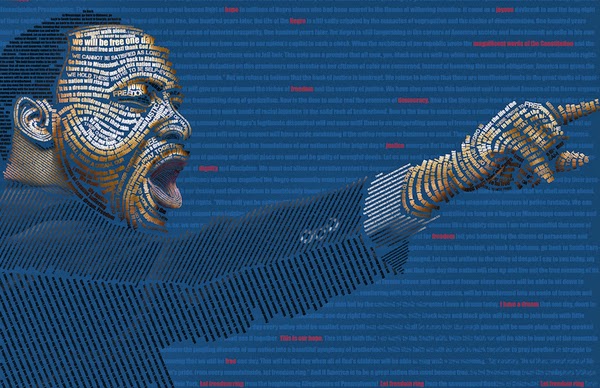





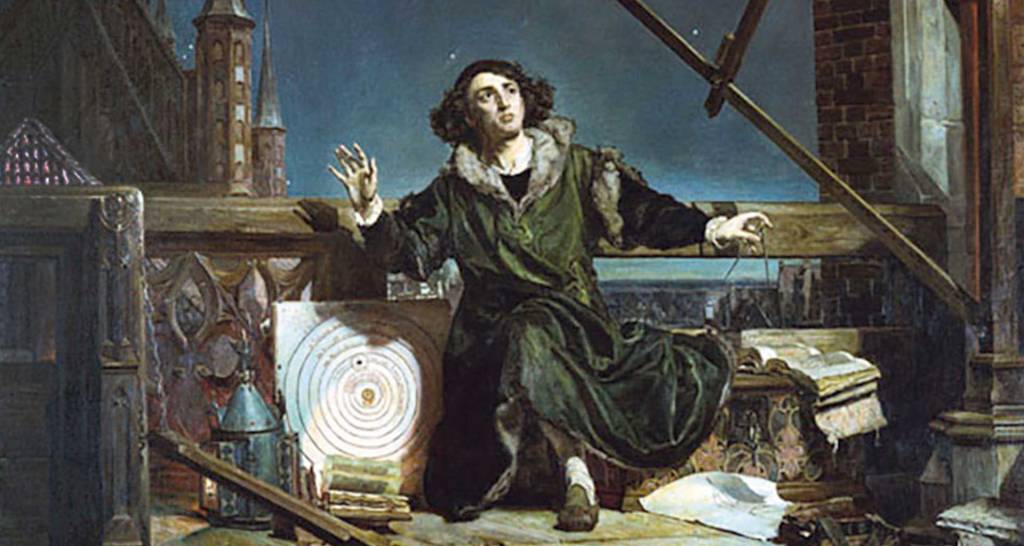
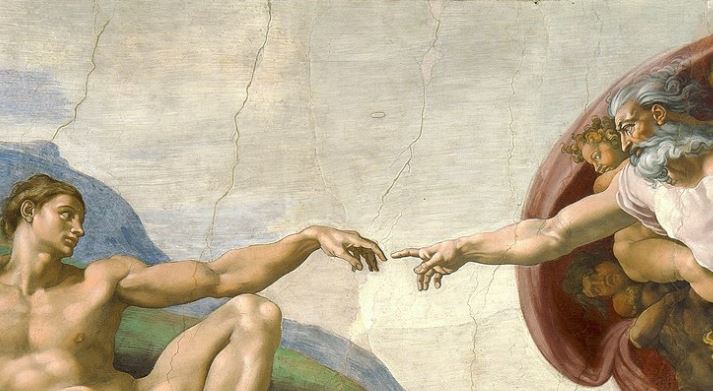
 Lamp and Light