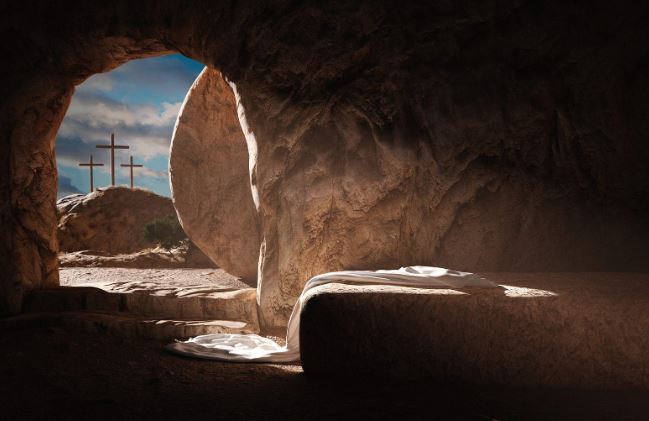
Why Does the Virgin Conception Matter?

I always want to encourage my fellow Christians that theology is not a stuffy subject reserved for uptight scholars to study in their ivory towers. Theology literally means “the study of God.” It is our extraordinary privilege to investigate the God-breathed text of the Bible and discover the truth about God and what He calls us to be. And if the goal is the knowledge and worship of God, there’s hardly anything more life-giving and thrilling to the soul than theology. On that note, I want to share four big reasons why the virgin conception matters for you today, and why there is no Christmas without it.

 “How will this be,” Mary asked the angel, “since I am a virgin?” (Luke 1:34, NIV)

Why the Virgin Conception Matters:

1. The virgin conception shows that the coming of Jesus Christ is the sovereign work of God alone.

With every other birth that has taken place, both a mother and a father were needed to create new life in the mother’s womb. One modern embryology textbook explains:

“Human development begins at fertilization when a sperm fuses with an oocyte to from a single cell, the zygote. This highly specialized, totipotent cell (capable of giving rise to any cell type) marks the beginning of each of us as a unique individual.”[1]

This is the natural process that God has designed from the beginning. One of the reasons God created marriage to be for one man and one woman is that in God’s design, a baby can only be conceived through the sexual union of a man and a woman. But here in this one unique case, we see a baby growing in the womb of a woman who has never been with a man.

This proves that God is the One who sovereignly sent Jesus into this world. The fact that no human father was needed demonstrates that God didn’t need our help to bring Jesus into this world. He did it supernaturally to show that salvation could only be accomplished by Him.

Also, note that God didn’t come down and start asking several Jewish women who would be willing to carry His Son. He simply chose Mary for this task. He didn’t ask Mary whether she was willing or have her sign any papers. God sovereignly chose her alone to have this extraordinary responsibility of carrying and giving birth to His Son.

2. The virgin conception proves that Jesus has always been the eternal God.

If Jesus was merely a man, then there would be no need for a virgin conception. But because the Son of God existed from all eternity, it only makes sense for Him to be born apart from human means.

In the virgin conception, we have the most astonishing miracle in all of human history. This is God Himself coming to earth, becoming one of us.

There have been numerous heresies throughout history that have gotten Jesus wrong, and it all comes down to His nature. Was He truly God in human flesh? Some early heretics tried to say that Jesus was such a remarkable human being that God adopted Him as His Son and gave Him a godlike status. Others have tried to argue that Jesus was the first and greatest creation of God the Father. But Scripture is clear. Christmas is about God Himself becoming one of us.

Speaking of Jesus, John 1:1 says:

In the beginning was the Word, and the Word was with God, and the Word was God. (John 1:1, ESV)
And the Word became flesh and dwelt among us, and we have seen his glory, glory as of the only Son from the Father, full of grace and truth. (John 1:14, ESV)

This “becoming flesh” is what happened in Mary’s womb. This is not something we can analyze, dissect, or figure out scientifically. Satan loves it when people worship at the altar of scientific materialism. Those religiously devoted to scientific materialism have adopted a belief system that rules out God and miracles from the start. I can almost hear the devil cackling when I hear people say, “I only accept what science tells me.” Such an absolute statement exposes a deeply religious conviction and idolatrous form of worship, akin to saying, “I only accept what the priests of Baal tell me.”

The virgin conception is a supernatural work of God, meant to draw our attention to the truth about Jesus. Jesus has been divine from all eternity, and yet he took on a human nature that He inherited from His mother, Mary. So in Jesus, we have the only one in history who is somehow both fully God and fully man.

3. The virgin conception means that Jesus understands us completely.

Of course, as God, Jesus already had perfect knowledge about what it means to be human. He made us, after all. But because of Christmas, Jesus now knows experientially what it means to be human. He can relate to us and personally identify with all the struggles, temptations, and miseries that come with being human in a fallen world.

For we do not have a high priest who is unable to sympathize with our weaknesses, but one who in every respect has been tempted as we are, yet without sin. (Hebrews 4:15, ESV)

Think of this. Right now, in Heaven, at the Father’s right hand, you have an advocate, a high priest who knows exactly what it is like to be human. Have you lost your temper recently with someone in your family? Jesus understands. Have you been tempted to lust or to want to control everything? Jesus understands.

He understands you completely, and yet He is totally free of sin. Jesus knows what it means to live as a full-fledged human in this world.

4. The virgin conception ensures that Jesus would be the perfect and sinless sacrifice we need.

We all came into this world through a mom and a dad. And we inherited from them both their genetic traits that make us who we are and the corruption of original sin.[2] We all arrive stained with the corruption of Adam. So for Jesus to come as that perfect atoning sacrifice who could bear our sin and endure the penalty we deserved, He needed to come in a supernatural way.

“Therefore he had to be made like his brothers in every respect, so that he might become a merciful and faithful high priest in the service of God, to make propitiation for the sins of the people.” (Hebrews 2:17, ESV)

That word “propitiation” is a very important word. Some translations render this verse to say “atonement” instead of “propitiation.” But propitiation has a very specific meaning: “a sacrifice that removes or satisfies wrath.” By dying in the place of sinners, the sinless Jesus absorbed the wrath of God that we deserved. By trusting in Jesus, we are trusting in His sacrifice in our place. The Bible teaches that we are naturally enemies of God and that the most urgent need for every man, woman, and child is to trust in the saving blood of Jesus Christ.

“Since, therefore, we have now been justified by his blood, much more shall we be saved by him from the wrath of God.” (Romans 5:9, ESV)

Baptist pastor Adrian Rogers summed it up:

“All Christianity is described in three sentences. 1) I deserve hell. 2) Jesus took my hell. 3) There’s nothing left for me but His heaven.”

Only through being born of a virgin could He be human in every way and yet utterly sinless, too. He never once failed His Father. Because of that, He could be our atoning sacrifice and represent us so that we could be reconciled to God.

The famous Heidelberg Catechism teaches the importance of Jesus being both truly divine and truly human:

Q.17. Why must he also be true God?

A. So that, by the power of his divinity, he might bear in his humanity the weight of God’s wrath, and earn for us and restore to us righteousness and life.

The virgin conception matters because we can’t understand the purpose of Christmas without it. The whole purpose of Christmas is that Jesus is the God-man who was born to live, die, and rise again to save us from the wrath of God and reconcile us to Himself.

Have thoughts on this post? Feel free to comment below!


[1] Keith L. Moore, T. V. N. Persaud, and Mark G. Torchia, The Developing Human: Clincially Oriented Embryology, 11th ed. (Philadelphia, PA: Elsevier, 2020), 11.

[2] https://lampandlightdevotionals.com/2021/11/16/is-original-sin-a-biblical-idea/

Experiencing the Reality of the Resurrection

It is remarkable to consider the numerous testimonies of skeptical scholars who set out to disprove the whole story of Jesus and His resurrection, and, like the hotheaded Saul of Tarsus, were knocked from their high horse only so they could gladly bow the knee to Christ.

“The Book that Refused to Be Written.”

One example is Frank Morrison. Morrison was a skeptical historian utterly convinced that the whole resurrection story was nothing but a hoax that had duped a great portion of the Western world and beyond. In his mind, the resurrection could not be true, simply because it proposed the impossible: that a lifeless corpse laying in a tomb had truly come to life. In Morrison’s mind, such an idea was preposterous from the start. It was ludicrous! Evangelical appeals to believe such a tale were an insult to his intellect.

And yet…

It did bother him that so many people had bought into this story—some of whom were no intellectual lightweights.

How is it, he wondered, that so many people could believe something that was so manifestly impossible? It would be one thing if a small crowd in Jerusalem back in the first century had been taken in by the resurrection tale, and that movement had fizzled and died long ago. But how is it that such a vast number of intellectual giants in the last 2,000 years (Augustine, Aquinas, Galileo, Kepler, Newton, and C. S. Lewis, to name a handful) have taken the claims of the New Testament seriously?

It was this question that drove Morrison to a detailed study of the resurrection accounts in the Gospels. He set out to disprove it all. But in a twist of providential irony, while he was meticulously seeking out holes in the Gospel accounts, he kept coming away from his study with the strange feeling that it all had the ring of truth. He had imagined himself writing a book detailing all the logical flaws and historical errors on the part of the Gospel writers. Instead, he found himself writing a very different book.

In fact, in his best-selling book, Who Moved the Stone?, which chronicles his investigative journey, the name of the first chapter is “The Book that Refused to Be Written.” In his own words, Morrison said that his historical investigation of Jesus’ resurrection kept taking him “in a new and unexpected direction.” He said, “It was as though a man set out to cross a forest by a familiar and well-beaten track and came out suddenly where he did not expect to come out. The point of entry was the same; it was the point of emergence that was different.”[1]

By the end of his research, it was not the whims of wishful thinking but the stubborn facts themselves that convinced him. Jesus Christ truly had risen from the grave!

The Greatest News on Earth

Can you remember the first time it really registered for you? Jesus is alive! He’s the Lord of the universe because He has defeated death! I remember experiencing something similar many years after I had become a Christian. I was reading a book called The Case for the Resurrection of Jesus, and I remember the truth washing over me in a new way. Jesus really is alive. He’s defeated death. That means I have nothing to fear in life or death!

The following Sunday morning I remember tears of joy coming to eyes as we sang about Jesus as the living Lord, and I just kept thinking, Yes! Jesus is alive! The tomb is empty! I live for a resurrected King! Sheer happiness coursed through my veins. I wanted to sing His praises for the rest of the day.

What could possibly be better news than this? Learning your application was accepted at an Ivy League school? Landing the ideal job you’ve been working tirelessly to get? Getting married to the girl of your dreams? As amazing as each of these are, none can compare with knowing deep in your bones that Jesus really has defeated death for you.

I was experiencing Paul’s words in Romans:

“This hope will not disappoint us, because God’s love has been poured out in our hearts through the Holy Spirit who was given to us.” (Romans 5:5, CSB)

The resurrection really does change everything. All other religions and faith systems are built on the teachings of dead guys. No matter how fancy and pristine their tombs might be, their bodies rotted away long ago. Buddha is dead. Muhammad is dead. Krishna is dead. Confucius is dead. Moses is dead. They’re all dead! But Jesus? He’s alive.

“But the one God raised up did not decay.” (Acts 13:37, CSB)

And what’s more is that from the very beginning of the church, Christians have always claimed He is alive. This is the truth that propelled the early church forward with boldness, declaring that “Jesus is Lord! Above all earthly gods. Above Caesar. Above the most powerful people on the planet. Jesus is Lord!”

It’s no surprise that the book of Acts shows the earliest disciples making the resurrection the hub of their whole message. They claimed they had seen the risen Jesus in the flesh. “God has raised this Jesus to life, and we are all witnesses of it,” said Peter (Acts 2:32). Peter and Paul called the resurrection a clear fulfillment of what God had promised through the Hebrew prophets (Acts 2:29-31; 13:34-35). Philip said that when you’re reading Isaiah 53, you’re reading about Jesus (Acts 8:30-35). From the start, their message was all about Jesus’ sacrificial death for the forgiveness of sins, and how Jesus’ resurrection proves that His death was sufficient.

“Now when David…fell asleep, he was buried with his ancestors and his body decayed. But the one whom God raised from the dead did not see decay. Therefore, my friends, I want you to know that through Jesus the forgiveness of sins is proclaimed to you.” (Acts 13:36-38, NIV)

No sacrifice for sins is needed after Jesus, because He made the payment in full.

“But when Christ had offered for all time a single sacrifice for sins, he sat down at the right hand of God, waiting from that time until his enemies should be made a footstool for his feet. For by a single offering he has perfected for all time those who are being sanctified.” (Hebrews 10:12-14, ESV)

And the Father raised Him from the dead because He was satisfied in the Son’s payment.

“Because of our sins he was given over to die, and he was raised to life in order to put us right with God.” (Romans 4:25, GNT)

This was no esoteric message about a transcendent Heaven that had no bearing on our lives today. Everyone who encountered the risen Lord suddenly had a new direction in life. And sometimes, this got them into trouble with the local authorities. That’s why wherever the gospel goes in Acts, a mob quickly follows.

Responses to the Resurrection Message

But why would a message of life attract angry mobs? How did various groups respond?

The self-righteous and political elite were threatened and enraged.

“These men who have turned the world upside down have come here also, and Jason has received them, and they are all acting against the decrees of Caesar, saying that there is another king, Jesus.” (Acts 17:6-7, ESV)

The proud intellectuals debated and mocked the message.

Some of the Epicurean and Stoic philosophers also conversed with him. And some said, “What does this babbler wish to say?” (Acts 17:18, ESV)

But some, like the Bereans, were noble and humble seekers of the truth.

“The people there were more open-minded than the people in Thessalonica. They listened to the message with great eagerness, and every day they studied the Scriptures to see if what Paul said was really true.” (Acts 17:11, GNT)

But one thing was clear. You cannot hear the full truth about the risen Jesus and then shrug your shoulders and walk away. There is no neutrality when it comes to Jesus. How could you ever be neutral about One who has left behind an empty tomb? Whether you love it or hate it, this message will do something to you.

It’s the reason why Paul could say, “To live is Christ! And to die is gain!” He meant something like this: “As long as I’ve got breath in my lungs, I’m living for Christ and sharing the news that Jesus is the Savior. If I get killed, that’s okay with me, because then I get to be with my Lord face to face.” Paul could talk like that because he had met the risen Lord already.

That’s what happens when you are truly gripped by the greatest news on earth.

A. W. Tozer said, “The Christian owes it to the world to be supernaturally joyful.” I agree, and this can only happen as we experience “the power of the resurrection” (Philippians 3:10). The more the reality of Christ’s resurrection has gripped our hearts, the more we see we can no longer face life’s difficulties without reference to this world-changing event.

If you have not yet surrendered to the resurrected King, I urge you to do that today. Only through trusting in the living Jesus is your eternal salvation made secure.

“If you confess that Jesus is Lord and believe that God raised him from death, you will be saved. For it is by our faith that we are put right with God; it is by our confession that we are saved.” (Romans 10:9-10, GNT)

Have thoughts on this post? Feel free to comment below!


[1] Frank Morrison, Who Moved the Stone? (1930).

Responding to Common Atheist Objections

“For what can be known about God is plain to them, because God has shown it to them. For his invisible attributes, namely, his eternal power and divine nature, have been clearly perceived, ever since the creation of the world, in the things that have been made. So they are without excuse.” (Romans 1:19-20, ESV)

When the famous atheist Bertrand Russell was asked what he would say to God if, at death, He turned out to be real, Russell’s famous reply was, “Not enough evidence, God! Not enough evidence.”[1]

According to the Christian worldview, God’s existence can be known to all. Through creation and conscience, God has made Himself known. As the Apostle Paul would say, “So they are without excuse.” The problem, according to the Bible, is that because we love our autonomy and hate the thought of being accountable to God, we “suppress the truth in unrighteousness” (v. 18).

Like the speeding driver who hopes no police officer is watching, broken people don’t want there to be a God—at least, not the holy and righteous God of the Bible. A non-threatening god that winks at sin, so long as you offer token prayers and sufficient good deeds, is not problematic. The real threat is a God of blinding holiness, a God who knows everything about you, everything you’ve done, and why you did it.

As I have interacted with Generation Z on college campuses over the last ten years, I’ve noted that an increasing majority I meet identify as either atheist or agnostic. That means that it’s not uncommon for the typical American college student today to say they see no good reason to believe God is real.

However, I’ve observed that while many will initially say with confidence they see no reason to believe in God, if you’re willing to ask questions and patiently listen, you discover that there’s usually more to the story. In many cases, it’s not necessarily that they have carefully considered the God question. More often, it’s that people hunger for an identity, and I suspect that identifying as atheist or agnostic sounds to many like “liberated,” “free thinking,” and “self-determined.”

Why Do You Believe What You Believe?

My approach is to ask for reasons they doubt God’s existence and then to listen very carefully. I want them to know I genuinely do want to hear their objections and questions. The last thing they want is another religious guy dumping a truckload of truth on them without any gentleness or compassion.

The Bible calls us not only to respond with gentleness and respect, but also to “be quick to listen, slow to speak, and slow to anger” (James 1:19). If nothing else, I hope that they are left with the impression that at least one Christian in this world cares enough to listen to them. But after listening, I will gently push back, usually with some questions of my own, in the hope of getting them to think through what they are claiming to believe.

My goal, however, is to get the conversation to Jesus. And I’m not ashamed to say so. After all, it is the gospel—not clever theistic reasoning—that is the power of God for salvation to everyone who believes (Romans 1:16). So, let’s consider what would be a thoughtful response to some of the most common atheist objections.

“If everything needs a cause, what caused God?”

This objection usually shows up after I’ve asked someone, “How do you account for the beginning of the universe?” Many atheists seem to think this question of “What caused God?” is the knockout blow to the First Cause argument. The argument works like this.

  1. Every effect is a result of some cause.
  2. If the universe itself is an effect, there must be a self-existent First Cause outside our universe that caused the universe.
  3. The universe is an effect, contingent on some prior Cause.
  4. Therefore, a First Cause, whom we call God, exists.

Think about how you ended up where you are today. There were a series of events and decisions that led you to where you are now. You could trace this cause-and-effect series in your life back to the moment you were born. But what caused that? At some point, your parents had to meet. As did their parents. And their parents. You get the picture.

Like a series of Dominoes falling, you can trace back every event in the world to a cause. But you cannot simply do this forever. Eventually, you have to come to a First Cause that tipped that first domino—an uncaused Cause.

One quick note. Christians have never claimed that everything needs a cause—only that creation needs a cause. According to the Bible, God is eternal, existing outside of time, space, and matter.

“Before the mountains were brought forth, or ever you had formed the earth and the world, from everlasting to everlasting you are God.” (Psalm 90:2, ESV)

So, to ask what caused God is like asking how long a bachelor has been married. Properly stated, this objection would sound like this: “If God caused the universe, what caused the eternal and uncaused God?” Just like asking how long a bachelor has been married, the question becomes incoherent once we understand the nature of God. He is by definition “from everlasting to everlasting,” and thus uncaused.

In other words, the Bible claims that God is not one more feature of the created world but is instead the foundation for the created world. He is Being itself, and therefore the ground of all reality.

“Maybe the universe didn’t have a beginning. Or maybe there is a multiverse that gave birth to our universe.”

The Book of Genesis begins with a straightforward explanation of our universe: “In the beginning, God created the heavens and the earth” (Genesis 1:1, ESV). Because of Genesis, Christians believed the universe had a beginning even at a time in history when most of the Greco-Roman world believed in an eternal universe.

It makes sense that as belief in one eternal God spread, so did belief in the universe having a beginning. In order to avoid the need for God, one popular skeptic recently wrote, “There is no beginning and no end—no boundaries. The universe always was, always is, and always will be.”[2]

It’s worth noting that even most cosmologists today agree that the universe had a beginning. They would typically say it all began with the singularity. But any reasonable person might wonder how that singularity got there. Even if you believed—despite contrary evidence—the universe didn’t have a beginning, you still need an explanation for why the universe is sustained in existence even now.

To suggest that there is a multiverse to explain our universe is to appeal to something for which we have no evidence. While many Marvel movies today are based on this idea of a multiverse where there are an infinite number of Spider-mans out there, it’s good to remind people to distinguish between fact and fiction. And in reality, there is no evidence for the multiverse. So, if we care about following scientific evidence wherever it leads, we shouldn’t resort to something with no observable evidence whatsoever.

In fact, the theory of a multiverse first arose as something of a “metaphysical escape hatch” for those who didn’t like the theistic implications of our universe having a beginning and being finely-tuned for life.[3]

“We don’t need to ask why the universe is here. Asking ‘Why?’ is childish.”

In a debate several years ago, the atheist Richard Dawkins said that looking for purpose in nature is a childish endeavor. He added that asking the question “Why is something the way it is?” is to ask a “silly question” which most people grow out of after age six.[4]

But here, Dawkins is mocking what is a basic human intuition. We ask the question “Why?” because we seek understanding—a question that ironically should be encouraged in the sciences. If it’s a “childish” question, then perhaps we need to learn from children about the importance of curiosity and critical thinking and not grow smugly self-satisfied that we already know best how the world works.

Behind Dawkins’ mocking tone is a thinly veiled uneasiness about seeking an ultimate explanation for all the effects in nature. Everything in nature has a cause. Eggs come from birds. Seeds come from flowers. Milk comes from cows. I could keep going.

But while we have a basic intuition telling us that everything in nature has a cause, the question can reasonably be pushed back to the cause of the universe itself.

“Maybe the universe doesn’t need a cause. Maybe it just is, and there’s nothing more to say about it. Why posit a God we can’t see to explain it?”

But this response commits the logical fallacy of special pleading. Special pleading is when we exempt a certain circumstance or event from the same critical criteria as other circumstances or events without reasonable justification.

For example, if you were to come home and find a plate of freshly baked chocolate chip cookies on the counter, you might wonder who made them. Now imagine your roommate or spouse glibly replying, “No one did. They’re just there. Why posit a baker when you didn’t see someone baking them?” Of course, such a response sounds ridiculous.

But here’s where I want to make it clear why it sounds ridiculous. We all intuitively know that every effect (e.g., freshly baked cookies) has a cause (e.g., a baker). Even the 18th century skeptic, David Hume, freely admitted as much: “I have never asserted so absurd a principle as that anything might arise without a cause.”[5]

But if everything in nature has a cause for its existence, it only makes sense that the whole universe would need a cause for its existence, too. And to explain the universe, this Cause must stand outside the universe rather than being one more part within the universe. Hence, the conclusion that the universe is caused by an all-powerful, eternal, all-wise, immaterial, self-existent, and personal Being—also known as God.

Some atheists I’ve interacted with have brought up Ockham’s razor to say that the simplest explanation is always best, and that we don’t need to posit the existence of a God we cannot see.[6] But again, if we are seeking a cause for the physical world we can see, why would we expect God to be physically visible within the universe? Likewise, the Russian cosmonaut Yuri Gagarin, the first man to enter space, reportedly said that he didn’t see God up there.

But we don’t look for a book’s author within its pages. Rather, we recognize the necessary existence of an author because we have a book. Ironically, William of Ockham (1287-1347) never used his “razor” to rule out a need for God. In fact, he said the underlying order in nature is most simply explained by an intelligent Creator. He wrote, “For nothing ought to be posited without a reason given, unless it is self-evident or known by experience or provoked by the authority of Sacred Scripture.”[7]

As Scripture teaches:

“Now every house is built by someone, but the one who built everything is God.” (Hebrews 3:4, ESV)

I prefer scientific explanations to theological speculations about God and what He may or may not have done.”

Science is a wonderful tool for exploring the natural world and for helping us develop technology. We are greatly indebted to scientific discoveries and pioneers of the past. However, science is a discipline for studying the physical world, nothing more.

For example, science may tell us what regularities (laws of nature) we can observe in the world, but it doesn’t tell us how those regularities got there in the first place. Moreover, while it has provided astounding observations about the universe, science cannot provide an ultimate explanation for the universe itself.

Underlying this objection is the presupposition that science is the source of all truth. But if someone was to say to me, “Truth is determined by what can be empirically verified by science,” I would ask them, “Can that statement be empirically verified by science?” This belief that science is the source of all truth is called scientism, and is a claim that, ironically, cannot be supported by science, and is therefore self-refuting.

However, science does provide evidence for a finely-tuned universe that had a beginning. Therefore, while science cannot prove the existence of God in a mathematical sense, it strongly points to the conclusion that God is the uncreated Creator exactly as the Bible describes Him. Moreover, through their studies, many believing scientists have sensed a greater awe by understanding how God so marvelously constructed this universe we call home. The famed astronomer Johannes Kepler (1571-1630) said, “The chief aim of all investigations of the external world should be to discover the rational order and harmony which has been imposed on it by God and which He revealed to us in the language of mathematics.”[8]

Nature can teach us that there is a God, but to know this God personally, we need Him to reveal Himself to us. And this is just what this God has done by giving us Scripture (2 Peter 1:16-21) and ultimately revealing Himself in the one true Redeemer, Jesus Christ, who claimed to be the eternal “I Am” of Genesis (John 8:58; 14:6).

Have thoughts on this post? Feel free to comment below!


[1] Michael J. Murray, An Introduction to the Philosophy of Religion.

[2] Michael Shermer, How We Believe.

[3] The term “metaphysical escape hatch” is used by Robin Collins in Lee Strobel, The Case for a Creator.

[4] See “Richard Dawkins Vs. William Lane Craig Debate” at https://www.youtube.com/watch?v=Uaq6ORDx1C4&t=204s

[5] Quoted in John C. Lennox, God’s Undertaker.

[6] William of Ockham’s famous statement was “Never posit pluralities without necessity.” Quoted in Stephen C. Meyer, Return of the God Hypothesis.

[7] Quoted in Spade, “Ockham’s Nominalist Metaphysics,” 104.

[8] Morris Kline, Mathematical Thought from Ancient to Modern Times (1972), 231.

A Gay Man Surrenders to Jesus

“What about homosexuality? What is your church’s stance on it? Is it a sin or not?”

This is the question that Becket Cook, a Hollywood set designer, asked a young man studying his Bible at a coffee shop in Los Angeles. It wasn’t the first question he asked, but the young man’s friendly and thoughtful demeanor when Becket first approached him opened the door for the bigger question brewing below the surface.[1]

How would you respond to Becket’s question? Do you have an answer ready if someone asked this simple yet pointed question? In one sense, this might be the question of our generation: Is homosexuality a sin? Wherever you come down on this issue, I would urge you to think through what the Bible and your church believe about this. When asked directly if homosexuality is a sin, I have heard numerous Christian celebrities and pastors hedge and stumble through an answer. They don’t seem to realize that because of their influence, their non-answer only adds fuel to the fires of confusion. If you haven’t carefully prepared for when this question comes—and be assured it will—it could prove incredibly detrimental in your own life and the lives of those with whom you interact. Out of love for family and friends, we cannot afford to get this one wrong.

Embracing the Truth No Matter What

If homosexuality is a good and God-honoring practice, then we ought to be joining in all the pride parades, waving pride flags, and celebrating it along with the crowds. However, if the truth is that, despite increasing cultural approval, God’s Word reproves homosexuality as a distortion of God’s good design, we should humbly accept this. Whatever is true, we should embrace out of love for God and others.

Thankfully, the young man in the coffee shop was ready. Becket writes, “His answer didn’t shock me. He didn’t beat around the bush, and very matter-of-factly stated that both he and his church agreed homosexuality is indeed a sin.”[2] What a refreshingly clear response! No complex answer filled with a thousand qualifications. After calmly explaining the Bible’s teaching on the matter, he proceeded to invite Becket, who was openly homosexual, to his church.

Initially, Becket hated the thought of going to a church where homosexuality was condemned. And yet, something was pushing him to go anyway. Maybe it was the way this young man gently but firmly held to his convictions. Maybe the Lord was drawing Becket despite his atheism.

A Change of Affection

Somewhat reluctantly, Becket went to the church service and heard the pastor proclaim the gospel of God’s infinite love for broken sinners for the first time. He learned that God had come in human flesh and was known as Jesus of Nazareth. Jesus went to the cross as a sacrifice for our sins and rose from the dead in triumphant glory. This gospel touched Becket at the deepest level. After going forward for prayer, something happened in Becket’s heart.

“All of a sudden, a giant wave of God’s presence came crashing over me… I was utterly overwhelmed, and I started bawling uncontrollably.”[3]

Becket surrendered his life to Jesus Christ. According to the Bible, when this happens, we are born again and become a child of God (John 1:12-13). We are made new inside.

“Therefore, if anyone is in Christ, he is a new creation. The old has passed away; behold, the new has come.” (2 Corinthians 5:17, ESV)

At conversion, God sovereignly gives us a new heart with new affections and desires, and He puts His Spirit within us, claiming us as His own.

“And I will remove the heart of stone from your flesh and give you a heart of flesh.” (Ezekiel 36:26, ESV)

Along with a new and intense desire to honor God, Becket immediately came to understand God had a new direction for his life—one that included leaving his gay lifestyle in the dust.

“I had finally come to the realization that homosexual behavior was a distortion of God’s perfect design for human sexuality and flourishing… Surprisingly, I was perfectly fine with this realization. The complete reversal of my opinions and pursuits in this area worked like this: I had just met the King of the universe!… How could I hold on to anything that didn’t bring me closer to Him?”[4]

Only the living God could transform the way Becket looked at homosexuality and everything else. Today, as Becket says in his book A Change of Affection, he lives life free of guilt, free of what others think of him, and free of the fear of death. As he put it, he has met the King of the universe! What could possibly compare?

As Christians, we need to remember that every last one of us is sexually broken apart from Christ. Without His grace and wisdom, our desires are disordered and not in line with His perfect design. We all are desperate for His transforming work!

Embracing Christ and Forsaking Sin

In spite of powerful testimonies such as Becket’s, many in our world want to deny that this kind of change can happen in someone’s life. We have an enemy who is bent on deceiving people about the transforming power of Christ. He wants us to imagine that if one is “born this way,” they have no choice but to live according to their homosexual desires. But true life is found in saying no to anything that would conflict with God’s best.

While giving people designations according to sexual orientation, such as “gay” or “straight,” might be a modern concept, the Bible is concerned with the sexual practice itself. And the simple fact is that homosexual behavior is always viewed negatively in Scripture.

“Or do you not know that the unrighteous will not inherit the kingdom of God? Do not be deceived: neither the sexually immoral, nor idolaters, nor adulterers, nor men who practice homosexuality; nor thieves, nor the greedy, nor drunkards, nor revilers, nor swindlers will inherit the kingdom of God.” (1 Corinthians 6:9-10, ESV)

But praise God that’s not the end of the matter! After this clear warning on what marks the lives of those outside the kingdom, we are given this word of hope:

And such were some of you. But you were washed, you were sanctified, you were justified in the name of the Lord Jesus Christ and by the Spirit of our God.” (v. 11, emphasis added)

God cares about what we do with our bodies, and our bodies can only flourish according to His good design. To live contrary to His design, is to flout the authority of the Designer Himself.

Just like we cannot pour Gatorade into our vehicle’s fuel tank and not expect engine problems, we cannot ignore God’s stated design for human sexuality and not expect negative consequences.

Consider again how you would respond when asked what you believe about homosexuality. In that moment, will you be more concerned with the approval of others or the God who made us all? Just imagine if that young man in the coffee shop had told Becket he and his church had no problem with people living whatever way they wanted. What if the pastor had avoided preaching the gospel? How we speak about homosexuality really does matter, and God will hold us accountable. God used these men to draw Becket into the kingdom. He no longer identifies as a “gay man,” but as a child of God.

So let’s commit to speaking the truth of God’s Word with clear resolve, but also with a gentle and invitational love that says, “There’s room at the table for all who embrace Christ and forsake sin. I hope you’ll join us.”

Have thoughts on this post? Feel free to comment below!


[1] Becket Cook, A Change of Affection (Nashville: Nelson Books, 2019), 8.

[2] Ibid, 6.

[3] Ibid, 19.

[4] Ibid, 23.

Answering a Muslim’s Challenge to Jesus

Joram van Klaveren, author of Apostate

A Muslim friend of mind recently recommended I read the 2019 book Apostate: From Christianity to Islam in times of secularization and terror, written by the recently converted Muslim, Joram van Klaveren. The well-written book describes van Klaveren’s journey from Dutch Reformed Protestantism to Islam, from Christian to Muslim.

While there is much to agree with, my conclusion after reading the book is that van Klaveren has abandoned a Christianity that he never fully embraced. I mean that respectfully. Throughout the book, van Klaveren admits that he’s always had intellectual struggles with concepts like the Trinity, the dual natures of Christ, and the idea that divine forgiveness requires a blood sacrifice.

I love Muslims, so I wanted to read this book to better understand some of their objections. At the heart of the disagreement between Christians and Muslims is Jesus Himself—His person and work. My great desire is to see my Muslim friends come to know Jesus personally as their Lord and Savior.

But when I share the gospel of a crucified and risen Jesus, a dilemma immediately presents itself. The Quran—the text all Muslims believe is the revealed word of Allah (God)—declares that Jesus (Isa) never even died on a cross (Surah 4:157). Muslims revere Jesus as a prophet, but not the eternal Son of God. The Quran clearly states, “The Messiah son of Mary was no other than a messenger before whom similar messengers passed away, and his mother was a saintly woman” (5:75).[1]

Jesus: Prophet of Allah or Son of God?

In Apostate, van Klaveren lays out some of the nagging issues he had with Christian theology for many years, which eventually led him to outright reject the faith and convert to Islam. His biggest struggle is with the deity of Christ. He quotes Colossians 1 as saying Christ is “the firstborn of every creature” (Colossians 1:15, KJV). And then asks, “If Christ is created, has there then existed a time before he was created? God, however, is eternal.”[2]

Here, van Klaveren seems to have a misunderstanding about the incarnation of Christ. Christians have never believed that Christ is created. The New Testament repeatedly teaches that Christ is the Creator of all things. In fact, van Klaveren fails to quote the very next verse, which says that Christ is the Creator of all things (v. 16). I’ll quote the passage in context in the English Standard Version (ESV):[3]

“He [Christ] is the image of the invisible God, the firstborn of all creation. For by him all things were created, in heaven and on earth, visible and invisible, whether thrones or dominions or rulers or authorities—all things were created through him and for him. And he is before all things, and in him all things hold together.” (Colossians 1:15-17, ESV)

His confusion seems to be rooted in his understanding of the King James translation of verse 15, which says, “He is the firstborn of every creature.”

Van Klaveren seems to think that “firstborn” indicates “first created.” But the Greek word prototokos (firstborn) does not mean “first created” one. We have to ask what Paul the Jew meant when he first wrote this. When we turn to the Old Testament, we find that “firstborn” certainly can mean simply “first one in birthing order.” But there is also a well-developed understanding of the “firstborn” as the one with a special status before God. For example, Moses tells Pharaoh, “Thus says the Lord, Israel is my firstborn son” (Exodus 4:22).

We also see the term taking on messianic significance when God speaks of David, who was a prototype of the Messiah. God says of David: “And I will appoint him to be my firstborn, the most exalted of the kings of the earth” (Psalm 89:27, ESV). All this rich background to the term firstborn seems utterly lost on van Klaveren. Ironically, the very term Paul uses to emphasize Christ’s exalted status as Lord, he takes to mean “less than God.”

I can understand why van Klaveren would have questions about why Paul would call Jesus “the firstborn of creation.” But even without the Old Testament background on the term, if he simply read the passage in context, he would see that Paul is repeatedly emphasizing Jesus’s deity throughout. Christ created all things (v. 16). All things were created for Christ (v. 16). Christ is before all things, and He holds all things together (v. 17). In everything, Christ is to be preeminent (v. 18). In Christ, all the fullness of God dwells bodily (v. 19; 2:9). There’s really no escaping what Paul intended to teach: Jesus is the Creator God in human flesh.

Did Jesus Deny that He is Divine?

Rather than questioning the Bible’s accuracy, van Klaveren is convinced that the biblical Jesus denied He is God. He approvingly quotes Abdal Hakim Murad:

“In the Bible, Jesus sometimes appears explicitly to deny that he is Divine. Texts include, ‘Why do you call me good? No one is good but God alone’ (Mark 10:18), and ‘The son can do nothing of his own accord, but only what he sees the Father doing’ (John 5:19).”[4]

Again, context is crucial to our understanding of what Jesus intended to convey. As we will see below, there are countless times that Jesus did affirm His own eternally divine nature. First, let’s consider the Mark 10 passage.

In context, Jesus is responding to a young rich ruler, who has just said, “Good Teacher, what must I do to inherit eternal life?” (Mark 10:17, ESV). Jesus responds with a question of His own, which He often did as a way of leading people to the truth. “Why do you call Me good? No one is good except God alone” (v. 18). Notice that Jesus does not explicitly deny that He is God. He asks a question that corresponds to the man’s starting assumptions.

Jesus is leading this self-righteous young man to reevaluate his concept of goodness. Believing Jesus to be a wise teacher, the man is happy to consider Jesus “good.” He probably was willing to call many rabbis “Good Teacher.” He also considers himself good, asserting he has not broken any of the commandments since childhood (v. 20). But Jesus can see through his self-confident exterior. In reality, this young man worships money, not God. That is why Jesus calls him to sell all his possessions and give to the poor before following Him. The man is hoping to add Jesus to his wealth rather than come to Jesus as Lord and Savior. He is not yet recognizing his desperate position as a sinner accountable to a perfectly good God.

The other passage mentioned, John 5:19, does not deny Christ’s deity either. In fact, in this very passage Jesus clearly expresses His deity. Interestingly, Murad does not quote the whole verse, which reads:

Jesus gave them this answer: “Very truly I tell you, the Son can do nothing by himself; he can do only what he sees his Father doing, because whatever the Father does the Son also does. (John 5:19, NIV)

When Jesus says, “the Son can do nothing by himself,” He is speaking about His obedience to the Father. According to the Bible, the plan of redemption originated in the Father, who sent the Son into the world to accomplish redemption. The Son, who is coequal and coeternal with God, is nevertheless functionally subordinate to the Father. That’s why Jesus frequently says He can do nothing apart from the Father’s will (e.g. John 6:38). This is a statement about their difference in roles, not difference in nature.

Murad cuts off Jesus’s statement that “whatever the Father does the Son also does” (v. 19). How could someone less than God be said to do whatever God does? In Apostate, van Klaveren argues that when Jesus is called “the son of God,” in the Jewish context that term didn’t suggest that He was literally divine, “but rather refers to an exalted status because of his exceptionality.”[5] But that’s only partially true. When Jesus spoke of God as “My Father” and Himself as “the Son,” He clearly taught His equality with God.

In the immediately preceding verses, we are told:

In his defense Jesus said to them, “My Father is always at his work to this very day, and I too am working.” For this reason they tried all the more to kill him; not only was he breaking the Sabbath, but he was even calling God his own Father, making himself equal with God. (John 5:17-18, ESV)

A little understanding of context goes a long way in clarifying many of Jesus’s statements. The Bible teaches that, as a man, the sinless Jesus was subject to many limitations such as being hungry, tired, thirsty, had to learn and grow, and was even subject to temptation. But that is with respect to Christ’s human nature. As God, Jesus could also make statements no mere man could make:

For as the Father raises the dead and gives them life, so also the Son gives life to whom he will. For the Father judges no one, but has given all judgment to the Son, that all may honor the Son, just as they honor the Father. Whoever does not honor the Son does not honor the Father who sent him.” (John 5:21-23)
“You search the Scriptures because you think that in them you have eternal life; and it is they that bear witness about me, yet you refuse to come to me that you may have life.” (John 5:39-40)
“I am the bread of life; whoever comes to me shall not hunger, and whoever believes in me shall never thirst.” (John 6:35)

In terms of roles, the Father has the highest authority. That’s why Jesus can say, “I do not speak on my own authority” (John 14:10) and “the Father is greater than I” (v. 28). But at other times, Jesus speaks to their shared divine nature, such as when Jesus says, “Whoever has seen me has seen the Father” (v. 9) and “Believe me that I am in the Father and the Father is in Me” (v. 11).

Furthermore, we cannot overlook all the times that Jesus received worship. In Scripture, godly men and angels always refuse to be worshiped (see Acts 10:26; 14:12-15; Revelation 19:10; 22:9), and wicked men like Herod seek to be worshiped as a god (Acts 12:21-23). So, how could Jesus be merely a man—especially a godly man—since He always welcomes worship?

And those in the boat worshiped him, saying, “Truly you are the Son of God.” (Matthew 14:33, ESV; cf. Matthew 28:9)
Thomas said to him, “My Lord and my God!” Then Jesus told him, “Because you have seen me, you have believed; blessed are those who have not seen and yet have believed.” (John 20:28-29, ESV)

Is the Trinity a Late Invention?

Van Klaveren’s other main objection to Christianity seems to be that the doctrine of the Trinity is a confusing mystery and “intellectual impediment.” This is a common view among Muslims I have interacted with on college campuses. The Trinity is viewed as an obscure or nonsensical belief that was added into the Bible many years later.

Van Klaveren states that “the most evident Trinitarian reference” is 1 John 5:7-8, but this is a later addition to the original manuscripts. I found it interesting that van Klaveren, a self-proclaimed former Christian, would say this, because while it remains a common argument Muslim apologists make, it’s also a very outdated and unconvincing argument. Here’s what I mean. He is referring to the King James Version, which renders the verses:

For there are three that bear record in heaven, the Father, the Word, and the Holy Ghost: and these three are one. And there are three that bear witness in earth, the spirit, and the water, and the blood: and these three agree in one. (1 John 5:7-8, KJV)

Certainly, van Klaveren is right that the earliest manuscripts we have do not include “in heaven, the Father, the Word, and the Holy Ghost: and these three are one,” but instead only include “the Spirit, the water and the blood” as the three giving testimony. But nearly all our modern translations reflect what we find in the earliest and most reliable manuscripts. Furthermore, I don’t know of any Christian scholar who would appeal to 1 John 5:7-8 to make a case for the Trinity.

For example, in his 200-page book defending the Trinity, Christian apologist James White never even mentions 1 John 5:7-8.[6] Why? Because the New Testament as a whole is thoroughly Trinitarian. In other words, so many statements made by Jesus and the New Testament authors cannot be rightly understood apart from the doctrine of the Trinity. While the word “Trinity” is never found in the New Testament, the concept clearly is. The following facts can be gathered from a careful reading of the New Testament:

  1. There is only one God (John 17:3; 1 Corinthians 8:6; 1 Timothy 2:5).
  2. God exists as three divine persons who share the same eternal divine nature (John 10:30; 14:9): the Father is God (1 Corinthians 8:6), the Son is God (John 1:1), and the Holy Spirit is God (Acts 5:3-4).
  3. The Father is a distinct person from the Son (John 16:9), and both are distinct persons from the Holy Spirit (John 15:26).

When you put all three together, what do you get? There is one God who has eternally existed as three distinct, coequal, and coeternal persons. That is the definition of the Trinity. So, to say that the best reference to the Trinity is also a late addition to the Bible is misrepresenting the facts, and it fails to interact with the multitude of passages that so clearly teach God’s triune nature.

Truly Man, Truly God

The late Christian apologist, Nabeel Qureshi, has said that when he was a Muslim, he was taught that the Trinity was nothing but “veiled polytheism.”[7] But if you actually follow the history of how the Christian church came to understand God as Trinity, it’s clear that they were simply working out the implications of New Testament teaching. It should be added that from the earliest records outside the New Testament, the Christian church has always affirmed Jesus’s deity.

Writing around AD 107-110 (about 460 years before Muhammad was born), Ignatius wrote, “God appeared in human form to bring the newness of eternal life.”[8] This was long before the Arian controversy was settled at the Council of Nicaea in AD 325. In AD 180, Irenaeus similarly affirmed that Jesus was “truly man” and “truly God.”[9]

While van Klaveren is right in one sense that the Trinity is a deep mystery we cannot fully grasp, that is not an argument against its veracity. After all, we are talking about the nature of the infinite Being. If God has revealed Himself as triune, who am I to say I won’t accept it simply because I cannot rationally comprehend it? We finite creatures are in no position to tell God what He can or cannot be like. Ultimately, only the Holy Spirit can reveal these truths to our hearts. As Paul wrote, “And we impart this in words not taught by human wisdom but taught by the Spirit, interpreting spiritual truths to those who are spiritual” (1 Corinthians 2:13, ESV).

The overwhelming testimony of the New Testament is that Jesus is the divine Messiah and Lord of the world. John could not have been clearer when he wrote:

“In the beginning was the Word, and the Word was with God, and the Word was God. He was in the beginning with God. All things were made through him, and without him was not any thing made that was made... And the Word became flesh and dwelt among us, and we have seen his glory, glory as of the only Son from the Father, full of grace and truth.” (John 1:1-3, 14, ESV)

Have thoughts on this post? Feel free to comment below!


[1] There are times when the Quran seems to misunderstand what Christians believe about the Trinity. In one passage, Allah asks, “O Jesus son of Mary! Did you say to people: ‘Take me and my mother for two gods besides Allah?’” (5:116). The Trinity that is refuted here includes Jesus, Mary, and Allah, and is a polytheistic group of three gods (“two gods besides Allah”). But this is not what Christians have historically taught about the Trinity.

[2] Joram van Klaveren, Apostate: From Christianity to Islam in times of secularization and terror (2019).

[3] I believe the ESV is a more accurate translation than the KJV for two important reasons: 1) It depends on the earliest and most reliable NT manuscripts, which were not available during the first publication of the KJV. 2) It uses language that strikes a balance of matching original word choice in Koine Greek with comprehensibility in modern English.

[4] Murad, 2013, quoted in van Klaveren, Apostate, 43.

[5] Van Klaveren, Apostate, 45.

[6] James R. White, The Forgotten Trinity (1998).

[7] “Nabeel Qureshi explaining the Trinity.” https://www.youtube.com/watch?v=4zc9ee08JeM Accessed on May 29, 2023.

[8] Ignatius, Letter to the Ephesians, 19, quoted in Allison, Historical Theology.

[9] Irenaeus, Against Heresies, 4.6.7, in ANF, 1:469.

Photo from cover of Apostate by Imam Malik Islamic Centre, Leiden

Is Christianity a Force for Good or Evil?

“You are the light of the world. A city set on a hill cannot be hidden. Nor do people light a lamp and put it under a basket, but on a stand, and it gives light to all in the house. In the same way, let your light shine before others, so that they may see your good works and give glory to your Father who is in heaven.” (Matthew 5:14-16, ESV)

In 1971, the popular Beatles singer, John Lennon, sang of a dream he had where no religion existed in the world. In that dream, not only was there no such thing as religion, but also no heaven or “hell below us,” and “above us only sky.” Such a world, he sang, would bring about world peace and unity since there’d no longer be anything worth killing or dying for.

Many today hold on to Lennon’s dream. In 2020, when most of the world was in isolation during the COVID-19 outbreak, Lennon’s song “Imagine” was sung by 25 celebrities in a compilation video posted on YouTube. Many still believe that a world without religion would be preferable. More specifically, many people have thought it better if Christianity didn’t exist in the world.

The so-called New Atheists, such as Richard Dawkins and the late Christopher Hitchens, have argued vociferously in their books The God Delusion and God Is Not Great that “religion poisons everything.”

However, only 8 years before Lennon recorded that song, another dream was expressed across the pond by Martin Luther King, Jr. In that dream, he imagined that one day “little black boys and black girls [would] be able to join hands with little white boys and white girls as sisters and brothers.” The irony is that while Lennon’s dream envisioned a world where there was no Christianity, King’s dream was firmly rooted in biblical Christianity. His iconic speech appealed to his Christian faith, which holds that every person was made in God’s image and has sacred value in God’s sight. King even deliberately quoted Scripture like Isaiah 40 to make his point.

“I have a dream that one day every valley shall be exalted, every hill and mountain shall be made low, the rough places will be made plain, and the crooked places will be made straight, and the glory of the Lord shall be revealed, and all flesh shall see it together.”

After quoting this passage, King declared, “This is our hope. This is the faith that I go back to the South with… With this faith we will be able to work together, to pray together, to struggle together, to go to jail together, to stand up for freedom together, knowing that we will be free one day.”

So which worldview is right? Is religion—and more importantly—is Christianity a force for good or evil in the world today?

Is Christianity Headed for Extinction?

In a 2016 survey, 30.9 percent of freshman college students claimed no religious affiliation, which is a 10 percent rise since 2006. Many have noticed this growing trend to be non-religious and have predicted that Christianity and the other religions are destined for extinction. This has been called the secularization hypothesis, because it predicts that religion will be pushed more and more to the fringe as secular values advance.

But is this true? Actually, no. In contrast to the thinking of many academics, the reality is that Christianity has never had a wider reach. Right now, Christianity is the largest belief system in the world, with 31.5% percent of the world’s population identifying as Christian. While it’s true that those identifying as religious in Europe and North America has declined in recent years, on the global scale, Christianity is growing stronger than ever.

Many sociologists have been forced to admit that the whole secularization hypothesis has been totally debunked. Robust Christianity is globally on the rise, and the trend is actually toward a more religious rather than secular world.

Biblical Christians would expect nothing less. Not only did Jesus promise that His gospel would be proclaimed to all nations (Matthew 24:14; Mark 13:10), but He also promised that the church He built will prevail “and the gates of Hades will not overcome it” (Matthew 16:18, NIV).

But the question remains: Is Christianity a force for good or evil in the world? After all, just because something is believed by many doesn’t make it true (also, many who claim to be Christian don’t follow Jesus’s teachings).

Joy in Knowing Jesus

A 2016 article in USA Today was entitled “Religion May Be a Miracle Drug.” The authors begin by asking, “If one could conceive of a single elixir to improve the physical and mental health of millions of Americans—at no personal cost—what value would our society place on it?”[1]

They go on to lay out all the correlations between mental and physical health benefits and consistent religious participation. According to their research, Americans who are actively involved in a local church tend to be more optimistic, have lower rates of depression, are less likely to commit suicide, have greater purpose in life, are less likely to divorce, and even tend to live longer! There is also good research showing that those who live out a robust Christianity—including having a regular prayer life, active Bible reading, consistent church attendance, and meeting the needs of others in the community—tend to be happier in life.

In fact, in his book The Happiness Hypothesis, even atheist social psychologist, Jonathan Haidt, makes the case that devout Christians tend to be happier than secular atheists like himself!

He writes: “Surveys have long shown that religious believers in the United States are happier, healthier, longer-lived, and more generous to charity and to each other than are secular people… Religious believers give more money than secular folk to secular charities, and to their neighbors. They give more of their time, too, and of their blood.”[2]

Obviously, sociological research isn’t the ultimate reason to surrender your life to Christ. We are to surrender to Christ because He is the “King of kings and Lord of lords” (1 Timothy 6:15). But it’s worth noting that objective research done by secular scholars inadvertently agrees that there really is joy that comes from knowing Jesus. Non-religious scholars like Haidt have begun to realize there really is something to what Paul taught: “Rejoice in the Lord always; again, I will say, rejoice” (Philippians 4:4).

The truth is that when the Bible is taken seriously and faith in Christ is lived out, there is a positive impact—both personally and in society. Christians first started universities to educate the mind, launched hospitals to care for the sick, and built orphanages to house those whom the world had rejected as a lost cause.

It is because of their Christian faith that William Wilberforce worked to abolish slavery in England, Dietrich Bonhoeffer spoke out against the Nazis, and Martin Luther King marched for the civil rights of black Americans. Today, many speak out boldly for the life of the unborn, largely due to their faith in Christ.

From Atheism to Jesus

This happened for Dr. Sarah Irving-Stonebraker. Sarah was an atheist, known by her friends at Cambridge for being “politely hostile” to Christianity. She passionately believed that one should defend the human rights for the hurting and underprivileged. But something happened while she attended a series of lectures given by the well-known atheist, Peter Singer, who was trying to make the case for human rights from an atheistic worldview.

As Sarah listened, it slowly dawned on her that despite Singer’s best attempts to prove otherwise, the godless worldview of the atheist gave no explanation for why humans should have any rights at all. If we are nothing more than a bunch of organized cells in a mindless universe, how could anyone really speak of human rights at all? She later met a group of Christian students whose lives were deeply shaped by Jesus. They were a joy-filled community that lived out their faith “feeding the homeless, running community centres, and housing and advocating for migrant farm laborers.”[3]

As Sarah considered this issue, she realized that it was none other than the biblical worldview—which she had rejected as a teenager—that made the best sense of humans having value and therefore, having rights worth defending. A human being, she realized, whether born or unborn, is not just another organism to be disposed of, like a worm or a beetle, but had intrinsic value because he or she had been made in God’s image, and thus was a neighbor deserving her love. Sarah gave her life to Jesus and today she fights for the rights of the underprivileged from the solid standing of a biblical worldview.

This is just one of countless examples of how the light of God’s truth can pierce through the darkness of this fallen world and bring about the dramatic transformation of a single individual.

I began by asking whether Christianity is a force for good in the world today. Consider that Christianity alone—of all the world’s religions—not only offers a reasonable explanation for why human beings have value in God’s sight, but that it also declares the truth that everlasting life is found in knowing this great God. Christ-centered Christianity is without question the greatest force for good this world has ever seen, because it alone points to the free offer of eternal life found in Jesus Christ (Romans 6:23).

But this is only the case as Christians have held tightly to the Word that their Lord gave them. When Christians have conformed to the world around them and lost touch with the biblical worldview, they have ceased being a force for good, because they no longer have brought hope to the world. And I think we can all agree that this world desperately needs hope.

Because Jesus is the ultimate Light of the world, His followers are called to be lights shining in the world (Matthew 5:14-16).

Consider what this means for you personally. In what areas of life is it hardest to bring the light of Christ? In whatever area that may be—at home, in the workplace, with family—ask God for courage to hold fast to the Word of life in this dark world.

Have thoughts on this post? Feel free to comment below!


[1] Tyler VanderWeele and John Siniff, “Religion May Be a Miracle Drug,” USA Today, October 28, 2016, https://www.usatoday.com/story/opinion/2016/10/28/religion-church-attendance-mortality-column/92676964/

[2] Jonathan Haidt, “Moral Psychology and the Misunderstanding of Religion,” Edge, September 21, 2007, https://www.edge.org/conversation/jonathan_haidt-moral-psychology-and-the-misunderstanding-of-religion.

[3] https://believersportal.com/former-atheist-prof-sarah-irving-stonebraker-shares-incredible-story-of-conversion-to-christianity/ Accessed on May 3, 2023.

12 Reasons to Believe that Jesus Rose from the Dead

From its beginning, the Christian movement has been rooted in the resurrection of Jesus of Nazareth. No other religion or faith tradition so powerfully bases everything in the reality of one event. And yet, Paul can write to other Christians, “And if Christ has not been raised, then our preaching is in vain and your faith is in vain” (1 Corinthians 15:14, ESV). Everything hinges on the truth of this singular event in history. Apparently, evidence matters even to Jesus Himself. The Bible says, “After his suffering, he presented himself to them and gave many convincing proofs that he was alive. He appeared to them over a period of forty days and spoke about the kingdom of God” (Acts 1:3, NIV). That being the case, it’s worth considering the following twelve pieces of evidence from both Scripture and outside Scripture for this event.

1. Jesus died by crucifixion.

All the evidence both within the Bible and outside the Bible demonstrates that Jesus truly died on Good Friday (Matthew 27:50-56; Mark 15:37-41; Luke 23:46; John 19:33-35). Roman soldiers were professional executioners, and if a soldier failed to carry out his orders, his own life would be on the line. No one survived crucifixion. This rules out the swoon theory, which argues that perhaps Jesus didn’t die on the cross, and somehow survived being covered in myrrh, wrapped in burial cloths, and laid in a stone ossuary for 36 hours. If, by some miracle He survived all this, could Jesus really have convinced His followers that He had come back as the Lord who conquered death?

2. The location of the tomb was well known.

Every record we have uniformly teaches that Jesus’ body was buried in the tomb of Joseph of Arimathea (Matthew 27:57-61; Mark 15:42-47; Luke 23:50-55; John 19:38-42). Because there are no competing accounts for the tomb’s location and women followers witnessed his burial, that rules out someone going to the wrong tomb on Easter morning.

3. The tomb was empty.

The earliest record of Jesus’ tomb from both friends and enemies of Christianity is that the tomb was empty on the Sunday following the Friday that Jesus died on the cross. Christ’s enemies claimed the disciples stole the body, and this continued to be their claim even in the time of the second century apologist Justin Martyr.[1] One thing the “stolen body” story assumes is that the tomb really was empty. Interestingly, we don’t see any of Christ’s enemies claim that the disciples merely went to the wrong tomb, or that the tomb was still occupied. Enemy attestation is generally powerful evidence in court, so this proves that the tomb Jesus had been interred in was empty on Easter morning (Matthew 28:1-8, 11-15).

4. Women as the first eyewitnesses.

The first eyewitnesses of both the empty tomb and the risen Jesus were women (Matthew 28:1-10; Luke 24:9-12). This is significant because a woman’s testimony was not valid in a first century court.[2] The fact that women are recorded as the first eyewitnesses who courageously went to the tomb while the men were holed up in an upper room behind locked doors is an embarrassing detail that would only be included if it truly happened (John 20:19, 26). This demonstrates that the account has the ring of truth and is not an invention of Christians.

5. Individuals and groups saw the risen Jesus.

The accounts of Jesus being witnessed demonstrate that He was seen in a variety of circumstances by both individuals and groups of various sizes (1 Corinthians 15:1-8; Matthew 28:9-10, 16-20; Luke 24:15-32, 36-53; John 20:14-29; John 21; Acts 1:3-9, 9:3-9; 1 Corinthians 15:3-8). Some skeptics have argued that the disciples probably just had hallucinations of Jesus, as sometimes happens with the bereaved. However, the fact that Jesus appeared to groups as large as 500 people rules out the hallucination theory, since hallucinations are subjective experiences for individuals. If a group witnesses something, they must be seeing something that has an objective reality outside themselves.

6. The physical nature of Jesus’ body.

Jesus proved His resurrected body was real and physical by showing the nail scars in His hands and eating with the disciples (Luke 24:36-43; John 20:19-28). This shows the risen Jesus was not a ghost or a spiritual vision. N. T. Wright has also demonstrated that in the ancient world, the word resurrection universally referred to “new bodily life” after death.[3] It was not a general term for the afterlife or “going to heaven.” When Paul preached Christ’s resurrection to the Athenian Greeks, they scoffed – not because they didn’t believe in the soul’s afterlife, but because they denied any return to bodily life (Acts 17:32). Jesus’ resurrection is recorded as a real event with eyewitnesses, not a metaphor for “Jesus rising in our hearts” or some other such nonsense.

7. The resurrection was proclaimed from the beginning.

Our earliest records indicate that the most pivotal message proclaimed by the early church in Jerusalem from the beginning was that Jesus was bodily raised from death and that this was based on eyewitness testimony (See Acts 2:22-24, 32; 3:13-15, 26; 4:10-11; 5:30-32; 10:39-41; 13:26-31, 34-39; Romans 1:4; 4:24; 7:4; 10:9; 1 Corinthians 15:15-20; Ephesians 2:6; Colossians 2:12; 2 Timothy 1:10; 1 Peter 1:21; 2 Peter 1:16; 1 John 1:1-3). This rules out the legendary development theory.

8. Origin and sudden growth of Christianity.

It’s very difficult to explain the origin and sudden growth of the Christian movement apart from Jesus truly rising from death and appearing to eyewitnesses (Acts 2:41-47; 5:42). There were other self-proclaimed messiahs in the first century, who were later killed or crucified. In each case, these movements died with their founders. So what led the early Christians to begin worshiping Jesus, who was also crucified as a criminal by Rome? Historian N. T. Wright said, “Never before had there been a movement which began as a quasi-messianic group within Judaism and was transformed into the sort of movement which Christianity quickly became.”[4] One early Christian creed dates from within the first few years after the cross and includes a list of eyewitnesses to the resurrection (1 Corinthians 15:3-7). Such an early date rules out legendary development, too.

9. Liars make poor martyrs.

The Apostles went from hiding behind locked doors to being willing to suffer and die for their claim to witness the resurrected Jesus (John 20:19, 26; Acts 5:40-42; 6:59-60; 12:1-2). This is compelling because while martyrs can be deceived and may unknowingly die for a lie, it’s hard to imagine a group of men willingly dying for what they knew to be a lie. Can you imagine their rallying cry: “Okay, fellas, we’re about to go out and suffer horribly and possibly die for this whopper we’ve just cooked up. Who’s with me?!” When people try to cover up a fraud, there is usually some kind of motivation, like money or power. But these men only lost power because of their devotion to the risen Lord. They had nothing to gain in this world by proclaiming the resurrection. Their only motivation for enduring persecution and death must have been their firm conviction that Jesus truly did rise as Lord of life. Historian Michael Licona has said, “Liars make poor martyrs.”[5] And Blaise Pascal said, “I only believe histories whose witnesses are ready to be put to death.”[6]

10. Early belief that Jesus is God.

All the evidence shows that the earliest Christians were Jewish monotheists (believed in only one God). However, they also worshiped Jesus as God, something utterly unthinkable unless Jesus had truly proved Himself to be God by rising from the dead (John 20:28; Philippians 2:5-11; Colossians 1:15-19). Skeptics like Bart Ehrman have tried to argue that the view that Jesus was God evolved over time, but the evidence of the New Testament shows that Christians understood Jesus to be God from the first decades while eyewitnesses to His resurrection were still alive. They simply adopted the view that Jesus took of Himself, such as when He forgave sins as only God can, claimed to be the Giver of life, said He shared in the Father’s divine glory, and took the divine name “I Am” (Yahweh) to Himself on numerous occasions. We can especially note Jesus’ affirming response to Thomas, who after seeing the resurrected Lord proclaimed, “My Lord and my God!” (John 20:28).[7]

11. Unexpected conversions.

Even non-Christian historians generally acknowledge that both James, the Lord’s brother, and Saul of Tarsus were initially skeptics about Jesus being the divine Messiah. In fact, the book of Acts records Saul as a passionate opponent of Christianity who wanted to destroy the movement until he encountered the risen Lord and later became known as the Apostle Paul (read about this transformation in Acts 9:1-30). It’s very hard to explain James’ and Saul’s sudden conversion to Christianity after initially opposing it apart from the resurrection.

12. Immediate transformation of religious observance.

The first Christians immediately began meeting on Sunday, instead of Sabbath (Saturday), the day that Jews had gathered for worship for hundreds of years (Exodus 20:8-11; Acts 20:7; 1 Corinthians 16:2). This only makes sense if Jesus did in fact rise on Sunday (John 20:1-2). The first Christians also began celebrating the Lord’s Supper (a special meal that commemorates the Lord’s death; 1 Corinthians 11:17-34) and baptism (which is the initiatory rite of a disciple and pictures union with Christ in His death and resurrection; Matthew 28:18-20). Both ordinances only make sense in light of Christ’s substitutionary death and resurrection in history.

Conclusion

Certainly, it might be hard to accept that someone truly defeated death itself on the basis of one or two pieces of evidence. However, the cumulative case that can be made for Christ’s resurrection is staggering. Because of space constraints, I’m only giving a brief overview, but this is just the tip of the ice berg. Each one of these could be unpacked in far greater detail. The point is that the Christian claim that Jesus rose from the dead is well-founded in history. This gives the Christian great hope. Salvation is by grace alone, apart from any good works or religious obedience. All who put their trust in the risen Lord are assured of forgiveness of sins and eternal life with Him (Romans 10:9-10). Jesus said, “Because I live, you also will live” (John 14:19, NIV).

Have thoughts on this post? Feel free to comment below!


[1] This is mentioned in Justin’s Dialogue with Trypho.

[2] N. T. Wright, The Resurrection of the Son of God (Minneapolis, Fortress Press, 2003), 686-96.

[3] N. T. Wright, Surprised by Hope, 35-36.

[4] N. T. Wright, The Resurrection of the Son of God, 17.

[5] Quoted in Gary Habermas and Michael Licona, The Case for the Resurrection of Jesus.

[6] Quoted in Josh and Sean McDowell, Evidence that Demands a Verdict.

[7] There is also plenty of extrabiblical evidence that the earliest Christians worshiped Jesus as God, including the writings of the ante-Nicene fathers. In the year 112 AD, Pliny the Younger wrote to his Roman Emperor Trajan that Christians he saw “were in the habit of meeting on a certain fixed day before it was light, when they sang in alternate verses a hymn to Christ, as to a god, and bound them themselves by a solemn oath, not to any wicked deeds…”

The Amazing Grace of God

“Amazing grace! How sweet the sound
That saved a wretch like me!
I once was lost, but now am found;
Was blind, but now I see.”

Thus begins the well-known hymn, “Amazing Grace.” Those words were written by a former slave trader turned gospel minister from the 18th century named John Newton. While the hymn “Amazing Grace” is known and loved by millions, the author of that hymn is not as well known in our secular age.

Wretched Sinner and Slave Trader

John Newton was drafted into the Royal British Navy at 18. But early on, his rebellious spirit got the best of him. Newton attempted desertion, which earned him a public flogging on the main deck in front of his entire crew, an ordeal that was equally excruciating and shameful. Filled with bitter rage, Newton began mocking his captain and leading a life where he regularly blasphemed God and committed all kinds of indecent acts.

After leaving the Navy, Newton entered a new career aboard a slave trading ship. His actions became more and more revolting. In his own words, Newton said, “I was exceedingly vile… I not only sinned with a high hand myself but made it my study to tempt and seduce others upon every occasion.”[1] One biographer said of Newton: “Although he had been brought up in the Christian faith by his devout mother, who died when he was six, Newton had become such an aggressive atheist and blasphemer that even his shipmates were shocked by his oaths.”[2]

When his ship was caught in a violent storm, Newton surprised even himself by crying out to God for mercy. Eventually, the storm calmed and Newton began to sense that perhaps “there is a God who answers prayer.”[3]

Eventually, he felt compelled to study the Scriptures. As Newton read, the God of the Bible seemed to come alive to him. He felt drawn to Jesus, the very same Jesus he had once mocked and ridiculed.[4] But realizing that his debt of sin had piled up high over the years, he assumed that God would want nothing to do with him. Yet, to his amazement, he found that the God of the Bible is a God of astounding grace who offers sinners like himself forgiveness. Newton came to see that in Jesus Christ alone, there was a path to grace, freedom from sin and total acceptance with God. He renounced his sinful ways, and trusted in Christ for salvation.

After beginning a pastoral ministry in Olney, England, Newton continued to be amazed by the favor God had shown to one so undeserving as he. Not only did Newton leave behind his life as a slave trader, he eventually preached against this cruel practice. His sermons and writings carried great weight, because he was speaking as one who once lived the wickedness he now condemned.

In his diary, Newton wrote a prayer to God, “Thou hast given an apostate a name and a place among thy children—called an infidel to the ministry of the gospel. I am a poor wretch that once wandered naked and barefoot, without a home, without a friend: and now for me who once used to be on the ground, and was treated as a dog by all around me, thou hast prepared a house suitable to the connection thou hast put me into.”[5]

Today, Newton’s legacy is not merely that he was a terrible sinner, but that he came to understand—to really understand—what Christianity is all about. It’s all about the amazing grace of God found in Jesus Christ.

What Christianity Is All About

It took some time for Newton to truly grasp the wonder of God’s grace. In a similar way, so many people today simply don’t understand just what God is offering them. They can hardly believe that God is as gracious as the Bible describes Him to be. Complete forgiveness of sins? Assurance of eternal life? A love relationship with God Himself? How could this be?

We assume that we must somehow earn acceptance with God. That’s the default perspective for every single one of us. Grace sounds too good to be true. We think that there must be something that we must do in order to be forgiven, and in order to be welcomed into God’s family. We don’t understand how God could offer the unfathomable riches of grace, forgiveness, and acceptance apart from any work from us (Romans 4:5-6).

And to be honest, this is why such a large number of people simply don’t understand Christianity. They think they do, but they don’t really. They think that Christianity is all about a God that is for good people. And so, in order to become a Christian, we must clean up our act, walk the straight and narrow, and live an obedient life—maybe even with God’s help. And then after we have cleaned ourselves up, God will welcome us as one of His own.

But that’s not what Christianity is all about. Christianity is all about Jesus and what He has done. First and foremost, it’s not about us and what we can do for God. Christianity does not say that, in order to be saved, you have to become more religious, do good works, do penance, and be obedient to laws and ordinances to somehow make yourself worthy of God. No!

“For by grace you have been saved through faith. And this is not your own doing; it is the gift of God, not a result of works, so that no one may boast.” (Ephesians 2:8-9, ESV)

Incredibly, the Bible says that God credits righteousness “to the one who does not work but trusts God who justifies the ungodly” (Romans 4:5, NIV). In fact, you know what the Bible says about good works that are done to earn God’s acceptance? It calls them things like “filthy rags” and “sewage” (Isa. 64:6; Phil. 3:8). Why? Why would God view even our best works as filth? Here’s what the Bible says:

“We have all become like one who is unclean, and all our righteous deeds are like a polluted garment. We all fade like a leaf, and our iniquities, like the wind, take us away.” (Isaiah 64:6, ESV)

Isaiah is saying that when good works are done to earn God’s acceptance, even our most righteous deeds are actually foul to God because they are still tainted by our sin. Why? Because every one of us, ever since the fall of man in Genesis 3, has come into this world with a sinful heart. Some are offended by this teaching. Many would rather believe that people are basically good.

But when we are most honest with ourselves, we can see that this is absolutely true. There is a darkness in us that keeps us focused primarily on ourselves. If we would stop and examine our own thoughts and actions, we would all have to admit that we are incredibly selfish creatures.

Even in our best moments, we are nearly always looking out for ourselves. We lie to make ourselves look better. We often ignore the needs of others. We don’t always show love to others like we should. We envy others when they succeed. And the root of the problem is this: We have all chosen to live as if our lives belong to ourselves and not to God. We’ve lived as if God doesn’t exist or doesn’t have a say over how we live our lives.

But we don’t belong to ourselves. We belong to God. We are His by divine Creator rights. When an artist creates art, that art is his. It belongs to him because he created it. As our Creator, we owe our very existence to God alone. We were created for His glory, and yet we have committed the great sin of turning our backs on Him.

Are You Thirsty?

Now enter grace. This is what Isaiah says—or really this is what God says—Isaiah’s just the one delivering God’s message:

“Come, all you who are thirsty,
    come to the waters;
and you who have no money,
    come, buy and eat!
Come, buy wine and milk
    without money and without cost.
Why spend money on what is not bread,
    and your labor on what does not satisfy?...
Give ear and come to me;
    listen, that you may live.” (Isaiah 55:1-3, NIV)

This is just incredible. Here is God, the very God who we have all rebelled against, saying to every one of us, “Come!” Rather than turning us away or annihilating us for all our rebellion, He’s calling us to Himself in love. And, remember, because we’ve committed the infinite offense of sinning against the almighty God of the universe, He would be perfectly just to simply judge all His creatures for what they have done. It is not an overstatement to say that each one of us, myself included, is deserving of hell (Romans 1:32, 6:23).

As an ambassador for Christ, I am compelled by Christ’s love to warn you: There really is a coming day of judgment. And more importantly, according to Scripture, God Himself “is patient toward you, not wishing that any should perish, but that all should reach repentance” (2 Peter 3:9).

Jesus Himself repeated this same invitation to whomever would heed His voice:

“If anyone thirsts, let him come to me and drink. Whoever believes in me, as the Scripture has said, ‘Out of his heart will flow rivers of living water.’” (John 7:37-38, NIV)

We owed a debt of sin we could not pay, and yet full forgiveness is offered to each one of us through simple faith in Christ. The reason God can do that and still be just is that He took the sin that we are guilty of, and He laid it on His own Son, Jesus Christ, when He hung on the cross.

“He forgave us all our sins, having canceled the charge of our legal indebtedness, which stood against us and condemned us; he has taken it away, nailing it to the cross.” (Colossians 2:13-14, NIV).

In his astounding love, Jesus paid the price for our sin. Although we could never pay such an awful price, Jesus could, because He is both God and man. Only as a man could Jesus bear man’s sin, and only as the infinite God could He pay the infinite cost.

And before Jesus died, He cried out on the cross, “It is finished!” (Jn. 19:30). It’s finished! It’s done. The price for sin has been paid. The work of atonement is complete. Now, whoever will yield their lives to Jesus, trusting in Him alone, will receive everlasting life and be forgiven of their great debt of sin.

What a shame it would be to have such an amazing invitation offered to us and then ignore it.

He Will Abundantly Pardon

Remember, John Newton had lived a contemptible life. He had squandered the opportunities he had been given and chosen to live a life of complete rebellion. He mocked others, sexually abused many of the slaves on his ship, and lived an utterly wicked life.

But God chose to forgive Newton of his countless sins. Even Newton struggled at first to believe that God could love him and want anything to do with him. “What mercy could there be for me?”[6] Newton asked himself as he first considered the gospel in light of all his terrible sins. And yet, God showed grace to him and gave him a new heart with new desires.

Newton realized that God was the God of second chances. God extended the invitation to Newton to come to Him, to come to the cross of Christ where the great burden of his sin could be removed and he could fully receive the love of God. And Newton never ceased being amazed at God’s grace in rescuing him, an utterly undeserving “wretch” in his own words. He spent the remainder of his life working to end the slave trade and spread the gospel of grace.

On his deathbed, Newton told his close friend, “My memory is nearly gone, but I remember two things: That I am a great sinner and that Christ is a great Savior.”[7]

Many of us can think like Newton did when he first heard the gospel. We can think that we’ve sinned one too many times, that we’ve failed too many times. So—we think—surely God wouldn’t want anything to do with me… would He? Wouldn’t He just give up on me?

But, friend, if you think that God would ever give up on you, you’re not thinking of the God of the Bible. You’re thinking of a false god. God is more gracious than you could possibly imagine. In the words of Philip Yancey, “Grace, like water, always flows downward, to the lowest place.”[8]

The New Testament describes Jesus as One who came with “grace upon grace” (John 1:16). See, that’s the most amazing thing: for those who rest in Christ, there is no end or limit to God’s grace. In Jesus, there is grace that is greater than all your sin.

“Seek the LORD while he may be found; call upon him while he is near; let the wicked forsake his way, and the unrighteous man his thoughts; let him return to the LORD, that he may have compassion on him, and to our God, for he will abundantly pardon.” (Isaiah 55:6-7, NIV)

God “will abundantly pardon” you when you turn from sin and trust in Christ. Jesus is inviting you right now—come to Him. Embrace His offer of life and forgiveness. Come to Christ and discover what it truly means to be forgiven.

Have thoughts on this post? Feel free to comment below!


[1] John Newton: From Disgrace to Amazing Grace, Jonathan Aitken. P. 18.

[2] Ibid., p. 19

[3] Ibid.

[4] Ibid., p. 77

[5] Ibid., p. 12

[6] Ibid. p. 76

[7] Ibid. p. 347

[8] Ibid., p. 11

The Power of the Word

Micah Wilder is a former Mormon missionary who was powerfully transformed by Christ during his two-year mission trip in Florida. While a Mormon missionary, he was passionate to see everyone he met come to what he deemed “the one true church of Jesus Christ.” His great ambition was to convert a Baptist minister. Ironically, God used the love and patience of a Baptist minister to turn Micah’s world upside down.[1]

As Micah explains, “Much like Saul of Tarsus, I had a zeal for God, but that zeal was misplaced. I was ignorant of the righteousness of God through faith in Jesus Christ, and I was seeking to establish my own righteousness by my works.”[2]

Micah thought of himself as a righteous young man, a deeply devout Elder in the LDS church. And yet, it was shortly after an encounter with a Baptist pastor named Alan Benson that his life began to radically shift. Pastor Alan lovingly challenged Micah to “read the New Testament like a child” and see that salvation is entirely the work of Christ. Determined to prove the minister wrong, Micah accepted the challenge and began reading the New Testament every day.

As Micah will tell you, it is the power of the Word of God itself that transformed his thinking, something every Christian ought to expect. Scripture claims to be God-breathed text and thus able to supernaturally work in hearts and lives.

“For the word of God is living and active, sharper than any two-edged sword, piercing to the division of soul and of spirit, of joints and of marrow, and discerning the thoughts and intentions of the heart. And no creature is hidden from his sight, but all are naked and exposed to the eyes of him to whom we must give account.” (Hebrews 4:12-13, ESV)

The Word of God has the power to cut right through to the heart, exposing our innermost thoughts and intentions. Micah has said, “In Christianity, it can be all too easy for us at times to focus so much on history, apologetics, and the intellectual side of the gospel that we forget the greatest tool we have: the Word of God.”[3]

Christians should never be ashamed of Scripture or think it is ineffective when sharing our faith. Many Christian apologists will encourage their fellow believers to set aside the Bible when interacting with unbelievers because they don’t accept it as divinely authoritative.[4] But the question is: Do you see the Bible as divinely authoritative? Do you believe it has the power to transform hearts that are hardened to the gospel?

A Rock-Breaking Hammer

Consider how Scripture speaks of itself:

“The law of the LORD is perfect, reviving the soul; the testimony of the LORD is sure, making wise the simple.” (Psalm 19:7, ESV)
“Is not my word like fire,” declares the LORD, “and like a hammer that breaks a rock in pieces?” (Jeremiah 23:29, NIV)

While we cannot force people to believe through clever persuasion, the Word of God has the power to break through the hardest of hearts and humble the greatest sinners so that they see their need for Christ.

This doesn’t mean that sharing your faith should be reduced to quoting Bible verses. However, it’s important that you make clear from the beginning that your authority is the Word of God. It’s crucial that Christians challenge their unbelieving friends to get into the Word itself.

Martin Luther, the courageous Protestant Reformer, said this about Scripture:

“I will preach it, teach it, write it, but I will constrain no man by force, for faith must come freely without compulsion. Take myself as an example. I opposed indulgences and all the papists, but never with force. I simply taught, preached, and wrote God’s Word; otherwise I did nothing. And while I slept [cf. Mark 4:26-29], or drank Wittenberg beer with my friends Philip and Amsdorf, the Word so greatly weakened the papacy that no prince or emperor ever inflicted such losses upon it. I did nothing; the Word did everything.”[5]

This is classic Luther, making profound theological statements colored with wit and earthy humor. But Luther’s point is simple: he was not responsible for the Reformation. It was the Word of God itself that exposed the corruption in the papacy and transformed people with the truth. That is the power of the Bible; it is sufficient to regenerate souls and renovate hearts.

God’s Word never comes back void, and it always accomplishes what God intends (Isaiah 55:10-11). Not only is it like a hammer, but it is also like a well-watered seed that germinates and grows. “You have been born again, not of perishable seed but of imperishable, through the living and abiding word of God” (1 Peter 1:23).

God’s Law as a Mirror

In his classic passage on evangelism, Paul begins by saying how he prays for his fellow Jews, “that they may be saved” (Romans 10:1). Like the former Paul, his fellow Jews are passionately religious, but are “ignorant of the righteousness of God” and so they are trying to earn a right standing with God through their own righteousness (Romans 10:3). Such efforts are always fruitless, because while we may think of ourselves as “pretty good,” Jesus said, “No one is good except God alone” (Mark 10:18).

When we are confronted with the Law of God, we see our paltry righteousness next to the perfect and righteous standard of God. The Spirit of God uses His Law like a mirror to show us who we truly are—desperate sinners under the just wrath of a holy God (John 3:36; Romans 1:18). That’s exactly what Jesus did for the young man who asked Him, “Good Teacher, what must I do to inherit eternal life?” (Mark 10:17). Jesus took this young man through the Ten Commandments:

You know the commandments: ‘Do not murder, Do not commit adultery, Do not steal, Do not bear false witness, Do not defraud, Honor your father and mother.’” (Mark 10:19, ESV)

The Law of God shows us our brokenness. Take the ninth commandment, for example. Have you ever lied? We all have, and yet we all know it is wrong. That’s why we like to call our lies “white lies” and try to justify why we lied when we are caught telling one. It’s for this same reason, that people are easily offended for being accused of sin—a word that speaks to how we have each violated God’s Law. We are rebels, but we are rebels in denial.

But after people have heard and understood the Law’s diagnosis, the remedy in Christ must be presented.

“So faith comes from hearing, and hearing through the word of Christ.” (Romans 10:17, ESV)

“Thy Word Is Truth”

The Bible says we are truth suppressors, because we know we aren’t everything we should be or even everything we would like to be.[6] These are all indications that something has gone terribly wrong with us. That is what the Word of God does. It shows us the error of our ways. Like a surgical scalpel, it wounds so that it can heal. And that healing can only come through the cross of Christ, where Jesus bore our sin in His body and endured the wrath of God in our place (Isaiah 53:4-6, 10; Romans 5:8-11).

Jesus prayed to the Father, “Sanctify them through thy truth: thy Word is truth” (John 17:17, KJV). He said that what will mark His followers is that they have been set apart by the Word of God.

I have spoken with atheists who refuse to even touch a Bible, but isn’t their strong allergy to Scripture just one more indicator of its inherent power? Is there any other book they so vehemently hold at arm’s length? Some are so hostile, they are not ready for such a challenge. But for those who are open, you can always challenge them to read the Bible “as a child” to see if it doesn’t prove itself to be the very Word of the living God.

Although the Old Testament is equally God’s Word, I usually encourage people to start with one of the Gospels in the New Testament – Matthew, Mark, Luke, or John. If someone just wants a full explanation of the Christian message, I sometimes direct them to the Book of Romans. But wherever you point them, have confidence that the Word of God has the power to break through the thickest barriers of the heart.

God’s Word is powerful because it alone is His perfect self-revelation. It is the Rock on which Christ’s followers can stand.

“How firm a foundation, ye saints of the Lord,
Is laid for your faith in His excellent word!”
[7]

This proved true for Micah Wilder. In the Bible, Micah found that our only hope of being justified (declared in the right) before God is through faith in Jesus Christ and what He accomplished through the cross and resurrection. When people ask what’s different about him now, since the LDS church claims to follow Christ too, Micah explains it this way:

“When I was a Mormon, I would have claimed that I believed in, trusted, and followed Jesus Christ. In reality, He was only a portion of what I believed I needed in order to be reconciled to God. As a Mormon, Jesus was just one of many pillars of my testimony. Now He is the Rock and the foundation of my faith. He’s not just part of my testimony, He is my testimony! I know that my good standing with God is independent of any religious system, denomination, man, work, ordinance, or anything of my own merit. It is, however, completely dependent on Jesus Christ. There is salvation outside of Mormonism, but there is no salvation outside of Jesus Christ.”[8]

To see the full testimony of Micah Wilder and other members of the band Adam’s Road, check out Unveiling Grace: The Film, found here: https://www.youtube.com/watch?v=Dl0c5nl6u48.

Have thoughts on this post? Feel free to comment below!


[1] See Micah’s full story in his excellent book Passport to Heaven (Harvest House Publishers: Eugene, OR, 2021).

[2] Micah Wilder, quoted in Eric Johnson and Sean McDowell, Sharing the Good News with Mormons, 111.

[3] Ibid, 112.

[4] I had a seminary professor who said if you use the Bible in evangelism, you’ll only turn people away. Micah’s story is but one example—there are countless!—of why that is simply untrue.

[5] Martin Luther, Luther’s Works, 51:77.

[6] Romans 1:18.

[7] “How Firm a Foundation” is a Christian hymn written by John Rippon and published in 1787.

[8] Johnson and McDowell, Sharing the Good News with Mormons, 114.

What Do the Christmas Prophecies Tell Us about God?

Parents love to see their children eagerly expecting the arrival of Christmas. They get Advent calendars with the countdown to Christmas and share in their growing excitement with each passing day. God did that with His children, too. He gave them prophecy after prophecy as if to build up that sense of expectation for when the Savior would arrive.

Has God Spoken?

While many doubt the Bible’s accuracy and authority today, one clear proof for its divine origin is the numerous fulfilled prophecies found within its pages, especially from the Old Testament. Only the all-knowing God could tell His people about future events, not merely in vague generalities, but with incredible precision.[1]

The Bible we have today was written down by men, but Christians have always believed that it’s not merely a human word. It is God speaking through faithful men. We weren’t meant to only see the red letters spoken by Jesus as God’s Word. 2 Timothy 3:16 says that “All Scripture”—all of the Bible—is “breathed out by God.” And God wants you to have the confidence that every time you take up and read His Word, you are hearing from the Creator Himself in plain language.

Because the Bible is God-breathed text, it is utterly unique. It is not just one more “conversation partner” among a host of helpful voices, as I heard one self-identifying progressive Christian claim recently.[2] Scripture is authoritative, because it comes from the transcendent authority of God. The Apostle Peter writes, “For no prophecy was ever produced by the will of man, but men spoke from God as they were carried along by the Holy Spirit” (2 Peter 1:21, ESV).

And throughout the whole Old Testament, God spoke through His chosen servants to tell His people of a coming Savior.

The Promised Redeemer

One of the most amazing things we see in the Bible is that from the time that humankind first rebelled against God in the Garden of Eden, God has been working out His plan of redemption.

Of course, the all-knowing God always planned on redeeming His fallen creation (Revelation 13:8). But how incredible to think that when Adam and Eve first reject His authority by eating the fruit, God doesn’t charge in with fury and smite them with a lightning bolt. Nor does He throw up His hands and say, “Well, I guess I’ll scrap this whole humanity project!” No, because He is a God of astonishing grace, He took that moment when they were so vulnerable—and so obviously guilty—to draw them close. He symbolically forgives them by covering their nakedness with animal skins and promises that a Redeemer would come to fix what they had broken (Genesis 3:21).

God promises One who will be an offspring of the woman, who will crush the devil underfoot (Genesis 3:15). In other words, He would come to undo the devastation caused by our first parents.

But He doesn’t stop there. Throughout the Old Testament, God continues to give promise after promise of a coming Redeemer. As the timeline progresses, more and more light is shed on Who this Savior would be and what He would be like. By the time you get to the New Testament, you’re eagerly expecting this Redeemer that God has promised for thousands of years.

God didn’t leave His people to wonder if there was any hope for them. He gave specific predictive prophecies so that they would know what to expect. And the fact that God carried out all these prophecies so precisely shows that He really is sovereign over this world.

A God in Control of History

In order for God to give prophecies that are fulfilled with such precision as we’ll see these were, He must be in absolute control of history.

Some pastors and theologians today are trying to argue that God doesn’t know the future in its entirety. They imagine God as a master chess player shrewdly strategizing and moving the pieces with incredible wisdom as He experiences changing circumstances, but that in the final analysis, He doesn’t know what decisions we will make. This is called open theism, because the future is allegedly “open” and unknown to God Himself.[3]

Well, there is a big problem with that idea. If God doesn’t know the future in its entirety, then how can we say He’s in full control? In fact, how can we say for sure that everything will end as He said it will end, if the future is a bit foggy even to God?

Theologians who teach this are trying to get God off the hook so that when bad things happen, they can say, “Oh, but see, God didn’t know it would happen like this.” But that sounds more like a bumbling friend than the El Shaddai—God Almighty—of Scripture. A God who is just trying His best but is often mistaken is hardly worthy of our trust and certainly unworthy of our worship.

But the Bible leaves us with no doubt about this: God is in absolute control of history.[4] Consider Isaiah 7:14.

The Virgin Conception

In context, God is giving the king of Judah a pledge of His trustworthiness. And this is given around 700 years before Christ’s birth. God essentially says through the prophet Isaiah, “Listen up! Here’s how you will know that I’m a God who keeps His Word.”

And Isaiah says, “Therefore the Lord Himself will give you a sign. Behold, the virgin shall conceive and bear a son, and shall call His name Immanuel.” (Isaiah 7:14, ESV)

That’s a pretty clear sign. Where else in all of human history do we have someone who was born of a virgin? So we can know when this happens, God is doing something extraordinary. And this is important to keep in mind. I can hear the skeptic asking, “Well, how do we know Mary was even telling the truth about being a virgin?” But this is not a case of one random woman making wild claims. There are numerous pieces of corroborating evidence supporting Mary’s claim.

First of all, consider who Mary’s son, Jesus, turned out to be. What cannot be dismissed even by secular historians is that Jesus lived an extraordinary life. If a virgin did conceive a baby supernaturally, we would expect this baby to turn out to be something special. Like, for instance, having one-third of the world claim to follow Him 2,000 years later and splitting history in half (BC and AD). Consider also that Joseph got the memo, too. He wasn’t even going to marry her until the angel showed up and explained everything.[5] It wasn’t just Mary’s word. But there’s also this promise in Isaiah 7:14 that God will perform this incredible miracle one time—and only one time—when a virgin will conceive.

If you’re going to assume someone must be lying simply because something sounds incredible, no amount of evidence will convince you if a miracle really happened. According to Luke’s report, Mary was just as bewildered as any modern person would be by the news that she—a virgin—would conceive (see Luke 1:34). One thing you have to realize is that miracles in Scripture always have a theological context. They are not random; they serve a revelatory and redemptive purpose. They point to the God who redeems. As we will see, it’s not just Isaiah’s one prophecy. There is an extraordinary convergence of fulfilled prophecies that center on the one person, Jesus of Nazareth.

Is the Messiah Divine?

Many Jews today deny that the Messiah will be divine. They think God becoming a human baby is preposterous, because “God is not a man” (Numbers 23:19). But while God is totally distinct from man in His divine nature, prophecies like Isaiah 7:14 do lead to us to conclude that the coming Messiah must be in some sense both human and divine. Indeed, this virgin-born son will be called Immanuel, meaning “God with us.”

But then if you flip forward a page to Isaiah 9, we’re told this:

“But in the future he [God] will bring honor to the way of the sea, to the land east of the Jordan, and to Galilee of the nations. The people walking in darkness have seen a great light; a light has dawned on those living in the land of darkness.” (Isaiah 9:1b-2, CSB)

Galilee was a region in the north of Israel, where the town of Nazareth was. So the prophecy here is that God will send One who will be like a “great light” to Galilee. Well, that certainly would fit with a man who 700 years later would be called “Jesus of Nazareth (in Galilee)” who was also known as “the Light of the World.”

But then just a few verses later, Isaiah tells us more about this coming Messiah.

“For a child will be born for us,
a son will be given to us,
and the government will be on his shoulders.
He will be named
Wonderful Counselor, Mighty God,
Eternal Father, Prince of Peace.” (Isaiah 9:6, CSB)

The rabbinic scholars must have scratched their heads at this point. The Messiah will come as a little baby “born for us.” Fair enough. But He will also be named “Wonderful Counselor, Mighty God, Eternal Father, Prince of Peace.” How could this be? How can a fragile little baby also be called “Mighty God” and “Eternal Father (or Creator)”? So, just like with Isaiah 7:14, they were left with this mystery unsolved. It was baffling, because God had always said He was not like humans. Yet, these prophecies seemed to say that the coming Messiah would be both a flesh and blood boy and the eternal Creator.

In fact, as you look at this prophecy, is there really any other way to interpret this? The Messiah had to be both God and man.

From Bethlehem or Nazareth?

Isaiah goes on to confirm that this one would also reign on David’s throne, which fits with other prophecies to show that he’s talking about the coming Messiah.

But then we come to Micah 5. And this one also vexed the rabbis. The context here is God promising a coming Redeemer, and even the ancient rabbis took this as a messianic prophecy.

“But you, Bethlehem Ephrathah,
    though you are small among the clans of Judah,
out of you will come for me
    one who will be ruler over Israel,
whose origins are from of old,
    from ancient times.” (Micah 5:2, ESV)

That final phrase “from ancient times” is the Hebrew phrase mi-vemeyolam, which is usually translated “from eternity.” And that would tell us that this coming Ruler actually has an eternal origin. But the big thing to note is that Micah says the Messiah would come from the little town of Bethlehem.

Earlier I noted that Nazareth was in Galilee. But Bethlehem was in Judea, not Galilee. So here’s the question: If Isaiah said that the Messiah would be from Galilee (where Nazareth is), how could He also be from Bethlehem (in Judea)?

For the Jews, this was a puzzle. Perhaps some even claimed it was unresolvable. But what if this coming Messiah would be born to a virgin from Galilee and even be raised in Nazareth of Galilee for most of His growing up years, so that He would be known as someone from Nazareth? But what if a census was decreed by the ruling Emperor, Caesar Augustus, so that His mother and her husband—who were both descendants of David—would have to return to their ancestral home of Bethlehem to be registered? And what if this census just happened to be exactly when Mary’s baby was born?

Wouldn’t we have to say that in one sense He was from Galilee, but in another sense He was from Bethlehem?

Ultimately, there are no accidents in history. The Sovereign God can give such precise prophecies with such incredible accuracy only because He really is in control of history.

The God of Christmas

Because the Christmas prophecies were fulfilled exactly, we can trust God’s Word entirely. All of these prophecies conclusively point to Jesus of Nazareth as the virgin-born divine Messiah sent to rescue us from our sins (Matthew 1:21). While God as God is certainly unlike us in important ways, He chose to become one of us when “the Word became flesh and dwelt among us” (John 1:14, ESV).

This is but a small fraction of the already fulfilled prophecies in the Bible. We could keep going if we had more space. But here’s the point we cannot miss: only a supernatural book can give us the future. The Jews who have rejected Jesus throughout history still have to acknowledge that these prophecies were in their Hebrew Bibles long before Jesus was born.

All of this is very good news for sinners like you and me. We have a God who has not left us alone. He promised in ages past to send a Savior. He fulfilled that promise on that first Christmas. And today this promise-keeping God shows mercy to all who call on the name of Jesus.

Have thoughts on this post? Feel free to comment below!


[1] Keep in mind, Orthodox Jews have had copies of the Hebrew Scriptures (Old Testament) since it was first penned long before the birth of Christ, so one cannot claim that Christians came along and modified the Hebrew Scriptures to fit the portrait of Jesus.

[2] The video is titled “Conservative vs. Progressive: Jesus, Culture, and the Bible (with Brandan Robertson)” hosted by Dr. Sean McDowell. https://www.youtube.com/watch?v=VOTjzVZihfM

[3] See a powerful refutation of this theology in Bruce Ware’s book God’s Lesser Glory: The Diminished God of Open Theism.

[4] Scripture supporting this claim is found in Deuteronomy 32:39; 1 Samuel 2:6-8; Psalm 103:19; 115:3; 135:6; Proverbs 21:1; Isaiah 25:1; Daniel 2:21; 4:34-35; Romans 8:28-30; Ephesians 1:11.

[5] See Matthew 1:18-21.