The Hardening of Pharaoh’s Heart

God clearly cares about our hearts. Throughout the Bible, we read about the significance of the heart. The heart is the seat of all human thought, emotion, and activity (Proverbs 4:23). God knows us so well, because His gaze pierces all the way through to our hearts (1 Samuel 16:7). The heart is often portrayed as the secret inner storehouse or the deep well of a person’s soul (Proverbs 20:5; Matthew 12:35; 1 Corinthians 14:26; Hebrews 4:12).

The words on our lips are usually good indicators of what’s brewing within. Jesus wisely said, “For out of the abundance of the heart the mouth speaks” (Matthew 12:34).

King Solomon urges us, “Trust in the Lord with all your heart, and do not lean on your own understanding” (Proverbs 3:5, ESV).

A heart that is right with God is a heart that gladly leans on Him as a child leans on her father’s chest. It is not too proud to trust in His grace.

Pharaoh’s Hard Heart

The Bible records God telling Moses, “When you go back to Egypt, see that you do before Pharaoh all the miracles that I have put in your power. But I will harden his heart, so that he will not let the people go” (Exodus 4:22, ESV).

This is the first time Pharaoh’s hard heart is mentioned. The Hebrew word chazaq literally means “to strengthen,” as in God strengthened Pharaoh’s heart in his rebellion. In 11 cases, chazaq is used to speak of God hardening Pharaoh’s heart (4:21; 9:2; 10:20, 27; 11:10; 14:4, 8) or more generally that Pharaoh’s heart “was hardened” (7:13, 22; 8:19; 9:35).

However, another word is also used to speak of Pharaoh’s hard heart – the Hebrew word kabad’, which literally means “to make heavy.” Three times, this word is used to speak of Pharaoh hardening his own heart (8:15, 32; 9:34), once with the general phrase “was hardened” (9:7), and twice to speak of God hardening Pharaoh’s heart (10:1; 14:4). It is a similar word to chazaq, but it has a special nuance worth noting.

Ancient Egyptians believed that in the afterlife a special ceremony took place called The Weighing of the Heart (pictured above). In this ceremony, overseen by the god Anubis, the heart of the deceased was placed on one side of a great scale and was weighed against the feather of truth. If someone had committed many sins, their heart would be weighed down, and they would be condemned to eternal restlessness. However, if they’d lived a virtuous life, one’s heart would be lighter than the feather. In this case, they would be granted safe passage to the Egyptian paradise, the fields of Aaru.

Because of this belief about one’s heart determining one’s eternal destiny, Egyptians would remove all the organs except the heart when burying their dead. Moses may be alluding to this ancient belief when he writes that Pharaoh’s heart was “made heavy” (Exodus 8:15, 32; 9:7, 34; 10:1; 14:4).

This is a reminder that in nearly every age and culture, people have been religious. God has given humanity a universal sense of right and wrong, and because of this, we all know we are supposed to be good. And we all sense the scales of justice by which our lives will be weighed.

Our Hard Hearts

It is interesting how often Scripture connects salvation to the state of one’s heart. The Bible says that we need to be saved from sin, and Jesus said that all sin ultimately springs from a defiled heart (Matthew 15:18-20). When He saw the prideful religiosity of the Pharisees, Jesus asked them, “Why do you think evil in your hearts?” (9:4). Mark tells us He was “grieved at their hardness of heart” (Mark 5:3). Sometimes, even His disciples didn’t understand because “their hearts were hardened” (6:52). But Jesus also said the greatest commandment was, “You shall love the Lord your God with all your heart and with all your soul and with all your mind” (Matthew 22:37).

It’s popular today for people to say, “Just follow your heart.” It’s cliché and catchy. But in the Bible, that sounds like generally bad advice, like something the devil would urge you to do. Instead, we are warned about the inherent dangers of following one’s heart, which is so prone to self-deception. A heart that is not directed toward God is foolish and darkened (Genesis 3:1-6; Ephesians 4:22; Romans 1:21). The prophet Jeremiah quoted God on the matter:

“The heart is deceitful above all things
    and beyond cure.
    Who can understand it?
I the Lord search the heart
    and examine the mind,
to reward each person according to their conduct,
    according to what their deeds deserve.” (Jeremiah 17:9-10, NIV)

It’s good to know that God is just and will reward people according to what they deserve, but what hope of reward do we have? The Bible also says, “There is no one righteous, not even one; there is no one who understands; there is no one who seeks God” (Romans 3:10-11, NIV). This sounds pretty bleak. Thankfully, this isn’t Scripture’s last word on the matter.

The New Heart We All Need

The prophet Ezekiel records a divine promise about those who would receive a new heart:

“I will give you a new heart and put a new spirit in you; I will remove from you your heart of stone and give you a heart of flesh. And I will put my Spirit in you and move you to follow my decrees and be careful to keep my laws. Then you will live in the land I gave your ancestors; you will be my people, and I will be your God. I will save you from all your uncleanness.” (Ezekiel 36:26-29, NIV)

This means there is hope for those who have hard hearts like Pharaoh. But it’s not a matter of having a new commitment to live a good life; it’s a matter of becoming a new creation in Christ. This can only happen through faith in His finished work on the cross and subsequent resurrection. Speaking of that time when Jesus was on the cross, the prophet Isaiah says, “he was pierced for our transgressions, he was crushed for our iniquities; the punishment that brought us peace was on him, and by his wounds we are healed” (Isaiah 53:5, NIV).

Jesus took all that defiles our hearts onto Himself so that we could be redeemed from the sin that had enslaved us. Salvation is about God cleansing our hearts by grace through faith (see Acts 15:9; Hebrews 10:22; 13:9). A new heart is a forgiven heart, a liberated heart.

Through faith in Christ, the burden of guilt is lifted, and our hearts become lighter than a feather. Jesus comforted His disciples when He was about to die for them, saying, “Let not your hearts be troubled. Believe in God; believe also in Me” (John 14:1). A heart cleansed by the shed blood of Jesus is a heart reconciled to God. “For with the heart one believes and is justified” (Romans 10:10, ESV).

A new heart is soft and fleshy (Ezekiel 36:26). It wants more of God, not less. It desires His name to be famous, not our own. It craves to be filled with His love and His Spirit, not the fleeting pleasures of sin. It seeks His leading and direction, rather than wanting its own way. Though the battle of opposing desires still rages today (Romans 7:15-25), only the fruit produced in the new heart will last into eternity (1 Corinthians 3:12-15)).

And finally, Paul’s prayers for the church were continually about the state of their hearts, showing that the heart is a subject we should not neglect.

“May the Lord direct your hearts to God’s love and Christ’s endurance.” (2 Thessalonians 3:5, HCSB)

That is my prayer for you as well.

Father of mercies, my heart is so prone to wander after worthless pursuits that seem so urgent or attractive today. Give me fresh desires from Your heart of love, that I might live the life You’ve called me to. In Jesus’ name. Amen.

Have thoughts on this post? Feel free to comment below!

Is There Evidence for the Exodus? (Part 2)

“I am the LORD your God, who brought you out of the land of Egypt, out of the house of slavery.” (Exodus 20:2, ESV)

In my last post (Part 1), we considered the archaeological evidence for Hebrew slaves in Egypt before the time of the Exodus. That is significant, but what kind of evidence supports the Exodus event itself?

According to the biblical book of Exodus, when God commissioned Moses for the task of delivering His people out of bondage, Moses was told that Pharaoh would refuse to let the people go, but that there was a purpose to this.

The Lord instructed Moses, “When you go back to Egypt, make sure you do all the wonders before Pharaoh that I have put within your power. But I will harden his heart so that he won’t let the people go.” (Exodus 4:21, HCSB)

Sin always grieves God, and a hard heart stands in opposition to His holy ways. However, the God who works all things together for good (Romans 8:28) wisely used Pharaoh’s stubborn hardheartedness as an occasion to show His glory over the false gods of Egypt. And so God sent ten mighty plagues on the land of Egypt, beginning with Yahweh turning the Nile River into blood. From then on, each plague (frogs, gnats, hail wiping out grain, skin disease, etc.) escalates in magnitude of national devastation. And each time God spares His chosen people from these disasters.

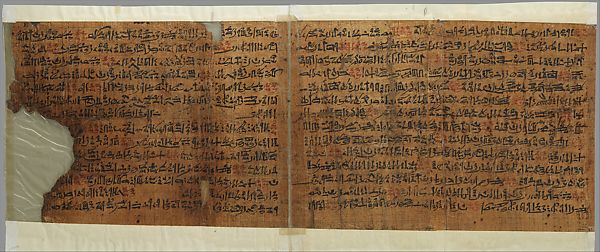
The Ipuwer Papyrus

The Ipuwer Papyrus

While many scholars have tried to come up with natural explanations for the plagues, the sequence and severity of these plagues demonstrate that these were directly from the hand of God. No natural cause would explain why the Egyptians were utterly devastated by these plagues while the Hebrews in neighboring Goshen remained safely untouched, both man and beast (Exodus 8:22; 9:26).

We also have a clue from the only surviving copy of an Egyptian text that has striking parallels to the Exodus account called The Admonitions of an Egyptian Sage, more often known as the Ipuwer Papyrus. Many scholars agree that this is a very early document, some placing it in the 18th Dynasty, the very time of the Exodus (ca. 15th century BC) because of certain linguistic features. The Ipuwer is basically a lengthy poem or prayer to the sun god Ra, written by an Egyptian sage lamenting a series of disasters in the land. I mentioned in my last post that the pharaoh would never let a defeat be recorded in the royal annals. But Ipuwer, the author, seems to be a sage reflecting on the state of the empire he once loved, not a court scribe, because he’s even critical of the pharaoh: “the king has been deposed by the rabble.”[1]

Ipuwer says “pestilence is throughout the land, blood is everywhere, death is not lacking, and the mummy-cloth speaks even before one comes near it.” He writes, “Indeed, the river is blood, yet men drink of it.”

Titus Kennedy neatly sums up the significance of the Ipuwer Papyrus:

“Passages in the poem, such as the river being blood, blood everywhere, plague and pestilence throughout the land, the grain being destroyed, disease causing physical disfigurement, the prevalence of death, mourning throughout the land, rebellion against Ra the sun god, the death of children, the authority of the pharaoh being lost, the gods of Egypt being ineffective and losing a battle, and jewelry now being in the possession of the slaves, are all occurrences in common with the Exodus story.”[2]

To read the Ipuwer Papyrus alongside the Book of Exodus is fascinating. The parallels are simply too clear to downplay. Many scholars have, of course, noted the similarities. However, most have asserted that this reflects a certain genre of “national disaster” folklore at the time rather than concluding that both could be referring to the same historical events. As Hoffmeier observed in the last post, your philosophical presuppositions determine what you will see. The problem with this easy dismissal is that if Ipuwer really was lamenting actual events in history, the above presupposition prevents someone from ever knowing it. One might dare to ask, What would Ipuwer need to say to demonstrate he really was referring to events he witnessed? After all, Ipuwer seems to be talking about a truly devastating time standing in contrast to Egypt’s glorious past.

The Date of the Exodus

There is considerable debate between biblical scholars as to when the Exodus actually took place. Most would place it in either the 15th, 13th, or 12th century BC. Because I take the Bible to be both the authoritative and understandable Word of God, I have no problem accepting the biblical timelines.

One of the clearest statements for dating the Exodus is 1 Kings 6:1: “In the four hundred and eightieth year after the people of Israel came out of the land of Egypt, in the fourth year of Solomon’s reign over Israel, in the month of Ziv, which is the second month, he began to build the house of the Lord.”

Scholars almost universally agree that Solomon began building the temple in 966 BC. We can then take the 480 years given here, do a little math, and come up with an approximate date of 1446 BC for the Exodus. Scholars who come up with a 12th or 13th century date have to say that the 480 years is a nice round number based on the number of idealized generations, allegedly 40 years each.[3] That strikes me as very strange since there is no indication from the text itself that this is what is going on.[4]

The Pharaoh of the Exodus

Once we have determined the date for the Exodus we can know the most probable pharaoh at this time based on Egyptian chronological records. And we can see if we have any supporting evidence for our dating of the Exodus, too.

According to Exodus, Moses was forced to flee from Egypt after killing an Egyptian guard. Moses spent the next 40 years in the Midianite desert, settling down with his wife Zipporah and becoming a nomadic shepherd.

The Bible says, “After a long time, the king of Egypt died” (Exodus 2:23, HCSB). Later, God tells Moses not to fear returning to Egypt “for all the men who were seeking your life are dead” (Exodus 4:19, ESV). Based on these verses, the pharaoh when Moses fled from Egypt must have been king for a long time, possibly at least forty years.

This is a crucial piece of evidence because most pharaohs did not reign for a very long time. Many didn’t even last ten years. There is, however, one and only one pharaoh in either the 18th or 19th dynasties (the possible eras for the Exodus) who reigned more than forty years, and his name was Thutmose III. According to Egyptian chronologies, that would mean his son, Amenhotep II was the king of Egypt when Moses returned for the Exodus. This is another factor supporting the early date of 1446 BC. The long reign of Thutmose III followed by Amenhotep II reigning at the time of the Exodus in 1446 BC fits together nicely.[5] However, no king during the 13th or 12th centuries reigned 40 years.

Since there are clues pointing to Amenhotep II being pharaoh at this time, it’s worth considering what we know about him from archaeology. Here’s what’s really intriguing. Amenhotep II was known for unrestrained arrogance of biblical proportions. Archaeologists have found inscriptions and monuments built in his honor where he claimed to be the greatest pharaoh in history. His boasts included rowing a ship faster than 200 Egyptian sailors, shooting an arrow through a copper target as thick as a palm, slaying 7 of the greatest warriors of Kadesh, and capturing more slaves than any other pharaoh in Egyptian history.

This was the pharaoh’s way of saying, “I’m kind of a big deal.” Does this align with what we know about the pharaoh of the Exodus? Well, let’s see. When Moses announced that Yahweh demanded he let the Hebrews go, the pharaoh proudly scoffed, “Who is Yahweh that I should obey Him by letting Israel go? I do not know anything about Yahweh, and besides I will not let Israel go” (Exodus 5:1, HCSB).

Throughout the Exodus narrative (Exodus 5-14), the pharaoh strikes us as arrogant, stubborn, and foolish – almost like someone who was compensating for some major insecurities. Such a psychological profile directly matches everything we know about Amenhotep II.

Evidence for a Crippled Army and Missing Slaves

In addition to his megalomaniacal boasts, Amenhotep II also completed only two military campaigns during the span of his whole reign. This seems strange when you compare it to all his predecessors, who averaged far more military campaigns. Thutmose III, by comparison, led at least 17 campaigns. What would lead the hotheaded Amenhotep II to drastically reduce the number of Egypt’s armed invasions?

Could it be that his once unstoppable army was drastically crippled – even annihilated – in an event at the Red Sea? This circumstantial evidence certainly fits the narrative given in Exodus 14, which says that after the Hebrews left Egypt, Pharaoh changed his mind and sent his entire army in pursuit, including “all Pharaoh’s horses and chariots and horsemen and his army” (Exodus 14:9, ESV). We then read that after Israel had made it safely across the parted Red Sea,

“…the Lord threw them [the Egyptian army] into the sea. The waters came back and covered the chariots and horsemen, the entire army of Pharaoh, that had gone after them into the sea. None of them survived.” (Exodus 14:27-28, HCSB)

It’s worth noting that Scripture never says that Pharaoh himself drowned in the Red Sea, only that his entire army perished. No wonder Amenhotep II had only one campaign after the Exodus.

Elephantine Stele of Amenhotep II

According to the Elephantine Stele of Amenhotep II inscription, this last campaign was more of a massive slave raid than a conquest of land. Amenhotep II claimed to have captured 101,128 slaves on this raid. If accurate, this would be about 20 times larger than the next largest slave raid in Egyptian history. How interesting that this pharaoh known for ridiculous exaggeration now says he’s also better at bringing in slaves than anyone else! Kennedy observes, “Because this happened right after the Exodus, perhaps it is indicative of an urgent need to replace the lost slave population in Egypt.”[6]

One thing most Exodus scholars agree upon is that future excavations in Egypt will likely shed more light on the timing and details of this central event in Israel’s history. After all, satellite imagery suggests that less than 1 percent of ancient Egypt has actually been excavated to date.[7] The Bible-believing Christian should rejoice in this fact. Once again, archaeological excavations have only strengthened the case for Scripture’s accuracy. We have only examined a portion of the incredible circumstantial evidence that has already been discovered in support of the biblical Exodus.

Have thoughts on this post? Feel free to comment below!


[1] “The Admonitions of Ipuwer,” https://www.worldhistory.org/article/981/the-admonitions-of-ipuwer/

[2] Titus Kennedy, Unearthing the Bible, 55.

[3] This number of 40 years comes from the 40 years of wandering in the desert when a whole generation perished, but that was a specific case not a hard rule that 40 years must always equal one generation in biblical timelines. It’s also worth noting that only those who refused to believe God’s promises perished in the wilderness (Hebrews 3:17), and that the 40 years corresponded with the 40 days they spied out the land (Numbers 14:34). Ironically, supporters of the late view have to take the 40 years mentioned in Numbers 14:34 and Deuteronomy 34:7 literally to make their case, even while they do not take the 480 years given in 1 Kings 6:1 literally.

[4] Other passages supporting the early date of 1446 BC include Judges 11:26.

[5] The problem with the later 13th century or 12th century dates for the Exodus is that in both cases, the pharaoh at those times (Ramesses II or Ramesses III respectively), does not succeed a pharaoh who reigned a long time, which seems to contradict Exodus 2:23.

[6] Kennedy, 57.

[7] Mark Janzen, Five Views on The Exodus, Grand Rapids, MI: Zondervan, 2021, 16.

Is There Evidence for the Exodus? (Part 1)

Modern scholars often assume the massive migration of Hebrew slaves out of Egypt recorded in the biblical book of Exodus never happened. The Exodus is thought to be nothing more than religious folklore, and that there is no hard evidence for such an event in the ruins of Ancient Egypt.

For example, critical scholars Israel Finkelstein and Neil Silberman claim, “The saga of Israel’s Exodus from Egypt is neither historical truth nor literary fiction… to pin this biblical image down to a single date is to betray the story’s deepest meaning. Passover proves to be not a single event but a continuing experience of national resistance against the powers that be.”[1]

But is this really the case? What can we learn from the actual evidence?

Biblical scholar and archaeologist James K. Hoffmeier has found undue skepticism among many of his peers. He observes, “If it were not still Scripture to Jews and Christians, the Bible probably would not be treated in such a condescending and dismissive manner.”[2]

Egyptologists concede that ancient Egyptians almost never recorded embarrassing losses. The pharaohs always made sure they looked like stellar leaders in the history books. Are we at all surprised? We are, after all, talking about the same human nature that craves approval from peers and longs for affirmation wherever it can get it. Even today, politicians will trumpet their successes but rarely begin a speech discussing their failures. But in Ancient Egypt, the pharaoh controlled the press. That being the case, we really shouldn’t expect to find positive evidence for the biblical Exodus in Egypt’s royal annals.

The remarkable thing, however, is that there is a truckload of circumstantial evidence for the biblical Exodus. I say “circumstantial” because while there may not be much in the way of direct evidence outside of Scripture, the evidence we do have strongly supports the circumstances that would have to be true if such an event were indeed historical.

Another point worth mentioning is that the Bible itself must be properly viewed as crucial evidence for the Exodus event. This may sound obvious, but the scholarly consensus often presupposes the Bible is a book full of myths. This is unwarranted, because an unbiased reading of Exodus reveals a text written as history. Furthermore, outside the Exodus narrative itself (Exodus 1-15), this redemptive event is referenced more than 120 times in the Old Testament. And in every case, the author seems to believe the Exodus really happened and that Moses was the historical man at the helm. In fact, it is the event that explains why Israel is a nation in the first place, and why Israel must serve the Creator-God Yahweh.

Circumstantial Evidence: Hebrews Lived in Egypt

So what is the circumstantial evidence supporting the historicity of the Exodus? One argument used by field archaeologist Titus Kennedy is called “The Point A to Point B argument.” Simply put, if there is good evidence for Hebrews living in Egypt (Point A) before the Exodus on the biblical timeline, and there is also good evidence for Hebrews living in Canaan (Point B) after that time, this would suggest that some kind of mass migration occurred.

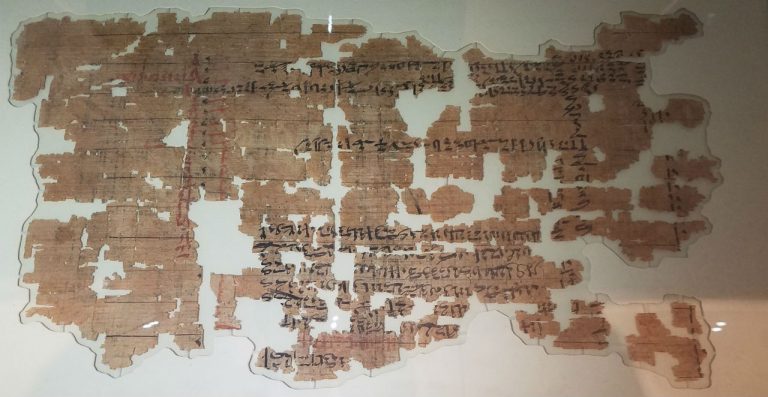
Papyrus Brooklyn

Egyptologists have discovered a list of Semitic servant or slave names on papyrus dated from about the 17th century BC.[3] This list, called Papyrus Brooklyn, gives both the Semitic name of the servant and the Egyptian name they were given. But here’s what’s fascinating. Nine of the servants listed have specifically Hebrew names that can be aligned very closely with other Hebrew names in the Bible. For example, one of the servants is named Shiphrah, the name of one of the Hebrew midwives mentioned in Exodus 1:15. Another servant is even named “Hebrew”!

This papyrus is powerful evidence not only that Semitic people (sometimes called Asiatics) lived in Egypt, but more specifically that Hebrews lived as servants or slaves in Egypt before the biblical Exodus. Interestingly, even critical scholars admit that the evidence points to Semitic people living in Egypt before the date of the Exodus (see Part 2 for a discussion of the Exodus date).[4]

Bricks without Straw

In the Book of Exodus, we read that when Moses first came to Pharaoh demanding he let God’s people go, Pharaoh was insulted. He said that such a demand to be released proved that the Hebrew slaves must be getting lazy. So he commanded his taskmasters to no longer give straw – a necessary ingredient for making bricks – to the slaves, adding that their brick quota would not be reduced. This led to the Hebrew foremen angrily blaming Moses and Aaron for coming to Egypt only to make their hard labor worse (Exodus 5:1-21).  

Mural at Tomb of Thutmose III

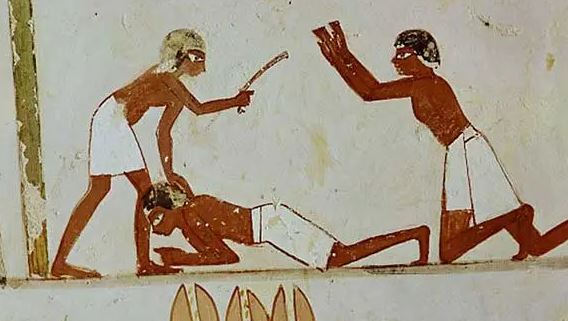
Interestingly, there is a mural on the tomb of Thutmose III, a pharaoh near the time of the Exodus, showing Semitic slaves making bricks. There is also a hieroglyphic text about an Egyptian taskmaster reminding slaves not to be idle or they’ll receive a beating. We also have a wall mural depicting this very thing, lending support to the biblical story of Moses killing a taskmaster who ruthlessly beat a slave (Exodus 2:11-12).

Mural at Tomb of Mennah, with Hebrew slave being beaten.

On top of all this, there is also an Egyptian text called the Louvre Leather Roll. Kennedy notes that this text “describes a situation similar to what is recorded in Exodus – that in this time period quotas of bricks were imposed on slaves, but when they did not have the necessary materials to complete all of the bricks, such as a lack of straw, the slaves were punished.”[5]

Did Hebrew Slaves Build the Pyramids?

Some have wondered if the Hebrews had any part in building the pyramids. First, it’s worth noting how much mystery surrounds the building of these massive ancient structures. The largest of the Great Pyramids, called Cheops, consists of 2.3 million stone blocks. These blocks weigh an average of 2.5 tons, with some of the blocks weighing as much as eighty tons! For comparison, the typical 18-wheeler truck can pull up to 24 tons. So, the question is: How in the world did they do it?

The Greek historian Herodotus (484-425 BC) said that when he visited Egypt, he learned that a work force of 100,000 slaves built the pyramids.[6] The Jewish historian Josephus (AD 37-100) said the Egyptian taskmasters “set them [the Hebrews] also to build pyramids.”[7] The consensus of modern scholars, however, is that slaves were not used because there is evidence of a workforce having their own settlement, with their own homes and provisions for all the food they could want.[8] So who is right?

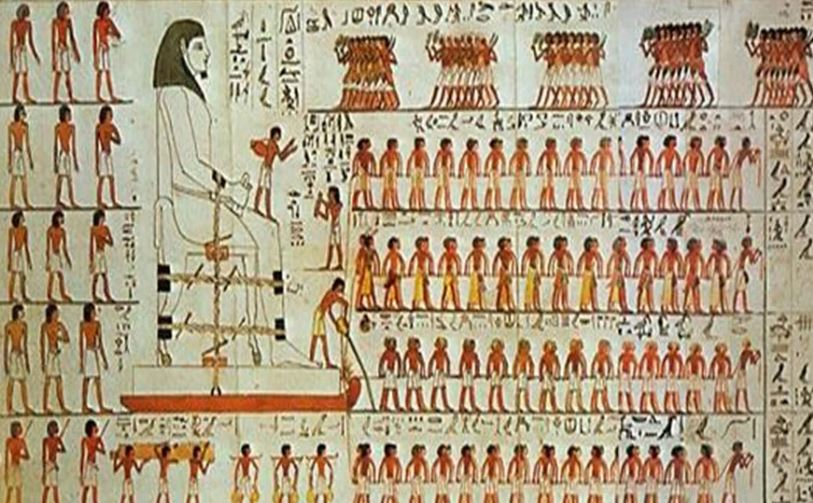
I think it’s impossible to say for sure that Hebrews built the pyramids. But here are some things we do know. Based on the Bible, the Hebrew slaves were used for many massive state projects involving mortar and brick (Exodus 1:10-14). We even have archaeological evidence of a Hebrew slave force in Egypt.[9] There is also a wall mural showing men using ropes to pull massive stones for building the pyramids. One mural seems to depict men using wet sand to help move massive structures.

Mural of slaves pulling large stone structure with ropes.

Again, none of this is conclusive evidence. Most Egyptologists would even date the construction of most of the pyramids to before the Hebrews were even in Egypt. Still, dating methods aren’t infallible; so we can’t rule it out. Scripture never actually claims that the Hebrews built the pyramids, so we shouldn’t be dogmatic on this point. What we can conclude is that a large Hebrew population did live in Egypt prior to the Exodus.

Continue reading in the next post “Is There Evidence for the Exodus? (Part 2)

Have thoughts on this post? Feel free to comment below!


[1] Finkelstein and Silberman, The Bible Unearthed, 70-71.

[2] James K. Hoffmeier, “The Exodus and Wilderness Narratives,” in Ancient Israel’s History: An Introduction to Issues and Sources, edited by Bill Arnold and Richard Hess, Grand Rapids, MI: Baker, 2014, 48.

[3] Titus Kennedy, Unearthing the Bible: 101 Archaeological Discoveries that Bring the Bible to Life, 48-49.

[4] Mark Janzen writes, “Egyptologists agree that excavations in the delta reveal a strong Semitic presence during the Hyksos era (ca. 1650-1540 BC), continuing into the New Kingdom.” Janzen, “The Exodus: Sources, Methodology, and Scholarship,” Five Views on The Exodus, Grand Rapids, MI: Zondervan, 2021, 19.

[5] Kennedy, Unearthing the Bible, 51.

[6] Miroslav Verner. The Pyramids: The Mystery, Culture, and Science of Egypt’s Great Monuments. New York: Grove Press, 2001.

[7] Josephus, Antiquities, 11:9.1.

[8] This shouldn’t be used as evidence against the pyramid builders being slaves. The Bible describes the Hebrew slaves as having their own settlement in Goshen (Genesis 47:27; Exodus 8:22; 9:26), having their own homes (Exodus 12:1-13) and eating plenty of delicious food (Numbers 11:5). Perhaps this is one of the ways the pharaohs compensated the Hebrews for their backbreaking work in hopes of preventing an uprising.

[9] James K. Hoffmeier, Israel in Egypt: The Evidence for the Authenticity of the Exodus Tradition.

First Love Forsaken

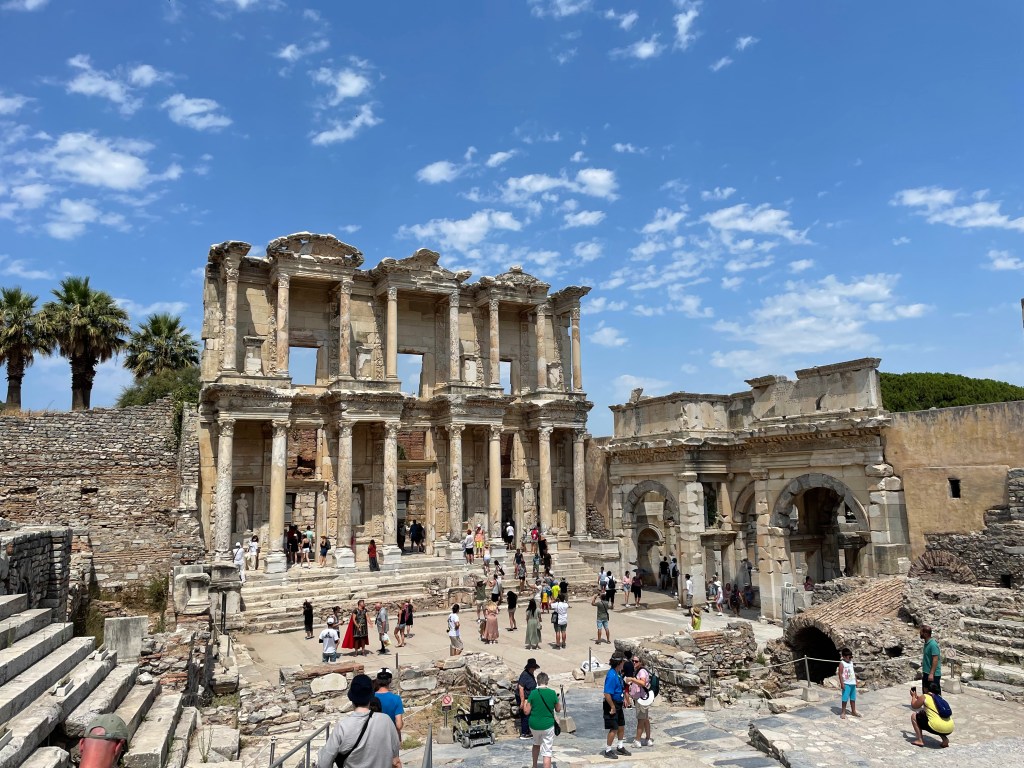
Library of Celsus, Ephesus, Turkey

Perhaps one of the saddest things to witness is when one spouse says to another, “I just don’t love you anymore.” It’s especially heartbreaking because we know that at one time – perhaps many years ago – the couple shared an intimacy too deep and mysterious for words. Just being near one another would quicken the pulse. And merely hearing the other’s voice would cause the heart to flutter.

Upon hearing that such a love is now dormant, the question we all want to ask is: What happened? We know that such affection is not quickly extinguished. And in fact, when asked why they no longer love their spouse, they will usually say they have gradually, over time, simply drifted apart.

The Love You Had at First

In the last book of the Bible, Revelation, Jesus addresses the church in Ephesus, a church known for enduring persecution for Christ. Jesus had a lot of good things to say about this church. But after commending them for their faithfulness, Jesus delivers these piercing words:

“Yet I hold this against you: You have forsaken the love you had at first. Consider how far you have fallen! Repent and do the things you did at first.” (Revelation 2:4-5, ESV)

How hard it must have been for the Ephesian Christians to hear the Lord say this. “You have forsaken the love you had at first.” It wasn’t as though they’d merely “lost that loving feeling,” as The Righteous Brothers crooned in 1965. Literally, the original Greek says “You have left your first love.” In one sense, they had “drifted” out of love. But Jesus puts it even more starkly. They had actually abandoned their love for Him.

So, what exactly did that first love look like for the Ephesian Christians? From what kind of love had they fallen so far? We read about this in the book of Acts.

A Church on Fire for Jesus

When the Apostle Paul first arrived in the commercial port of Ephesus around AD 53, he went straight to the synagogue to show his fellow Jews and God-fearers from the Hebrew Scriptures that Jesus is their long-awaited Messiah. After preaching boldly there for three months, Paul’s message was roundly denounced by his own kinsmen.[1]

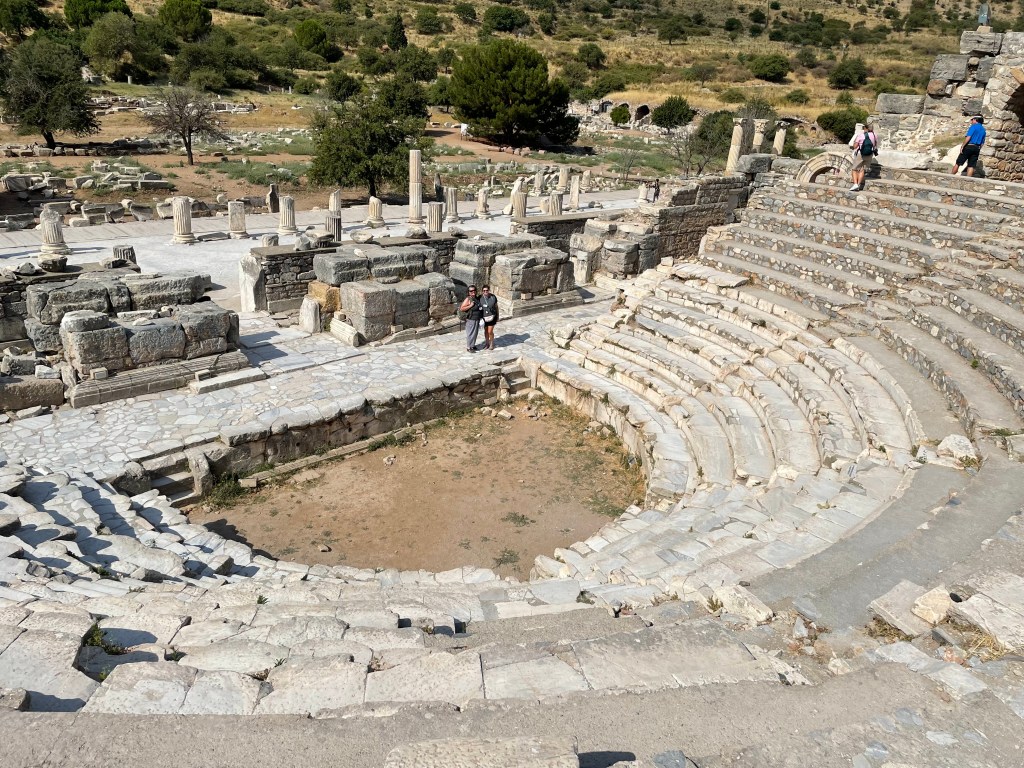
Was it the message where Paul emphasized the Messiah’s sacrificial death for sinners that led to his dismissal? Or maybe it was Paul’s clear teaching on Jesus being not merely a man but the divine Savior from Heaven that led to the Jews’ collective response of “Thanks, but no thanks.” It’s often been said that when God closes one door, He is opening another. And in that very sense, the Jewish Paul found a new opportunity to preach the gospel in a secular setting known as “the lecture hall of Tyrannus” (Acts 19:9). When I visited Turkey (called “Asia” in the Bible) recently, our guide led us to a small theater in Ephesus that is thought to perhaps be this very hall of Tyrannus.

Odeion Theater, possibly the Hall of Tyrannus (Acts 19:9).

It was here that, for two solid years, the apostle’s ministry was so fruitful that the historian Luke could say that “all the Jews and Greeks who lived in the province of Asia heard the word of the Lord” and that “the name of the Lord Jesus was held in high honor” (Acts 19:10, 17).[2] In fact, many of the Ephesians who formerly practiced sorcery decided to hold an open bonfire where they burned all their incantation scrolls out of their newfound devotion to Christ. These former magicians had found something in Jesus that magic could never deliver. Eternal hope. Total forgiveness. Unconditional love. Peace with God.

These Ephesian Christians were passionately in love with Jesus.

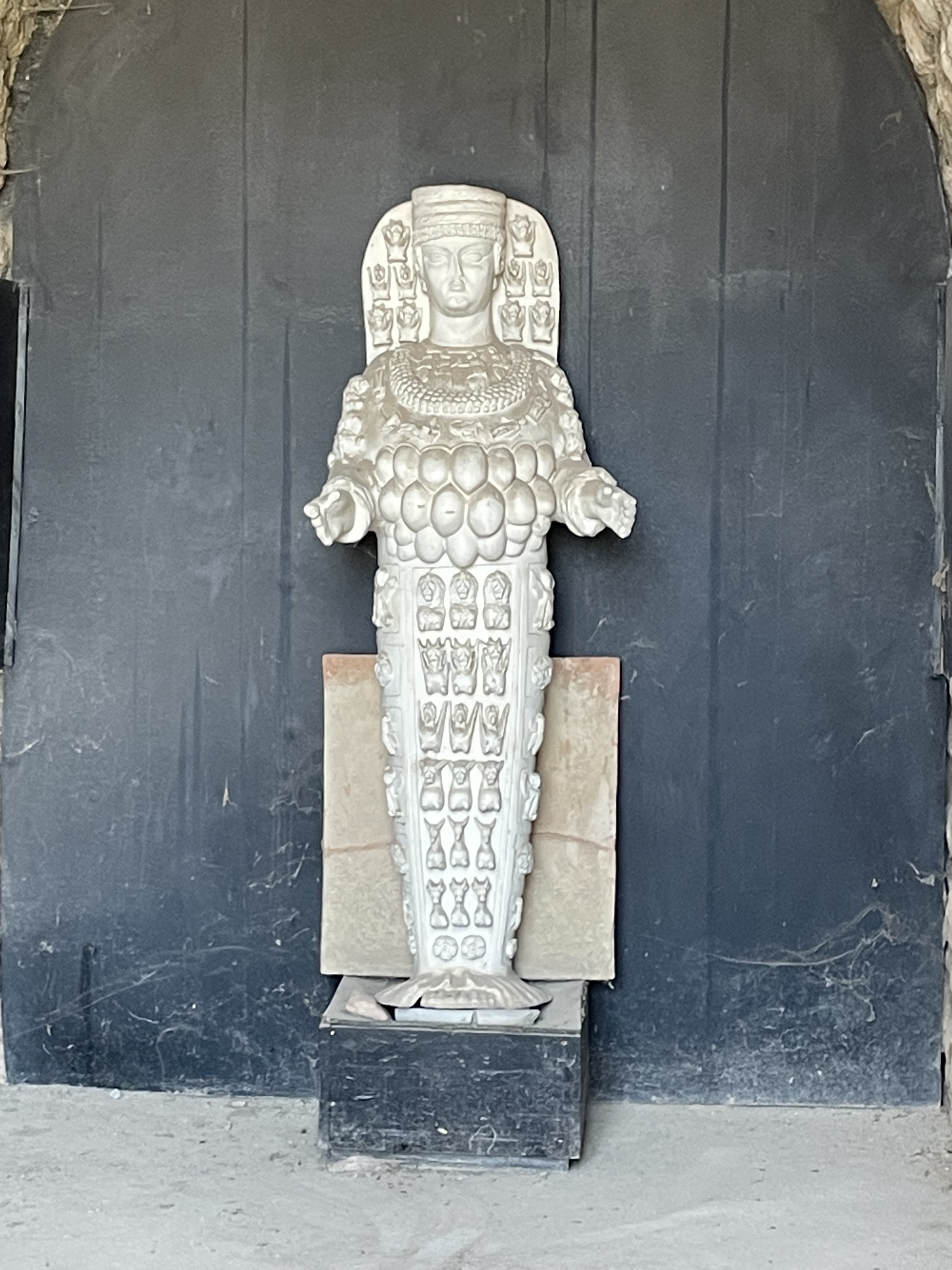
With such a soul harvest, it’s no wonder Paul stayed there for over two years. Luke goes on to tell us something truly remarkable. So many Ephesians had turned from mute idols to the living Lord that a local silversmith named Demetrius complained to his fellow tradesmen that his idol business was tanking. Most notably, these craftsmen’s livelihood was based on selling silver shrines to the Greek goddess Artemis.

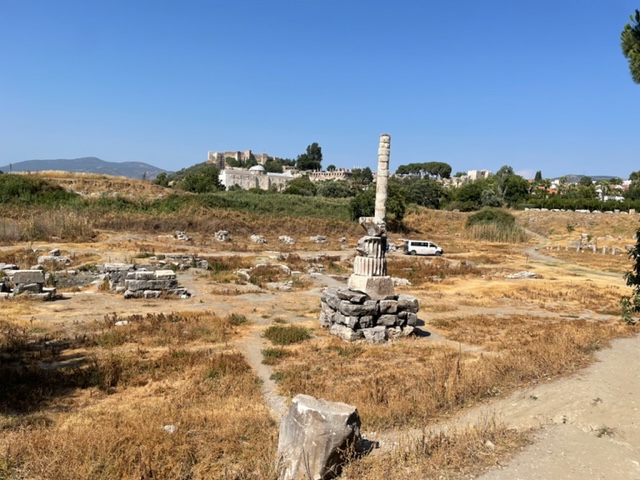
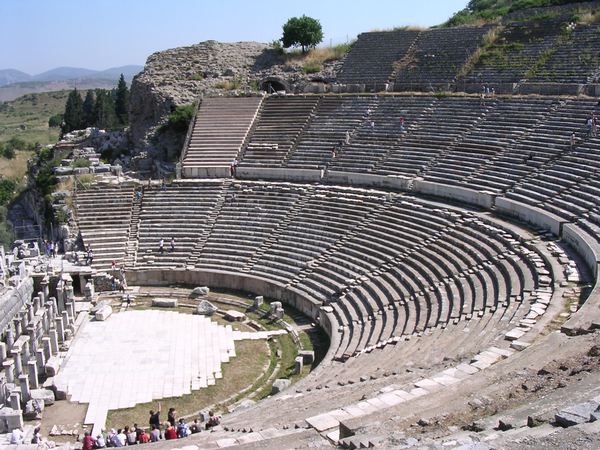
The Temple of Artemis stood proudly just outside the city center of Ephesus. Today, it is little more than a heap of rubble, but in the first century, it was one impressive spectacle – one of the Seven Wonders of the Ancient World, no less.[3] For nearly 400 years, Artemis and her temple were the Ephesians’ pride and joy, and they viewed themselves as the guardians protecting her honor.

So volatile was the opposition to the gospel Paul preached that a riot broke out in the city’s massive arena (still standing today). The crowd mindlessly chanted for two hours: “Great is Artemis of the Ephesians!” Luke humorously records: “The assembly was in confusion: Some were shouting one thing, some another. Most of the people did not even know why they were there” (v. 32). So much for the wisdom of crowds.

That the message of a crucified and risen Messiah could provoke such a startling reaction in a major city like Ephesus is astounding. It signals the transforming power of the gospel. Hearts once enslaved to idolatry now burned hot for Jesus.

Reigniting Your Love for Jesus

When Jesus addressed this same Ephesian church some 40 years later, that love had grown cold. It’s worth noting that they had sound theology, were quick to spot false teachers, and lived moral lives (Revelation 2:2-3). Outwardly, this church seemed to have it all together, even in the midst of the cultural pushback they’d known since the church’s inception.

Despite all this, their love for Jesus had cooled from a glowing blaze to dying embers. This is a reminder to us that Jesus cares about more than outward performance. “For the Lord sees not as man sees: man looks on the outward appearance, but the Lord looks on the heart” (1 Samuel 16:7). While Jesus commends faithfulness, our Lord is far more concerned with our relationship with Him.

Perhaps you can relate to the Ephesian church. You’ve stayed the course in so many areas of your life. You haven’t indulged in gross immorality. You could stand up to any test of biblical orthodoxy and right beliefs. But there’s something vital missing.

The passion for Christ you once felt so keenly has slowly ebbed away. You serve faithfully in your church, but you often wonder why more aren’t like you. The joy you once had at knowing your sins were forgiven has been replaced by an undercurrent of bitterness and jealousy toward others.

I want to suggest that the way to rekindle the love you once felt so deeply for Jesus is to come back to the simple message of the cross. Jesus tells the Ephesians, “Repent and do the things you did at first. If you do not repent, I will come to you and remove your lampstand from its place” (Revelation 2:5). Repentance is not just for unbelievers. Christians need to repent, too. 

Repentance is about acknowledging how you have offended the Lord and then turning to His shed blood on the cross as your only hope. Remember how just the thought of Jesus choosing to love you in spite of your great sinfulness used to ignite your love for Him? In the same way, contemplating His deep love for you will reignite your love for Him.

“This is love: not that we loved God, but that he loved us and sent his Son as an atoning sacrifice for our sins… We love because he first loved us.” (1 John 4:10, 19, NIV)

Have thoughts on this post? Feel free to comment below!


[1] See Acts 19:8-9

[2] Though not explicitly named as the author in Acts, “the beloved physician Luke” (Colossians 4:14) is widely regarded by scholars as the author of both the Gospel of Luke and the Book of Acts.

[3] When listing the Seven Wonders of the Ancient World, Antipater of Sidon had this to say about the Temple of Artemis: “I have set eyes on the wall of lofty Babylon on which is a road for chariots, and the statue of Zeus by the Alpheus, and the hanging gardens, and the colossus of the Sun, and the huge labour of the high pyramids, and the vast tomb of Mausolus; but when I saw the house of Artemis that mounted to the clouds, those other marvels lost their brilliancy, and I said, ‘Lo, apart from Olympus, the Sun never looked on aught so grand.’” Antipater, Greek Anthology IX.58.

Are Science and Christianity Friends or Foes?

“Great are the works of the LORD; they are pondered by all who delight in them.” (Psalm 111:2)

Many today take it for granted that biblical faith is incompatible with scientific findings. The assumption is that science has provided all the knowledge we need about our origins and the origin of our universe. This idea that science and Christianity are at odds has been so widely promoted in our culture by popular science communicators – including Bill Nye and Neil deGrasse Tyson – that many have taken for granted that this is true.

Christianity and Cosmic Order

Before one can undertake any scientific endeavor, such as calculating the growth rate of fertilized plants versus that of unfertilized plants, one must hold some basic working assumptions. One such assumption is the regularity of nature.  In other words, you must assume that certain physical laws will remain in place each time you observe and measure the plants. Such an assumption might seem incredibly obvious. We think, Of course, there is regularity in nature!

But on an atheistic worldview, why assume any kind of law-like structure to the universe? Laws don’t form by chance; they come from a Lawgiver. If the universe is the result of an undirected chaotic explosion rather than the ordered creation of an infinite Mind, why would we expect consistency in nature?

No one would believe that the Eiffel Tower formed as a result of an iron mine explosion. In the same way, we shouldn’t expect any kind of orderliness in a universe that formed by an unguided explosion.

Paul Davies is a physicist who is certainly not religious. And yet he comments:

“Just because the sun has risen every day of your life, there is no guarantee that it will rise tomorrow. The belief that it will, that there are indeed dependable regularities of nature, is an act of faith, but one which is indispensable to the progress of science.”[1]

The Bible not only says that “all things were created through [Christ] and for [Christ],” but also that “in Him all things hold together” (Colossians 1:16-17). It is because the Son of God “upholds the universe by the word of His power” that we can have confidence in the regularity of nature (Hebrews 1:3).

Physicist Michael Guillen says, “The Christian worldview best squares with the scientific worldview. It’s easy for me to be both a scientist and a Christian. Do science and Christianity have disagreements? Oh, you bet! And a few of them get the bulk of the publicity. But when it comes to the fundamentals, the two worldviews are very much in line. They are like my wife and me. We have our disagreements. And some of them are real doozies. But when it comes to core principles, we see eye to eye.”[2]

This is why modern science first began in the West, where the backdrop of the culture was the Christian worldview. This also explains why the vast majority of the founders of modern science were theists – and many were Christian theists.[3]

For instance, Galileo – often falsely portrayed as an opponent of biblical faith – was a Bible-believing Christian who argued that “the laws of nature are written by the hand of God in the language of mathematics” and that the “human mind is a work of God and one of the most excellent.”[4]

While many want to argue that faith and science are at odds, the scientific method itself is based on certain faith assumptions. Without these assumptions – which most scientists simply take for granted – science could never get off the ground. These include the orderly character of nature, the regularity of physical laws, the rational intelligibility of the universe, and the fact that our minds are equipped to understand certain truths about the universe.

Philosopher Richard Swinburne writes:

“The very success of science in showing us how deeply ordered the natural world is provides strong grounds for believing that there is an even deeper cause for that order.”[5]

The Limits of Science

Many have bought into the ideology of scientism, which says that science alone is the key to answering all our questions about the universe. But this ignores the many areas where science is limited. For example, science can teach us how to build an atomic bomb, but it cannot tell us whether it is right to use it.

Science cannot even tell us why there is a universe to study in the first place. Science is a wonderful tool, but it cannot give us a grand explanation of everything. Instead, science points us to a greater explanation beyond its analytical reach.

Scientific observations showing that our universe is expanding indicate that our universe had a beginning. But if the universe had a beginning, there must have been a cause. Things don’t just burst into existence without a prior cause. A timeless and all-powerful God who transcends nature would be a reasonable explanation for the origin of our universe.

“For what can be known about God is plain to them, because God has shown it to them. For his invisible attributes, namely, his eternal power and divine nature, have been clearly perceived, ever since the creation of the world, in the things that have been made. So they are without excuse.” (Romans 1:19-20, ESV)

Atheism and Its Illogical View of the Beginning

In his book The Grand Design, the late Stephen Hawking argued that we don’t need God to explain the origin of the universe. Instead, the universe’s physical laws can explain why there is a universe.

Hawking wrote: “Because there is a law such as gravity, the universe can and will create itself from nothing.”[6]

Interestingly, when I shared this idea with my 7-year-old son, Logan, he laughed and said, “That’s impossible for something to make itself.” He recognized that Hawking’s statement is logically flawed. For something to create itself, it would have to be in existence already. His statement is incoherent.

Why would a scientist as accomplished as Stephen Hawking make such an obvious logical blunder and claim that the universe brought itself into existence?

Scripture provides insight here. The Book of Romans says that when you reject the one true God who created nature, you will end up worshiping various aspects of nature itself (Romans 1:21-23). Interestingly, there is a parallel to this ancient form of nature worship among many scientists today. They attribute creative power, eternality, and even design to the cosmos instead of the Creator of the cosmos.

Oxford scientist John Lennox observes:

“Perhaps there is a subtle danger today that, in their desire to eliminate the concept of a Creator completely, some scientists and philosophers have been led, albeit unwittingly, to re-deify the universe by endowing matter and energy with creative powers that they cannot be convincingly shown to possess.”[7]

Can Irrationality Produce Rationality?

If nature is all there is, that would mean there is no divine mind outside the universe responsible for our existence. But that would mean that our brains are the result of blind and irrational natural processes. Now, if that is where atheistic science takes us, then why in the world would we trust our brains can grasp the truth? In fact, why think we could ever do science in the first place?

Consider a scenario where I told you about a computer that was not designed by a human mind but came about purely by the blind forces of nature. Would you expect such a machine to function well, let alone assemble naturally in the first place? Such an idea sounds preposterous. In the same way, we could only trust our brains to grasp scientific truth if they have been designed by an intelligent Creator who transcends the blind processes of nature. The great irony is that, in their eagerness to eliminate God from the scientific enterprise, atheists have actually removed any reason whatsoever for trusting our rational faculties.

Some atheists have recognized this and are haunted by the logical outcome of their godless worldview.

The chemist J. B. S. Haldane said, “It seems to me immensely unlikely that mind is a mere by-product of matter. For if my mental processes are determined wholly by the motions of atoms in my brain I have no reason to suppose that my beliefs are true.”[8]

Atheist John Gray has put this problem more bluntly: “Modern humanism is the faith that through science humankind can know the truth and so be free. But if Darwin’s theory of natural selection is true this is impossible. The human mind serves evolutionary success, not truth.”[9]

Gray’s point is that on Darwinism, there’s no real basis for thinking we have adapted the ability to know the truth. After all, the Darwinian worldview says that there is no ultimate design and purpose to organic life and that humans are the result of unguided chance.

Christian apologist C. S. Lewis similarly asked, “If thought is the undesigned and irrelevant product of cerebral motions, what reason have we to trust it?”[10]

If atheists want to go on believing that their brain is the product of blind chance, they are welcome to do so, but I’m going to stick with the hypothesis that the only wise God designed my brain. Praise God, we are not mere accidents. Instead, we are “fearfully and wonderfully made” by God with loving design and intention (Psalm 139:14).

According to the Bible, we have every reason to believe our brains can grasp certain truths about the natural world. In fact, the Bible says that God created us in His own image – meaning our rational minds are a reflection of His rational mind (Genesis 1:27-28). Thus, on the Christian worldview, we have good reasons to think we can learn about the world through the scientific endeavor.

Science and biblical faith are not at war. They complement and reinforce one another.

Feel free to comment below!


[1] Paul Davies, The Mind of God, 81.

[2] Michael Guillen, Seeing Is Believing.

[3] Such theistic scientists include Roger Bacon, Gregor Mendel, Blaise Pascal, Johannes Kepler, Nicolaus Copernicus, Galileo Galilei, Isaac Newton, and Michael Faraday.

[4] Galileo quoted in John C. Lennox, Cosmic Chemistry, 43.

[5] Richard Swinburne, Is There a God? (Oxford: Oxford University Press, 1996), 68.

[6] Hawking and Mlodinow, The Grand Design, 180.

[7] John C. Lennox, Cosmic Chemistry, 113.

[8] J. B. S. Haldane, Possible Worlds and Other Essays (reprint ed.) London, UK: Chatto and Windus, 1932.

[9] John Gray, Straw Dogs, London, Granta Books, 2002, 26.

[10] C. S. Lewis, Miracles.

Photo Courtesy of NASA, M. Livio, and the Hubble Heritage Team.

Called to Be Distinct

The Bible describes Christians as citizens of Heaven who are called to live as exiles in the world. To belong to Jesus is to belong to another world. This world – in its fallen state – is not our home. To live as an exile means you’re living between two worlds – the world you are currently enmeshed in and the world to come, where you truly belong. At its heart, this world is hostile to God.

One of the ways the world expresses its hostility is trying to squeeze us into its mold. That is why believers continually face the pressure to adopt the values, beliefs, and lifestyles of this world. Jesus said He wanted His followers to be set apart in the truth of His Word (John 17:17), but a full-orbed biblical worldview is increasingly scorned in our culture.

Do not be conformed to this world, but be transformed by the renewal of your mind, that by testing you may discern what is the will of God, what is good and acceptable and perfect. (Romans 12:2, ESV)

Christians must choose daily to either live for this world, adopting its values and belief structure, or live for the glory of God, which will one day be fully known on this planet.

“For the earth will be filled with the knowledge of the glory of the LORD as the waters cover the sea.” (Habakkuk 2:14, ESV)

So we ask the question: How do you follow God in a world that is at odds with Him?

Know the Truth

Daniel knew what it means to be an exile. Imagine being dragged from your home while your city is under assault, and then taken to a faraway land where you are far from your family, your place of worship, and everything you have ever known. That is what happened to the young man named Daniel, and his three friends, Hananiah, Mishael, and Azariah, when they were rounded up in Jerusalem and taken to the great city of Babylon.[1] These teenagers were handpicked because they were handsome and intelligent, fit to serve in the king’s court.

King Nebuchadnezzar commanded Ashpenaz, his chief eunuch, “to teach them the language and literature of the Babylonians” (Daniel 1:4, NIV). Although their given names reflected Yahweh, the God of Israel and Creator of the world, Ashpenaz gave them new names that reflected the gods of Babylon. All of this was done to indoctrinate these young men in the worldview of Babylon. If they were going to serve in the palace, they needed to think like Babylonians.

But throughout this book, the author continues to refer to himself as Daniel, which means “God is my judge.” That is significant. It tells us that, despite being educated and enmeshed in the Babylonian culture, Daniel recognized from the beginning that he is accountable to only one God: Yahweh. The Babylonian gods didn’t own him, so he refused to identify with them. While he would be a loyal subject of the king, he ultimately served the God of Israel – even as an exile hundreds of miles from Israel.

Daniel knew the truth about who was really in charge of this world, and he based his entire life on that. After all, what could matter more than serving the very One who gave you life, breath, and everything else (Acts 17:25)?

Resolve to Be Different

Along with being educated in the Babylonian culture, Daniel and his friends were given plates filled with the sumptuous food and fine wine of the king. However, they refused to eat it. I can imagine the four teenagers sitting at the table with the delicious aroma wafting into their nostrils. But then they gave each other a knowing look and set their forks back on the table.

“But Daniel resolved that he would not defile himself with the king’s food, or with the wine that he drank.” (Daniel 1:8, ESV)

These young men knew the truth of their Scriptures, which under the old covenant at that time included certain dietary restrictions. While we don’t know for sure what made the food defiling, it’s reasonable to conclude that eating it would violate their scriptural convictions.

I’m sure many objections arose in their minds. Why should we refuse the food they give us here? After all, it’s just food. What’s the big deal anyway? We’re not in Israel anymore. And do we really want to insult the king who generously offered this delicious food?

Perhaps they had an Eve moment when they looked at the forbidden food and weighed all the advantages of taking one bite of the delicious morsels (see Genesis 3:6). We should appreciate how difficult this decision must have been for them; they were prone to temptation like the rest of us. And taking a stand here could be costly.

But these were young men of conviction – a trait all too rare in the church today. They had already decided they were not going to cut corners or compromise their beliefs. They were firmly rooted in the Bible, and they knew in their hearts they were called to be distinct from the world around them.

What about you? What are some convictions you hold that no amount of cultural pressure can squeeze out of you? Have you already resolved to be different from the world?

Peacefully Resist Conformity

When Daniel politely refuses to eat the king’s food, the chief eunuch Ashpenaz is agitated. He knows that if those under his tutelage reject their assigned portions, he could lose his head (Daniel 1:10)!

But I love Daniel’s response. Rather than belittle Ashpenaz or the king, he seeks a peaceful and reasonable solution.

Daniel says, “Test your servants for ten days; let us be given vegetables to eat and water to drink. Then let our appearance and the appearance of the youths who eat the king’s food be observed by you, and deal with your servants according to what you see” (v. 12).

In essence, Daniel is saying, “Let’s see if we can find a solution that works in both our favors. You need us to be strong and healthy, and we need to live by our convictions. Let’s put our convictions to the test and see if they hold up.”

Instead of acting in self-righteous anger or defiance, Daniel humbly asks Ashpenaz to weigh the evidence. Daniel’s working assumption is that it’s always better to obey God than disobey, despite how foolish it may appear to others. Ashpenaz agrees to his terms, and God honors their obedience by giving them greater health than the other youths (v. 15).

In reading this passage, I have wondered why it only mentions Daniel and his three friends taking a stand. What about all the other young Jews enlisted to serve in the palace? Did they all fold under pressure? It seems likely they did.

This is supported by Daniel’s statement: “As for these four youths, God gave them learning and skill in all literature and wisdom, and Daniel had understanding in all visions and dreams” (v. 17, my emphasis).

How interesting that God honored the faithful obedience of these four young men in ways they hadn’t imagined. They were faithful over something seemingly small here, but God took notice. It is no accident that Daniel and his friends are given opportunities to stand for Yahweh in far more prominent ways later. As it turns out, faithfulness in the small things matters because it’s a reflection of your faithfulness in the big things.

Let’s ask God to give us the courage of conviction to refuse to compromise in either the small or big things in life. Christians are called to be distinct.

Have thoughts on this post? Feel free to comment below


[1] This true story is recounted in the biblical Book of Daniel, chapter 1.

Photo courtesy of kadingirra.com

How Do I Know if I’m Struggling with Pride?

“To fear the LORD is to hate evil; I hate pride and arrogance, evil behavior and perverse speech.” (Proverbs 8:13, NIV)

Pride. It never looks good on anyone. If you trace every sin back to its root, you almost certainly will find pride lurking in the shadows. In the biblical sense, pride is an inflated view of oneself, especially with respect to God or others. Scripture urges us, “Do not think of yourself more highly than you ought, but rather think of yourself with sober judgment, in accordance with the faith God has distributed to each of you” (Romans 12:3, NIV).

The biblical Book of Daniel has much to teach us on the problem of pride: why it is an affront to God, and how we can both identify it and avoid it in our lives. Daniel provides three indications that you are struggling with pride:

  1. When you don’t have time to pray.
  2. When you have a low view of divine providence.
  3. When you think lightly of sin.

The Deception of Pride

Pride is subtle, because it is so hard to notice in ourselves. We have no problem noticing it in others. Sometimes, it can even seem glaringly obvious in someone else. By its very nature, pride convinces us that we don’t struggle with it.

C. S. Lewis calls pride “the great sin” and “the utmost evil.” Lewis stresses how deceptive pride can be:

“There is no fault which makes a man more unpopular, and no fault which we are more unconscious of in ourselves. And the more we have it ourselves, the more we dislike it in others.”[1]

In the book of Daniel, we learn about the proud King Nebuchadnezzar, who was repeatedly warned about the limitations of his kingdom. Throughout this fascinating book, the looming question is “Who’s really in charge here – Nebuchadnezzar or the God of Israel?”

At the beginning of the book, Nebuchadnezzar has just begun his conquest of Jerusalem, the capital of Israel, God’s chosen nation. To the Babylonian king, his victory over Israel might have been all the proof needed that Yahweh, the God of Israel, was defeated. But Daniel provides a theological understanding to what really happened when Jerusalem fell to Nebuchadnezzar: “And the Lord gave Jehoiakim king of Judah into his hand, with some of the vessels of the house of God” (Daniel 1:2, ESV).

While Nebuchadnezzar might have supposed that Jerusalem fell simply because of his great might and military strategy, Daniel is cluing us in to what’s really going on. God gave Jerusalem into Nebuchadnezzar’s hand, because He was judging the nation for their unrepentant sin and idolatry (Jeremiah 20:3-18; 21:1-11; 22:11-30).

One of the lessons of Daniel is that pride blinds us to our own insecurities. We see this when Nebuchadnezzar compels his officials to bow down to a golden image soon after being told in a dream that his great empire will not last forever (Daniel 3).

Toward the end of his reign, Nebuchadnezzar looks across his mighty empire and boasts, “Is not this great Babylon, which I have built by my might power as a royal residence and for the glory of my majesty?” (Daniel 4:30). In that very moment, God humbles this proud man by making him insane and driving him away from his palace to live among beasts for seven years.

Nebuchadnezzar experienced the hard truth of Proverbs 16:18: “Pride goes before destruction, and a haughty spirit before a fall.”

When You Don’t Have Time to Pray

Daniel is the polar opposite of King Nebuchadnezzar in almost every way. Rather than having an inflated view of himself, Daniel consistently exhibits an exalted view of the one true God and a sober view of himself. Rather than claiming he possesses wisdom and power, Daniel says, “Praise be to the name of God for ever and ever; wisdom and power are his” (Daniel 2:20, NIV).

With such a high view of God, Daniel cannot afford not to pray. In fact, Daniel is repeatedly found on his knees throughout this book. In one famous passage, King Darius is inveigled into signing a decree forbidding anyone to pray to anyone but him; those who violate this injunction will have to spend the night with some hungry lions. Of course, this decree is part of a ploy by some jealous officials bent on annihilating Daniel, who now outranks them.

Ironically, the only so-called “flaw” they can find in Daniel is that he consistently and without fail was found on his knees in prayer (Daniel 6:5).

When God grants Daniel the ability to interpret Nebuchadnezzar’s dreams, he doesn’t take credit for this gift. “But as for me, this mystery has been revealed to me, not because of any wisdom that I have more than all the living, but in order that the interpretation may be made known to the king” (2:30).

In one of his prayers, Daniel recognizes that God “removes kings and sets up kings; he gives wisdom to the wise and knowledge to those who have understanding” (2:21).

It’s no accident that a humble man like Daniel had a well-honed prayer life. It’s hard to be proud when you’re on your knees before God. One sure sign that you are struggling with pride is that you rarely express dependence on God through prayer.

Like Daniel, we live in a culture that is hostile to faith in God. Since we are surrounded by secularism, it’s very easy for us to forget the power of prayer or wonder if it’s worth our time. After all, life is busy. But we can learn something from this man who lived some 26 centuries ago. Even when Daniel was a busy executive, he made sure to carve out three times each day for prayer (6:10).

When You Have a Low View of Divine Providence

The Book of Daniel especially highlights the way pride flies in the face of divine providence. Coupled with the need for communion with God through prayer is a high view of God’s sovereign direction of history.

What is tragically lacking among many moderns is a radically God-centered view of all reality. By “God-centered view” I mean a recognition that all reality is in the palm of God’s hand. His purpose in the world is what will ultimately hold sway.

“Many are the plans in the mind of a man, but it is the purpose of the LORD that will stand.” (Proverbs 19:21, ESV)

Christians need to reclaim the truth that all things exist by God’s creative power and are sustained in existence for His glory alone (Romans 11:36).

After being forced to live like a beast for seven years, Nebuchadnezzar finally lifts his eyes to heaven and only then does his reason return to him (Daniel 4:34). Nebuchadnezzar had previously grown proud, looking down on everyone else. To humble him, God gave him the mind of a beast (4:16), as if to demonstrate that a failure to acknowledge God makes you like a beast. It’s only when he lifts his face from the grass he’s been eating to gaze at the heavens above that a sound mind returns.

Nebuchadnezzar had to learn the hard way that God is the one in charge of history. He sets up kings and kingdoms. He determines where and when you live (Acts 17:26). We only have breath in our lungs as long as God supplies it, and He foreordained the date of our death (Acts 17:25; Psalm 139:16).

“A person’s days are determined; you have decreed the number of his months and have set limits he cannot exceed.” (Job 14:5, NIV)

When King Nebuchadnezzar recognized the folly of his former boasting, he now chose to praise the one true God who is sovereign over all:

His dominion is an eternal dominion;
    his kingdom endures from generation to generation.
All the peoples of the earth
    are regarded as nothing.
He does as he pleases
    with the powers of heaven
    and the peoples of the earth.
No one can hold back his hand
    or say to him: “What have you done?” (Daniel 4:34-35, NIV)

Having learned this lesson well, the king declared to all his kingdom: “Now I, Nebuchadnezzar, praise and exalt and glorify the King of heaven, because everything he does is right and all his ways are just. And those who walk in pride he is able to humble” (v. 37).

When You Think Lightly of Sin

In addition to not having time for prayer or having a small view of God’s providence, the Book of Daniel teaches us that pride manifests itself when we think lightly of sin. The Bible teaches that sin is rebellion against the King of heaven that Nebuchadnezzar spoke about. It’s choosing our own way and opposing God’s way.

Sin is so grievous because we were made for fellowship with our Creator, but sin separates us from His holy presence. When we tell ourselves that sin is not a big deal, we are sowing lies that will reap destruction. Small thoughts of God and His holiness are the devil’s playground. When we think lightly of sin, we play right into his hands.

That’s what happened to Belshazzar, Nebuchadnezzar’s successor. Although he had learned about how his predecessor needed to be humbled, he chose to not heed the warning (Daniel 4:22-23). He too lifted himself “against the Lord of heaven” and threw a party where he, his friends, his wives, and his concubines all drank from the sacred vessels that Nebuchadnezzar took from the Jerusalem Temple. Not only did they defile the vessels intended for worship of God, but they began worshiping the Babylonian gods in their drunkenness.

It was some party, I’m sure. That is, until God showed up. The music stopped when a massive hand suddenly appeared, writing a message on the wall of the palace: “Mene, Mene, Tekel, and Parsin” (Daniel 5:25). Daniel gives us a humorous picture of Belshazzar’s reaction.

“His face turned pale and he was so frightened that his legs became weak and his knees were knocking.” (Daniel 5:6, NIV)

When Daniel is summoned, he interprets the message to mean that the king’s days had been numbered, he had been weighed and found wanting, and his kingdom would soon be taken away and given to the Medes and Persians. Sure enough, this is precisely what happened, and Belshazzar was killed that very night (v. 30).

This passage is a good reminder for us today. Sin is still a big deal, and God still judges sin. God weighs the heart and we can be sure that no sin escapes His notice (Hebrews 4:13).

While Belshazzar thought lightly of the sin he committed, we again see the godly contrast in Daniel. When Daniel humbly prays to God in Daniel 9, he begins by acknowledging God’s greatness and love. He then confesses his sin.

“…we have sinned and done wrong. We have been wicked and have rebelled; we have turned away from your commands and laws.” (Daniel 9:5, NIV)

Although Daniel lived a faithful life, he doesn’t pretend he doesn’t have his own sin to confess. Rather than merely talking about Israel’s sin, he includes himself among those who have more obviously turned from God.

That’s the attitude we need to have before our holy God. Not merely, “Lord, this nation has sinned,” but, “Lord, we have sinned.”

When we confess the sin of pride, we are sure to find grace and forgiveness through the saving sacrifice of Jesus Christ.

“If we confess our sins, he is faithful and just to forgive us our sins and to cleanse us from all unrighteousness.” (1 John 1:9, ESV)

That gives great hope for those of us who struggle with the sin of pride.

Have thoughts on this post? Feel free to comment below.


[1] C. S. Lewis, Mere Christianity, 121.

Why Honoring Parents Still Matters

The family is the basic unit of society. Our family background and experiences inevitably shape the way we view the world, for good or ill. Most of us love our parents dearly and owe them more than we know for helping us become the people we are today. Others at times have wished their parents had done many things differently. Still others have wished they had different parents.

If you have a hard-working, courteous and honest employee, there’s a good chance his parents had something to do with that. In God’s design, parents are intended to be the greatest human influences in a person’s life. By and large, worldviews, values, and beliefs are forged in the home.

It’s no wonder that when a winning athlete has a microphone shoved in her face she nearly always seizes the opportunity to thank her parents for helping her become the person she is today. Like it or not, God set up His world in such a way that parents have a major impact. In countless ways, you are unavoidably a product of your upbringing. Even the absentee parent greatly affects the child in ways they could not have dreamed.

Divinely Appointed Representatives

The way that one relates to other people, particularly those in authority, is shaped by the relationship they had with their parents at home. This extends to how one tends to perceive God. Of course, many parents may think this level of influence amounts to an impossible responsibility. But if considering all this gives parenting greater weightiness, that’s actually a good thing. Whether you are a dad or a mom, your children (no matter their age) need you desperately, and your God-given role is indispensable. Many parents only wish they had stopped to consider the significance of their role before their children moved out.

Nevertheless, God has granted parents the awesome privilege of representing Him to their children. Parents are a tangible and visible representation of the authority that is ultimately His. It’s no wonder that God often compares Himself to a devoted parent in Scripture.

“Can a mother forget the baby at her breast and have no compassion on the child she has borne? Though she may forget, I will not forget you!” (Isaiah 49:15, NIV)
“As a father has compassion on his children, so the Lord has compassion on those who fear him.” (Psalm 103:13, NIV)

When God gave the Big Ten for His people to live by, He included this one as the fifth commandment:

“Honor your father and your mother, so that you may live long in the land the Lord your God is giving you.” (Exodus 20:12, NIV)

To honor one’s father and mother is to express respect, obedience, and gratitude to them. Since parents represent divine authority in the home, the way a child relates to their parents is a reliable indicator of how they will relate to God. A father, in particular, tends to have a powerful influence on how children view God the Father. A mother’s influence is equally important, but is usually impactful in different ways.

Many adults can testify how their father dramatically shaped the way they imagined God. Some even struggle with the very concept that God is called “Father.” I would argue this extends beyond individual families. Societies that have a low view of fathers will also have a low view of God.

Paul Vitz has argued that there is a direct correlation between atheism and growing up with an absentee or abusive father. In his book, Faith of the Fatherless, Vitz turns Freud’s “projection theory” of religion on its head, showing that it is actually having a “defective father” that often predisposes one to atheism.[1]

The Child’s Calling to Obey Parents

So what does it mean to honor one’s parents? First and foremost, it means children are to obey their parents. “Children, obey your parents in the Lord, for this is right” (Ephesians 6:1, NIV). Children must be taught to recognize their parents are their God-given authority.

Some think of “authority” as a bad word, but when it describes the authoritative structures that fill out God’s design for the human race, it is most certainly a good authority. If we never respect our parents’ authority, there is little chance we will respect any authority.

It is significant that God has vested parents, not government, with the responsibility of raising children. Kevin DeYoung remarks, “It is no wonder that when totalitarian regimes throughout history have tried to exert control over people, one of the chief mechanisms by which they’ve done so is severing that attachment to the family – making allegiance to the state the building block of society rather than the honoring of parents.”[2] It’s not an overstatement to say that if you want to destroy a nation, step one is to destroy the family by subverting the authority of parents.

But it is to parents that God says, “Train up a child in the way he should go, and when he is old he will not depart from it” (Proverbs 22:6, NKJV). You can’t very well learn character traits like honesty and self-control without someone modeling that in flesh and blood in the home.

Unfortunately, it’s become all too common for this basic authority of parents in the home to be scoffed and sneered at. Many parents casually talk about teenagers going through the “rebellious years.” The cover of one magazine for teenage girls asked, “Do you really hate your parents? Like, who doesn’t?” The magazine then offered advice on how to deal with the “detestables.” All you have to do is consult what the Law of God said about what to do with “rebellious teens,” and you’ll have an idea of how much God despises such an attitude (Deuteronomy 21:18-21; Leviticus 20:9).

When Edward, Duke of Windsor, was asked what caught his attention about the United States, he curtly replied, “The way parents obey their children.”  

The Book of Proverbs has the format of a father teaching his son the basic wisdom for living a righteous life in God’s world. There is a wealth of wisdom to be gleaned from this book. The son is taught to be hard-working, honest in all his dealings, and mindful of how he uses his tongue. Undergirding all this wisdom is a fundamental fear or reverence for God and respect for parents as the two greatest authorities in one’s life (Proverbs 1:7-8; 6:20; 9:10).

“A wise son hears his father’s instruction, but a scoffer does not listen to rebuke.” (Proverbs 13:1, ESV)

The same basic principle of the fifth commandment is borne out in a hundred different contexts in Proverbs. The basic teaching is that when you live by wisdom, you honor your parents, and “your days may be long in the land that the LORD your God is giving you” (Exodus 20:12, ESV).

While we should honor our parents simply because God commands us to do so, I love that God is willing to unfold for us all the ways that life will be blessed through honoring parents. In other words, when you honor your father and mother, life will generally go well for you! You can expect to live a full life and have the kind of character people want to be around (Proverbs 2:21-22; 3:1-2; 9:11; 10:27; 11:12; 13:3, 15; 15:18).

God Wants Me to Honor Them?

In some instances, honoring one’s parents may seem like a terrible idea. Many have only dark memories of their father or mother, and the pain has left an emotional hole in their heart. The last thing their parents deserve is honor, they think. And there is an important sense in which they are absolutely right.

I recently heard about a young woman whose father was an alcoholic throughout her life. There was very little commendable about his character. At her wedding ceremony, her father arrived drunk. Seeing him behave so thoughtlessly on this day of days pained the young woman, but she consciously chose to forgive him in the moment.

Yes, sometimes the best way we can honor our parents is to forgive them for the ways they have wronged us. In no way do I want to minimize the pain a parent may have caused you. I think of the daughter who clings tightly to the grudge against her abusive father, or of the son who can only recall the way his mother ran him down with relentless criticism. But true healing can happen when you forgive those who have hurt you the most. Nothing can change what happened, but you can decide to follow in the footsteps of Jesus, who forgave even those who were mocking Him while He hung from the cross (Luke 23:34). If you don’t have a relationship with your mom or dad, I would urge you to do all you can to reconnect with them.

We are called to honor our parents, not because of how well they did or did not raise us, but because the God-ordained roles of father and mother are intrinsically honorable. If children never honored their parents and only rebelled, our world would be much darker than it already is. Your parents may not deserve honor, but honor is still due them. That’s why the fifth commandment plainly says, “Honor your father and mother.” Period. There is no exception clause like “but only if they live honorably.”

What about those who want a relationship with their father or mother, but the parent has closed off all communication? God wants us to know that He will be the Father we need if our earthly parents abandoned us. “For my father and my mother have forsaken me, but the LORD will take me in” (Psalm 27:10, ESV).

Ultimately, God is the Father and the church is the family we all most need. But God promises us greater fulfillment in life when we learn to honor our parents.

Have thoughts on this post? Share in the comments below!


[1] Paul Vitz, Faith of the Fatherless. To be clear, Vitz does not argue that someone is psychologically determined to reject God. Each one of us is responsible for the decisions we make, to follow or reject God, but his argument is that there are psychological factors that frequently contribute to atheism.

[2] Kevin DeYoung, The Ten Commandments, 81.

Photo from Getty Images

Can We Have Assurance of Salvation?

By Jason Smith

One of the most common questions Christians have is: “How can I be sure that I’m really saved? How can I know?”

And often this question is not even verbalized, but it’s a doubt that can weigh on a believer’s heart for a long time, sometimes for years. Or it can come and go.

One of the devil’s chief goals is to steal the Christian’s assurance. He wants us to be living in constant doubt. He wants us to be constantly plagued by the thought, Maybe I’m not really saved. But God wants genuine believers to have assurance of salvation.

A good father would never want his children to always be plagued by doubt on whether they really belong to him. And that is God’s heart, too.

What Does Assurance Look Like?

A merchant ship once came across a fierce storm while crossing the Atlantic Ocean. One sailor clutched his seat with white knuckles while massive waves rocked the massive vessel. He cried out to his shipmate, “We’re going to sink!” The other man shook his head. “I’ve been aboard this ship through many storms.” With calm confidence, he added, “She’ll take us safely to harbor.”

What was the difference between the two men? Both were facing a massive storm at sea, but only one had assurance they would make it home safely. The difference was not in their self-confidence, but in how much confidence they had in the ship.

This illustration helps us see that our assurance of salvation will depend on what we know about the object of our faith. We will be assured of a great salvation only if we know we have a great Savior.

Run to the Blood

In the book of Revelation, John records an apocalyptic scene where the dragon – who is the devil – is thrown down to earth in the midst of a cosmic war.

And I heard a loud voice in heaven, saying, “Now the salvation and the power and the kingdom of our God and the authority of his Christ have come, for the accuser of our brothers has been thrown down, who accuses them day and night before our God.” (Revelation 12:10, ESV)

Satan is an accuser. He is constantly trying to shake our faith. He’s constantly trying to steal our assurance of salvation. So what does he do? He accuses us over and over, day and night. Satan says, “Look, how you’ve failed God. Do you really think you could belong to a holy God?” Satan keeps a constant ledger to accuse us and steal our confidence.

So what do the Christians do when these accusations come? It says:

“And they have conquered him by the blood of the Lamb and by the word of their testimony, for they loved not their lives even unto death.” (Revelation 12:11, ESV)

When in the midst of life’s trials, your faith is shaken and you begin to doubt your own salvation, the most important thing is not to first look at your own life. It is to run to the blood of the Lamb. It is to claim the promises of the gospel.

Martin Luther discussed times when the devil seemed to fixate on a single sin from his past in order to torment his conscience and steal his assurance. Luther urged his readers not to disagree with the devil that they had broken the Law, but to instead point the devil to the crucified Savior who already bore the Law’s condemnation in their place.[1]

So many Christians have come to believe that they can lose their salvation if they go one step too far. If they fail God one time too many, then all is lost. Or many people have been taught that if they die with unconfessed sins, they’ll be lost forever.

One church with this confusing theology had a weekly ritual where the town drunk got saved every Sunday morning and then was drunk every Sunday evening. One day the pastor said to him, “Next Sunday we ought to shoot you right after you get saved!” He was joking, of course, but you can see where this whole theology leads. Salvation is seen as something you’re constantly dipping into and out of, like a kid that can’t decide if he wants to be in the swimming pool. On this view, everything depends on your daily moral performance. But, friend, salvation is not like that.

Let me just tell you clearly: Salvation is about being born again. Do you think you can undo the new birth?

“Therefore, if anyone is in Christ, the new creation has come: The old has gone, the new is here!” (2 Corinthians 5:17, NIV)

The Bible says, that when the Holy Spirit comes into our hearts at salvation, from that point forward we are “sealed for the day of redemption” (Ephesians 4:30). Picture an envelope sent from earth that is guaranteed to arrive in heaven. When God seals something, it cannot be undone!

If your good works didn’t have anything to do with getting you saved, then they don’t have anything to do with keeping you saved.

What about spiritual fruit?

Someone might think, Now, wait a minute. Shouldn’t we look for spiritual fruit for confirmation that we’re saved? That’s true, and we don’t want people who have not given their lives to Jesus to have a false assurance that they are saved while living like the rest of the world.

Here is something that I think will be helpful: There is a massive difference between a driving source of assurance and a confirming source of assurance.

Consider what Jesus said:

“Very truly I tell you, whoever hears my word and believes him who sent me has eternal life and will not be judged but has crossed over from death to life.” (John 5:24, NIV)

Notice that eternal life is a present possession for the believer. They “will not be judged,” because they have crossed over from spiritual death to life in Christ.

When you’re looking for assurance of salvation, the first and foremost thing you must turn to is the gospel itself, which is the driving source of assurance.

Driving source of assurance (the Gospel): The promise of forgiveness and eternal life for all who trust in Jesus Christ.

Confirming source of assurance (spiritual fruit): Evidence of Christ’s moral transformation in your life.[2]

You don’t turn to evidence of moral change as the primary source of assurance. It’s an important fruit of spiritual life, but not the root of assurance.

Think of it this way. The gospel is like the accelerator in your car. When you press on that pedal, that’s what drives the car forward. Good works are like the speedometer. They are indicators that you’re saved, but they are not to be the driving source of assurance.

Kept by Jesus, for Jesus

Consider what Jude says to those who might be struggling with doubts about salvation:

“Now to him who is able to keep you from stumbling and to present you blameless before the presence of his glory with great joy, to the only God, our Savior, through Jesus Christ our Lord, be glory, majesty, dominion, and authority, before all time and now and forever. Amen.” (Jude 24-25, ESV)

Who keeps you from ultimately stumbling? God. Who presents you blameless before the presence of His glory? God. Your salvation is in His hands, not yours. It always was and always will be.

Instead of me trying to convince you that no one who is genuinely saved can lose their salvation, let’s look at promises from Scripture.

You are not lacking in any gift, as you wait for the revealing of our Lord Jesus Christ, who will sustain you to the end, guiltless in the day of our Lord Jesus Christ. (1 Corinthians 1:7b-8, ESV)
And I am sure of this, that he who began a good work in you will bring it to completion at the day of Jesus Christ. (Philippians 1:6, ESV)

And this next one is the words of Jesus, recorded in John 6. Listen to how all-encompassing this promise is.

“All those the Father gives me will come to me, and whoever comes to me I will never drive away. For I have come down from heaven not to do my will but to do the will of him who sent me. And this is the will of him who sent me, that I shall lose none of all those he has given me, but raise them up at the last day. For my Father’s will is that everyone who looks to the Son and believes in him shall have eternal life, and I will raise them up at the last day.” (John 6:37-40, NIV)

Not only does Jesus say He will never drive away any who come to Him, but He says He won’t lose a single one of those the Father gave Him. So, the logic works like this. All the Father gives to Jesus come to Jesus. All who come to Jesus will be kept by Jesus. All who are kept by Jesus have eternal life.

The Golden Chain of Redemption

If all those promises from our Lord were not enough, we could still turn to Romans 8:29-30, a passage often called “the Golden Chain of Redemption.”

“For those whom he foreknew he also predestined to be conformed to the image of his Son, in order that he might be the firstborn among many brothers. And those whom he predestined he also called, and those whom he called he also justified, and those whom he justified he also glorified.” (Romans 8:29-30, ESV)

Some Christians balk at the whole idea of predestination. But frankly, this and many other passages would have to be ignored to dismiss the idea of predestination. It is a word meant to give Christians a humble assurance of their final salvation.

Notice, especially in verse 30 that there doesn’t seem to be room for any to fall away from salvation. It’s not as though you can be predestined, called, and justified, but somehow miss out on being glorified. Each link in the chain is connected to the next, creating an indestructible chain of security that stretches all the way back to eternity.

It is fascinating that Paul uses the past tense when he says “those whom he justified he also glorified,” as though our future glory has already taken place (v. 30). We would expect him to use the future tense (“will be glorified”), because this will happen at Christ’s return. So how can Paul say this? Because in God’s eyes it is as certain as something that already happened.

Super Bowl XLVIII was expected to be a tough battle between the Seahawks and the Broncos. Going into the game, no one imagined Russell Wilson would lead his team to a blowout victory over the superstar Peyton Manning and his Broncos. When the Seahawks led 43-8 with two minutes remaining in the game, Seahawks fans confidently declared, “We won! We won!” Although the game was not yet over, victory was certain. In the same way, because our victory in Christ is so certain, Paul can speak of it in the past tense.

These promises are meant to give the believer confidence. Assurance of salvation is the birthright of those who are born again.

But even if you were to say to me after all these promises, “Jason, I still don’t know. It seems like people can lose their salvation. I know people who have left the faith.” Here’s what I would say: The Bible does talk about those who fall away, but it never says those who have saving faith in Jesus ever fall away.

Are there any examples of someone who lived among the community of the faithful and later fell away? Judas Iscariot was one of the twelve disciples Jesus chose to travel with Him. But Jesus called Judas “one doomed to destruction” and said it would be better for Judas “if he had not been born” (John 17:12; Matthew 26:24). So, yes, there are examples of those who appear to love and follow Jesus and then fall away. But that’s not the same as those who are truly saved by trusting in Jesus. This is a sober reminder that you can trust in a pastor, priest, church, or even set of doctrines, but not actually be trusting in Jesus.

Over and over, the Scriptures proclaim this promise: If you are saved by Jesus, you are kept by Jesus and for Jesus.

To those who are called, beloved in God the Father and kept for Jesus Christ. (Jude 1, ESV)

Notice, it doesn’t say we keep ourselves saved. It’s a passive term. We are kept for Jesus.

Mustard Seed Faith

Our tendency is to look primarily at ourselves and consider whether we have done enough for God, to see whether we really belong to Jesus. But while self-examination has its place, the Bible doesn’t encourage us to look inwardly for assurance. We are called to trust in Christ alone for salvation, resting everything on His work through the cross and resurrection.

Even passages that don’t mention faith, like Romans 8:29-30, don’t negate the necessity of faith in Christ for salvation. The Bible is crystal clear that salvation comes through faith in the risen Lord.

“If you confess with your mouth that Jesus is Lord and believe in your heart that God raised him from the dead, you will be saved.” (Romans 10:9, ESV)

One thing people often do is they think: Yes, I have faith in Jesus, but is my faith strong enough to save? But this kind of thinking can end up turning faith into a work. You can think, I just need to muster up enough faith for God to accept me. But if you’re doing that, you’re missing the whole point of faith.

Remember the two sailors? Salvation from the storm did not rest on the strength of either individual. The sailor assured of survival was resting in the strength of the ship itself, not the strength of his faith.

Faith is about looking outside of yourself to someone else. The size of the faith isn’t what ultimately counts. Jesus said a mustard-seed size will do (Matthew 17:20). What matters is that we persevere in faith, knowing that our keeping the faith ultimately depends on God keeping us (Hebrews 3:14; 2 Peter 1:10).

Take some time to meditate on God’s promises of eternal life and ask God for the faith and assurance that He will keep you in His hands forever.

Feel free to comment or share your thoughts below!


[1] Luther’s Works, 54:34, 275-76.

[2] Thanks to Greg Gilbert for helping me clarify this distinction. See Gilbert, Assurance.

Painting “Ship in a Storm” by Sarah Dowson

Seeking God with All Your Heart

By Jason Smith

Life is filled with distractions that pull us away from what matters most. We all know this. Most likely, there have been times where you have recognized this fact playing out in your life. You spend a whole evening watching TV; afterwards, you wonder if that was time well-spent. Or, you spend hours shopping for the perfect thing to meet your needs only to come up empty. Or perhaps you get stuck reading one news feed after another until you realize that an hour has zipped by and little was really accomplished.

So how do we avoid these time-wasting distractions and make time for God? I think it’s helpful to consider what a distraction really is: something that pulls your attention away from what you need to focus on. In a way, it’s like when I make a run to the grocery store to buy some milk. If I’m focused on getting to the milk, I will probably take the most direct pathway. Of course, milk is nearly always tucked away in the far corner of the store (it’s a big marketing conspiracy to entice your eyes with everything else the store has to offer when you’re really only there for the essentials), so I have to maneuver my way through a host of potential distractions.

Oh, look – cookies. That would go well with the milk. Oh, and there’s some salad options – better grab something healthy, too. And look! The cereal is on sale! It would be pretty silly to get milk and not get cereal…

You get the picture. But imagine that before you even step foot in the store, you make the commitment to not be distracted by any other potential purchases. You tell yourself, “All right. I’m coming out those doors with nothing but a jug of milk in my hand.” Imagine you even let a friend know about your plan so that they can help hold you accountable. That would probably firm up your resolve.

All In

When it comes to seeking God, it’s not all that different. When you truly commit to making time for fellowship with your Creator, it will happen. Just like the man in love with a woman will let no hindrance or distraction interfere with their time together, so it is with the one who truly seeks God. God never calls for half-hearted commitment from us. He wants us to be all in.

Consider how Moses counseled the people of Israel before they entered the land God promised them. He reminded them first of the miraculous deeds God did to bring them all the way out of slavery in Egypt to where they now stood. He then warned about the temptation to seek after “man-made gods” of the neighboring nations, which are counterfeits of the true and living God. After warning about their susceptibility to these dishonoring distractions, Moses said, “But if from there you seek the Lord your God, you will find him if you seek him with all your heart and with all your soul” (Deuteronomy 4:29, NIV). Essential to seeking God is obeying His Word:

“You shall be careful therefore to do as the LORD your God has commanded you. You shall not turn aside to the right hand or to the left.” (Deuteronomy 5:32, ESV)

In other words, don’t let anything sidetrack you from walking with the Lord and listening to His voice.

When asked what the greatest commandment was, Jesus similarly urged us to love God with our entire being: “Love the Lord your God with all your heart and with all your soul and with all your mind” (Matthew 22:37, NIV).

Jesus called for comprehensive, wholehearted devotion. He knew that anything less than wholesale commitment to God was a woeful neglect of the purpose for which we have been made.

The Problem

The problem, as the Bible describes it, is that our loves are disordered:

“For people will be lovers of self, lovers of money, proud, arrogant, abusive, disobedient to parents, ungrateful, unholy, heartless, unappeasable, slanderous, without self-control, brutal, not loving good, treacherous, reckless, swollen with conceit, lovers of pleasure rather than lovers of God.” (2 Timothy 3:2-4, ESV)

Created by God and for God, we all have chosen instead to live for ourselves. This is the basic definition of what the Bible calls “sin.” Martin Luther said that we are incurvatus in se. That is, our hearts are turned inward, so that we live for ourselves rather than for God. Though our hearts cannot be satisfied apart from God, our affections have been so warped that the self has become the center of gravity. This is the universal problem of sin.

The worst part is that we can’t break out of this cycle. Even our best deeds are marred by patterns of self-centered thinking. Our hearts are chained to the desires that displease God. Jesus said, “Truly, truly, I say to you, everyone who practices sin is a slave to sin” (John 8:34, ESV).

The Remedy

So, what’s the remedy?

Only Jesus can break the hold that sin has on our hearts so that we can seek Him. It’s as though the poison of sin was gathered up in a bottle, and Jesus willingly drank it for us. The anguish and punishment owing to us was borne by Him. “He himself bore our sins in his body on the tree, that we might die to sin and live to righteousness” (1 Peter 2:24, ESV).

Living to God and righteousness is our created purpose. But only through Jesus can this great purpose be realized. Jesus said if He sets us free, we will be free indeed (John 8:36).

When you come to Christ, not only is the power of sin broken, but you now have new Spirit-wrought desires to live fully for Him. The self can no longer reign. There is only room on the throne for one King.

Then Jesus told his disciples, “If anyone would come after me, let him deny himself and take up his cross and follow me.” (Matthew 16:25, ESV)

When Jesus spoke those words, taking up one’s cross could only mean one thing: it was a call to die to oneself, that you might fully live for Him. That’s why Peter said Jesus bore our sins “that we might die to sin and live to righteousness.” Jesus calls us to lay everything down – our pride, our ambitions, our self-centered thinking, our fear that we might miss out on something better – and follow Him with abandon. In Jesus’s words, anything less is to “forfeit your soul” (v. 26).

Wholehearted Devotion

What does all this mean? We can only seek God fully when we surrender ourselves to Him. We can only say “Yes” to God without reservation when we have first said “No” to our own selfish pursuits. We will know we are seeking God when we are spending time with Him in His Word, the Bible.

“Blessed are those who keep His testimonies and seek Him with all their heart.” (Psalm 119:2, BSB)
“With my whole heart I seek you; let me not wander from your commandments!” (Psalm 119:10, ESV)

Jesus calls for wholehearted devotion, because He knows that seeking God is the only path to true life. Those who follow Jesus now live in a new direction. This will mean laying aside all distractions that seek to steal our attention away. The Bible is clear that those who follow Jesus with a whole heart will look radically different from the rest of the world. Not only will this mean going against the grain of the world around us, it will also mean going against the grain of the selfish desires that still cling to our hearts in this life.

You might be thinking, I don’t know if this is for me. I’ve already chosen a different direction for my life. I’m not even sure God would want something to do with me anyway.

But the Bible says God is rich in mercy. In fact, He’s not a God looking for a reason to cast you aside. Consider how Scripture describes His character:

“Who is a God like you, who pardons sin and forgives the transgression of the remnant of his inheritance? You do not stay angry forever but delight to show mercy.” (Micah 7:18, NIV)

Did you catch that? God delights to show mercy. He takes great joy in pouring out grace and forgiveness on sinners who surrender to Him. As long as there is still breath in your lungs, this applies to you.

“Seek the LORD while He may be found; Call upon Him while He is near.” (Isaiah 55:6, NASB)

Feel free to comment or share your thoughts below!