
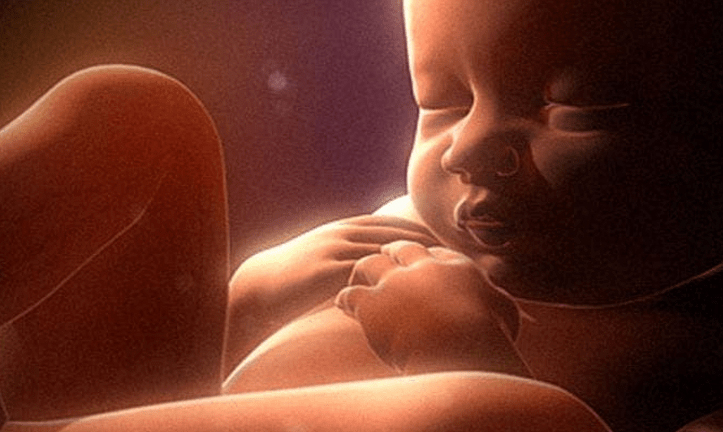
“You will conceive and give birth to a son, and you are to call him Jesus.” (Luke 1:31, NIV)
In the ancient world, human life was viewed as very cheap. Someone’s value came from what they could offer to others. If you were useful or skilled, you had value in the eyes of others; if not, you were expendable. Babies were often viewed as disposable, and women and children were treated as property. Before Jesus came, human beings almost universally had only instrumental value in the eyes of others, not intrinsic value.
The birth of Jesus Christ changed all that. The Bible says of Jesus, “God was pleased to have all his fullness dwell in him” (Colossians 1:19, NIV). His primary purpose for coming was to accomplish our redemption from sin and make us new. Yet the Creator of the cosmos was not above entering this world through a virgin’s womb. Although He was supernaturally conceived, He otherwise entered this world like you did, growing inside His mother’s belly for most of a year. And like you, after coming down the birth canal, He was totally dependent on His mother’s nourishment and care.
Here lies the greatest enigma of all. The Supreme Creator who spoke everything into being was coddled and nursed by His teenage mother. No wonder the angels look on in stunned amazement at what God has done (1 Peter 1:12). The One through whom and for whom all things exist had made Himself small. Simply put, Jesus was a fetus.
The word fetus simply means an “unborn baby.” Although there’s nothing degrading about the term itself, it is often used as a way to dehumanize the unborn. Not long ago, my wife, Whitney, and I visited OMSI (Oregon Museum of Science and Industry). One of the most fascinating exhibits is called Prenatal Development. In a circular room, you find preserved unborn babies at every stage of development in utero.[1] What struck me was that from a very early stage, perhaps around nine weeks, the tiny baby revealed features that were so undeniably human. Already at that point, miniscule limbs have sprouted and little black eyes can be seen on the bean-shaped head. I came away from the exhibit agreeing with King David that we truly are “fearfully and wonderfully made” (Psalm 139:14). How incredible to think that Jesus too passed through each one of those stages in Mary’s womb!
Luke records that when the pregnant Mary visited her cousin Elizabeth, who was also pregnant, Elizabeth’s baby – later known as John the Baptist – leaped in his mother’s womb. And then Elizabeth tells Mary:
“Blessed are you among women, and blessed is the fruit of your womb! And why is this granted to me that the mother of my Lord should come to me? For behold, when the sound of your greeting came to my ears, the baby in my womb leaped for joy.” (Luke 1:42-44, ESV)
Today, many in our nation are asking, “Why should we care about the unborn?” One abortion rights advocate even mockingly called the pro-life position a “love affair with the fetus.”[2] The unborn child has even been likened to a parasite or blob of tissue.[3] No doubt the dehumanization of these precious little image bearers of God has led to the slaughter of millions.
So, why should we care about the baby in the womb? Here is one very good reason: Because Jesus was once a baby in the womb. And even while unborn, He brought joy to another unborn baby! If experiencing joy in the presence of another doesn’t qualify for personhood, I don’t know what would!
It’s worth noting that the Greek word used for baby here –βρέφος (brephos) – is the same word Luke uses for babies outside the womb elsewhere, showing that God’s Word doesn’t distinguish between babies inside and babies outside the womb (see Luke 2:12, 16; 18:15). Either way, they’re all babies.
It is because Jesus came as a baby and welcomed and loved the little children He encountered that Christians have always made the care of children a priority. In ancient Rome, where babies were often aborted or abandoned, the early Christians were known for saving thousands of babies. They brought them into their homes, adopted them as their own, and taught them the Christian faith.
When the disciples tried to hold the children back as little nuisances, Jesus famously said, “Let the little children come to Me, and do not forbid them” (Matthew 19:14a, NIV). Those words inspired Christians throughout history to be the first to start orphanages, foundling homes, and eventually start Sunday Schools for children to learn about Jesus at an early age.[4]
Christians today are known for being at the forefront of the pro-life movement and starting the 3,000 to 4,000 crisis pregnancy centers across the United States. These clinics are known for offering free services and demonstrating compassion to thousands of young pregnant women in difficult situations and empowering them to make wise and informed decisions.
Many today view the pro-life movement as an obstacle to the women’s rights movement. However, those who hold this notion ignore the fact that the same Jesus movement that brought about the pro-life position also paved the way for equal treatment of women.
In ancient times, nearly every culture viewed women as having a lower status than men. Aristotle even argued that a woman ranked somewhere between a free man and a slave. Considering that a slave held no more value than cattle in ancient times, you get a glimpse of how poorly women were treated. As you review the accounts from ancient India, China, Rome, and Greece, the widespread consensus was that wives were the property of their husbands. Modern westerners can hardly fathom such a low view of women. So what changed all that? What inspired the now widespread perspective that women and men have equal value, rights, and dignity?
In the words of historian Rodney Stark, the elevation of women has its roots in the “triumph of Christianity.”[5] That is, Jesus Himself elevated women to a level of dignity and respect. He honored the women who followed Him, engaged them in conversation, and was eager to teach them alongside the men, all social taboos at the time. Jesus treated women as equals to their male counterparts. It is the early Christians who taught the then-pagan world that husbands are to love and be faithful to their wives, widows should be cared for, and polygamy was forbidden by God. Stark writes, “In response to the special appeal that the faith had for women, the early church drew substantially more female than male converts, and this in a world where women were in short supply.”[6]
What does all this have to do with Christmas?
By daring to become a human Himself, Jesus imbued all human life with greater dignity than it ever had before His birth. In the Christian worldview, unborn children, women, and men all have equal value as image bearers of God, and consistent followers of Jesus have always stood for the rights of each.
All this because of Christmas. When you trace the roots of all these changes back far enough, you will find that they all began in a little manger in Bethlehem some 2,000 years ago.
[1] According to the display, all of the unborn children died as a result of “natural causes or accidents,” not abortion.
[2] Joycelyn Elders, quoted in The New York Times Magazine. https://www.nytimes.com/1994/01/30/magazine/joycelyn-elders.html
[3] Randy Alcorn, Pro Life Answers to Pro Choice Arguments (Sisters, OR: Multnomah Publishers, 1992, 1994, 2000).
[4] George Grant, Third Time Around: A History of the Pro-Life Movement from the First Century to the Present (Franklin, TN: Legacy, 1991, 1994).
[5] Rodney Stark, The Triumph of Christianity (New York, NY: HarperCollins, 2011), 121-135.
[6] Ibid, 135.
 Lamp and Light
Wonderful post, Jason! It is interesting to me that OMSI would have a display like that in our liberal Portland.
Sent from my iPhone
>
LikeLiked by 1 person
Yes, and the interesting thing was how many responses in the comment book at the end of the exhibit mentioned how clearly it showed God’s handiwork and even surprise that the unborn looked so human. As I like to tell people, genuine science and the Christian worldview are friends, not enemies. 🙂
LikeLike
So enjoyed this piece, Jason! In all my 60 + years I have never thought of Jesus in the womb so fully! God’s continued blessings to you and the family!
LikeLiked by 1 person
So glad to hear, Debbie. I hope you and your family have a wonderful Christmas!
LikeLike
Amen.
I would be careful about using the term daring in reference to Jesus. You probably didn’t intend to imply that God takes risks, but with the prevalence of open theism today, we must be careful. 🙂
LikeLiked by 1 person